

Magazine
“We Refuse to Free Terrorists for Our Son”: A Hostage Mother’s Unshakable Moral Line
Efrat Mor speaks about her son Eitan, kidnapped from the Nova festival, the choice not to free terrorists for his return, and holding on to faith, family, and hope
- Efrat Talia Cohen
- | Updated
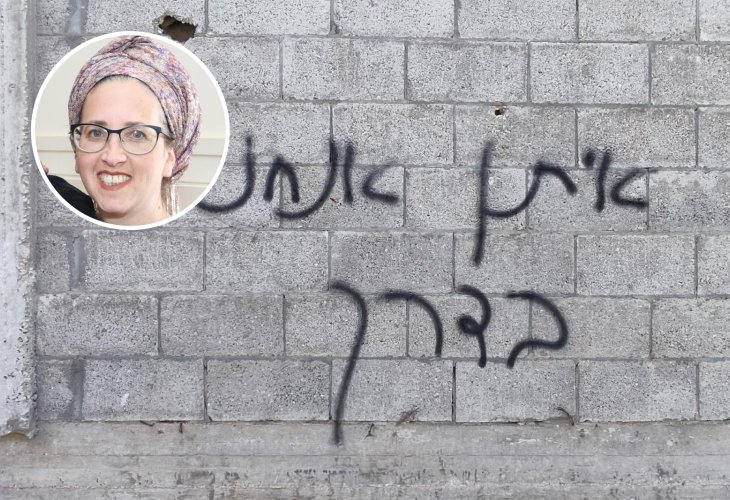
One day after Efrat and Tzvika Mor were informed that their eldest son, Eitan, had been kidnapped to Gaza, the redemption ceremony (pidyon haben) of their first grandchild took place. They had dreamed about and planned the ceremony for a long time and intended to celebrate it in a big way. “I’m a Levite’s daughter, so I had never experienced an event like this before. Standing opposite a Kohen in that moment was incredibly moving for me,” Efrat says. At the same time, she recalls how in the end they celebrated without him, in a small, modest ceremony, and from there went out, desperate, to continue their rescue efforts and inquiries about him.
The words pidyon haben bring to her mind the concept of pidyon shvuyim — redeeming captives: “To think that Eitan couldn’t be with us, to hold immense joy alongside immense worry. He was really looking forward to becoming an uncle. He was at the brit and even came to visit the baby in the hospital right after he was born.”
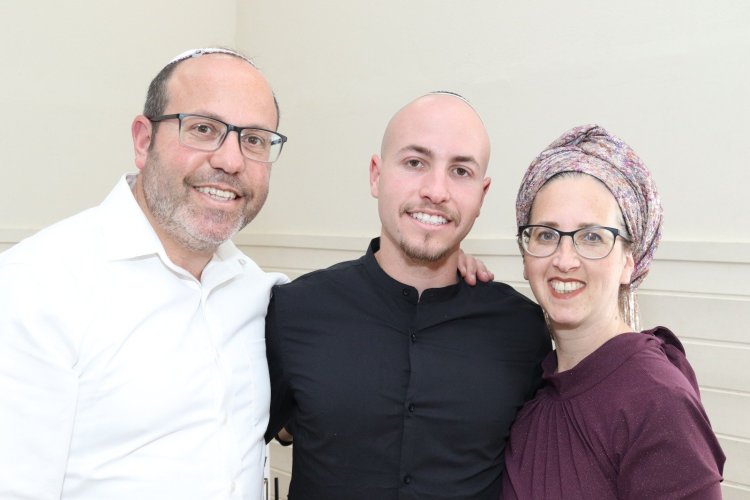
Eitan, 23, was working as a security guard at the Nova music festival, together with his friend from Kiryat Arba, Elyakim Libman. When the inferno began, both of them could easily have fled and saved themselves, but they chose to stay in the line of fire and try to save people — and even the bodies of young women they encountered, so they would not be kidnapped or abused. In the end, they themselves were abducted by terrorists.
When did you first hear and understand what had happened to Eitan?
“The truth is, we didn’t even know that Eitan was in the south. We thought he was in his apartment in Nachlaot, which he rents with a roommate. We spoke to him fifteen minutes before the holiday, and he told my husband what he had cooked for Shabbat — he loves to cook — and we ended the call as usual. When I went to synagogue the next morning for the holiday prayers, I saw women worriedly reciting Psalms. Later, people from the synagogue were mobilized, and there were rumors about what was happening, about terrorists infiltrating, but we didn’t grasp the scope of the event, and it never crossed my mind that it had anything to do with me personally.
“I went to rest and woke up at 4:30 p.m. to the sound of my husband’s phone vibrating. To my surprise, I saw his brother’s number on the screen. It was very strange that he was calling in the middle of the holiday, knowing that we observe it and wouldn’t answer. I went to my husband and quickly asked what to do, and he said it wasn’t a life-and-death emergency and that we shouldn’t answer. After the holiday ended, my other brother-in-law called and asked whether we had been in touch with Eitan, and he realized that we had no idea he was there. It turned out that Eitan had called him at 7:30 in the morning and asked for help. He saw what was happening there and couldn’t get help himself, so he asked him to try, and then his phone battery died. That’s why they tried calling us on Shabbat — they were extremely worried about him and wanted to know if at least he had contacted us.
“Then a crazy period began. We went to the police to file a missing-person report. My husband also gave a DNA sample. We went through ten long, agonizing days. We watched horrific Hamas videos just to see if he appeared in any of them. At the same time, my brother-in-law, who is connected to ZAKA, tried to check with them. We also called hospitals to ask if he might have arrived there. The uncertainty was utterly shattering.
“Even the way we were informed that he had been kidnapped was a saga in itself. One day, a representative on behalf of Gal Hirsch, who is responsible for missing persons and hostages, called us and said he had new information about Eitan and wanted to meet us. We were sure they were coming to tell us something. I texted the social worker from the welfare department who was accompanying us, and she said she knew about it and that she would join them. We were convinced they were coming to tell us the worst. We sent the younger girls out of the house so they wouldn’t be there for such a hard moment, took Rescue Remedy to calm ourselves, held hands, and cried endlessly. It was the day after the redemption ceremony of my first grandchild — an event that was already very charged because Eitan wasn’t there and had been so eager for it. In the end, compared to what we had feared, there was huge relief in knowing that he was kidnapped and not murdered.
“We entered a turbulent period, but a different one. We live with very hard uncertainty. On the other hand, there is also great kindness in that from time to time we receive signs of life from Eitan. They can’t elaborate, but they tell us they know he is alive. Each time we are moved all over again, and it’s a blessing, because there are families who receive no sign of life at all — and I admire them deeply. There are families who speak only of hope and faith in God despite having no information whatsoever. In general, I truly feel that since my son was kidnapped, I am much closer to the Creator, because it is so shattering that it’s clear to me it has to be precise — there’s no other possibility. And we constantly see many acts of kindness along the way. The birth of our grandchild before the kidnapping, for example, was an immense blessing. My daughter and her husband lived with us for over a month, and it was simply joyful. It grounded me and forced me to act and take care of them. Now she lives nearby, and every time the officer says he’s coming, they join the meeting.
“Contrary to other voices that are heard, such as accusations and anger toward the state and various bodies connected to the hostages, I think it’s important to say that we are being taken care of from head to toe. The officer makes the effort to come every time there’s a development or something new to say, and even when there isn’t — just to see how we’re doing.
This week, for example, he was in Kiryat Arba and asked to come even though he had nothing new, and I really appreciated that. We feel we have backing, that we are surrounded by very professional people who are supporting us from all sides. Even the bureaucracy — both the health fund and government offices help me in ways like moving appointments up if I need to. It eases things you simply don’t have the head for. There are no words for their care; it’s very meaningful.”
“We don’t want terrorists released for our son”
While most hostage families are waging a broad media campaign to apply pressure for the hostages’ release, the Mor family is taking the opposite approach. They adamantly refuse the release of terrorists in exchange for Eitan’s return, no matter what. “Don’t misunderstand — I find it incredibly hard that my son is kidnapped,” Efrat says, “but there is reason and there is emotion. Emotionally, we all want to go to Gaza right now and pull him out, and tears are constantly shed for him. But for me, the entire Jewish people also includes my children, and I am responsible for them too. My son once told me: ‘It’s like after they release Eitan in a deal, a terrorist released in that deal will murder him, or one of my grandchildren.’ We felt that this spoke to and touched all of us. Beyond that, it weakens us as a state when we are busy bargaining over hostages. This whole conduct of groveling before a terror organization — it’s sad that such a situation still exists. We are different; we have a state and an army. Sadly, we needed to receive this slap from the Creator, but from it, and from that terrible day, also grew things that are amazing and deeply moving.”
How do you cope with anger from other hostage families and accusations against you?
“It’s easier for me. Sometimes I read things that are hard for me to read, but I’m more at home with my younger daughters, and it’s less in my nature to go out and speak. Until recently I was completely anonymous, and against my will I’m now in the public eye. My husband Tzvika is our ‘foreign minister,’ so he absorbs most of the accusations. In Haaretz not long ago, I read an accusation by the father of another hostage that my husband is abandoning our son. You can’t judge them — they didn’t grow up the way my husband did, in yeshivot, with a mindset focused on the collective. It’s not their fault; it’s Western culture.
“On the other hand, it’s very important for me to say what an embrace we receive from the people of Israel — not only here, but also in the Diaspora. Constant calls and messages from all over the world. One rabbi told me, ‘Your son is no longer just your private son; he is the son of the entire Jewish people.’ People who don’t know him or us at all take things upon themselves for his rescue, simply because his story touched them. I’m sure this has happened to many other hostage families. We feel that everyone is with us. Sometimes women talk to me and cry over my son, and I’m the one comforting them.”
When you state that you are not willing to have Eitan released in exchange for terrorists — beyond how heroic that is — aren’t you afraid that you’re deciding his fate without knowing what he himself would want?
“We know that our son doesn’t think differently. A few months ago, somehow the topic came up at the Shabbat table — maybe we were talking about Gilad Shalit, I don’t remember exactly, and Eitan said explicitly: ‘If I were kidnapped, I wouldn’t agree to be released in exchange for terrorists.’ We didn’t remember it, but one of our sons did and reminded us. Eitan is very right-wing in his views; it was very clear to him that he wouldn’t be released in exchange for terrorists, and he probably also knew why — because it raises the price and invites the next incident.”
So you oppose the entire campaign led by hostage families. From your perspective, what should and can be done for the hostages?
“First of all, Tzvika founded, together with good people, the ‘Tikva Forum’ — a forum of people who think like us, whose motto is that the more we fight Hamas, the more it will be pushed into a corner and forced to release hostages. Tzvika is now giving lectures all over the country and receives many messages saying that this support gives soldiers strength. He has told me several times, ‘My whole life was preparation for these days.’ Women have come to me and said they couldn’t function at first, and only after hearing my husband speak did they regain strength.
“There is no place right now for weakening talk, accusations, or calls for trials. I’m certain that one day there will be an accounting of exactly what happened there, but right now it’s an emergency and we need to back our government. We oppose lowering the intensity of the fighting. We have strength and soldiers with light in their eyes, full of motivation, who want to conquer Gaza and settle there. Unfortunately, some of our leaders don’t share this view, and I hope they wake up and understand that only if we take Gaza from them will they understand. We’re not delusional — we are one point on the axis of Jewish history, and it’s clear to me that Gaza will be settled again. It’s incredibly frustrating, and you feel helpless, because Gaza is ours and you want to show the enemy that you don’t surrender. But you understand that this is a matter of processes. And again, here too, everything is precise from above — we can’t know what God is planning.”
What gives you strength in all of this?
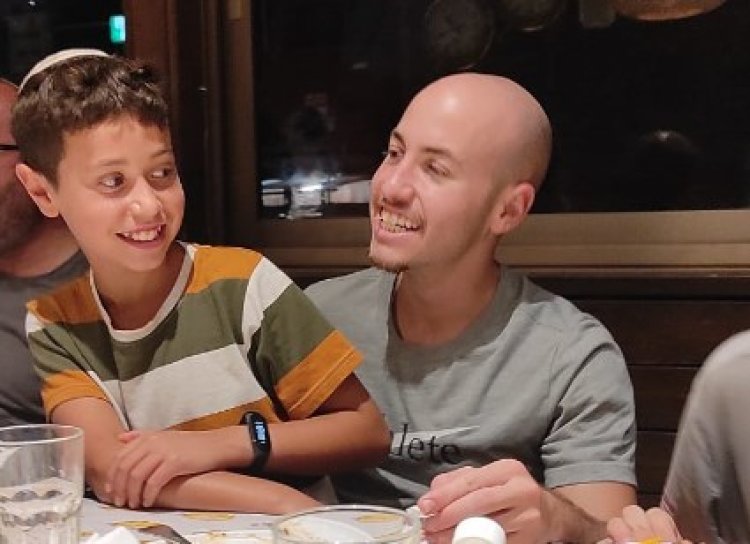
“There are several levels to answering that. First of all, faith in the Creator. I feel that my faith has grown immensely since Eitan was kidnapped. Knowing that everything is precise gives me strength. Second, the heroic act that Eitan carried out together with Elyakim truly strengthens me. In his place, I would have fled, and the fact that he insisted on going back to remove the bodies of young women so they wouldn’t be abused or kidnapped — that’s incredible to me. Also, the fact that I have a family and young daughters to take care of strengthens me to keep going. We decided to approach this from a place of optimism and faith. There are moments of crisis, helplessness, despair, and worry about how much longer it will take — and what if it takes years, or if they’re never released at all. That thought often sneaks into the heart — we’re human. Sometimes I work on disconnecting and repressing in order to survive; that also protects me.”
What is it like knowing there is another family dealing with exactly what you’re dealing with, also from Kiryat Arba?
“We knew the Libman family before, but we weren’t close. The boys were friends already, and we spoke occasionally, but there’s no doubt that since then we’ve grown very close, because this is a situation no one has experienced before, and suddenly you have partners in sorrow and in emotion. Some time ago I organized a writing workshop for the daughters of both families, and it was very meaningful. There was also a therapeutic playback session for the men — Tzvika came out of it deeply moved; it was very powerful. We’ve discovered that we’re similar in many ways, and there’s no doubt it’s like a ‘mini support group.’ Personally, it strengthens me greatly, because my connection is only with Avishag Libman, Elyakim’s mother, and not with other hostage mothers. We exchange feelings and experiences and occasionally go together to separate challah. I don’t go out much from the house since what happened, but sometimes I do.”
Can you share one particularly strong, outstanding good quality that Eitan has?
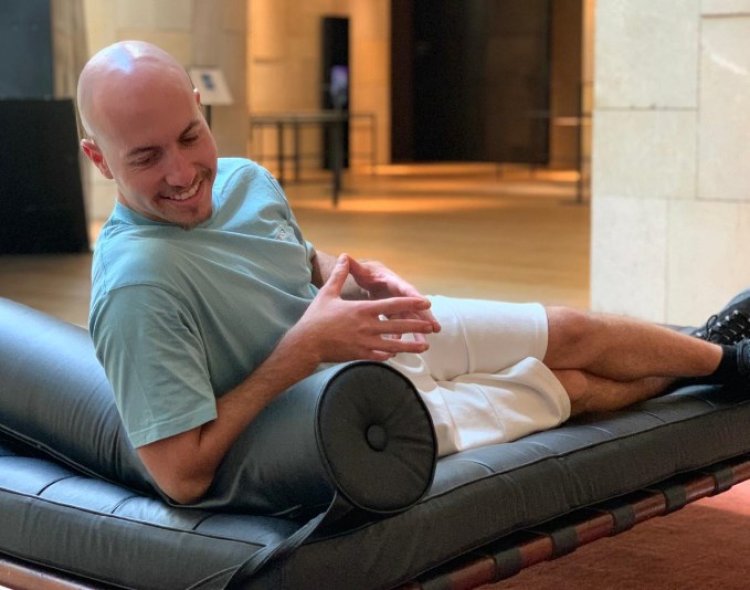
“Honoring parents was the most dominant trait in him. He didn’t come home very often, but when he did, he would say, ‘Mom, now you sit,’ and he’d get the house in order by cooking and cleaning. I was always amazed by his sensitivity. Sometimes he himself was exhausted, and still he wouldn’t let me do anything. When I had surgery last summer, he came and sat with me for hours, taking care of me, and I felt what an amazing firstborn son I have — it moved me deeply. In general, he went through many awe-inspiring processes with himself, advancing in personal growth and character refinement, and I constantly told him how much I admired him.”
Following Eitan’s kidnapping, the Mor family recently decided to launch a special initiative: establishing a synagogue in his merit and for his rescue. “We want to build a synagogue building here in the neighborhood. Since the COVID period there has been a synagogue — my husband is among its founders, but unfortunately it doesn’t have a permanent structure. Until recently it was in a tent, and we want to build something substantial that will continue the Torah classes and the community kiddush every Shabbat.
“The truth is, the initiative isn’t new — it predates Eitan’s kidnapping. On Rosh Hashanah, when he ate the holiday meal with us, he casually mentioned that he had transferred a thousand shekels to my husband for the synagogue, and I was deeply moved, because I knew it was a very large sum relative to what he earns. After he was kidnapped, I thought about how Eitan’s contribution was a signpost for the synagogue we want to name in his merit. To me, a synagogue is very connecting and also eases life for many people. For example, pregnant women come here, and a person with a mobility scooter comes as well. My dream is that Eitan will merit to recite the Birkat HaGomel blessing in the synagogue when he returns.
As for the thanksgiving meal, we already have a menu. Already in the first month after the kidnapping we thought about it. We know what the boys like: we’ll prepare a substantial meat meal. Our neighbor has already volunteered to make the desserts.”

