

Magazine
The Photographer Who Captured Jerusalem's Heart
Shabtai Michaeli, a Georgian immigrant, became an iconic street photographer of Jerusalem despite the challenges of illiteracy and disability. Only after his passing did his children learn of his remarkable life story and his deep love for the people of Israel.
- Michal Arieli
- | Updated
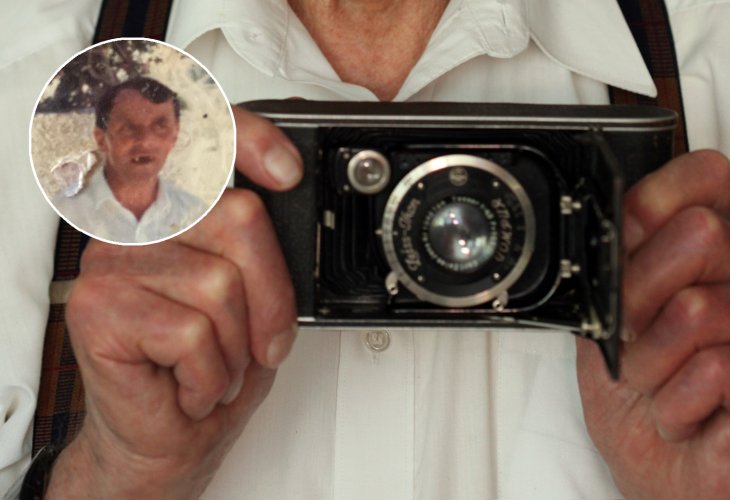 Inset: Shabtai Michaeli (Illustrative Photo: Yossi Zamir / Flash 90)
“Pictures on the spot, pictures on the spot, Polaroid.” If those words immediately bring to mind a short, smiling Jewish man with a camera slung over his shoulder, weaving through Mahane Yehuda or slipping into a Jerusalem wedding hall, there’s a good chance you met Shabtai Michaeli at least once.
For decades, he was simply known as Jerusalem’s photographer. He documented residents in nearly every corner of the capital, and over time, he became part of the city’s landscape.
It’s hard to think of weddings from fifteen or twenty years ago without remembering Michaeli. He would arrive right in the middle of the dancing, snap photos, and print them on the spot, something rare in those days. But what many people didn’t know was the story behind the man: born an orphan, arriving in Israel with nothing, living with a serious disability, and still going out day after day to photograph in order to support his family and his mother, almost until his final days.
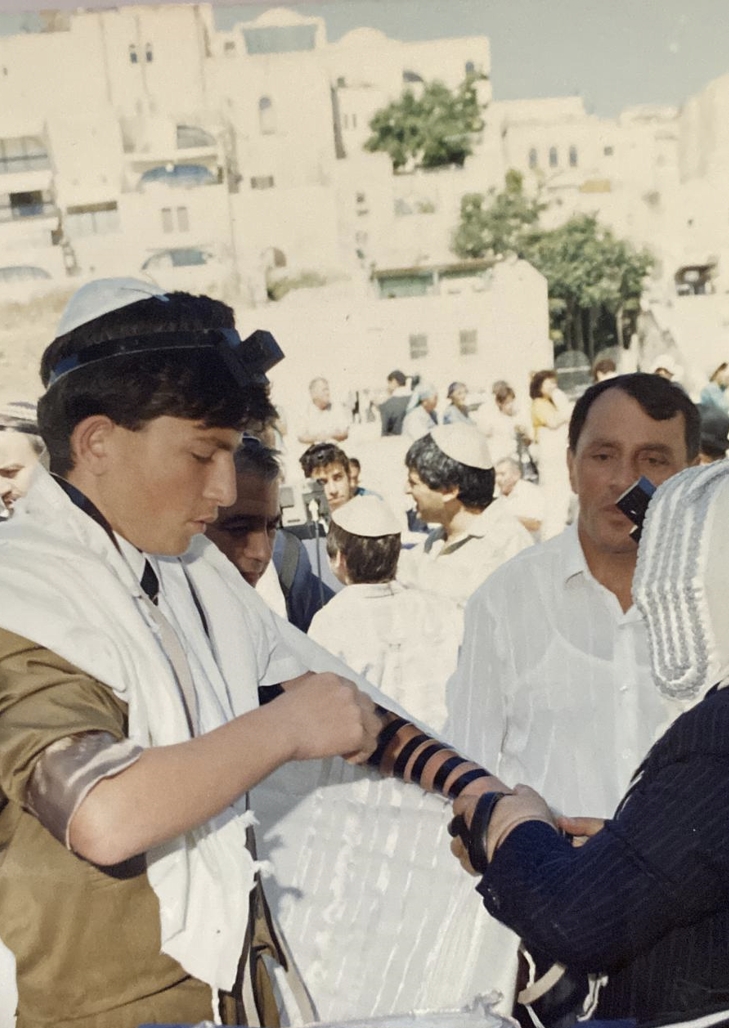
Recently, this beloved man passed away. Only after his death did his children learn chilling stories about him that revealed the moving portrait of a Jew who could not read or write, yet loved the Jewish people with all his heart and gave them whatever he had, and sometimes even what he didn’t.
Between Life and Death
Shabtai Michaeli, also known as Shota Michalashvili, was born in Georgia in 1942 into a life marked by orphanhood. Just months before his birth, his father was drafted into the Russian army to fight the Nazis. One day, messengers knocked on his mother’s door and delivered a telegram stating that her husband had fallen in the war.
The young widow refused to accept it. She traveled across Ukraine searching for him, but nothing helped. Her only son was born an orphan, and she devoted her entire life to him.
Starting Over in Israel
After he married, Michaeli worked as a shoemaker and became known in the Georgian community as a gifted craftsman, with hands that could turn torn, worn shoes into something that looked almost new. In 1973, he immigrated to Israel with his wife, their three young daughters, his mother, and his aunt.
“My father honored his mother deeply,” says his eldest daughter, Rose Chico. “She lived in our home until her last day, and he always saw her as someone who could teach us life wisdom. She was truly part of our family.”
The transition to Israel was not easy. They left all their possessions behind and arrived with nothing, without even knowing the language. Only after great effort did Michaeli’s wife find work as a school cleaner, while he took on multiple jobs at once, doing whatever he could to support the family.
Despite the pressure, they slowly built a life, until the day everything changed.
The Accident That Changed Everything
Naomi Ben Or, also a daughter of the family, remembers it vividly. “Suddenly, a crowd burst into our home, panicked, saying that Dad had been injured in an accident. There were screams. Grandma fainted. Ambulances and police arrived. Dad was taken to the hospital in critical condition, in real danger.”
Their mother often said she was certain his condition turned around because of Grandma’s prayers. “Grandma would not stop crying out to Hashem,” Naomi explains. “She said, ‘I lost my husband. Please don’t take my only son.’”
Chico was eight at the time and remembers even more. “The accident happened when Dad was on his way to a family in the neighborhood. He was involved in arranging a match that was moving forward seriously, and he wanted to deliver a message. That match did happen, but the engagement took place while Dad was suspended between life and death in the hospital. He didn’t even know about it.”
“Even today, when I pass the spot where it happened, my heart stops,” she adds. “Dad’s life changed completely from that moment. Until then, he was young and strong, working at anything he could. After he became disabled, every action was hard. He couldn’t even put on socks or shoes by himself.”
He was released from the hospital with metal plates in his leg and a disability that stayed with him for the rest of his life. A long rehabilitation followed. “I remember being four or five and Mom asking me to help Dad,” Naomi says. “The disability affected him deeply.”
Refusing to Give Up
But Michaeli was determined. He would not let the accident break him. As soon as he returned home, he returned to work. Though he never learned to read or write, he took on odd jobs, and on Fridays he would bring his shoemaking tools to the neighborhood shopping center and offer shoe repairs to passersby.
The Picture of His Life
The odd jobs and the shoemaking, done with enormous effort because of his limited mobility, were not enough to support the family, especially once another son was born. That is what led Michaeli to a creative idea.
He decided to buy a camera, not just any camera, but a Polaroid style camera that could print the photo immediately after it was taken.
“Today, every event has photographers printing magnets,” says Moshe Tzatzashvili, husband of Leah, another daughter. “But my father in law invented the idea fifty years ago. He understood the need to give people a memory on the spot.”
From Family Moments to Wedding Halls
“At first, Dad mainly photographed us as children,” Naomi recalls. “At home, in the playground, leaning on cars, dressed up on Purim. Once he became more skilled, he started documenting family celebrations. If someone got engaged or there was a Sheva Brachot, Dad would arrive with the camera on one shoulder and a Georgian drum on the other, called a doli.”
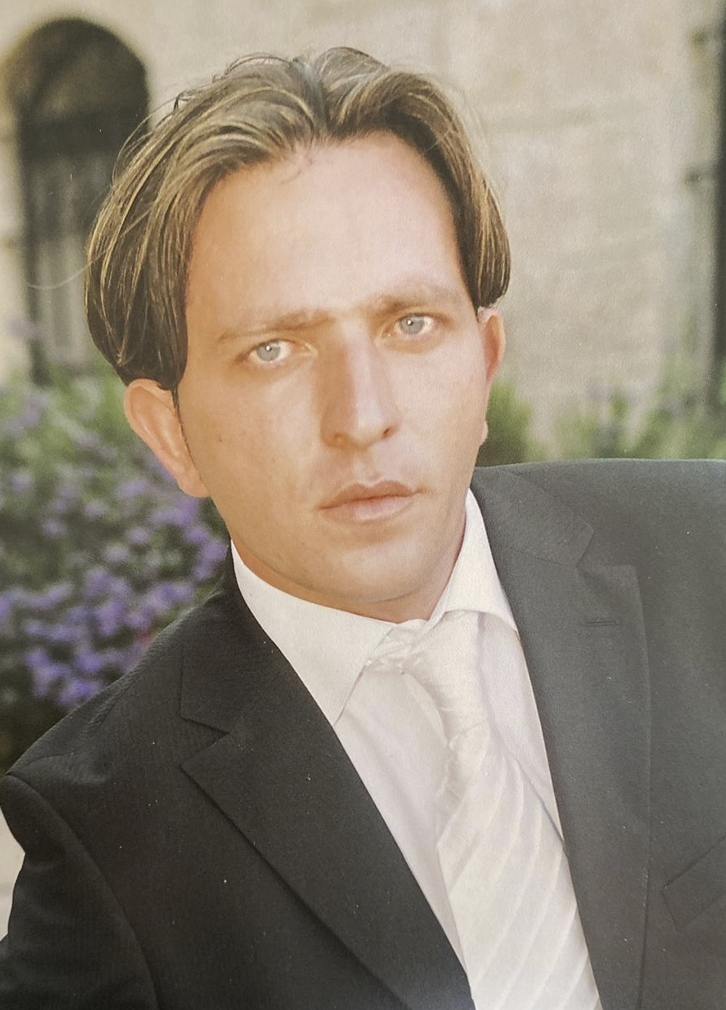 Shabtai Michaeli's son, Chaim
During the event he would photograph, and once it ended he would escort the bride and groom home with drumming and dancing, all while disabled and barely able to drag his leg.
“Only later did he decide to make it his profession,” she says. “Every evening he would move from one wedding hall to another in Jerusalem, offering what was considered an incredible novelty then, a beautiful photo developed on the spot.”
Naomi remembers attending weddings of friends and repeatedly spotting her father at the entrance. “He never gave up on a single event. He would go from wedding to wedding.”
He always asked permission at the door. Once, Naomi joked, “Are there any events in Jerusalem that you don’t go to?” Her father answered seriously, “I don’t go to private events where I might invade someone’s privacy.” He was careful about that. He never photographed funerals. He avoided politics. He stayed away from places like the Knesset building or demonstrations. Those topics simply didn’t speak to him.
A Hat, a Drum, and a Warm Smile
“In the beginning, Dad wore a wide brimmed hat,” Naomi remembers. “He used to joke that professional wedding photographers have special effects in their cameras, but he had an effect on his head.”
Later, he stopped wearing hats. When the grandchildren were born, he would come out of the room each time with a different funny hat and ask, “Who wants a picture with me?” He adored his grandchildren and photographed them endlessly. He even let them use his older cameras, since every so often he had to replace one.
A Few Shekels, and a Whole World of Giving
“Dad charged just a few shekels per photo,” Chico says. “And still, he supported the entire family. We never lacked anything.”
“If I needed new clothes or shoes, he would take me that very day and buy them,” she adds. “He didn’t say anything, but I noticed that week he worked extra hours and barely came home.”
“When I feel lazy about getting up for something small, I remind myself of Dad. Despite his disability and older age, he would leave at five in the morning and photograph nonstop. He’d return close to midnight, dragging himself up the stairs to the fourth floor apartment where he lived since making aliyah. He refused to move even after the accident. He simply didn’t see a reason.”
His only son, Chaim, remembers accompanying him to the shopping center to help carry and return the shoemaking tools.
“Even on snowy days, when no sane Jerusalemite would come out to repair shoes, Dad would sit there anyway,” Chaim says. “When I asked why, he would tell me, ‘There are people who are waiting for my smile and my good morning, even on a snow day.’”
Was the work hard for him?
“Of course it was hard,” Chaim says. “But Dad never complained. He even joked that thanks to the job he was improving his English because he learned to speak with tourists.”
Chaim also emphasizes his father’s honesty. “He never took more money than he deserved, even from tourists who could have paid far more. He wouldn’t even think of taking advantage. He did everything with gentleness, never with a feeling of forcing his photos on anyone, and he always ended with wishes for health and blessings.”
Jerusalem in Pictures
Today, his children flip through the many photos he left behind. They capture special moments across the capital, and now they tell the story of his life. For a moment they are overcome with longing, and a moment later they are smiling at the past.
“It’s nostalgia,” Naomi says. “Through Dad’s photos, you can see not only what he went through, but what Jerusalem went through over the decades. There are pictures from the days when private cars still drove down Jaffa Road, years before the light rail construction. You can see the central bus station before the Bridge of Strings, the Western Wall before certain changes, places that no longer exist. Dad photographed people, but in the end, he also photographed history.”
Recently, several entrepreneurs approached the family with an idea to memorialize him by creating an exhibition wall displaying many of his unpublished photos under the title “Find Yourself in Jerusalem.”
Where He Loved to Photograph Most
“But the place Dad loved most was the Western Wall,” Chico adds. “He used to go there regularly on Mondays and Thursdays, because he knew there would be bar mitzvah celebrations and many people.”
He loved the atmosphere, until he began receiving tickets. At first he tried to fight it, explaining that he wasn’t disturbing anyone, but eventually he gave up and moved to photographing other areas of the city.
In recent years, he began frequenting Mahane Yehuda Market. “The more the market became touristy, the more Dad felt he was needed there,” his daughter explains. “But even while working, he made sure to call Mom and say, ‘I’m at the market, what should I buy you?’”
He would buy whatever she asked for and carry it all by train to Neve Yaakov. He used public phones. He didn’t even own a cellphone.
He continued working even during periods of terror attacks in Jerusalem. The family begged him to stop until things calmed down, but he told them, “Life goes on. We won’t let terror stop us from living.”
On the eve of Sukkot, he would regularly go to Mea Shearim to photograph the sukkah markets and decorations. On weekends he would go to the pedestrian mall, and on days off he would go to Sacher Park. They always knew his regular spots.
He photographed only in Jerusalem, but once in a while he would travel to Tel Aviv to buy film, and he would take photos along the way. Naomi remembers one trip that left him shaken. It took time for him to open up and admit that thugs had beaten him, robbed him, and damaged his camera.
Their mother tried to hint, “Maybe this is a sign you’ve done enough. People your age don’t work anymore.” But he couldn’t imagine stopping. He kept working as long as he was able to go out and walk.
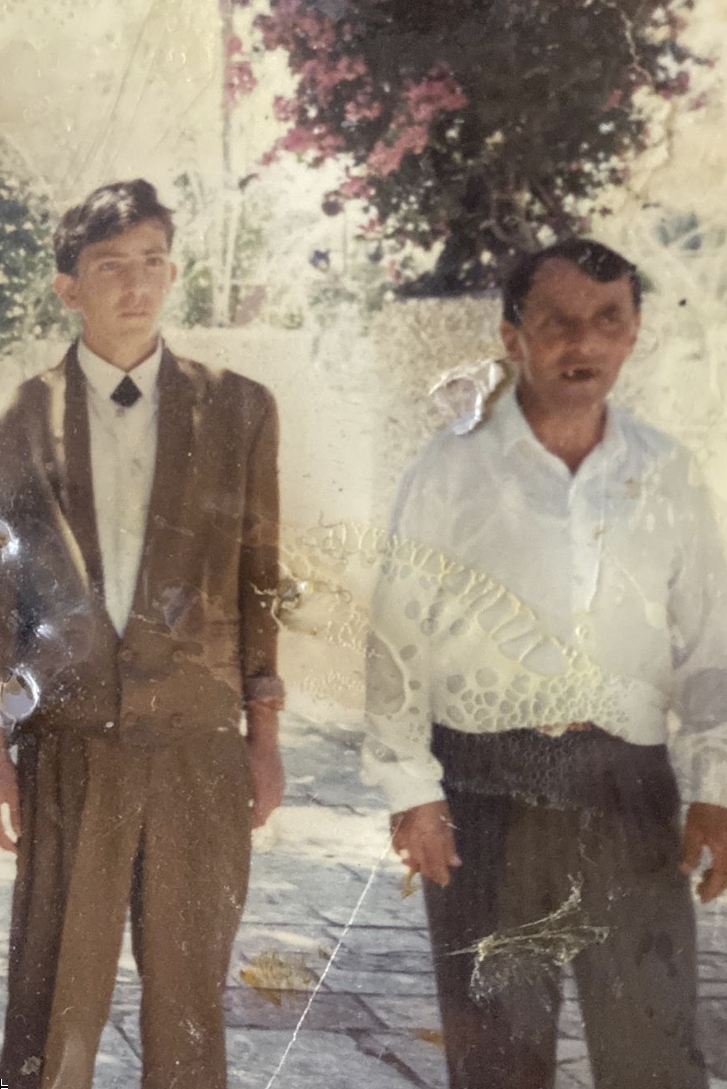 Shabtai on the streets of Neve Yaakov.
“Baruch Hashem” as a Way of Life
In his later years he no longer saw well, yet he continued photographing. People were so kind that even if the photo didn’t come out perfectly, they would still take it, thank him, and smile. The family felt that the love he had given others for so many years was now returning to him many times over.
When he was very old, he would sometimes come home sad and tell their mother, “Today there was no work,” or “I fell while working and it was hard to walk.” But even then he would say, “It’s okay. Everything is okay.”
The words that were always on his lips were “Baruch Hashem.”
“How are you?” “Baruch Hashem.”
“Does anything hurt?” “Baruch Hashem.”
Even his Indian caregiver began using those words.
He didn’t speak much, but he would repeat one message to his children: “Be a human being.” He also used to say, “Honor every person simply because they are a person.”
They grew up on those phrases, and they watched him live them daily. He photographed babies and the elderly, Jews and non Jews, people from every background, and treated everyone with the same respect.
Only after he passed away did they learn that he often photographed for free. At times he would approach people he sensed could not pay and offer to document their celebrations at no charge. Stories like this continue to reach the family, and it moves them deeply. He had a large family to support and needed to bring money home, yet he still found ways to give.
In his later years he barely charged for photos at all. He lived simply. For himself, he needed nothing. He only wanted to give.
A Friday Devoted to Shabbat
One part of the week was different. Friday afternoon, he would stop photographing and dedicate himself to Shabbat preparations.
“Dad used to say that ‘all your work is done’ begins already on Friday,” his son Chaim says. “Early in the afternoon he would already go to the mikveh, then to the synagogue, making sure to arrive at least twenty minutes before Shabbat, so he could repay the pledge he had made for an aliyah the week before. For him, there was no such thing as entering Shabbat with a debt.”
The Last Picture
How did you feel as children about the unusual profession your father chose?
“We were proud,” says Moshe Tzatzashvili. “More than once I’d be walking around the city with friends and suddenly we’d spot him in the street, busy with a photo. I was never embarrassed. He would wave to me, happy to see me, and sometimes even give us a picture for free.”
“He was our family photographer,” Chico adds. “At family celebrations, we didn’t have the concept of hiring a photographer. Dad didn’t just take pictures. He had a gift for capturing the most meaningful moments.”
Naomi admits that later in life she sometimes heard people mocking his unusual work. She once told her father, and he didn’t understand why it mattered. Why be hurt by people’s comments. He himself encountered people who tried to humiliate him, yet he refused to be offended. He would return to the same places again and again. For her, it became a powerful personal example.
A Call for Forgiveness
Naomi shares a story that left a deep impression. A woman once called the family home and asked to speak to Shota Michalashvili. Their mother said he had gone out to photograph, and asked if she could help.
At first the woman insisted on speaking to him, but eventually she explained why she was calling. She had become seriously ill, and when she went to a great rabbi for a blessing, he told her to think if she had wronged someone. Suddenly she remembered that years earlier she had been at a wedding hall in Jerusalem, and when an older photographer arrived, she became angry and called security to remove him from the hall.
She was convinced she had hurt him and wanted to ask forgiveness.
When Michaeli returned, his wife told him the story. He asked to speak to the woman and told her, “Ma’am, you don’t need to apologize. Everything is fine. I already forgot. I forgive you completely. The main thing is that you should be healthy.”
Later, Naomi asked him how he could forgive so easily. He answered simply that he didn’t even remember being hurt. He truly moved on. That was his nature. He didn’t dwell in pain or self pity. He always looked forward.
“To this day,” Naomi says, “I go to events and people stop me and ask, ‘You’re Shota’s daughter, right?’ Today I’m not embarrassed at all. I feel real pride.”
“The Angel of Jerusalem”
Chaim says that when he recites Kaddish in the synagogue where his father prayed, people constantly share stories.
“Some even called him ‘the angel of Jerusalem,’” he says quietly. “They tell me about acts of kindness he did, money he gave to charity without our knowing, lonely people for whom he was the only person who cared. They tell me how he had a special way of drawing close children and teenagers.”
He pauses, then adds in a choked voice, “Dad was quiet. He didn’t talk much. But he would call the neighborhood children ‘bubbele,’ and whisper to each one, ‘I appreciate you so much. I wish I were a scholar like you.’ Teenagers told me that his warmth, coming from a simple man who couldn’t even read, was what brought them closer. I hope I can learn to do that too, to speak to my children with that kind of love and real respect.”
The Final Photo
What was the last picture your father took?
His children think for a moment, flipping through memories and images.
“The last photo was actually taken at home,” Naomi remembers. “It shows the grandchildren and great grandchildren. It’s a simple family picture.”
“But the last photo taken with his camera wasn’t taken by him,” her sister adds. “His Indian caregiver took it, photographing Dad.”
It may have been one of the only times Michaeli himself appeared in a picture. He captured everyone, yet he stayed in the background.
That, his children say, was who he was. Quiet, simple, and yet powerful. With his passing, they feel he took some of his secrets with him, secrets they are only beginning to discover, and others they may never know.

