

Magazine
From Tel Aviv to the Desert Border: How Farming Brought One Couple Back to Faith
Gal and Roni Tushia's journey from television and Berlin festivals to vineyards on Israel’s Egyptian border
- Hidabroot
- | Updated
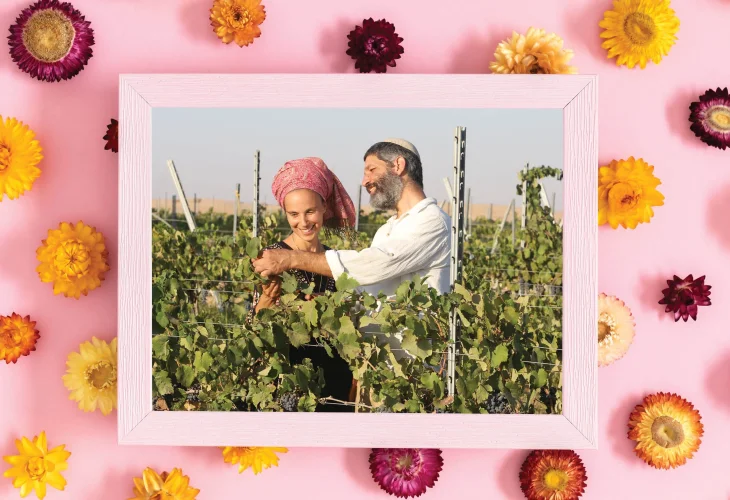 Gal and Roni Tushia (Photo: David Silverman)
Meshek Tushia, located in the moshav of Be’er Milka, is one of the most fascinating places you can tour: an oasis of every kind of fruit tree and an impressive winery, all rooted in the dry desert soil. But to visit, you need to travel all the way south to Israel’s most remote region, because the farm sits right on the Egyptian border.
The farm's owners, Gal and Roni Tushia, warmly welcome visitors — among them groups of soldiers, yeshiva students, pre-military academies, and schools. Some come to tour, and others even come to help with the work. At the same time, the couple faces a complete disconnect from central Israel.
“In the whole area there are only four communities near us,” Roni explains, “and the closest one is a twenty-minute drive away. The nearest major city is Be’er Sheva which is an hour away. That means no one comes here by accident. If you want to visit us, you have to come specifically, because we’re not on the way to anywhere.”
The couple has an additional reason they feel so bonded to this place. “The land is what brought us back to Judaism,” they say. “This is the path the Creator chose to show us the truth — because until 18 years ago, we were completely distant from both the world of the land and the world of teshuvah. The process we went through was truly surprising and almost magical.”
“What Is God, Anyway?”
“We’re originally Tel Avivians, and we met back in university,” Gal says. “We both worked in television — Roni in production and advertising, and I worked in music and sound. I accompanied reality shows, news, Channel 2, and more. The first ‘miracle’ we experienced was that we got married,” he adds with a smile, “because in our social circle that was very uncommon. Our ambitions were clear: we wanted to be people of the ‘big world,’ and as soon as possible, to leave Israel and build careers abroad.
“Neither of us felt any connection to the Land of Israel, or to the people living in it. We grew up with zero knowledge of Torah and mitzvot, Shabbat, or holidays. Back then we constantly flew Israel–London and Israel–Rome, and one day we got invited to perform at a festival in Berlin.”
Gal pauses and notes that at the time, they had many friends living in Berlin, and the idea of joining them sounded tempting. “We flew to Berlin and discovered it was a very respected festival. After the performance, the festival director approached us and asked to pay us in cash. She brought us to her office and — unlike producers who delay payment, handed us an envelope stuffed with hundred-dollar bills. I don’t know why, but I had this feeling she was ‘trying to buy me as a Jew.’ I can’t explain where that feeling came from, but in that moment I told Roni: we have nothing to look for in Berlin or in this whole culture. I’m going back to Israel, and I’m not leaving again.”
“It was a shocking declaration,” Roni recalls, “because until then our life was built around back-and-forth flights. Still, I went along with Gal. We returned to Israel and moved to South Tel Aviv, into a small house surrounded by a yard full of weeds that looked like it had never been cared for.”
![]() A First Connection to the Soil
A First Connection to the Soil
“One day,” Gal says, “I decided to pull all the weeds and clean the yard. Then I looked at the soil and felt a need to plant something. I had no connection to agriculture, but I took tomato seeds from breakfast, buried them in the ground, and watered them with mineral water, day after day. The tomato plant grew, and after about two months I picked my first tomato. The satisfaction of eating something I had worked for was huge. That was my first connection to the earth.”
Roni, at that time, also felt a connection to growth and renewal, but from another place. After years of waiting, she became pregnant with their first daughter and was thrilled.
“I was busy with pregnancy, then with birth and raising the baby,” she explains. “So I didn’t really notice the process Gal was going through. And since Gal didn’t demand that I change anything about my lifestyle, it didn’t bother me much.”
But Gal kept moving forward.
A Question by the Crib
“I remember being in the hospital,” Gal says, “when Noga, our first daughter, was barely two hours old. I sat by her crib and thought: ‘I’m looking at my continuation — but what do I even want her to continue?’ That question kept bothering me. At the time I was very connected to the land, and I also did yoga and meditation every day. One of the yoga instructions said: ‘Try all the physical postures to create good breathing, which will help you meditate and connect to God.’ I read that in English and in Hebrew and didn’t understand — what is God, anyway?”
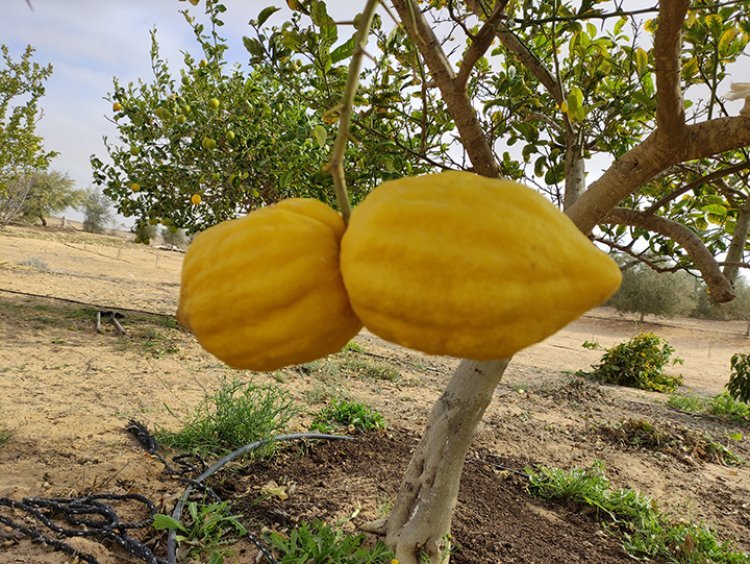
Light in the Synagogue
The next stop in Gal’s search was the synagogue.
“The only time I’d ever been was my bar mitzvah, when I read from the Torah,” he recalls. “But something in my heart told me I might find answers there. So I went to a synagogue on Shabbat. The gabba’im noticed me, handed me a tallit and siddur, and announced: ‘You’re taking out the Torah scroll!’ I listened to the Torah reading while wrapped in a tallit, deeply moved by the melody.”
“I came home glowing,” he says, “and when Roni saw that, she panicked: ‘What do you need a synagogue for on Shabbat?’ I couldn’t explain it — it was bigger than me. The next Shabbat I went again, and again I felt the same illumination. Roni and my friends didn’t understand what was happening, but I couldn’t give it up. Roni eventually realized there was nothing to argue about and let it be. We didn’t even fight about it.”
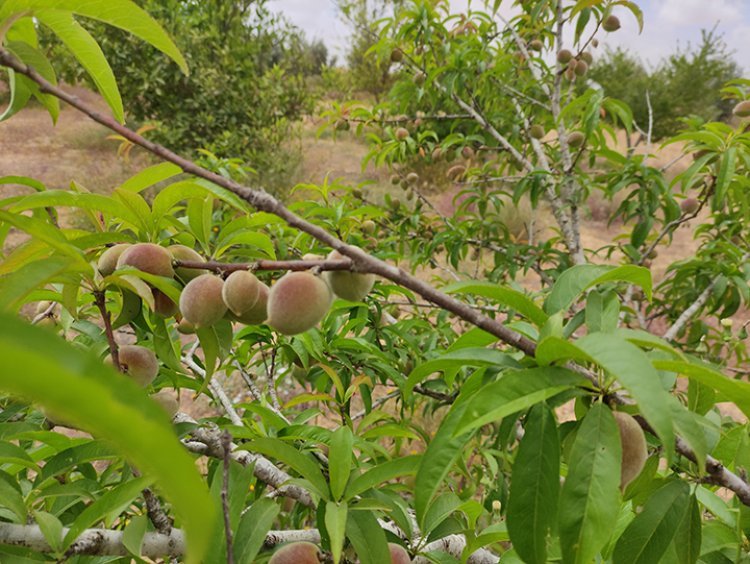
“Free Land” and a Move to the Desert
One day Gal came up with a new idea and told Roni he wanted to start growing everything they ate.
“My reaction was to burst out laughing,” Roni remembers. “How do you build a farm without suitable land?” But Gal didn’t flinch. “He sat me in front of the computer, typed ‘free land’ into Google, and that’s how we got to Be’er Milka — the moshav where we live today.”
Roni, how did you cooperate with that? Did you connect to the idea too?
“At first I didn’t,” she admits. “But it all happened at a time when I was absorbed in raising the baby, and I didn’t even realize what was happening right under my nose. We simply loaded our little home onto a large vehicle, and moved into the desert.”
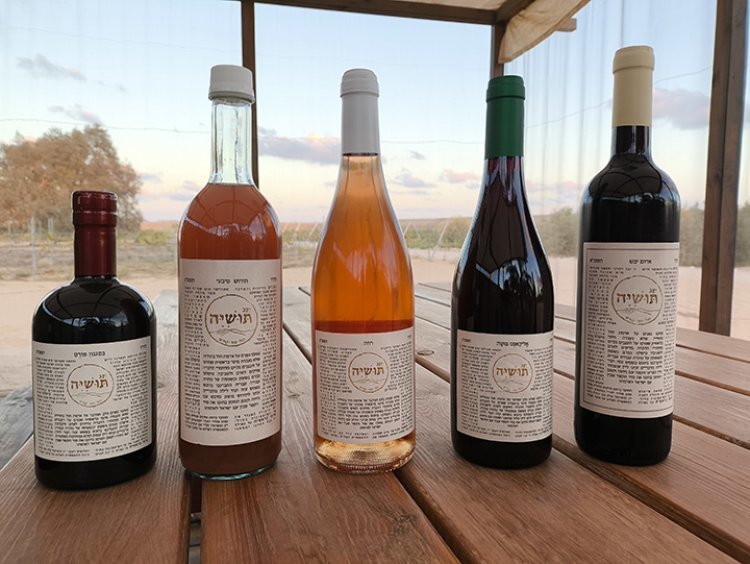
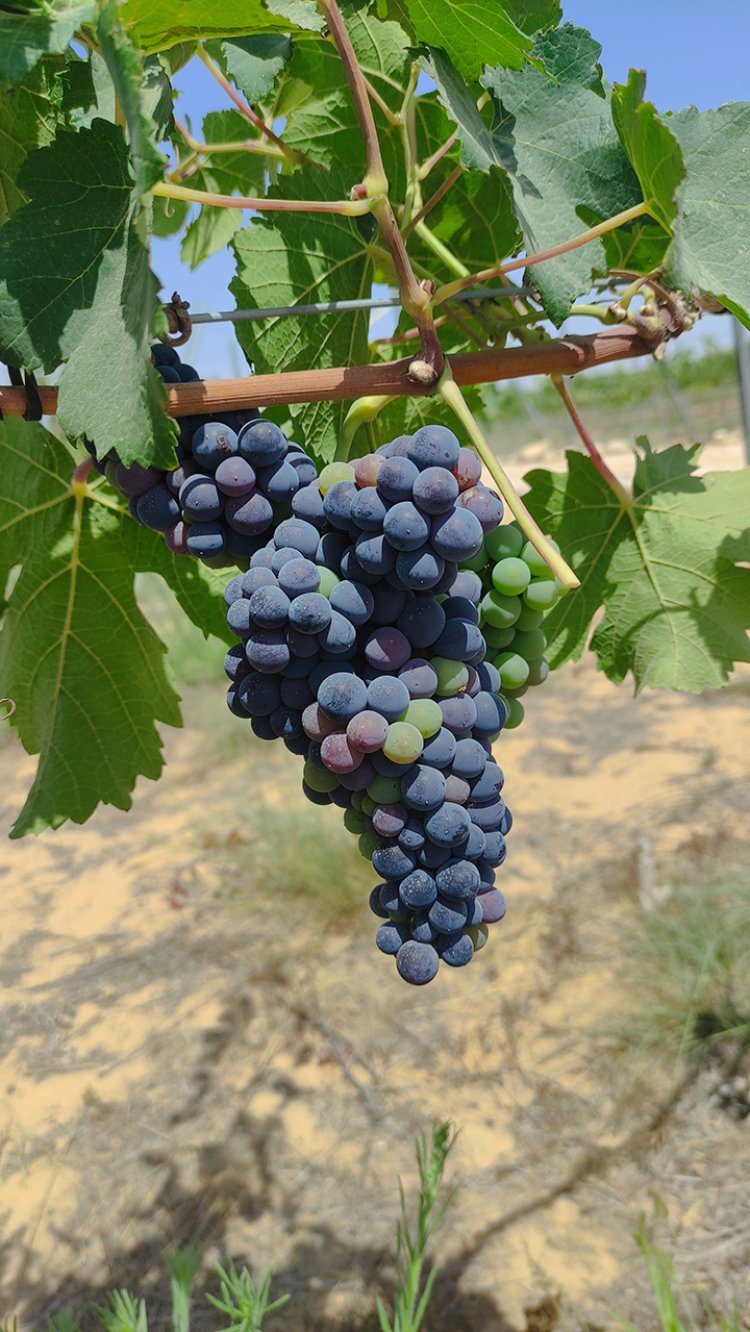
“We got very close to nature,” Gal recalls. “We began living a quiet, calm life. I continued working in the center of the country and came back home to our small place. Be’er Milka didn’t have a religious community, so I didn’t have a rabbi or a synagogue I was attached to. But one day someone told me: ‘Do you know what people do on Friday night? They make kiddush.’ When I asked, ‘What’s kiddush?’ he explained: ‘You take a cup of wine and read a text from the siddur.’ That idea — something I’d never heard of before, led me to produce wine on our farm. That’s how I started planting vineyards in the desert sands, which became our winery.”
“What were you going through back then, Roni?”
“At first it felt like a vacation cabin,” she says. “I loved the atmosphere of the moshav. But then I became pregnant with our second daughter, and the closer the birth got, the more anxious I became. My first birth had been very traumatic and left me with a lot of fears. I debated between a hospital birth and a home birth, and I was deeply worried — especially because the nearest hospital is an hour away. Gal, on the other hand, was calm and kept telling me: ‘What difference does it make if you give birth at home or in the hospital? You’ll see, it’ll be fine.’ And that’s when I began to understand: Gal had something I didn’t — he had faith.
“I was 35 and no one had ever spoken to me about faith in the Creator. I tried asking myself: ‘Where do I get faith from?’ — and I had no answer. I tried looking at holy books Gal had on the shelf, but I couldn’t connect. In the end I found a book a friend brought me about spiritual preparation for birth. I read it every morning, imagined my relationship with the Creator, and felt it doing me good. In hindsight, I know my teshuvah began right there — even though many more developments came afterward, until I merited to draw close to God with a whole heart.”
Going Up to Jerusalem
A deeply moving and meaningful stage in their lives came in the year 5775, their first shemittah year as farmers.
“Until then I was very connected to Torah and mitzvot,” Gal says, “but I prayed alone and wasn’t connected to any rabbi. I searched for answers online. When the shemittah year came, it was clear to me that I was leaving the farm and using the time to learn Torah. I began listening to classes from Machon Meir, and soon decided: if I’m learning, better to learn at the source.
“So once a week I traveled to Jerusalem to learn at Machon Meir yeshivah, alongside guys twenty years younger than me. It gave me strength and Torah stability, and then I brought my family to Jerusalem as well. Roni attended Jewish studies classes, the kids went into Torah frameworks, and we found a clear direction and connected strongly to a community. After a few years, with all the strength we gained, we returned to Be’er Milka to continue fulfilling the dream of agricultural work and to develop the winery.”
The Land That Opened Hearts
Their connection to the soil comes up often in the talks they give to visiting groups.
“I tell people how much gratitude we owe the land,” Gal explains, “because through it we connected to the Land of Israel and to the People of Israel.”
Roni adds: “People come here and are deeply moved to see crops growing out of desert sands. Quite a few groups return again and again. And since the war began, many even came from abroad to help with the work — which was truly needed and vital.”
Even the residents of the moshav itself became more deeply connected.
“After Simchat Torah 5784, something fascinating happened,” Gal says. “In those days there was real concern that a second front might open, God forbid, on the Egyptian border. For the first time since we arrived in Be’er Milka, we began doing joint night watches with neighbors and local residents. We had incredible conversations. It became an opportunity to speak about Torah and faith with people who had never heard about it before. Hearts opened, and people were searching for ways to strengthen themselves.
“Day by day we feel Rashi’s words on Sanhedrin: ‘How will we know the redemption is here? When the Land of Israel gives its fruit generously — then the end is near, and there is no clearer sign than that.’ Thank God, we merit to see the magnificent fruits of the Land of Israel every single day — and we await the moment we will merit to go up with them to Jerusalem.”

