

Magazine
The Untold Courage of Israel's Spy, Shulamit Kishik-Cohen
Shulamit Kishik-Cohen risked everything to smuggle Jews to Israel and pass critical intelligence from enemy states. Even after her capture and brutal torture, her unwavering faith and deep love for Israel remained her strength.
- Tamar Schneider
- | Updated
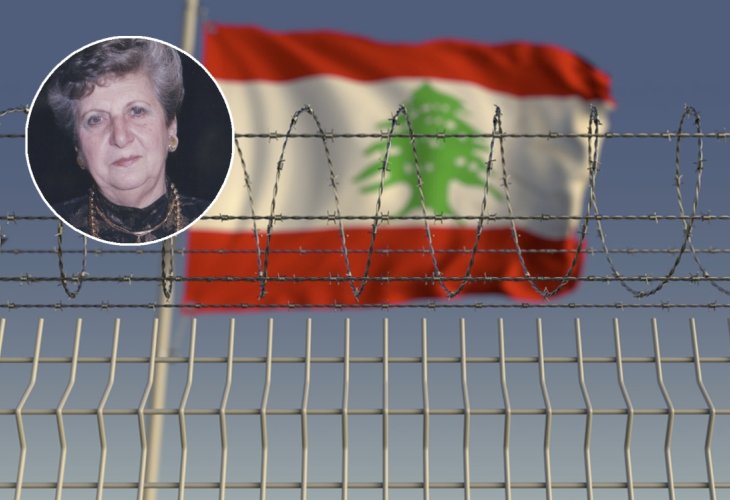 (In circle: Shulamit Cohen)
One night in 1961, Shula Kishik Cohen heard urgent knocking at the door of her home in the Jewish quarter of Beirut, Lebanon’s capital. The late hour and intensity made it clear that the military had arrived. After a lengthy search, they ordered her to accompany them to detention.
“When my mother stepped outside, she saw the entire neighborhood filled with soldiers and military vehicles,” her daughter Carmela Assal recalls. “All of them came just to arrest one Jewish woman.”
This time, the large force was not excessive. Not long before, Shula had escaped custody by leaping from her rooftop to neighboring roofs. Lebanese security now understood they would need reinforcements. The woman who had helped thousands of Jews reach Israel, passed intelligence from enemy states, and evaded capture for 14 years was finally arrested. She was later sentenced to death.
Several years after Shula’s passing in May 2017, Carmela shares her mother’s story.
“She was wise, creative, and fearless. For years she risked her life and our family’s safety out of deep love for the Jewish people and the Land of Israel. At the same time, she ran our home and raised seven children. She believed Hashem had chosen her for this mission, and even in the darkest moments of prison, she continued to thank Him.”
A Bird in a Golden Cage
Shulamit Kishik Cohen was born in 1917 in Argentina.
“She grew up speaking Hebrew, Spanish, French, English, and Arabic,” Carmela says. “Those languages later became essential to her work.”
When Shula was seven, her family moved to Jerusalem, where she and her eleven siblings absorbed strong Jewish values and love for the land. During the 1929 riots, at age twelve, she saw her mother hide a weapon in her brother’s tallit bag. “That moment planted the seeds of courage that shaped her entire life.”
At sixteen, her life changed again.
“My father, Joseph Cohen, was a successful textile merchant from Beirut, over thirty, who decided he wanted to marry a girl from Jerusalem. After receiving rabbinic recommendations, he came to my grandparents’ home. They were struggling financially, and when they saw he was G-d-fearing and stable, they agreed to the match. My mother cried bitterly. She loved Jerusalem deeply and found it painful to leave her family and marry someone much older. But she understood the circumstances and the fact that he promised to support them. After the wedding, she moved to Wadi Abu Jamil, the Jewish quarter of Beirut.”
How did your mother adjust to life in Lebanon?
“She was energetic and always searching for purpose. Life there was calm and comfortable, but she felt like a bird in a golden cage. My father tried to give her everything, yet something was missing. That changed when she joined the community council. At a time when women rarely took public roles, she became a full partner. She taught Hebrew and Judaism and encouraged aliyah. Since the border with Israel was open, she brought back Hebrew textbooks for her students. The community leaders quickly realized how capable she was.”
In 1943, Lebanon gained independence, and political power was divided between Muslims and Christians.
“Politicians began courting the Jewish community for votes. They visited during holidays and celebrations. The community leaders hesitated to demand anything, but my mother was the first to ask what the 15,000 Jews of Beirut would receive in return. She secured permits, building assistance, and even succeeded in having Hebrew officially recognized as an academic subject in Lebanese schools.”
“They Want to Kill Everyone I Love in the Land of Israel”
The most dramatic turning point came on Shula’s thirtieth birthday, which coincided with a Christian holiday.
“As was customary, the Prime Minister hosted a formal event and invited senior officers and community representatives,” Carmela explains. “Because my mother had built a relationship with him, she attended as the Jewish representative. This was shortly before the British Mandate ended, and fears of Arab attacks were intense. That evening, she sat quietly to the side, deeply worried.”
In her memoir Shirat HaShulamit, Shula describes sitting near an open window when senior Lebanese and Syrian military leaders approached, including both chiefs of staff. They stood just behind her. Something inside urged her to listen.
She heard detailed plans to destroy Jewish communities in the Galilee, routes of attack, and coordinated strategy. Her body weakened, her vision blurred, yet her hearing remained sharp. More destruction. More Jewish lives lost.
“They want to kill everyone I love in the Land of Israel.”
These were not extremists but senior military commanders.
When Shula returned home, everyone was asleep.
“She didn’t tell my father,” Carmela says. “She stood by the window and pleaded with Hashem to guide her.”
She then wrote what appeared to be a simple letter checking on a cousin’s health. Between the lines, using a code she had learned in her youth, she embedded everything she had heard.
What did she plan to do with the letter?
“The next morning she came to my father’s shop. Women didn’t typically go out alone then, so he was startled. She said she urgently needed to send the letter to Israel. He told her a client from southern Lebanon was expected and could deliver it. At the time, Jewish-Arab relations in that region were friendly, and passing letters was routine. The client agreed to help.”
Three days later, another knock came.
“A man delivered a rolled note that read, ‘We received your message and wish to meet you.’ My mother sat down and thanked Hashem. She knew the message had reached the right hands.”
How did they realize the letter contained a hidden message?
“At the time, many people sent coded letters to assist the Jewish community. Every letter was examined. When they noticed my mother’s unusual spacing, they decoded it immediately.”
“This Land Is My Wealth”
Shula’s work intensified rapidly.
“Three months later, Israel declared independence and borders closed,” Carmela explains. “Jews began fleeing Arab countries, and many passed through Lebanon because its border was easier to cross. Wadi Abu Jamil filled with refugees hidden in synagogues. They needed to reach Israel quickly. My mother organized their transfer, and my father supported her with guidance and substantial funds. She connected with smugglers from southern Lebanon, later establishing sea routes using fishing boats. She accompanied groups at night and wouldn’t sleep until she knew they arrived safely. Later, she even obtained forged passports so some could fly to Israel.”
Once, she needed to transfer ninety children to Metula.
“Just before the operation, my mother learned someone had informed on her and authorities were watching. She prayed deeply, and a solution came. It was a week before Chanukah, so she lined the children up, gave each a candle, and walked through the streets while they sang Chanukah songs. Detectives questioned her, and she calmly explained they were rehearsing for the holiday. By the time they reached the buses, the officers had left. The children arrived safely.”
At times, Shula accompanied escapees all the way to Israel.
“Each time she first prayed at the grave of Rabbi Meir Baal HaNes before continuing to her secret meetings,” Carmela says. “She kept a small charity box by her Shabbat candles for donations there. Even years later, when it filled, she would ask me to bring the money. She felt deeply connected and truly witnessed many miracles.”
During one visit to Israel, she asked to see a transit camp.
“She saw mud, tin shacks, and long food lines. She felt ashamed because she had always promised people a better life.”
There she met Mr. Gabbai, one of Iraq’s wealthiest men, who had immigrated through her efforts.
“She apologized to him. He bent down, picked up mud, kissed it, and said, ‘This land is my wealth.’ That love for the Land of Israel, despite the hardship, gave my mother renewed strength.”
Why didn’t your family immigrate earlier?
“My mother believed we would soon make aliyah. She sent my two older brothers first, and later my sister. But she knew no one could replace her work in Beirut, and Israel continued relying on her. My father also struggled to leave his business. So we stayed several more years.”
Another episode revealed her courage.
“After Yom Kippur, eleven members of the burial society disappeared while escorting a deceased person. Everyone knew only my mother could help because of her connections. She was asked to confront the leader of an extremist Muslim party who was responsible. She said, ‘With Hashem’s help, we will succeed,’ and went alone. He could have harmed her, but she went with unwavering faith. Her command of Arabic, humor, and expressions won people over. She threatened that Jews would not vote for him. He agreed to release them, but she refused to leave until she saw them freed. That night, a jeep returned with all eleven men and her.”
When did your mother have time to care for you children?
“During nights when she didn’t sleep, she knitted, cooked, cleaned, and embroidered. By morning the house was spotless. She knew the prayers and Psalms by heart and recited them while working. She cared for us deeply, and her work rarely came at the expense of our upbringing.”
A Death Sentence
About ten years after Israel’s establishment, tensions in Lebanon intensified.
“There was a need to protect the Jewish quarter, and my mother smuggled weapons from Israel to the young men there. People began whispering, yet every police search found nothing.”
In 1961, three weeks after returning from a secret visit to Israel, she was arrested.
“One of the agents working with her was caught and confessed everything. His testimony filled a 350-page file,” Carmela says quietly.
Shula was tortured for two years to extract a confession.
“Her hair and nails were torn out. She was beaten and deprived of basic human dignity. Yet she confessed to nothing, only repeating, ‘I am just a simple woman.’ At the end, the interrogator cried, ‘No wonder these Jews succeed if they can endure such things.’”
How did she survive this?
“Her faith sustained her. She believed everything came from Hashem and accepted it with love. She lived with constant awareness of His presence. Even in prison, she found meaning. She thanked Hashem she was imprisoned in Lebanon and not Syria, knowing she wouldn’t have survived there. She saw that as a sign she would eventually be saved.”
As the trial of the informant approached, he suddenly died of a heart attack.
“No one knows who caused it, the Lebanese, the Israelis, or only Hashem,” Carmela says. “But once he died, there was no one left to testify.”
Carmela was fifteen at the time.
“My father, brother, and sister went to court. My brother and I stayed home with our aunt preparing a meal. The lawyers assured us a mother of seven would surely be released. But hours passed, and toward evening my siblings returned home in tears.”
What was the verdict?
“My mother was sentenced to death. Because she had seven children, it was commuted to twenty years of hard labor. My father was also arrested. That night, four of us were left alone. Overnight, my brother and sister became responsible for everything, abandoning their studies to care for us and manage our parents’ legal affairs.”
Shula was physically shattered.
“She barely ate and looked broken. Even in prison, an antisemitic guard abused her.”
Still, her faith shone.
“She recited prayers and Psalms, begging Hashem to protect her children. When conflicts broke out between prisoners, she restored peace. Later, after a visit from a government official, she improved prison conditions and even established a sewing workshop. That was who she was, full of faith and kindness even in darkness.”
“Return, Return, O Shulamit”
After the Six Day War, the miracle came.
“As part of a prisoner exchange, my mother was released after six years in prison. She was transferred to Israel, though there was still fear of Syrian abduction along the way. That same day, we were flown to Cyprus and then to Lod Airport. The nightmare ended.”
Later, Israeli officials asked Joseph and Shula what they wanted in return. Joseph replied:
“Shula gave her life, and we gave all we could for the Jewish people. We did not do this for reward. We ask for nothing except a roof over our heads. Please grant us an apartment in Jerusalem, our lifelong dream.”
The family settled in Jerusalem’s Rehavia neighborhood. Shula spent years sharing her story publicly. She received numerous awards, including the honor of lighting a ceremonial torch. But the recognition most precious to her was being named a Distinguished Citizen of Jerusalem, the city she loved and where she was ultimately laid to rest after passing away at the age of 100.

