

Magazine
Walking to Yerusalem: Inside the Journey of Ethiopia’s Jews
From remote Ethiopian villages to refugee camps in Sudan and finally to the Holy Land, Shay Yaso recounts the extraordinary journey of the Beta Israel community and the unbreakable faith that carried them home.
- Miriam Salomon
- | Updated
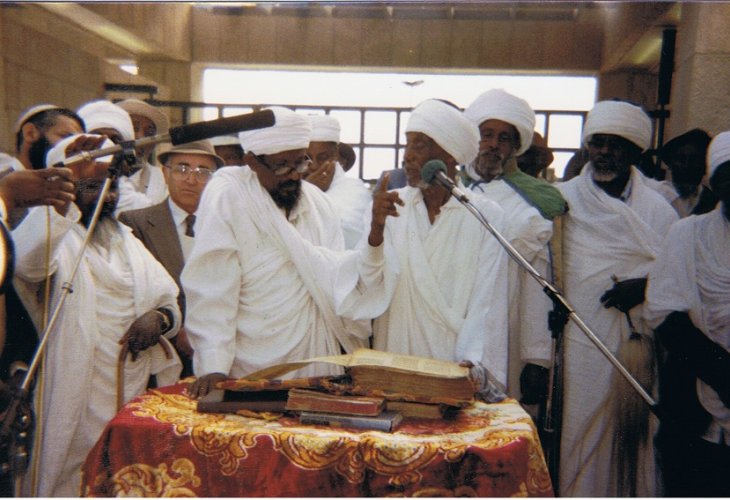 The 'kessim' (priests) dressed in white.
 For nearly two thousand years, the Beta Israel community lived in Ethiopia as an isolated and independent Jewish community. Its members preserved their Jewish identity with remarkable devotion and carried in their hearts a powerful longing for the Holy Land.
“Ethiopia is a vast country,” says Shay Yaso, a member of the community. “It has more than one hundred million residents and enormous territory. Among them lived several thousand Jews in small, close-knit communities, mainly in northern Ethiopia, in the Tigray region, including the Wolkait area and the Amhara region around Gondar.”
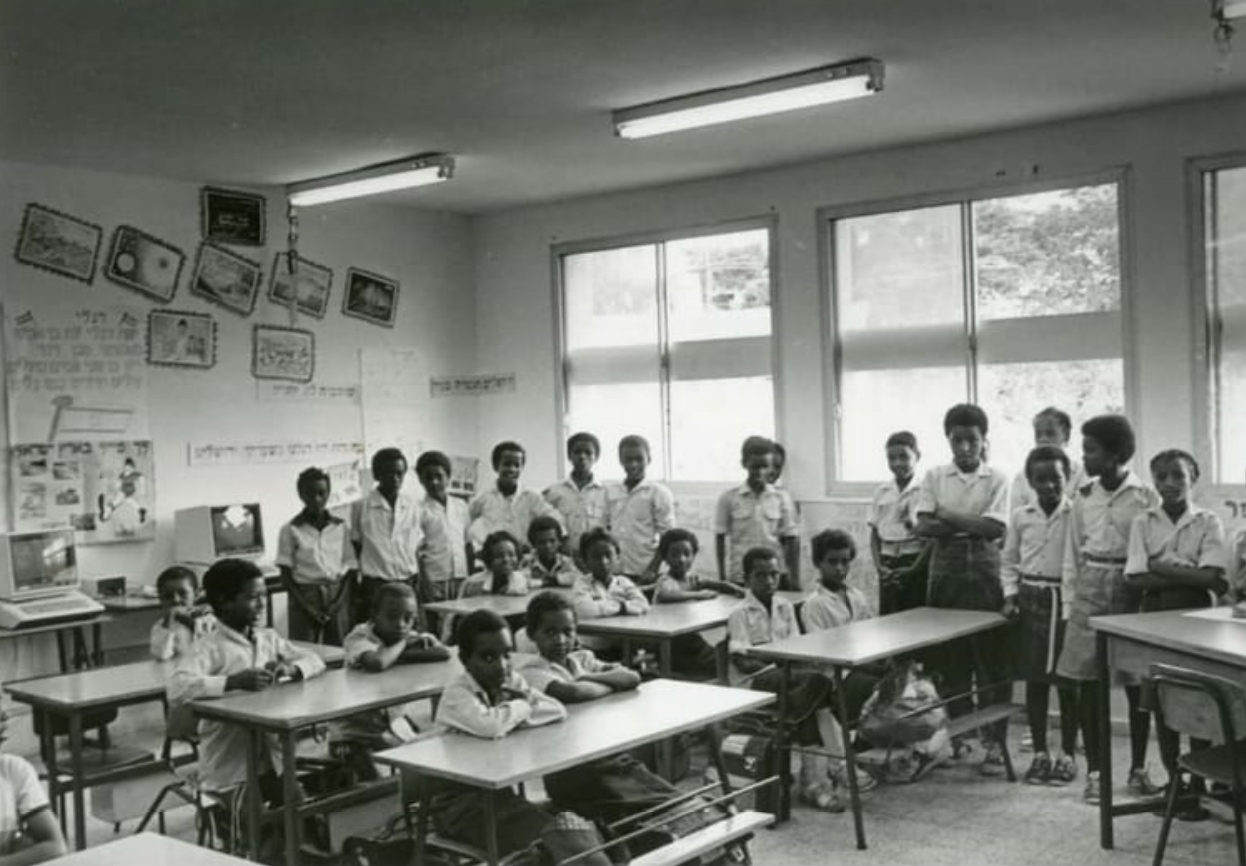 At the Atlit absorption center, Beit Yosef School. Shai Yasso is third from the left among the standing children.
What are your childhood memories from your village as a five- or six-year-old?
“First of all, a six-year-old was not considered a small child. I was already seen as responsible. I had an important role: herding the family’s sheep. Every morning I left and returned only at night, fully responsible for the flock. By age thirteen, boys in Beta Israel were often already married. That stemmed partly from concern for protecting Jewish girls, but also from a different approach to raising children.
“I have many sweet memories from those years. Even though more than forty years have passed, I vividly remember Fridays and Shabbat. From Thursday, everyone prepared. By midday Friday, everything was ready. No one worked. The village became completely still. We wore white clothing and the adults went to synagogue.
“I also remember Sukkot. Everyone gathered at the synagogue, where there was a large sukkah. The kess would recite Kiddush over bread, everyone answered Amen, and we sat and ate together. The women prepared special bread for the occasion. Afterwards, families returned home to continue celebrating.”
Judaism in the Heart of Ethiopia
Did the Beta Israel community live fully Jewish lives?
“Yes. We had spiritual leaders known askessim, the traditional rabbinic leaders of the Beta Israel community, who guided every aspect of religious life. My grandfather, Kess Yitzchak Yaso, was one of the great leaders of the Tigray and Wolkait regions. He traveled from place to place teaching Torah, guiding the people, resolving conflicts, and strengthening hope for aliyah to Israel.
“Usually, the role passed from father to son, but my grandfather became a kess because of his exceptional Torah knowledge, even though his father was not a kess. He knew how to read and teach Torah and instructed many others. The kessim were knowledgeable in halachah as it was understood at the time. They also possessed handwritten Torah scrolls called the Orit, which guided the community.”
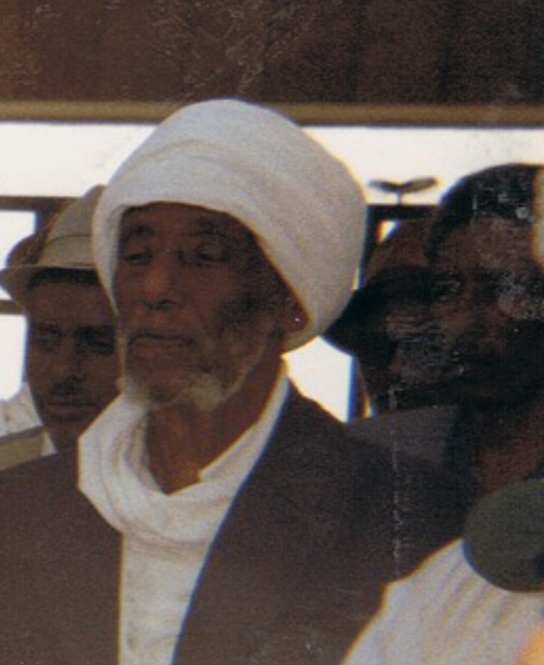 Shay's grandfather, Kess Yitzchak Yaso z"l
What Torah knowledge did Ethiopian Jews have? Did later halachic works reach Ethiopia?
“Unfortunately not. The community was completely cut off from the rest of the Jewish world for nearly two thousand years. One major theory suggests Ethiopian Jews arrived there about 130 years before the destruction of the Temple, fleeing internal conflict. They believed they were the only Jews left in the world.
“As a result, they held only the Written Torah and clung to it with deep devotion. Their prayers and daily speech were filled with the Ten Commandments. They married only among themselves and felt a strong responsibility to preserve the Jewish people. The Oral Torah did not reach them, so their religious life resembled Temple-era practice. They observed purity laws, gave tithes to the kessim, and even practiced a form of remembrance of the Passover sacrifice.”
But they couldn’t truly bring the Pesach sacrifice without a Temple.
“That’s true. It was more symbolic. They did not know the Temple had been destroyed. As children, we believed the Temple still stood in Jerusalem and that we would soon go there to serve. That’s what we grew up hearing.
“Our parents’ conversations were filled with the word Yerusalem. ‘Soon we will go to Yerusalem.’ ‘Tomorrow we will go to Yerusalem.’ And when tomorrow came and nothing happened, the longing only grew stronger. ‘Today we didn’t merit it, but tomorrow we will.’
“If my parents bought candy, they would say, ‘This is nothing compared to the sweetness of Yerusalem.’ When I walked with the sheep, I imagined Jerusalem made of gold and precious stones. If a child misbehaved, they would say, ‘With behavior like that, you won’t reach Yerusalem,’ and that alone was enough to bring tears. When we saw storks flying overhead, we would call out, ‘Stork, stork, have you brought news from Yerusalem?’ Everything revolved around Jerusalem.”
Did you suffer antisemitism in Ethiopia?
“Surprisingly, no. In our region there was mutual respect. Our non-Jewish neighbors believed their blessing came from Jewish prayers. After we left, the region declined economically, and they said openly, ‘After you leave, there will be no blessing.’ They didn’t want us to go.
“We lacked nothing materially. We were a well-established family, even wealthy. We owned land and livestock and lived comfortably. Socially and emotionally, we were secure. Yet despite everything, the longing for Jerusalem filled the air. We knew our true home was there. Not because of hardship, but because of a deep spiritual pull.”
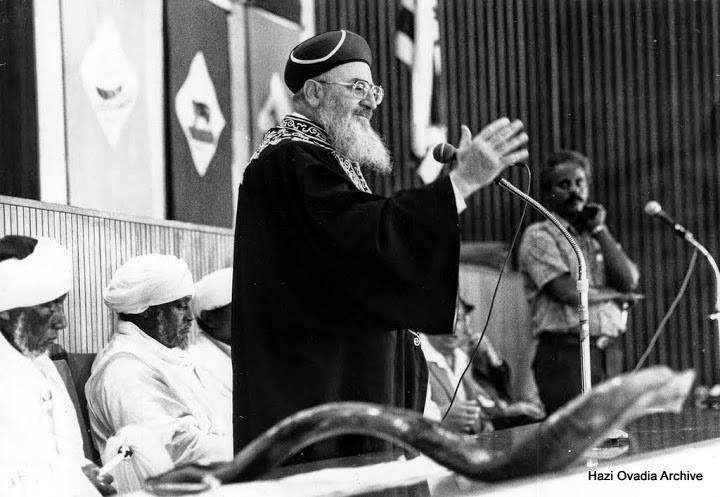 Rabbi Mordechai Eliyahu with the kessim, including Kess Yitzhak z"l
Setting Out for Yerusalem
In 1980, after generations of longing, Jerusalem suddenly felt within reach, and the community decided to act.
What led you to finally rise and fulfill the dream?
“My grandfather Kassahun Almayo, together with Kess Avraham Tizazu and Asa Elezar, gathered the community and said the time had come. My other grandfather, Kess Yitzchak, had already made it to Israel. We heard that Jews were escaping through Sudan and succeeding. That gave us hope.
“At the same time, Ethiopia was unstable. War broke out between the regime and rebels, and Jews were caught in the middle. The unrest pushed the decision forward. But it wasn’t a surprise. We had always known that one day we would rise and go to Zion.”
Did the authorities allow you to leave?
“Yes. My grandfather courageously approached the rebel officer in charge of our region and told him we were Jews and needed to return home. After months of negotiations and gifts, permission was granted. On Thursday we received approval. On Sunday we began the journey. We took only essentials and left everything else behind. The officer told my grandfather, ‘When you reach Jerusalem, pray for us.’”
Families departed under cover of night. Shay recalls walking endlessly beside his parents, his mother carrying younger children, his father carrying bundles, and the older children walking tirelessly. They traveled only at night to avoid detection and the desert heat. The journey lasted nearly two months and was filled with hunger, danger, betrayal, and loss. Some guides led them into the hands of thieves. People died along the way. Yet Shay recalls that as children, they felt only excitement. They were walking toward Yerusalem.
Life in Sudan
They eventually reached Sudan, expecting to meet Mossad agents and fly onward. Instead, they found massive refugee camps filled with Ethiopian refugees. They settled in the Tawa camp, hiding their Jewish identity for three years.
How did you manage to hide your Judaism for so long?
“It was extremely difficult. Once, a neighbor asked my sister for fire on Shabbat. Terrified of being exposed, she lit a flame and gave it to her, then cried bitterly when our parents returned. They told her to fast one day and Hashem would forgive her. They didn’t know the halachic concept of pikuach nefesh, but they understood instinctively she had done the right thing.
“My parents rarely left the house. We children went out to work. We learned Arabic quickly and adopted Muslim names. Once, a wealthy sheikh gave me meat. I didn’t want to eat non-kosher, but I couldn’t expose myself. I thanked him, waited until he wasn’t watching, and threw it away.”
How could such young children support their families?
“We worked. I carried bags for shoppers. My brother collected fares on transport trucks. Groups of Jewish children aged six, seven, eight looked out for one another. Sometimes we had no food and waited by cafés for leftovers. Sometimes we slept under railway tracks when we couldn’t afford transport. One friend died of malaria.
“I once narrowly escaped abduction when a man locked me inside his house. By Hashem’s mercy, I noticed a back door and escaped. The trauma stayed with me, but I kept working because my family depended on me.”
After three brutal years, their family was finally brought out through Mossad-organized routes via Khartoum, flown to France, and then to Israel. Shay speaks with deep gratitude for the Jewish solidarity that saved them.
The Peak of the Dream
“The most emotional moment was stepping onto the soil of Israel. We kissed the ground. The joy was indescribable.”
Were you disappointed when you saw that life in Israel was not the golden Jerusalem you imagined?
“We realized reality was different, but the joy outweighed any disappointment. There was Torah. There were Jews. That was everything. At age nine, I could finally sit and learn the Hebrew alphabet and Torah.
“The most moving moment was watching my grandfather, Kess Yitzchak, humble himself and study the Oral Torah. He said, ‘I came here to learn from you.’ Later, he donated our ancient Orit scroll to the National Library of Israel. We celebrated it like a Hachnasat Sefer Torah. We felt we had reached the peak of our dreams.”
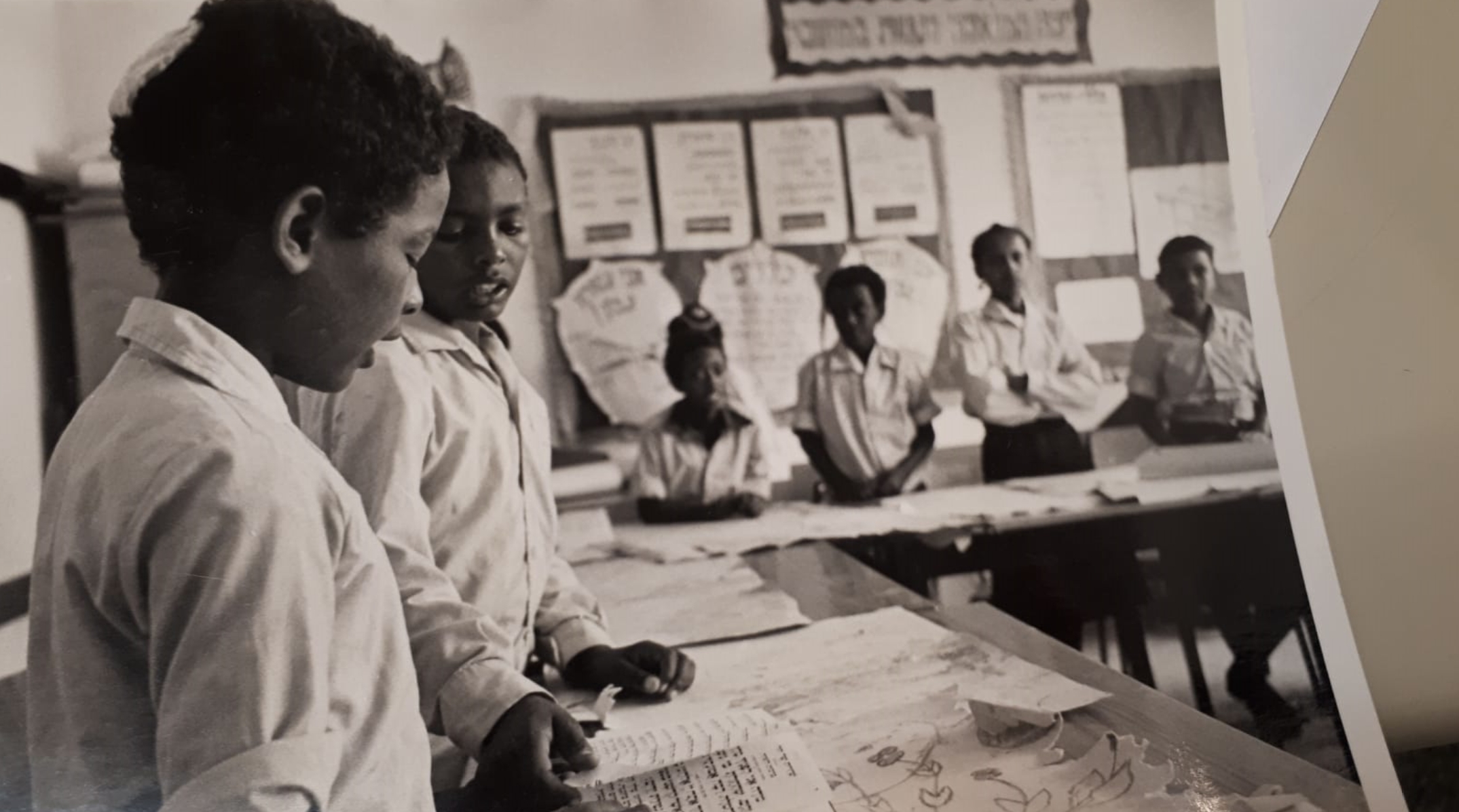 Yasso (first on the left), age 9, in Israel
Preserving the Legacy
Over the years, Shay Yaso has dedicated himself to preserving the heritage of Ethiopian Jewry and has written five books on the subject. His latest book,Yaso, written for young readers, shares his story of aliyah with warmth and authenticity.
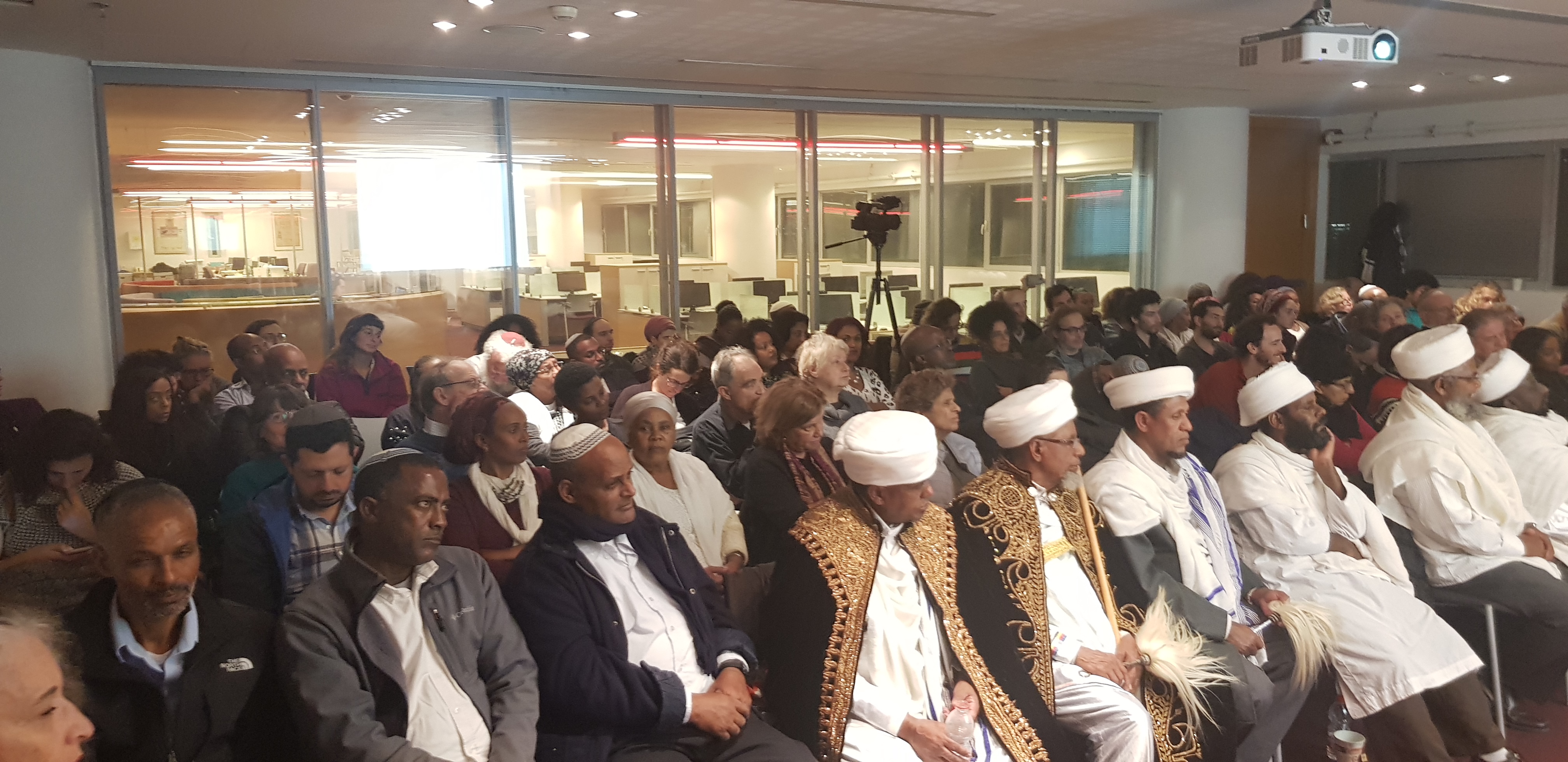 After Kess Yitzhak’s passing, at the 2016 Torah scroll donation ceremony, National Library of Jerusalem.
“It’s important that people know us directly,” he says. “When you know, you can respect and love. Every community brings something unique. Together, we form the mosaic of Am Yisrael. There is room for everyone, and a good name rises above all.”

