

Magazine
Unveiling the Mysteries of King David's Tomb
Who discovered King David’s Tomb? What supports its authenticity, and why is the site so fiercely contested? Rabbi Idan Grossman and Rabbi Yaakov Sevilia share rare insights and declare: “We must do everything to keep the tomb in our hands.”
- Erez Navon
- | Updated
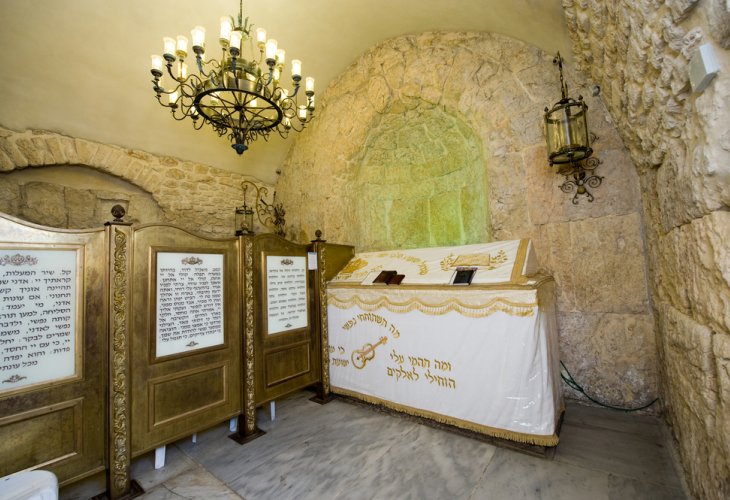 Tomb of King David (Photo: Shutterstock)
Shavuot, the festival of the giving of the Torah, is known as both the birth and death anniversary of King David, one of the most significant, fascinating, and revered figures in Jewish history. Yet many aspects of his life remain unknown and shrouded in mystery.
“Most people don’t realize that until 1967, King David’s Tomb was the symbol of Jewish heritage,” says Rabbi Idan Grossman, Chairman of the King David Heritage Association. “All the national ceremonies now held at the Western Wall once took place in the grove near the Tomb. Pilgrims gathered there and observed Shabbat. After the Western Wall came into our hands, the focus shifted and King David’s Tomb was forgotten and neglected. Only in recent years has the Tomb and its surroundings begun to be renovated. Sadly, today it serves mainly thousands of Christian pilgrims who visit daily, as the site is also a major attraction for them.”
 (Photo: King David Heritage Association)
Many Testimonies, One Tomb
Over the years, many intriguing and emotional testimonies have been collected about King David’s Tomb. In 1854, an Italian archaeologist named Emmarito Pierotti was appointed by the Ottoman government as Jerusalem’s city engineer. Entrusted by the authorities, he accessed even the most hidden areas of the city, where not even Muslims ventured. During his exploration, Pierotti discovered carved rock steps in the David’s Tomb complex leading to an enormous underground cave bearing clear signs of human craftsmanship.
Within the cave, openings appeared to lead to additional chambers beneath the monument known today as “King David’s Tomb.” After studying the site, Pierotti concluded that it was the burial place of the Kings of the House of David. He published his findings in his book Exploring Jerusalem, noting evidence of ancient Jewish construction: “I am convinced that beneath the room containing the sarcophagus (current ‘David’s Tomb’), or to its north, there is an entrance to the actual burial site. After descending through a very steep dirt slope, I found a series of steps leading to a great burial cave extending under a significant portion of the cemetery above.”
Another remarkable account comes from American researcher James Turner Barclay. Through his friendship with the sheikh responsible for the tomb complex, Barclay and his daughter were permitted to enter the underground chamber. They described a large monument in the center of the lower room, which Muslims said was built for “Nabi David,” the Muslim name for David. At the far end stood a tall curtain beside high candlesticks, where candles burned in his honor. Behind the curtain lay a continuation so sacred that even senior sheikhs dared not enter. Barclay’s daughter, a gifted artist, later documented the chamber in a striking painting that offers a rare glimpse into the hidden world beneath.
In Judaism, however, we rely on the testimony of our great scholars. Rabbi Yehoshua Leib Diskin, the Maharil, stated: “All sacred places accepted from generation to generation are authentic in themselves and require no further proof, especially when vouched for by the greats such as the Ramban, the Ari, and Maharim Haggiz. One who stubbornly refuses to accept the sanctity revealed by our giants includes himself among fools, wicked, and coarse.”
A striking and unsettling testimony comes from two Jewish painters who, around 120 years ago, reported their experience to the Maharil Diskin and the Maggid from Vilkomir. Employed by Muslims under the Sultan’s orders, they worked on renovations in the hall beneath the tomb. On a holiday, when they were left alone, they ventured beyond the curtain blocking entry to the inner rooms, areas avoided even by Muslims because previous explorers had died upon entering. Inside, they discovered halls marked “Tombs of the House of David,” passed through a long corridor lined with gold and silver pillars, and reached King David’s chamber and, opposite it, the chamber of King Solomon. They also saw a Torah scroll resting on the grave of King Hezekiah, consistent with the description in the Talmud in Bava Kamma 16. They safely reported what they had seen, though they refrained from publicizing it at the time out of fear for their lives.
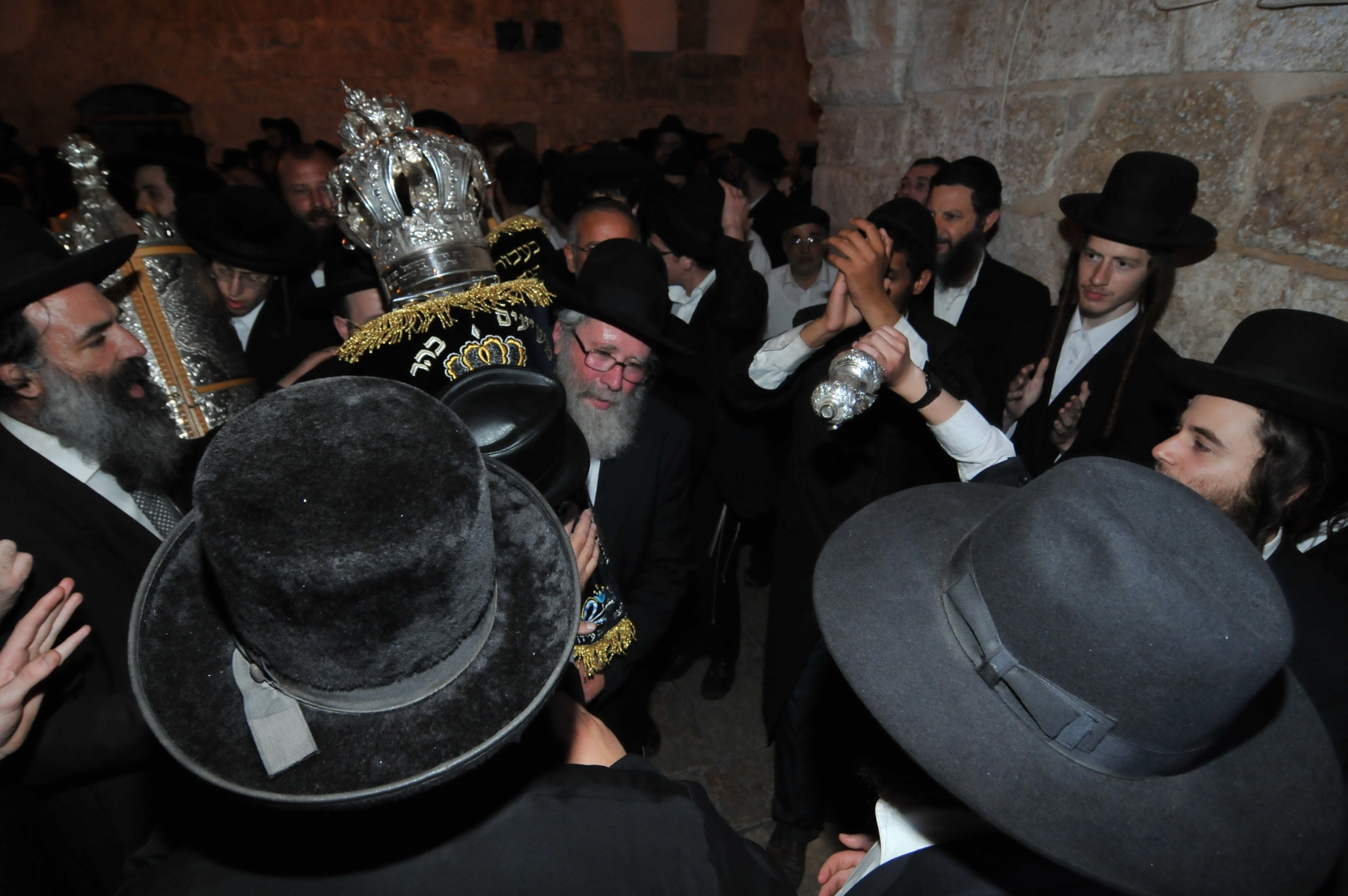 Celebrating a New Torah Scroll, the Grossman Family (Photo: King David Heritage Association)
The Ari, who moved from Egypt to Safed in 1570, stood outside the wall built by Suleiman 32 years earlier near Zion Gate and identified the southwest hill as the burial place of the Kings of the House of David. Maharim Haggiz carefully described how the Ari stood very near “David’s Tomb” on Mount Zion and recorded this in his book Eleh Massei.
Rabbi Yosef Chaim, the Ben Ish Chai, visited in 1869 but was barred by Muslims from entering the tomb. He composed an earnest prayer, “Rise up David King Messiah,” writing: “Now see your house, David, strangers stand within it. See how we are expelled today from partaking in Hashem’s portion, as though we are considered foreigners…”
The Miron of Jerusalem
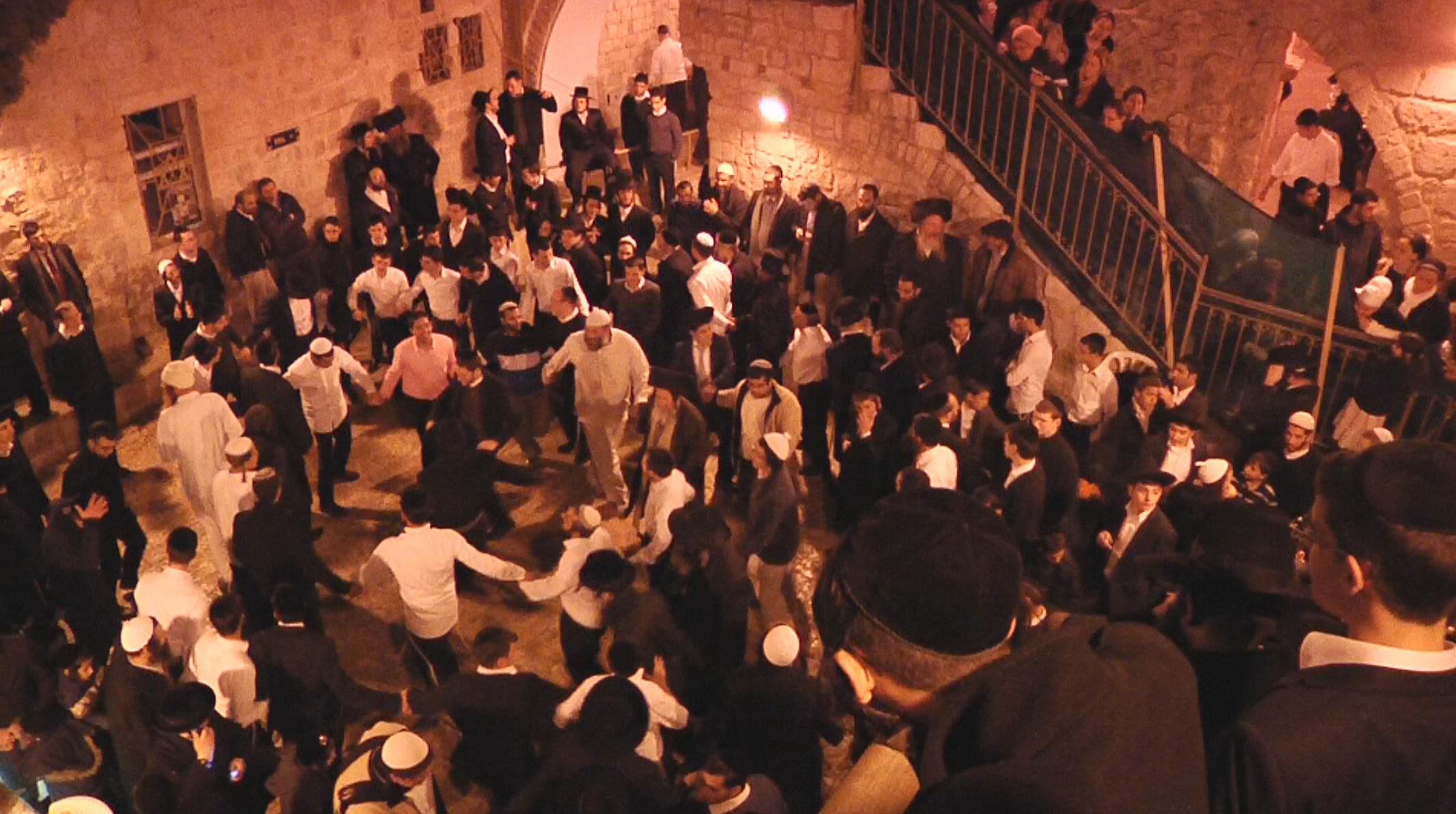
A growing tradition at King David’s Tomb is the large Melave Malka meal held every Saturday night with an orchestra, led by Rabbi Idan Grossman and his wife.
It is fitting that the Melave Malka is held here, given David’s unique connection to this meal, beyond his authorship of Tehillim.
Rabbi Grossman explains: “David asked Hashem to know the day of his death, and Hashem revealed it would be Shabbat. Therefore, every Saturday night David held a thanksgiving meal, grateful for having been granted another week of life. Since Mount Zion was David’s residence, we hold our weekly Melave Malka at the same time and place where he did.”
He adds, “The initiative began through our dear friend Abraham Kudri, who was close to Rabbi Avraham Fish, known for astonishing acts of salvation, and who ran the meal in Tel Aviv. About ten years ago, we restarted it modestly in a private home, then moved to our association’s office, and eventually to Mount Zion. At first the site closed at 7 PM, it was dark, and we lit our way with candles. We were about 15 people, but the joy was overwhelming. Within a month, nearly 100 people were attending. Today, the meal is held at the plaza beside the tomb with several hundred participants, two bands, dancing, and celebration. People come from afar and tell me, ‘You don’t realize how empowering it is to be here after Shabbat. It gives us strength for the entire week.’ That is our joy. It takes tremendous effort to bring everything each week, but knowing people are waiting leaves no room for delay.”
Rabbi Grossman adds, “The atmosphere is one of volunteering and mutual care. Musicians donate their talent to uplift spirits, and we see this as a holy privilege. This gathering reconnects Jews to Mount Zion, once forgotten, and strengthens the hope that it will not fall into Christian hands. It is essential that Jews visit throughout the week, reciting the Tehillim authored by King David a’h, at the place most fitting for his praise.”
Why do Christians, in your view, want Mount Zion?
“There are two strategically critical sites in the world: Temple Mount for Islam and Mount Zion for Christians. Christians claim this is where the ‘Last Supper’ took place, but the Upper Room was constructed only 700 years ago. Their strategy is to claim sites by saying ‘he ate here,’ ‘he slept here,’ and similar fabrications. David’s Tomb is Christianity’s second most important site after the Church of the Holy Sepulchre, which is why the Vatican sends between 500 and 1,000 pilgrims daily. Due to COVID-19, there are currently no visits, but under normal circumstances the situation is shameful.”
Rabbi Grossman’s wife expresses deep concern: “Last year on Shavuot, around 60,000 Jews visited, and it was deeply moving,” she recalls. “Ten years ago there were only about 500 visitors. This year, sadly, I fear the site will be desolate due to COVID-19. We have received no clear answers from the authorities.”
Not in Silwan
In the Jewish Quarter, Rabbi Yaakov Sevilia, Chairman of the Board of David’s Custodians, is closely identified with King David’s Tomb. He authored the compelling book The Secret of King David’s Tomb, which explores the site’s deeper mysteries. He agreed to expand further on the subject.
What led you to dedicate most of your time to preserving and nurturing King David’s Tomb?
“Years ago, I traveled to Nahariya to seek a blessing and counsel from Rabbi David Abu Hatzeira. He looked at me and said clearly, ‘Your mission in this lifetime is Mount Zion.’ I was stunned. What connection did I have to Mount Zion? It contains King David’s Tomb, and I live in the Jewish Quarter, but how could this be my life’s purpose? Over time, it became clear that Hashem was guiding events, drawing me deeper into this complex and sensitive subject, confirming that this truly is my mission.”
Rabbi Sevilia stresses the site’s authenticity. “Unlike other graves such as the Cave of the Patriarchs or Rachel’s Tomb, which are undisputed, King David’s Tomb remained in obscurity for many years. Skeptics question its location and suggest it lies elsewhere. The discovery of what archaeologists call ‘David’s City’ near the Arab village of Silwan, south of Temple Mount, challenges the belief that David’s Tomb rests on Mount Zion, since the verse states that the Kings of David were buried in their city. Yet closer examination raises serious questions about whether the site identified today as ‘David’s City’ truly corresponds to the original city of King David.”
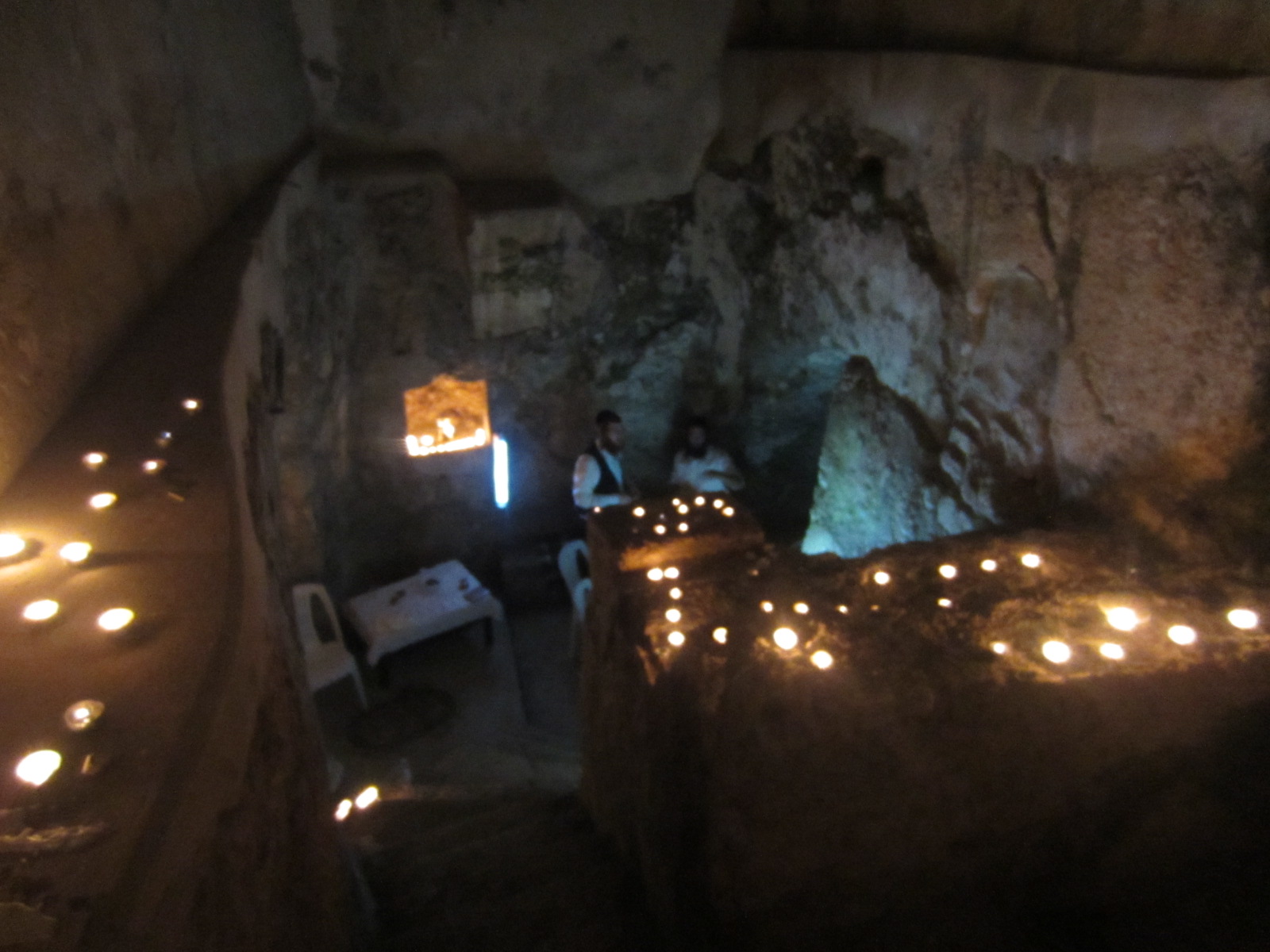 The ancient mikveh (Photo: King David Heritage Association)
He adds, “The claim that David’s City was located south of Temple Mount on the Ophel ridge, significantly lower than Mount Zion by about 80 meters, is a relatively recent theory, developed within the last 150 years by British Christian archaeologists. This contradicts all traditional sources, from the Bible through the Tannaim and the great sages from the Rishonim to modern authorities, who affirm that the City of David extended from King David’s Tomb to the Tower of David near Jaffa Gate, the highest point of the ancient city and a natural defensive stronghold.”
Rabbi Sevilia notes that Mount Zion is not only King David’s resting place. “Seven kings lie here: David, Solomon, Hezekiah, Jehoshaphat, Jotham, Asa, Josiah, and the High Priest Jehoiada. Possibly their wives are buried here as well.”
Why do you think Christians do not want Jews there?
“They seek to erase Jewish presence and promote the idea that David’s City lies near Silwan. They prefer that we search there, even though David truly rests here on Mount Zion. Over time, Christians pushed Jews away from the authentic tomb, and censorship weakened our connection to this place.”
Rabbi Sevilia adds, “Years ago, the ‘House of the Mighty’ of David mentioned in the Book of Nehemiah was discovered in a nearby building, featuring a finely chiseled Star of David. Crowds gathered, but under Christian influence it was destroyed.”
He pauses before continuing. “A global battle is taking place over this site. In recent years, the Vatican instructed pilgrims to come specifically to the chamber they call the ‘Last Supper’ as part of their struggle for control. Their intention is to displace Jews. Each year they conduct idol-worship ceremonies with foreign incense and call them ‘prayers,’ directly above praying Jews below. They aim to take over the room above and convert it into a church for daily worship. Our protests have so far delayed their plans.”
Whose was this site historically?
“Until 1948, the Dajani family owned significant portions of Jerusalem and controlled King David’s site for over 400 years. During the War of Independence, as they departed, they sealed all underground openings. In 2013, archaeologists opened a small ground-level entrance to the right of the monument, uncovering stairs descending to the hall beneath the tomb, which had been blocked with stones and sandbags. After renovations, it was resealed.”
What truly lies beneath?
“A vast subterranean world. The courtyard beside the tomb contains steps descending downward, suggesting an ancient ritual bath from the Temple period, with the characteristic double stairway, one for descending in impurity and one for ascending in purity. Pilgrims used the area as a synagogue. Over the years, prayer and Torah study took place here, but the Greek Church later claimed the site as a chapel, distancing it from its Jewish roots.”
“A dramatic event occurred seven years ago, just days after a mass Friday gathering in the grove attended by all the rabbis and residents of the Quarter. A sinkhole nearly six meters deep opened overnight near the basketball court. Rabbi Usher Friend had long said while praying there that ‘David lies directly beneath,’ and his words proved true.”
“Within days, the Greek Church filled the opening with dirt and dismissed the incident as fabricated.”
In conclusion, both Rabbi Sevilia and Rabbi Grossman, together with his wife, emphasize that continued Jewish presence is essential to safeguarding this sacred site. “We welcome visitors every day, especially for the central Melave Malka. Tours and celebratory first haircuts also take place here. Prayer on Mount Zion holds great spiritual power for every salvation, for children, livelihood, and countless blessings, particularly while reciting Tehillim whenever possible.”

