

Magazine
The End of an Era: A Legendary Mohel's Final Act
At 89, after performing thousands of circumcisions, the legendary mohel Rabbi Emmanuel Meshulam passed away during a bris. Now his student shares the full story, describing the unforgettable moment in which birth, a bris, and farewell became deeply intertwined.
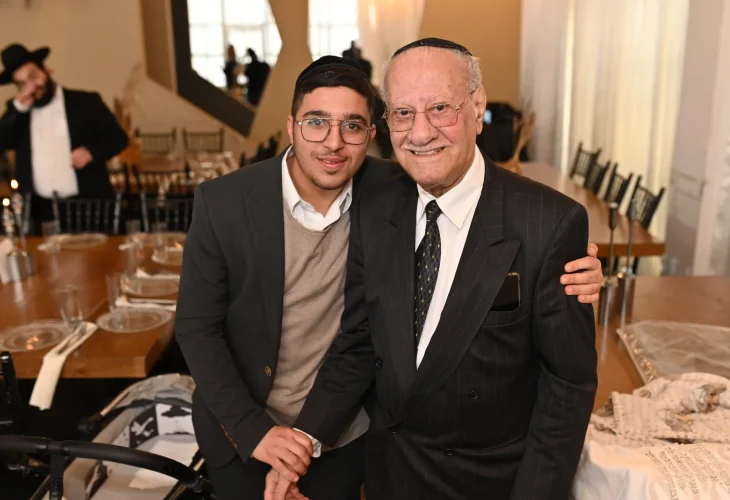 Yair Saado with Rabbi Emmanuel Meshulam
For five years, Yair Saado has accompanied the veteran mohel, Rabbi Emmanuel Meshulam, on his way to bris milah ceremonies, learning from his methods and receiving training. Yet he never imagined that the day he would receive his certification as a mohel would also be the day he would say goodbye to his mentor.
"Rabbi Emmanuel certified hundreds of mohels across the country, and I was his last student, receiving my certification on the day he passed," he shares. "But he wasn't just my rabbi; he was truly a role model for me since I was fifteen. Growing up in Rehovot, I always admired his legendary figure and felt privileged to be near such a special person."
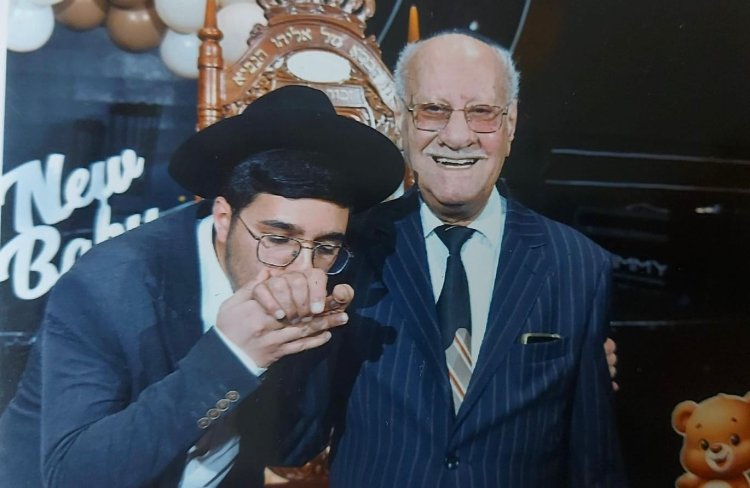 Yair Saado with Rabbi Emmanuel Meshulam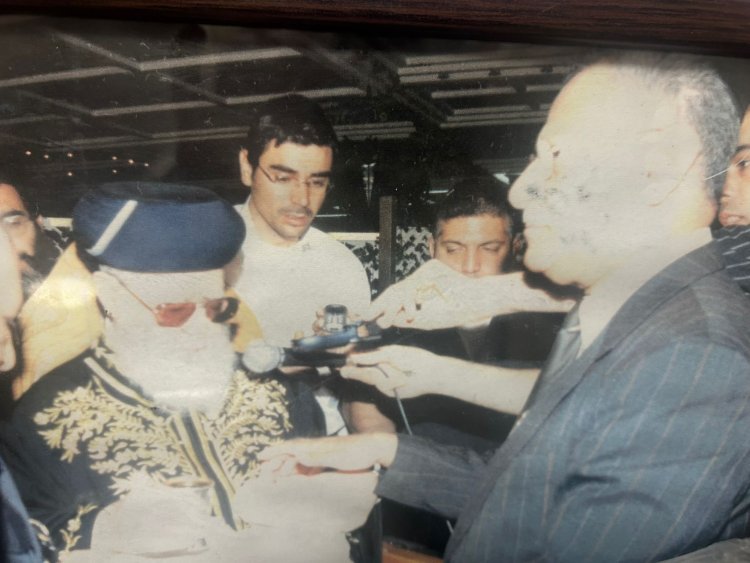
"Never Took a Penny"
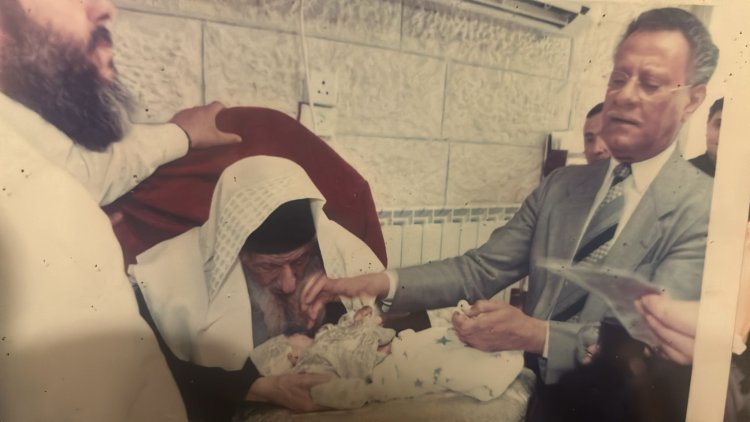
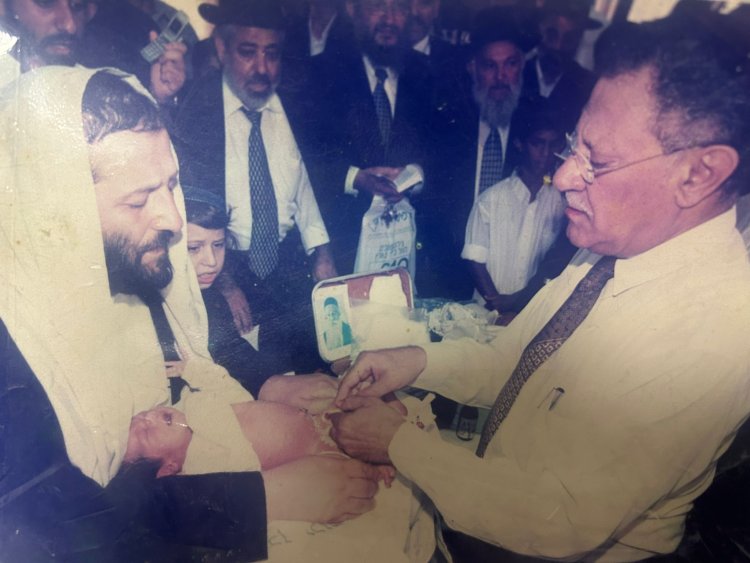
Saado notes that Rabbi Emmanuel, the oldest mohel in Rehovot, had a custom of inviting young boys interested in bris ceremonies to accompany him. "There was hardly a day he didn't attend a bris, and some days he performed seven or eight," Saado recounts. "I personally grew interested at fifteen because it fascinated me. Rabbi Emmanuel would pick me up in his car to join him in this mitzvah. Later, he gathered even younger boys, sometimes they didn’t even reach the venue, just assisted him on the way. He made them feel like they were doing the most important work in the world.
"In recent years, I asked him to certify me as a mohel, and indeed, I completed the necessary studies, while getting to closely know his wondrous character." Saado pauses to emphasize knowingly: "Rabbi Emmanuel never took payment for the circumcisions he performed, not even symbolically. He circumcised thousands of babies for no compensation, saying, 'I will receive the reward in the World to Come.' Incidentally, I don't recall instances where he refused a bris invitation, sometimes traveling across the country performing multiple ceremonies back to back.
"He also traveled abroad, flying to countries dozens of times under challenging conditions, just to ensure another bris was done. He accepted compensation only for flights and accommodations, never for his work. The most amazing thing was seeing his joy after each event, and even at 89, he never stopped thanking for the privilege of performing the mitzvah."
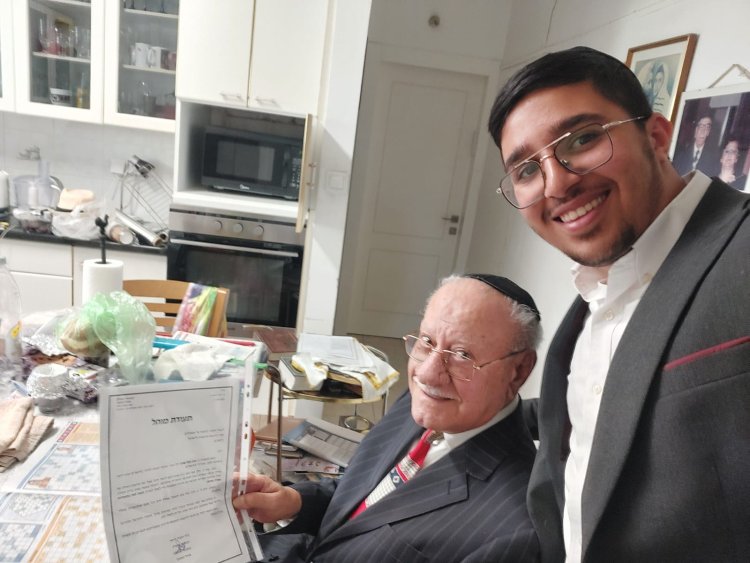
A Farewell Bris
Saado mentions that after extensive studies, he reached the final stage, requiring only the practical exam for certification. "I asked Rabbi Emmanuel when I could take the test, and he replied, 'Soon.' A few days later, on a Sunday morning, he called and said, 'Be at my place at 9:30.' Of course, I was there on time. I must say, for Rabbi Emmanuel, 'time is time.' He was never late for minyan or a bris, and if he scheduled a meeting with me and I was a few minutes late, I'd see his car driving away.
"This time, we were headed to perform the mitzvah at a family living on the fifth floor of a building without an elevator. At 89, Rabbi Emmanuel started climbing floor by floor, with devotion and no complaints. Upon entering, he asked the father, 'Bring a tallis,' and when the father didn't have one, Rabbi Emmanuel took his own, and appointed himself as the sandak while I was the mohel. The father agreed, and I performed my first circumcision.
"After the event, we left, with Rabbi Emmanuel brimming with joy and complimenting my work. Three days later, on Wednesday, the 23rd of Iyar, he called me to collect my certification. It didn't cross my mind that this would be our last meeting. I went to him, and he handed me the certificate, asking, 'Print it quickly to have another copy.' He then signed it, and at 2:30 PM, we headed to another bris.
"Before we left, Rabbi Emmanuel kissed the mezuzah and recited the verse, 'And Jacob went on his way...' During all the years I knew Rabbi Emmanuel, he never left for a bris without his wife's blessings. This time she said nothing, and when I later spoke to her during shiva, she confirmed it, mentioning she didn't know why.
"On our way to the bris, Rabbi Emmanuel reiterated various rulings, preparing me for my future in the field. We arrived to discover it was a ceremony celebrating the birth of twins, a boy and a girl. Rabbi Emmanuel prepared the circumcision tools and as he announced, 'This is Elijah's chair...' he collapsed. There was, of course, great commotion, especially when the paramedic who treated him turned out to be his grandson, unaware he was tending to his grandfather. He transported him to the hospital while I was left in the venue, next to the circumcision tools, realizing it would be the second baby I would circumcise in my life. For a moment, I pondered whether to perform the bris or halt the event, but then I understood it was unthinkable to postpone an eighth-day bris, especially since I didn’t realize Rabbi's condition was so grave.
"I performed my duty, dedicating it in my heart to Rabbi Emmanuel's recovery. I then asked the orchestra to sing and play bris songs to ensure the event continued, maintaining the family's joy. Only after leaving the venue did I hear the heartbreaking news and broke down."
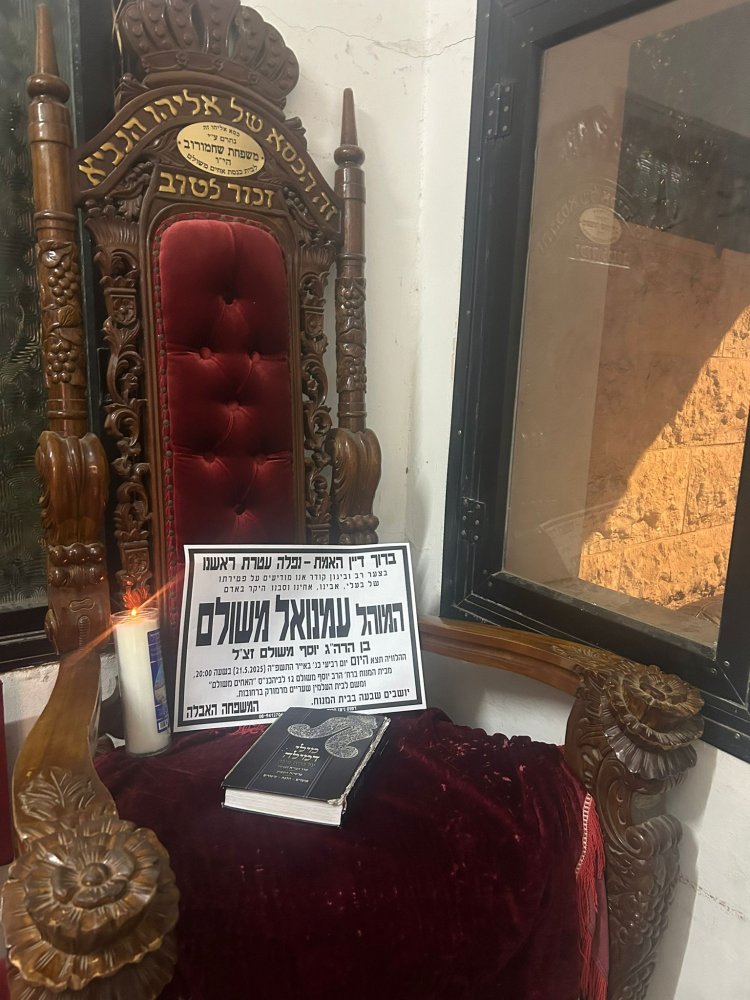 Rabbi Emmanuel Meshulam's memorial
"Life will never be the same," Saado concludes, "but as a mohel seeking and privileged to carry on Rabbi Emmanuel's legacy, there are aspects of his heritage that I will never forget. Like his immense effort to attend every bris, even at the ends of the earth. His remarkable punctuality, his radiant face, and his unique practice of never accepting payment for a bris milah, ever. It's no surprise Rabbi Emmanuel was called 'The Father of Mohels.' I personally know hundreds of his students across the country who are now mourning and genuinely feel they've lost a father."

