

Magazine
When Grief Becomes Purpose: The Legacy of Avia Goldberg
After losing their 19-year-old son Avia in a tragic accident, Israel and Ronit Goldberg chose a different path: turning grief into action. From social initiatives to education, kindness, and remembrance, this is the moving story of a family that transformed pain into purpose.
- Moriah Luz
- | Updated
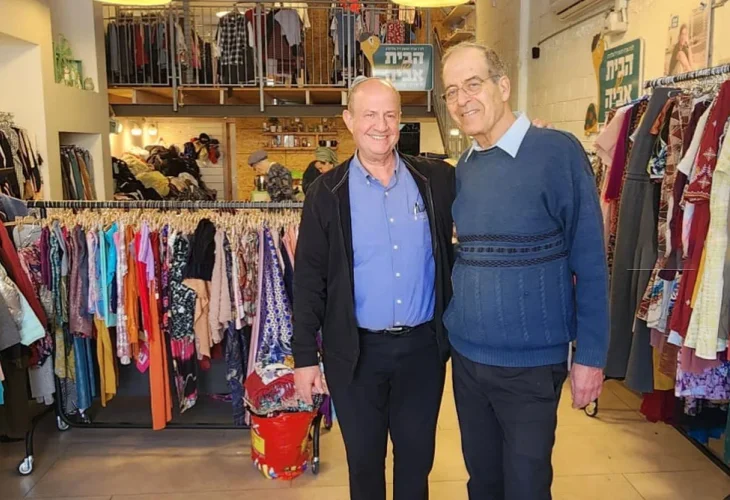 Left: Israel Goldberg at 'Avia's Home', a shop founded in memory of his son.
A Final Act of Kindness
“Avia was on his way to yeshiva and stopped to refuel,” begins Israel Goldberg, the father of Avia, of blessed memory, who was killed in a car accident. “At the gas station, there was a woman whose car had broken down. Avia told the friend who was traveling with him that they were not leaving until they helped her. After they finished and returned to the road, the car struck a deep crack in the asphalt and overturned. His friend emerged unharmed, but Avia was killed instantly.”
“The News Spread by Word of Mouth”
Israel did not receive the news of his son’s death through an official notification. He saw it himself. “We were told that Avia had been injured, and my wife and I rushed to the hospital. When we arrived, we asked where he was and how he was doing, and the medical staff began to hesitate. Only later did we understand that they were waiting for a doctor so they could formally inform us. We could not wait. We went in and saw Avia inside a body bag. We immediately understood.”
“At that moment, I felt the verse from Tehillim in a tangible way: ‘He will not allow your foot to falter.’ I felt my legs give way and knew I had to sit. Sitting there, I turned to Hashem and said: ‘You took Avia. I do not argue. He cannot be brought back, and I accept that this is Your decree. But at least give us, as a family, the strength to continue doing good and to continue Avia’s path.’”
“And from there, we continued living,” Goldberg says quietly. “We did not descend into a dark cave of mourning. There are no cynical jokes in our home. We insist on choosing positivity.”
He explains that they chose to adopt Avia’s defining traits: action, kindness, and boundless generosity. “People who needed advice about buying a car, a washing machine, or a computer would come to him. He would research, compare options, and explain what was best for them. My brother-in-law needed a car, so Avia prepared a detailed chart comparing fuel consumption, engine capacity, and overall value. I do not know how he knew so much. He was simply knowledgeable. People who did not even know him received his phone number through word of mouth and called for advice, and he was always happy to help. He would tell me, ‘Dad, I don’t even know them, but they’re calling, so I give them the information. I won’t tell them no.’”
A Quiet Strength
Israel describes his son with longing. “Avia was quiet, with a shy smile. But alongside that, he was decisive and strong. You would not notice his inner strength at first glance. He did everything quietly, without seeking attention.”
He adds that Avia loved Torah study and was deeply active in matters relating to the settlement of the Land of Israel, investing time, energy, and commitment in the cause.
Reviving the Mount of Olives
From the moment they learned of their son’s death, Israel and Ronit Goldberg decided they would not collapse under grief. They are parents of six children. Avia, who was 19 at the time of his death, was the eldest. They also own an advertising agency serving the religious and Haredi sectors. Shortly after the shiva, they established the Avia Foundation, an umbrella for several initiatives that continue Avia’s path through love of the Land of Israel, education, and acts of kindness.
How did you choose which projects to focus on?
“Growing up, my family was traditional, and over the years I became stronger in observance,” Goldberg explains. “After the army, I began studying in a yeshiva in Jerusalem and became close to Rabbi Tzvi Yehuda Kook, of blessed memory. Much of my lifestyle today is thanks to him. Avia’s name is an acronym for Rabbi Avraham Yitzchak HaCohen Kook, the father of Rabbi Tzvi Yehuda. At first, we planned to bury Avia on Har HaMenuchot, but our second son insisted that the proper place was the Mount of Olives. We were granted that merit, and Avia is buried near the rabbi for whom he was named. After the burial, we were exposed to the neglect of this sacred place, where great figures throughout history are buried, and we decided to raise awareness.”
Goldberg began organizing guided tours on the Mount of Olives. Later, he discovered the Seven Arches Hotel at the top of the mountain. The hotel is government-owned but operated in practice by an Arab company. “We began renting the hotel for Shabbat. Since it is not kosher, this requires serious preparation. We bring high-level kosher catering, all Shabbat necessities, and host guests there.”
Guests include groups of soldiers and their families, whom Goldberg hosts free of charge, bereaved families, wounded IDF soldiers and their relatives, and people from across the country who register to participate.
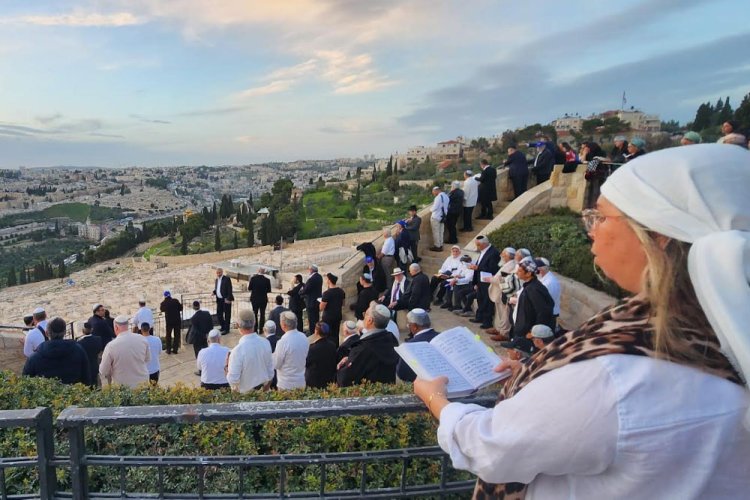 Prayer on the Mount of Olives. On the right: Meirav, mother of Agam Berger, who was released from captivity.
Education Through Experience
Another project established in Avia’s memory focuses on road safety awareness. “We created an experiential complex called ‘Zehav Park,’ with 30 stations that teach safe behavior on the road. We believe that proper conduct on the road is deeply connected to the value of ‘Love your neighbor as yourself.’ The park includes simulators for cars, scooters, electric bikes, and skateboards, virtual reality glasses, an escape room, interactive quizzes, overturned vehicles, and more. Everything is built around the theme of road safety. It is highly experiential, like a theme park, and by the end the message truly sinks in. We believe education must begin at a young age.”
At present, the project operates as a mobile installation that relocates periodically, with plans to establish a permanent location in Lod in the near future.
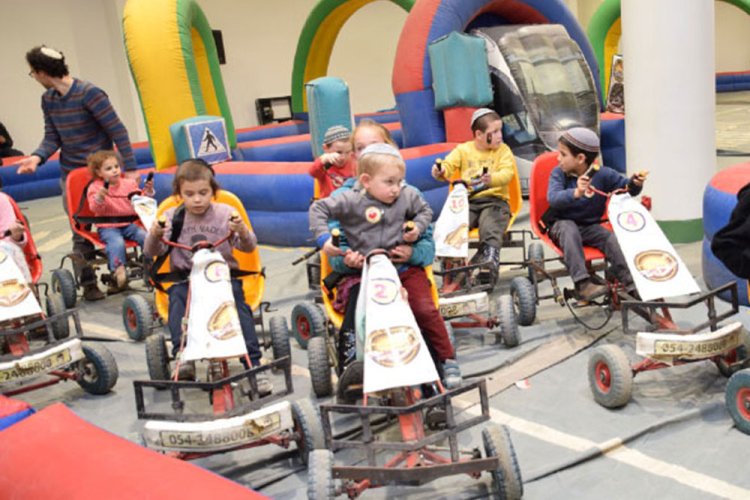 Zehav Park
The House of Avia
“Another place we established in Avia’s memory is ‘The House of Avia,’ a boutique clothing store where a mother of eight can walk in and buy full wardrobes for all her children, for herself and her husband, and pay 140 shekels at the end.”
Goldberg explains that the clothing comes from well-known brands such as Zara, which donate surplus inventory. Private individuals also donate gently used clothing. The store operates primarily through volunteers, alongside teenagers with special needs who volunteer there regularly. Each item costs between three and ten shekels.
“In the House of Avia, everyone gives. The donors give clothing, the volunteers give their time. Even the customers give, because the small amount they pay is used to treat and honor the special-needs volunteers. Several times a year we organize special events just for them.”
You describe moving directly from shiva into action. That is not an obvious response. Where do you draw the strength from?
“When Avia was killed, I felt as though I had taken a backpack onto my shoulders and stepped into action. That action itself gives me strength. I feel that this is how I continue his work in the world.”
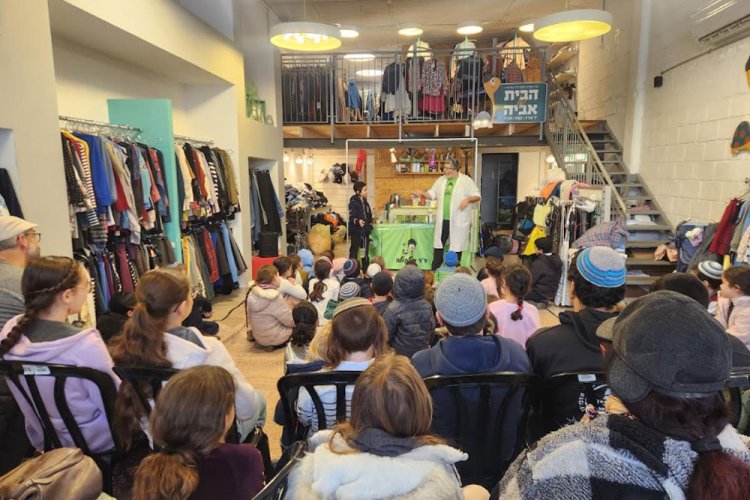 Children’s activities at the House of Avia.
Strength From Family
“My primary strength comes from the family,” Goldberg says. “My wife and children are all involved in the projects. We work together, each contributing in their own way. When we host Shabbat on the Mount of Olives, my youngest daughter designs the table centerpieces and candle-lighting corner. My wife manages logistics and registration. Another son is responsible for serving drinks to guests. Everyone takes part, and I draw tremendous strength from the unity this creates.”
In response to the many families who tragically joined the circle of bereavement during the war, the Goldbergs, together with attorney Yitzhak Miron, established a website called “To Fill the Void.” The site lists the names of fallen soldiers. Each profile includes a description written by the family, highlighting the good deeds the fallen person was known for. Visitors are invited to dedicate a good deed in the merit of the fallen, and the family receives a notification.
“People can take things they are already doing and simply dedicate them in the merit of that soldier. It strengthens the families deeply. They feel encouraged and comforted. In this way, they constantly receive signs of life from their hero, seeing that he continues to live through good deeds and in the hearts of others. It also connects the public to the fallen, who did not die as private individuals but to protect all of us and the Land of Israel.”
He adds, “This is very similar to what we have always done with Avia, but now it is extended to all the heroes. Nearly 900 have fallen. That is a terrible and immense number. We felt this was a way to strengthen the families and ensure meaningful remembrance through action.”
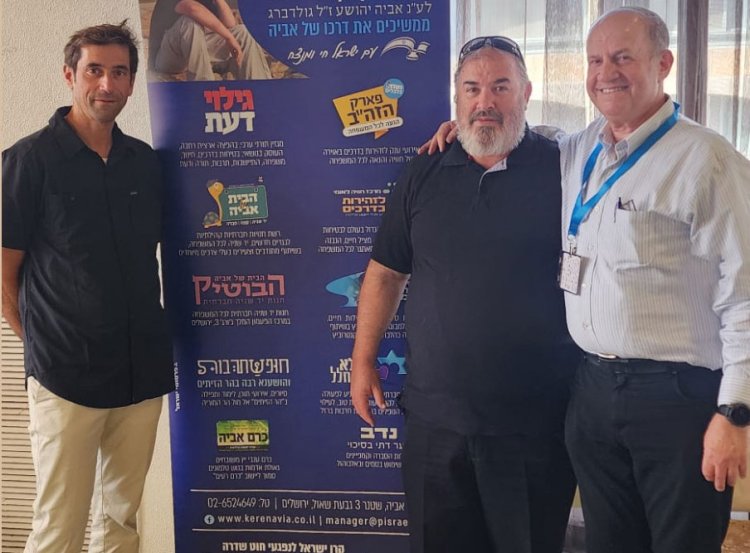 Right: Israel Goldberg
 The Challenges of Bereavement
What are the greatest challenges in coping with loss?
“The central challenge is that the dead must not destroy the living. That the focus on loss must not outweigh our responsibility toward our other children and grandchildren. It is a delicate line between honoring the memory of the deceased and becoming overly consumed by grief.
“Our approach is not to sink into sorrow but to channel pain into joyful, shared action. Even so, there is a risk. A child might think, ‘Everything revolves around Avia, what about me?’ Thank God, our children understand the mission and are active partners, but balance is always essential.
“Another challenge is ensuring that no family member is left behind emotionally. We carry responsibility to ensure that everyone remains standing, alive, developing, and moving forward. I have learned that when the head of the family continues forward with strength, it influences the entire household.”
Choosing Life
Goldberg describes bereaved families he invites to the Mount of Olives who initially refuse to leave their homes. “Some parents tell me, ‘Israel, we do not leave the house.’ They withdraw for long periods.” He speaks of the efforts he invests in convincing them to come and notes that when they do, a transformation often occurs.
“People assume bereavement means isolation. Sometimes there is a natural pull to withdraw, and each person processes grief differently. That is why we must stay alert and look around us to see if someone has become too withdrawn. It can lead to depression and decline, and that is not healthy.”
Additional challenges include the high financial costs of the projects and what he calls “infecting others with the mission,” persuading people that this is not only a private family matter. “The Mount of Olives is not our issue alone. It belongs to everyone.”

