

Magazine
The Last Nazi Hunter: The Ongoing Battle for Justice
For decades, Dr. Ephraim Zuroff has pursued the world’s last remaining Nazi criminals. In this in-depth interview, he reveals the obstacles, the strategies, and the moral urgency behind the ongoing battle for justice.
- David Fried
- | Updated
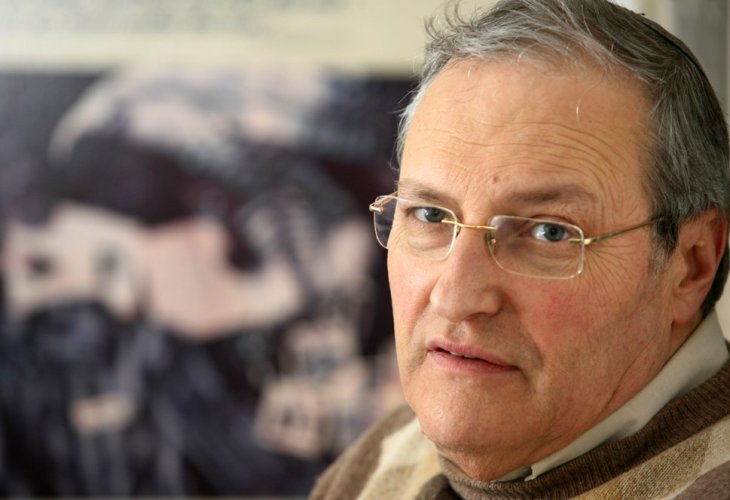 Dr. Ephraim Zuroff (Photo: Yossi Zamir / Flash 90)
Every so often, my inbox receives a notification from the Simon Wiesenthal Center announcing that yet another Nazi criminal has been identified and brought to trial. Behind these ongoing efforts stands a determined group led by Dr. Ephraim Zuroff, widely known as “the last Nazi hunter.” After receiving another annual report on current prosecutions, I decided to contact Zuroff directly to hear the remarkable story of a man who has devoted his life to pursuing justice for the victims of the Holocaust.
Dr. Zuroff, 73, was born and raised in New York City, a setting seemingly far removed from the pursuit of Nazi criminals. Yet as a committed Jew, named after his maternal uncle who was murdered in the Holocaust, he felt a personal obligation to engage in this mission. “I earned a degree in history at Yeshiva University and then moved to Israel to continue my studies at the Hebrew University of Jerusalem. During that period, I developed a deep interest in Holocaust research and completed both a master’s degree and a doctorate at the Institute of Contemporary Jewry,” he explains.
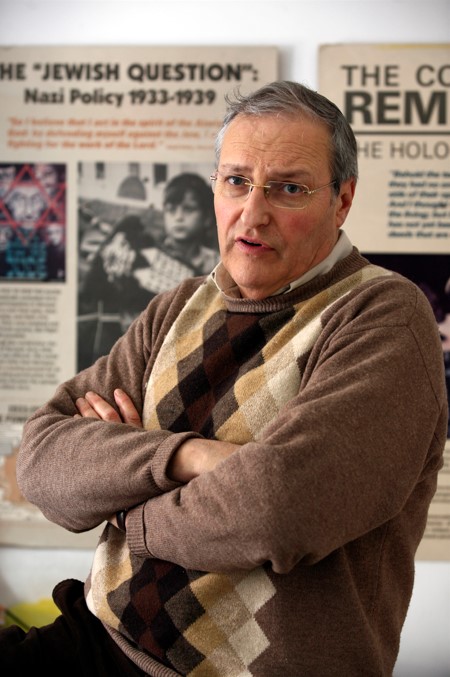 Dr. Ephraim Zuroff (Photo: Yosi Zamir / Flash 90)
After completing his studies, Zuroff returned to the United States. Soon afterward, the Simon Wiesenthal Center in Los Angeles learned of his academic background and offered him the role of its first academic director. He accepted enthusiastically. For several years, he helped build the Center’s library and archives and served as historical consultant for the international Holocaust documentary Genocide, which introduced many Americans to the depth of Jewish suffering during the war. At the time, he did not yet realize that this role would lead him toward a lifelong pursuit of Nazi criminals.
A Cause That Was Not Yet His
In the early years of his work at the Wiesenthal Center, Zuroff was not directly involved in hunting Nazi criminals. “I didn’t oppose the idea, but it simply wasn’t my focus,” he recalls. “My primary concern was Holocaust education and remembrance.”
When did your outlook change and lead you to pursue Nazi criminals?
“Several years later, I met Simon Wiesenthal himself. Witnessing his dedication made me understand how essential this work truly was. When I returned to Israel, I resolved to dedicate myself to tracking down Nazi criminals worldwide.”
Zuroff describes his role as consisting of three equal parts: detective, historian, and political activist. “The political dimension is often the most difficult, because it involves persuading governments to pursue justice,” he explains. “Even the United States, which later became a leader in this effort, took more than thirty years to begin acting seriously. Many criminals died before any action was taken.”
Bridging the Gap With Survivors
How can you realistically track people who are hiding their identities?
“At first, I was not personally searching for Nazis. I worked with the U.S. Department of Justice, which had established a special office to prosecute Nazis who had immigrated to America. They asked me to help bridge the gap between government investigators and Holocaust survivors, knowing survivors might hesitate to speak with official institutions.”
The Department of Justice representative assigned to him was not Jewish, which left a strong impression. “Here I was, Jewish and trained in Holocaust history, while he knew little about the subject, yet he was deeply committed. It strengthened my sense of responsibility to gather evidence and assist.”
Zuroff soon developed an ambitious idea: creating a database of Holocaust survivors across North America to assist in identifying perpetrators. The Wiesenthal Center declined to fund the project, so he eventually moved back to Israel. There, he approached Rabbi Marvin Hier, founder of the Wiesenthal Center, with a proposal to establish an Israeli branch. The idea was accepted, and the Center’s operations in Israel were built from the ground up.
The Difficulty of Eastern European Cases
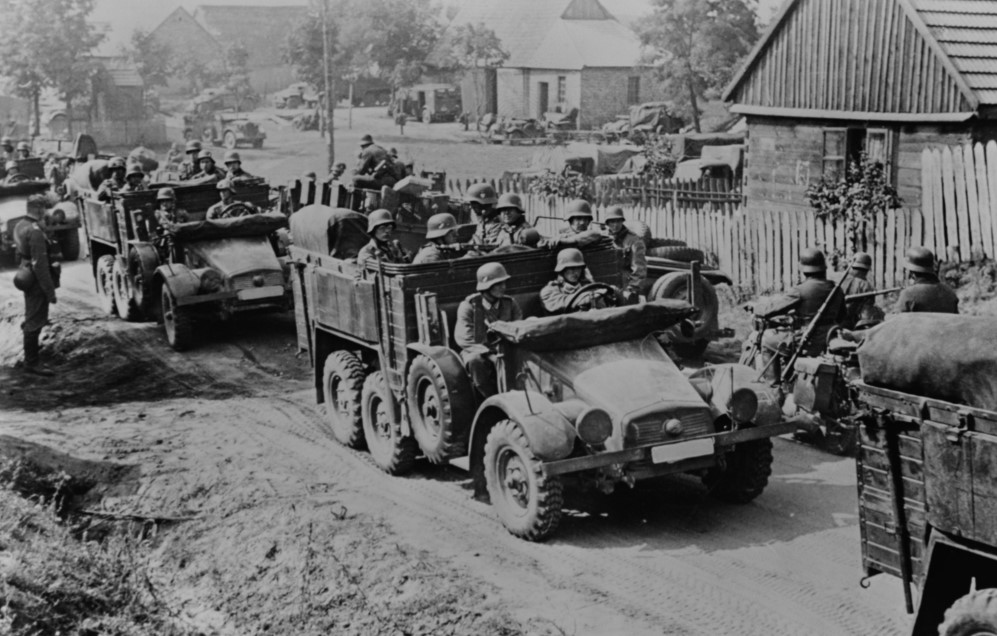
Zuroff continued working closely with American prosecutors. “Most of the cases we handled involved perpetrators from Eastern Europe. Approximately 98 percent of my cases were connected to that region.”
The challenge was that documentation from Eastern Europe was extremely scarce. “I used to joke that if I received a dollar for every document about who smuggled the first gun into the Warsaw Ghetto, I would be wealthy. But finding documentation about who served as mayor of Kovno during the Holocaust was almost impossible.”
He explains that early research institutions, including Yad Vashem, initially focused more on Jewish resistance than on cataloging collaborators. This made evidence gathering far more complex. Eventually, however, persistent efforts by the U.S. Justice Department and independent researchers succeeded in uncovering dozens of cases.
Why focus primarily on Eastern European perpetrators?
“Because those who fled to Western countries after the war were largely from Eastern Europe. They emigrated in large numbers to the United States, Canada, England, and other English-speaking countries, believing they would be safer there than under Soviet rule. For years they were. Then they began to face justice.”
Tracking Down Mengele’s Associate
Asked to describe one of the most significant cases he worked on, Zuroff recounts the story of Dr. Aribert Heim, a brutal camp doctor known for conducting medical procedures without anesthesia. Survivors from the Ebensee camp in Austria testified to horrific acts committed by Heim, including lethal experiments. A former inmate, Karl Lauter, reported witnessing Heim murder a prisoner who sought treatment for an infected leg.
The Wiesenthal Center launched an international search. While German authorities claimed Heim had died decades earlier, Zuroff uncovered evidence showing he was alive long after a court had officially declared him dead. Tax documents submitted by Heim’s lawyer seeking exemptions proved that the criminal had survived for many additional years. This discovery deeply embarrassed German authorities.
How did you try to find him?
“I traveled even to South America in an attempt to locate him. Unfortunately, we never succeeded. He likely died of old age.”
Using Public Pressure
Zuroff later developed a new strategy. Rather than relying solely on government action, he began publicizing names of suspected collaborators to the media. Working with the Wiesenthal Center, he compiled lists using cross-referenced records, including Red Cross data, and released them publicly when governments failed to act.
This approach produced results. Reports began appearing of former Nazis living quietly in cities such as Dublin and Manchester. Media exposure pressured governments into passing new legislation. “Canada enacted legislation in 1987, Australia in 1989, and England in 1991. These laws were passed largely because public opinion made inaction impossible.”
Although prosecutions remained limited, Zuroff views the broader impact as significant. “These laws undermined the sense of security these individuals had lived with for decades. They began to fear exposure and prosecution. In many cases, that alone was a form of justice.”
A Message for the Future
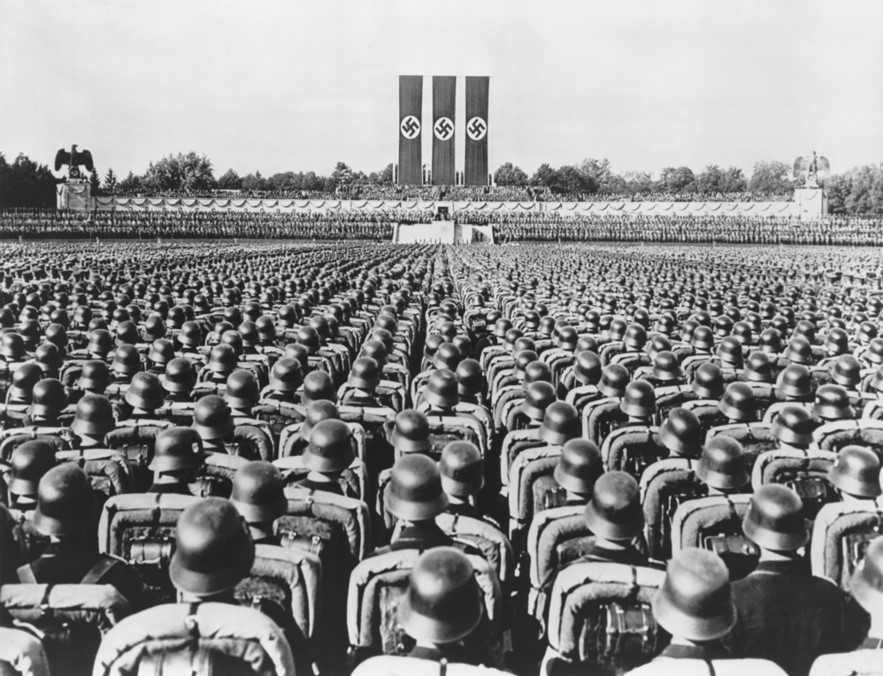
Zuroff strongly rejects the argument that time has passed and that elderly perpetrators should be spared prosecution. “Age does not erase guilt. We owe it to the victims to pursue justice, regardless of how many decades have passed.”
Beyond justice for past crimes, he emphasizes the moral message. Prosecuting Nazi criminals sends a warning to future generations that atrocities will not be forgotten and that accountability can arrive even many decades later.
“These are the last people deserving of sympathy,” he says. “They showed none to their victims.”
Do you have any regrets?
“I regret not being able to catch more of them,” he answers without hesitation.
Changing the Legal Landscape
Despite this, Zuroff’s impact has been substantial. One of the most significant changes influenced by his work is Germany’s legal approach to Holocaust prosecutions. Previously, only high-ranking decision-makers were prosecuted, while those who carried out the crimes could claim they were merely following orders. Today, German courts prosecute even those who served in operational roles within the camps, ensuring that the final remaining perpetrators are no longer beyond the reach of justice.

