

Magazine
Beyond the Scars: Mali Segal’s Journey from Trauma to Purpose
As a teenage girl, Mali Segal survived a terror attack that shattered her self image and changed her life. Years later, she has turned pain into purpose, guiding women toward healing, confidence, and inner strength. In a candid conversation, she shares her journey of faith, resilience, and rebuilding from within.
- Moriah Luz
- | Updated
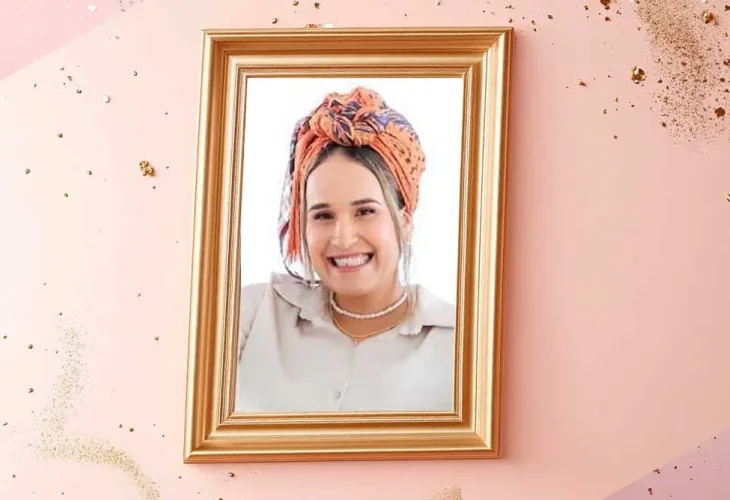 Mali Segal (Credit: Idit Yakutiel)
“As a teenage girl, I was deeply concerned with my appearance,” begins Mali Segal. “That’s why the attack that scarred my face struck such a painful place.”
Today, Mali is the director of the Meshivat Nefesh Institute under Harel Hatzroni. She also works as a fashion stylist, accompanying women at the intersection of clothing and inner growth, and teaches courses and workshops on the subject. She came to this path after surviving a severe terror attack in her early teens and navigating the complex emotional journey that followed.
“Twenty-three years ago, during Chanukah, when I was 14, I asked my mother if I could go into town with a friend. My family lived in Immanuel in the Shomron, and our shopping center was in Kfar Saba, which meant traveling by public transportation. Just before we left, my younger brother decided to join us, so the three of us set out together.”
As evening approached, Mali, her friend, and her brother began their journey home. They reached Karnei Shomron by bus and waited for another line to take them back to Immanuel.
“Our parents would have allowed us to take a ride with people we knew from the community. While we waited, several such people passed by, yet no one stopped. Even those who usually offered us rides didn’t stop that day. To me, it shows how precisely everything was directed from above.”
The long-awaited bus finally arrived, almost full. They boarded, believing their long day was nearly over. Mali even messaged her mother that they would make it home in time to light the Chanukah candles.
The Moment That Changed Everything
“Less than a kilometer from the entrance to the settlement, there was a massive explosion, followed by silence. I immediately understood it was an attack.”
The explosive device had been planted on a dangerous curve near a steep drop. Miraculously, the bus driver remained calm. The steering wheel had been reduced to a metal rod, yet he managed to guide the bus safely toward the settlement gate, allowing passengers to disembark without further danger.
“Later he said he felt as though angels were carrying the bus.”
“I felt wetness on my face and an overwhelming weakness, and I understood I had been injured,” Mali recalls. “My first thought was my little brother. I didn’t want him to see me and panic. I told him to get off and run home without looking back. I planned to follow him. But he didn’t listen. He stepped down, saw my face in the streetlight, and from his reaction I understood the sight was bad. He ran home, and I collapsed by the roadside.”
Moments later, gunfire erupted from the nearby hill. The explosion had been only the first stage of the terrorists’ plan, meant to target rescue forces.
“Anyone who could run fled into the settlement. The fact that the driver managed to move the bus saved many lives. From a distance, I noticed another bus inside the settlement that people were boarding. They said it was heading to a clinic for first aid. I was very weak, but I forced myself to reach it.
“I wanted treatment, of course. But what truly drove me was knowing there would be a mirror there. Looking back, it sounds strange in such a situation. But as a teenage girl, whose appearance meant everything to her, I needed to see what I looked like and understand why my brother had reacted the way he did.”
The reflection was devastating. A bullet had shattered her nose, broken her upper jaw, and damaged several teeth. At the clinic, doctors identified a head injury, and she was airlifted to the hospital.
“The next morning, a newspaper was placed on my bed. The front page described the tragedy: eleven people murdered, many more injured. I was in shock.”
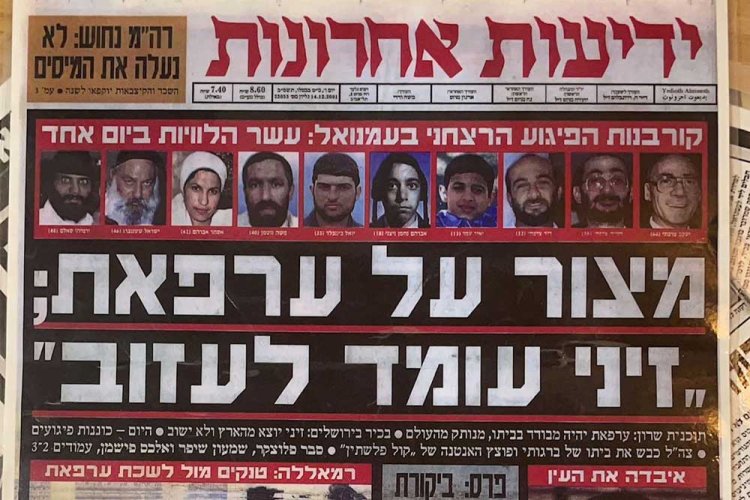 Front page news of the attack
Her own personal struggle had only begun. Her face had been severely damaged, and she underwent hours of surgery to reconstruct it.
“I Thought My Life Was Over”
How did you cope with the recovery?
“The injuries and surgeries left deep scars. I was missing front teeth. I felt ashamed to leave the house. Still in the hospital, I told my mother I wouldn’t return to school and that I didn’t want visitors. I was convinced no one would ever marry me. To me, life was over. I felt like I was trapped in a dark tunnel with no light.”
She credits her mother with saving her.
“Thank God, I was blessed with a strong mother who didn’t accept my despair. When I was discharged, she told me I could rest at home for two days, and then I was going back to school. She refused to let me sink into self-pity. At the time I felt misunderstood and even angry. Today I know she saved me. Because of her, I learned to confront challenges, to choose life even when it’s painful, and not to surrender to despair.”
The rehabilitation process stretched over years. Certain treatments could only be done after her body finished developing. Dental implants, for example, were only possible when she turned eighteen.
“My body image was shattered. Every glance or whisper felt like mockery. To go through this at the peak of adolescence was incredibly difficult.”
For seven years, she refused to speak about the attack.
“The pain was too raw. Only around age twenty did I write about it in a widely read Shabbat leaflet. For many people, it was the first time they heard the full story. That writing began to release something inside me.”
Faith, Questions, and Growth
Did you struggle with faith during that time?
“I had many questions. As a teenager, I couldn’t understand why Hashem had done this to me, and the biggest question was why my face, the place that mattered most to me.”
Today, her perspective is different.
“After a long inner journey, I can honestly say I would not give up what I went through. I’m speaking only about my personal process, not the tragedy itself. What I experienced shaped me, strengthened me, brought me to who I am today. It requires daily work, but I wouldn’t change it. Even nationally, the terrorists tried to destroy us, yet we healed and continued living with strength.”
From Pain to Purpose
Mali continued forward. She worked with at-risk youth and studied emotional development at the Meshivat Nefesh Institute, eventually becoming its director.
“At some point, I realized I was still seeing myself as a victim instead of recognizing how far I had come. That very week, several friends, independently, told me they loved my style and asked me to help them shop. This had never happened before. The clothes were the same ones I’d always worn.”
She began to understand the connection between inner perception and outer appearance.
“When I looked at myself in the mirror, I noticed a different light. Today I know that inner change radiates outward. The clothes are the same, but the way you choose, combine, and wear them reflects what’s happening inside.”
Learning Self-Acceptance
This sounds like a sudden change. Was it?
“Not at all. It was years of inner work. I trained myself to look in the mirror and focus not on the scars, but on what I loved about myself. I practiced self-acceptance deliberately and worked to fill my thoughts with faith and confidence.”
“I could have removed the scars surgically,” she adds, “but today I see them as symbols of strength and growth. I’m even grateful they weren’t fully erased. They reflect my journey.”
Love, Acceptance, and Building a Home
One of her deepest fears had been who would ever marry her. Hashem answered that fear with precision. Her husband grew up in the same community. Years before they met, he heard her say she would only marry a yeshiva student. Later, when he became one, a mutual acquaintance suggested the match. He was almost the first boy she met.
“A lot of my self-confidence came from his acceptance and support,” she says.
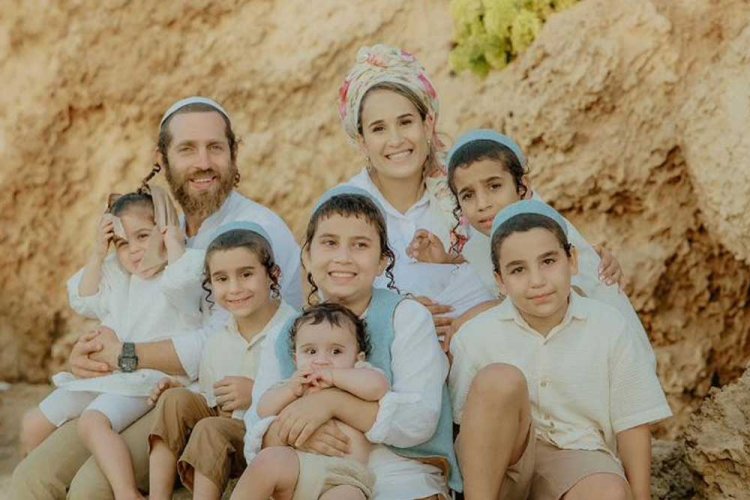 The Segal family today. Credit: Idit Yakutiel
Styling as Soul Work
Today, Mali helps other women build that same confidence. Through styling, she helps women choose clothing that uplifts rather than constrains, weaving together appearance, identity, and inner growth.
“Styling means dressing with intention. I realized I was drawn to it, and the feedback I received encouraged me to study it professionally. I discovered an entire world.”
She explains that although she once planned to work directly in emotional counseling, Hashem led her to this path instead.
“While we’re trying on clothes, women share their deepest struggles. What looks superficial becomes a doorway to the soul. I saw how clothing choices could transform how women see themselves. That’s when I understood this is my mission.”
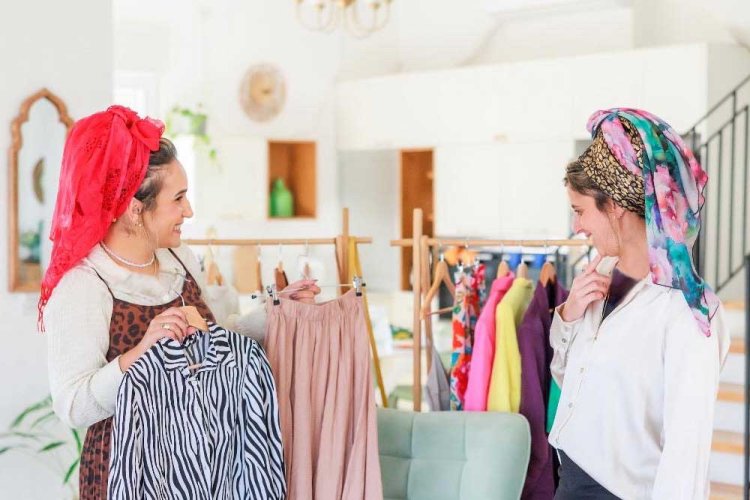 Mali with a client during a styling session. Credit: Idit Yakutiel.
Style and Modesty Can Walk Together
She sees no contradiction between style and modesty.
“Modesty doesn’t limit beauty. With the right tools, modest clothing can be elegant, expressive, and powerful. It’s a challenge, but a meaningful one.”
Living in a mixed community in the Jordan Valley, she often receives compliments from secular neighbors.
“They tell me it’s beautiful, elegant, European-style. And I remind them that this is fully modest clothing. Style and modesty are not enemies. They can exist beautifully together.”
Her message to young women is clear.
“Choose carefully who you follow and where you draw inspiration. Styling and modesty do not contradict each other. They can walk hand in hand.”

