

Magazine
From Israeli Basketball Star to Torah Educator: Daniel Tamir’s Journey of Faith
How a former Jerusalem player left professional basketball, embraced Judaism, and now inspires Jewish youth through Torah and the game in Los Angeles
- Hidabroot
- | Updated
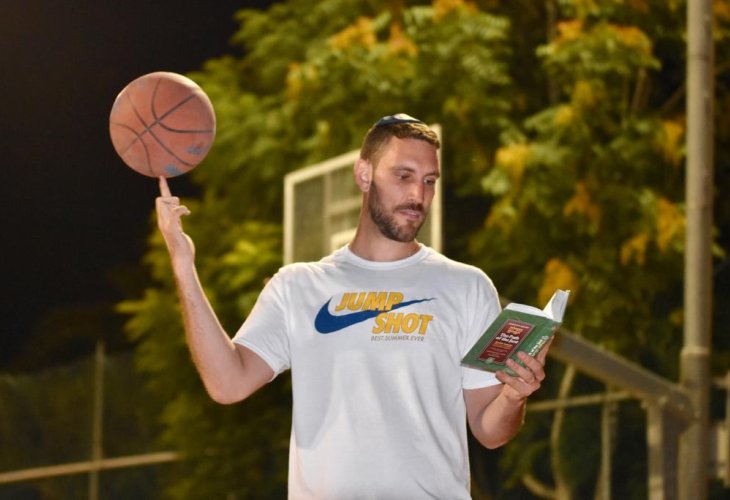 Daniel Tamir (Image Credit: "Hapoel America")
In recent years, many Israeli basketball fans have wondered where the promising player Daniel Tamir disappeared to. From the moment Tamir burst onto the scene, he was seen as a major hope for Israeli basketball. At 208 cm tall, he produced significant achievements, his coaches were pleased with his progress, and many believed he was headed for accomplishments even greater than those of his brother, Amit Tamir, who was also a well known and outstanding player.
Then, in the midst of his success, just as quite a few teams were offering him spots, he simply vanished. Some rumors said he had flown to New York, others reported he was playing in Hungary, but no one imagined the full truth. Today, as an observant Jew living in the Jewish community of Los Angeles and teaching children Torah alongside basketball, Tamir sits down for an especially moving conversation.
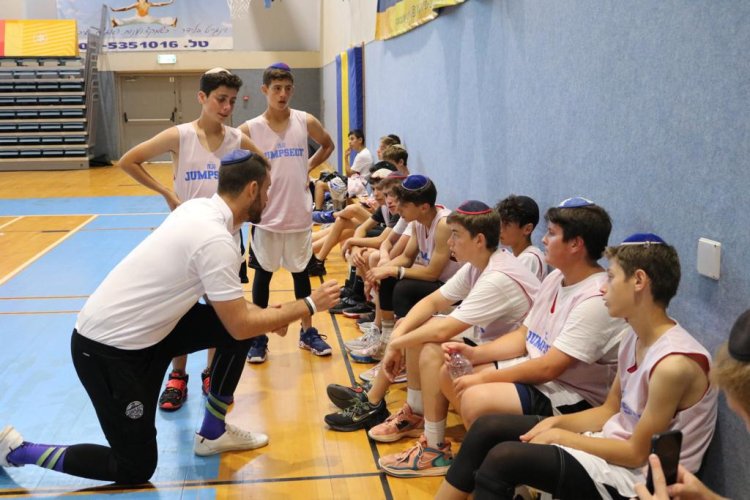
Israel, the United States, Hungary
“I grew up as a kid in the Kiryat Yovel neighborhood in Jerusalem,” he begins. “We’re a sports family. My late father was an excellent basketball player, my brother Amit played on the Israeli national team, and basketball was very central for us. As for me, ever since I was five and started to understand how to dribble a ball, I was interested in basketball games and followed my brother and father with fascination and admiration.”
Observing mitzvot did not interest him at all back then. “Our family was completely secular,” he clarifies. “My father came from an Ashkenazi home with no tradition at all. My mother is Moroccan, so we heard a bit from her about holidays. We even kept separation between meat and milk, but we still felt very far from religion. When I saw a religious person on the street, I would cross to the other side. I heard things around me about religious people not going to the army, not paying taxes, and other less pleasant comments about that community. I felt these were people I preferred not to be connected to, and that the farther I stayed from them, the better.”
Basketball made up a huge part of Tamir’s life. He joined national teams at a young age and achieved major success with Israel’s squads, which gave him great satisfaction and forward momentum. He continued playing for Hapoel Jerusalem’s senior team, and his professional career developed from there.
At eighteen, he enlisted in the IDF. After three years of service, he chose to enter education and began working with at risk youth. “At a certain point they suggested I take part in a nice initiative, a summer camp in the U.S. for Jewish children,” he says. “They invited me to join for the summer and coach them in basketball. For me it was a perfect combination, education and basketball. I flew to New York, and because many children at the camp came from the Modern Orthodox community, for the first time in my life I got to take part in prayers and see Shabbat observance up close. To my surprise, it wasn’t bad. On the contrary, the atmosphere was pleasant and very sweet.”
After the camp, Daniel moved to Hungary, where he played and achieved quite a bit of success. “It didn’t bother me to be far from home,” he admits. “The only time I really felt the difficulty was on Passover. I was in western Hungary with forty people, none of whom spoke Hebrew or English, and the hardest part was that there was no Seder. It felt strange. I missed the Passover customs I remembered from home. Overall, I was in Hungary for one year, and during that time I formed a relationship with a non Jewish woman. She even came with me on a visit to the U.S.”
As the year was ending, Daniel faced an unexpected surprise. Local law in Hungary changed, and it was decided that people with dual passports would not be allowed to play. “At that point I had to decide where I was headed. Did I want to go back and play in Israel, or continue elsewhere abroad? I immediately understood that I wanted to play in Israel. But when I asked the woman I had met to join me, her parents told her, very clearly, ‘You will never marry a Jew.’ That’s where the relationship ended. Of course it wasn’t easy, but looking back it’s clear to me that there was tremendous divine providence. God saved me from intermarriage. It was as if He told me, ‘Stay in the Jewish world. Everything you see outside doesn’t belong to you. You have nothing to look for there.’”
Learning in Yeshiva, Playing on the Court
Daniel returned to Israel and continued playing for the Israeli national team. In fact, it turned out to be his final year playing Israeli basketball. It was also a deeply significant year in other ways, because during that time he lost his father in a workplace accident and went through a painful crisis.
“I felt I wanted to do something meaningful for my father,” he recalls. “Then they told me there is great significance in saying Kaddish. I decided to take it on for a month, and during the first month after the passing I went to synagogue every day, prayed there, and said Kaddish. I felt a powerful spirituality, but afterward I went back to my routine as if nothing had happened.”
Then an attractive offer arrived. People in the United States who had heard about his success at the summer camps suggested he come study at Yeshiva University, the only institution in the U.S. where Jewish studies are learned in the morning and university level secular studies take place in the evening.
“They offered me a place as a student and also to coach the yeshiva’s basketball team,” he explains. “At first I said no as it was clear to me that I wasn’t going to study in a religious institution. But after convincing and talk about the high academic level, I agreed, and at age twenty four I received a visa to the U.S. and the gates opened.”
The moment you leave for the U.S., do you need to stop playing in Israel?
“Yes, absolutely. That was the moment my basketball career ended, so I weighed it a lot. At first I consulted my family and asked to hear their opinion. We were still in the first year after my father's passing, and I didn’t want to cause anyone pain, God forbid. My brothers supported me and said it was an excellent decision. My mother also stood behind me. All that remained was to contact my agent and tell him I was retiring. It was not an easy moment, because at that exact time excellent offers came in for teams for the next season. We both had tears in our eyes, but I have to say, I was completely at peace with myself. I accepted the farewell to basketball with understanding and acceptance. I felt I was heading toward a new chapter in life.”
Daniel arrived at Yeshiva University and discovered that not everything was simple. “When I walked into the beit midrash for the first time, I felt like some kind of strange bird,” he says honestly. “I had a spiked haircut, short hair, and a tank top. The rabbi looked at me, and I recoiled; I felt there was no connection between us. But very quickly the sense of alienation disappeared. They welcomed me warmly, allowed me to ask every question I had, and gave answers that led to more questions and deeper and deeper answers. Day by day, my understanding grew that this is the truth. I felt I had found the beauty in Judaism. I found myself speaking with God and pleading, ‘Master of the Universe, if there really is something here, show me that I’m on the right path.’ During that time I also began putting on tefillin regularly, and the spiritual closeness affected me.”
Life Changing Lectures
The major turning point came when Daniel was invited for Shabbat by a Jewish family in New York.
“I came to the family’s home, and during the meal I decided to put my phone aside,” he says. “The meal was amazing, invested, with an abundance of Torah thoughts and songs. When we finished I told myself, ‘It isn’t that hard without a phone. I’ll try leaving it aside until Shabbat ends.’”
That Shabbat, after Mincha, Rabbi Moshe Weinberger, a well known rabbi in New York, approached him and invited him to attend a Melaveh Malkah event on Saturday night. Daniel accepted, but when he arrived he felt a profound shock.
“Suddenly I saw everyone dressed in Hasidic hats and Shabbat clothing, and only I felt completely out of place. Then, out of nowhere, Rabbi Weinberger came over, pulled me into the center of the circle, and began dancing with me hand in hand. These were very special moments, and before we parted we agreed to meet again.”
The next meeting came quickly and lasted a long time. “We spoke a lot about the importance of basketball and physical activity that helps maintain a healthy body, because that too is a command from God. Rabbi Weinberger also sharpened a message I haven’t forgotten to this day. ‘God always wants to share with us the good He has. He bends down toward us to give, but we are required to do our part, to stand on our tiptoes and rise a little, so we can succeed in receiving all that goodness from God.’”
At the same time, Daniel says, he was searching online for spiritual lectures, and that’s how he reached fascinating videos by Rabbi Zamir Cohen on Torah and science. “I took a look and I was captivated,” he admits. “Rabbi Zamir’s words spoke to me deeply. They fit with logic and reason. After that came practical strengthening too. I began putting on tefillin consistently and coming to prayers, and my process of returning to Judaism picked up speed.”
A Tradition of Learning
The next chapter of Daniel’s story took place in Ukraine, when he was invited to join a Hasidic trip with the Biala Rebbe.
“I went on the trip curious to see where it would lead me, and I experienced an incredible spiritual experience that’s hard to describe in words. The peak of the trip was Shabbat in Medzhybizh, the burial place of the Baal Shem Tov. We prayed in the synagogue where he prayed, and the atmosphere was uplifting. Throughout Shabbat we had conversations that penetrated the soul. I spoke with the Rebbe as well, and he helped me reach the understanding that I can take the basketball I’m so good at and add Torah to it.”
The Rebbe was not the only one to tell him so. Daniel says that during that period he heard the same message from other rabbis too.
“I started to understand that basketball is a special tool that can do good in the world,” he explains. “I went back to coaching the yeshiva team with renewed energy. That was important because that season was a bit challenging and not very successful from a basketball perspective.”
Before the next game, Daniel suggested that one of the players learn a little in the moments before going onto the court. The player happily agreed. He took the book Olam HaMiddot, while Daniel learned from Mesillat Yesharim. Afterward they went out to the court, and according to Daniel, they saw great success and won surprisingly. It didn’t happen once, it happened eight games in a row.
“Before every game we made sure to learn,” he says. “It gave us strength, and we saw the success clearly. Even more than that, it was fascinating to see how the exact topic we were learning showed up afterward on the court. For example, when we learned about anger, we ended up playing a team where arguments broke out against us. Or when we learned about humility, we played a team we felt we were better than, and we had to think about how to stay humble enough.”
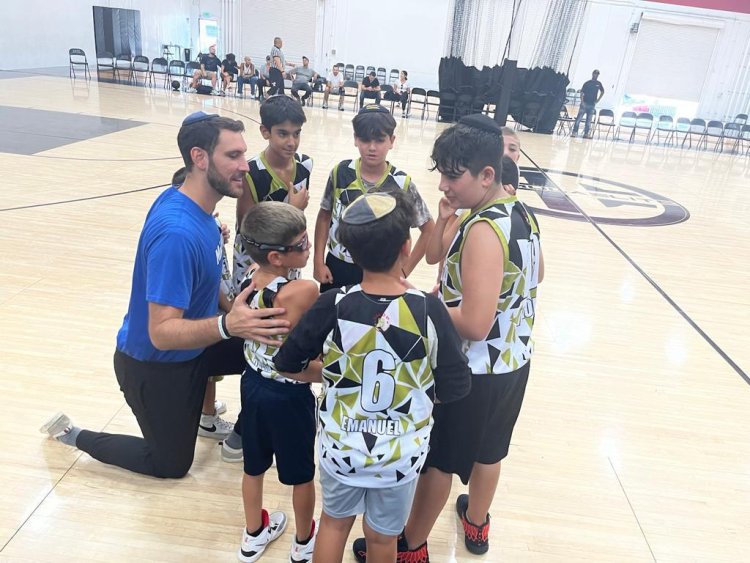
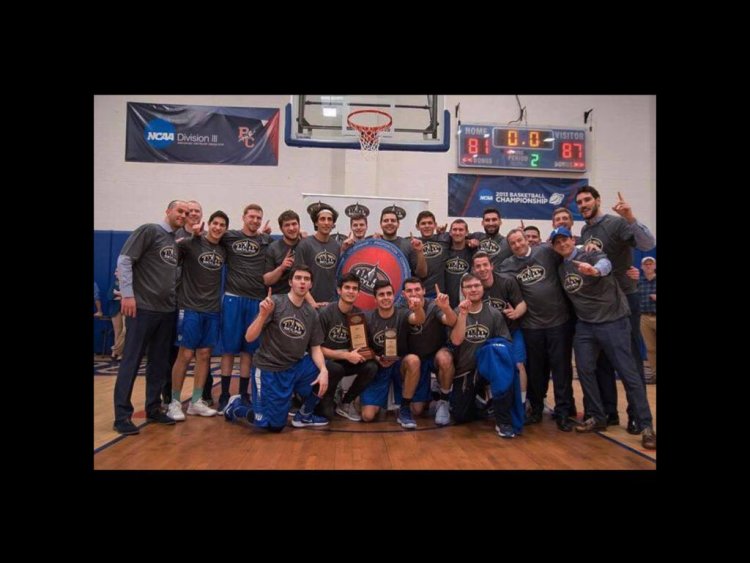
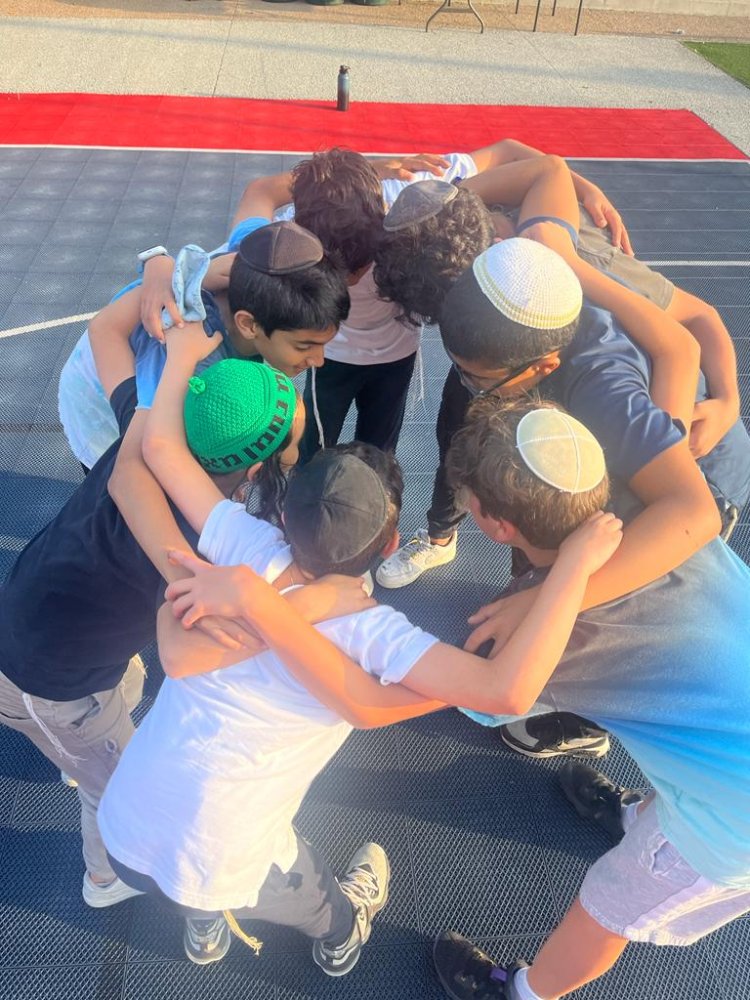
“One day there was a game after a long trip, and because we arrived late, we didn’t have time to learn. We lost that game. Afterward I spoke with the team and we made a clear decision. In every game, before going out, all the players would sit with kippot on their heads and learn. I’m truly emotional to say this, but that year we won the first championship in the university’s history. After that we were invited to a special tournament with representatives from all over the U.S. There too we didn’t give up on learning. Right before the game, while we were in the locker room, we got one of the rabbis close to us on the phone, and together we listened to a short Torah thought. Thank God, this tradition of learning continues to this day.”
“I Was Privileged to Close the Circle”
On a personal level as well, Daniel says he quickly saw great divine assistance. He married a woman who also strengthened spiritually, and together they built a home on the foundations of Torah and mitzvot. Today they live in Los Angeles, connected to the Jewish community, and live a fully observant lifestyle.
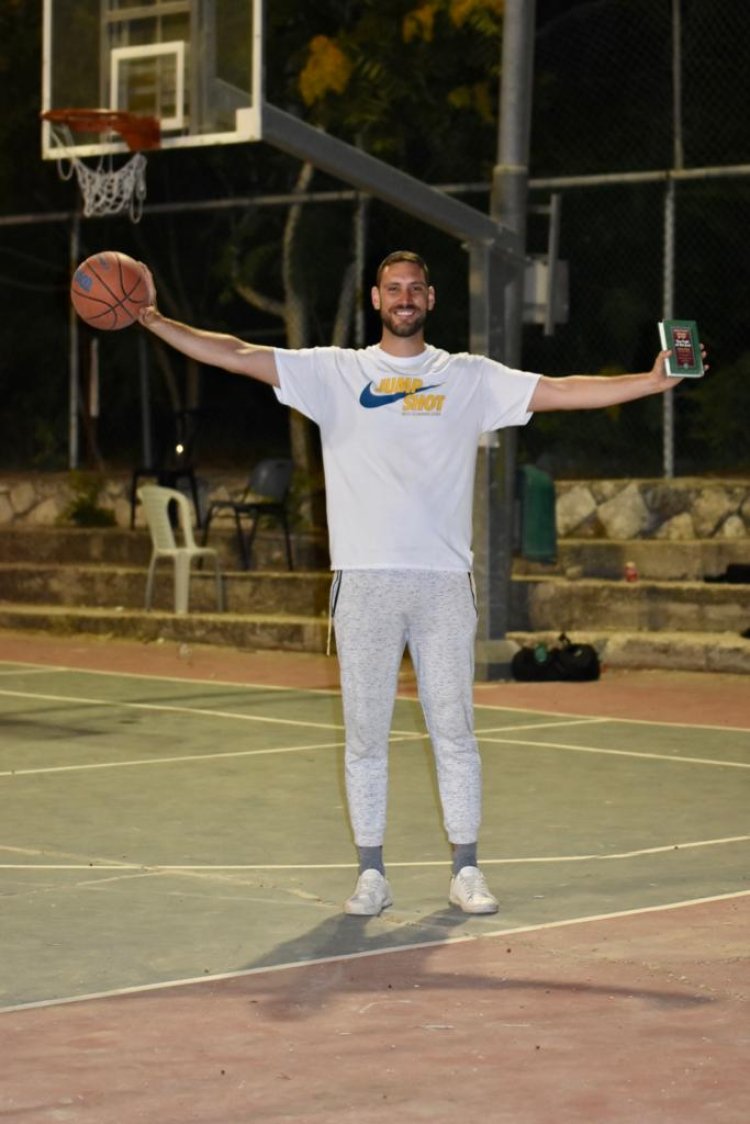
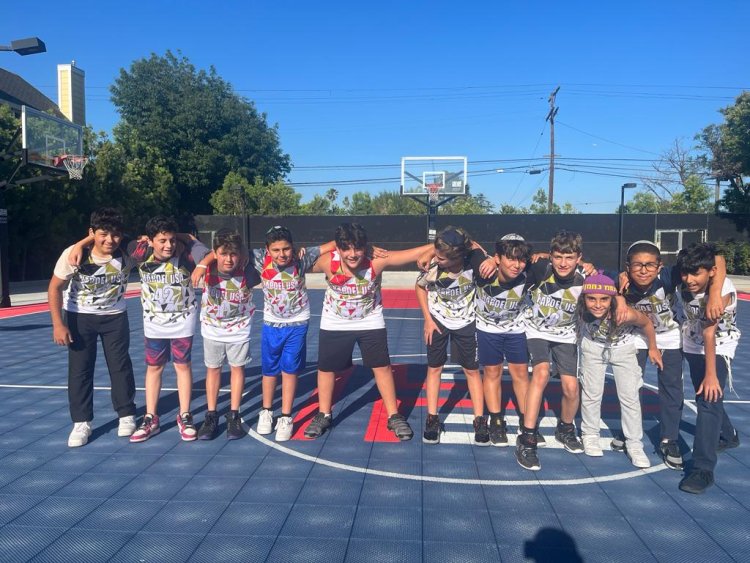
“I continue learning Torah and being involved in basketball,” Daniel explains. “Among other things, I established a special program for the Jewish community that offers basketball and Torah. It’s a basketball team where we train, and at the end of every practice we dedicate five minutes to learning values and Torah. I also have programs for kids in Jewish high schools that aren’t considered religious, but even there we learn Torah. It moves me to see how they connect to Torah words and feel a bond with them. Apparently the fact that it’s coming from someone who isn’t a parent or a teacher, but a basketball player who is 208 centimeters tall, has a strong impact on them. Every summer I take some of the kids to a special combined program in Israel, with the goal of bringing them closer to the land and adding more and more learning.”
To conclude, Daniel notes that last year he met Rabbi Zamir Cohen, who came to strengthen the Los Angeles community. “I spoke with the rabbi and we thought together about the best way to advance the projects. I was very emotional. I told him it felt like closing a circle, because my entire return to Judaism began thanks to his lectures and the Hidabroot organization, and now I have the merit of meeting him and speaking with him with a kippah on my head.”
What does your family say about the strengthening you went through?
“I have a sister who returned to Judaism before me, and she’s truly happy. My mother is proud of me too. My other two brothers live a different lifestyle, but they respect me a lot. I think it’s easier for them to accept the change because I made sure along the way not to disconnect from the family and not to ‘lose my head.’ In practice I remained exactly who I was, and I even continue working in the field that has accompanied me since childhood, I just added another layer and meaning. I added Torah and mitzvot.”

