

Magazine
Embracing Jewish Life in São Paulo: A Journey of Faith and Community
Discover the captivating blend of breathtaking landscapes, everyday safety fears, and a thriving Jewish community that defines Rivka Tamim's life in São Paulo, Brazil.
- Miriam Salomon
- | Updated
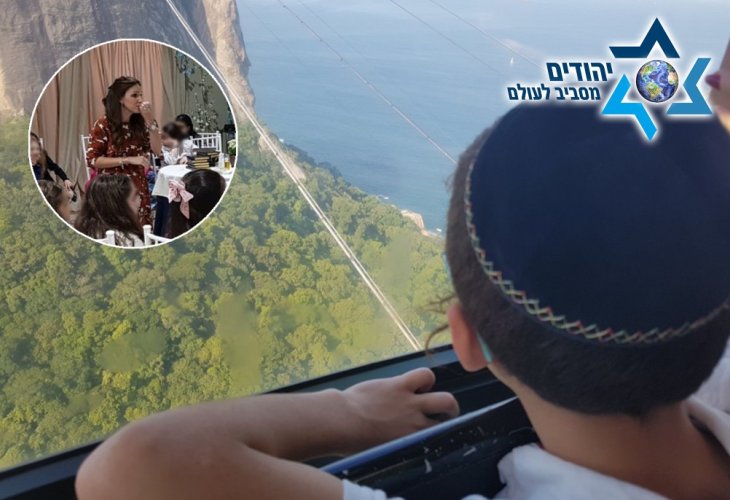 Rivka's son in Rio de Janeiro. Inset: Rivka Tamim
Meet Rivka
Rivka Tamim, a mother of three, has made her home in São Paulo, Brazil, where she immerses herself in a vibrant Jewish community.
What Does Brazil Mean to You?
“It has a uniquely special Jewish community. People here have warm Jewish hearts, deep reverence, and remarkable generosity. Brazil is also a land of breathtaking nature, unpredictable weather, and a real concern about kidnappings. That’s Brazil.”
 Brazilian landscape, Foz de Iguaçu
Why Did You Choose to Live Here?
“We arrived nine years ago on behalf of Ner L’Alaf, an organization that trains rabbis to serve Jewish communities worldwide. We came as a young couple with a three-year-old son. Our two daughters were born here. We planned to stay for a year but remain to this day.
“My husband serves as a cantor and rabbi, and I teach Hebrew and work in outreach. The community here is large and needs ongoing support. My husband gives daily Torah classes and a Shabbat lecture that attracts people from different synagogues.
“We also run Shabbat programs for children, with learning, Tehillim, and raffles. We expanded this to include girls, using educational games and monthly activities tied to Jewish holidays. From challah-baking events to chesed projects, there is always something happening.”
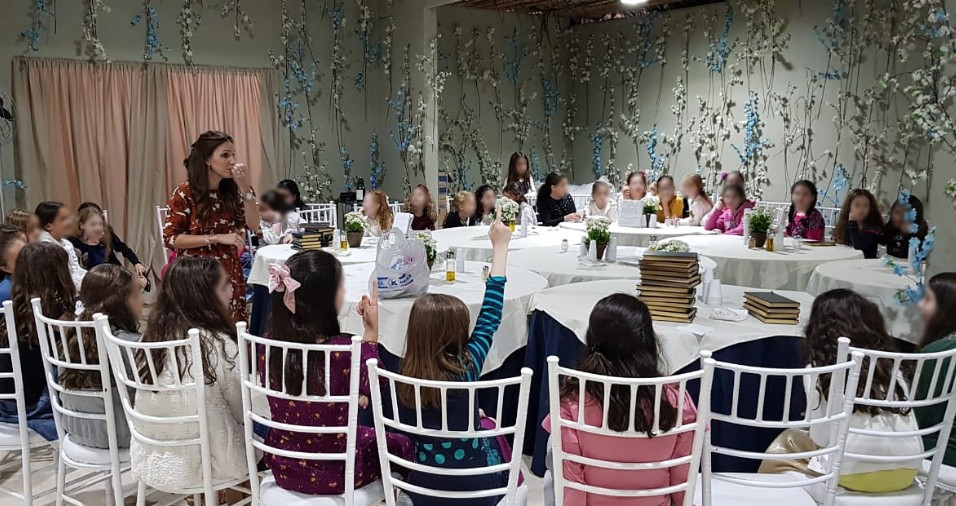 In the synagogue sukkah
What Kind of Schools Are There?
“There is a wide range of Jewish schools, including Torah-focused institutions, Chabad, and even a Yiddish-speaking cheder. The educational level is extremely high. My children attend excellent schools that combine Torah, values, and strong general studies.
“What stands out most is the character of the children. There is almost no fighting, and spiritually there is virtually no dropout. The community supports every child, academically and emotionally. If a student struggles, they receive individual help. My son proudly says, ‘There is no school like mine.’”
What Is Your Weekly Routine Like?
“Sunday is family day. The boys learn Torah in the morning, and we spend the afternoon together.
“From Monday to Thursday, I teach Hebrew at a religious school. The children eat at school, and afternoons are filled with activities. My son attends Gemara classes, robotics, chess, and sports. My daughter goes to swimming, dance, and social groups.
“I value that my son learns alongside boys from all backgrounds. It teaches him that Torah belongs to every Jew and that respect is not about external appearance.
“Evenings are dedicated to homework, family time, and dinner. We are blessed to have household help, which allows me to stay focused on the children and outreach work.”
How Does Your Shabbat Look?
“Friday is devoted to preparing for Shabbat and hosting guests. The table is set beautifully, and the meals are invested with care. The children help clear the table on Shabbat, which teaches them responsibility and respect for the day.”
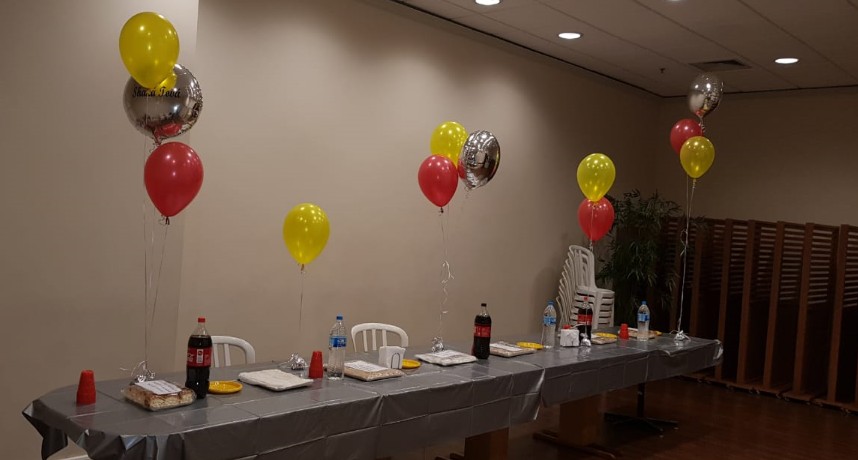 Rosh Hashanah Program Evening
What's the Weather Like Now?
“Brazil is tropical. A single day can include cool mornings, intense heat, afternoon rain, and pleasant evenings. It took time to adjust, especially with children constantly forgetting sweaters at school.”
 Brazilian landscape, Foz de Iguaçu
What's the Political Situation Like?
“I’m not very knowledgeable about politics, but I do know that the current president is very supportive of Israel. For many years, there was little political backing for the State of Israel, but today the relationship between the two countries is strong. There are even ongoing discussions about moving the Brazilian embassy to Jerusalem.
“A year ago, during the dam disaster in Minas Gerais, Israel sent a rescue delegation to help search for survivors and provide advanced equipment for identifying victims. The dam collapse buried an entire village in mud and claimed the lives of 250 people. It happened about a flight away from São Paulo. Thank G-d, I didn’t know anyone personally who was affected, and no one from the Jewish community was harmed. Still, my heart goes out to the families of the victims.”
Are Jews Involved in Government Policies?
"Jews aren't involved in government policies, but they're highly esteemed by the authorities and the general population."
Do You Experience Antisemitism?
“Not at all. We walk proudly in the streets with kippot and tzitzit and speak Hebrew openly. Even at the airport, we feel comfortable expressing our Jewish identity. There is a strong sense of tolerance and respect here, regardless of religion, race, or gender.
“Many Brazilians believe deeply in G-d and hold great respect for the Jewish people. When people ask where I’m from and I mention Israel, they often respond with excitement: ‘The Holy Land, where G-d lives.’ For many Brazilians, visiting Israel is a lifelong dream, even if only to see the land they know from the Bible.”
How Did You Celebrate Chanukah?
“Sadly, it isn’t as festive here as it is in the Land, and I regret that my children don’t experience what I grew up with: shops filled with sufganiyot, menorahs, and dreidels. Even Purim is relatively quiet here, without the music and public atmosphere found in Israel.
“At home, however, we create a warm holiday spirit. We lit the menorah, made latkes, and gathered for family games. You can still spot menorahs in some windows, though not many, since December is vacation season and much of the city empties out. Many people travel within Brazil or abroad. We, too, are planning a short trip to the Land, and God willing, activities here will resume in early February. Those who remain in the city do continue to light candles.”
Have You Visited Israel? What Were Your Impressions?
“We visit at least once a year and stay in Jerusalem with our parents. We reconnect with family, go on outings, talk late into the night, and make up for lost time. For my children, Israel feels like an endless summer vacation: no school, just trips and family gatherings.
“For us, the Land feels almost like a dream. There is abundance in everything: food, new construction, renovated cities, cleanliness, children’s activities, Jewish clothing, and so much more.”
A story that could only happen here
“Brazil also brings real personal safety challenges. In this third-world country, if something serious were to happen, calling the police would likely be ineffective. I don’t even know the emergency number. Thankfully, the Jewish community is well organized, with its own ambulance services, security systems, and even kosher hospital food.
“We live in the neighborhood with the highest concentration of Jews in the city. It is gated and secured not because of antisemitism, but because of crime such as theft, kidnapping, and robbery. Buildings are protected with iron gates, security cameras, and guards who allow entry only after receiving homeowner approval. There are double entrance doors, where the second door opens only after the first is fully closed.
“My children never go out alone and are always accompanied by adults. Even we avoid walking outside at night and prefer to drive instead.
“There have been a few kidnappings within the community, but they were resolved through ransom and ended without physical harm, since the motive is usually financial. Still, there was a tragic case about thirty years ago, when the son of a prominent community leader was kidnapped and murdered. In his memory, his parents donated and built synagogues in Israel named ‘Zachor L’Avraham.’”
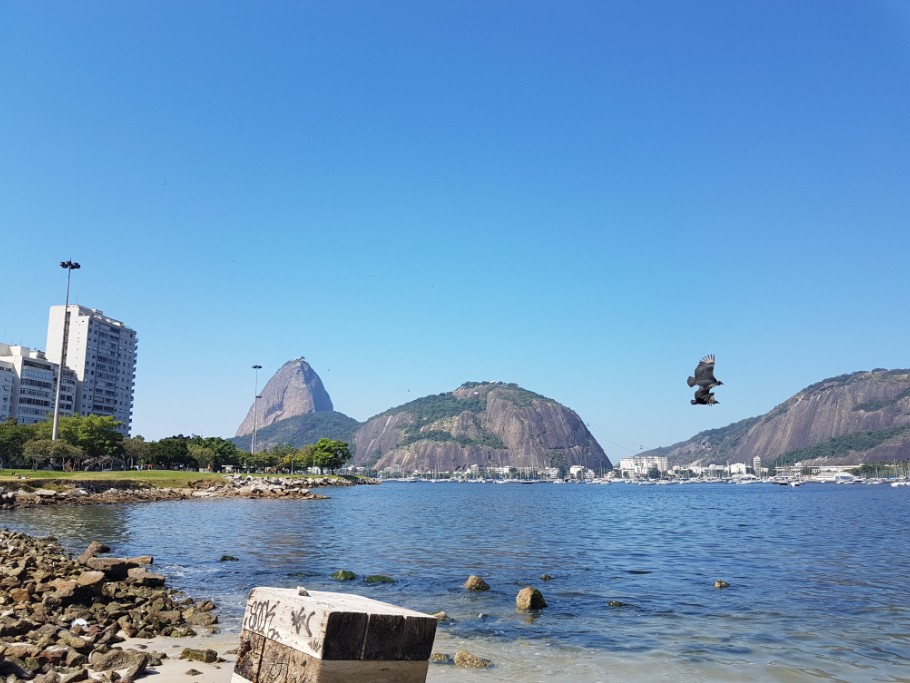 Brazilian landscape, Rio de Janeiro
