

Magazine
A Journey of Faith and Resilience: From Venezuela to Santiago
From craving Israeli snacks to community building in Chile, Yael Sirota shares her story.
- Miriam Salomon
- | Updated
 (Photo credit: shutterstock)
What does Chile mean to you?
"Chile is a beautiful, safe, and convenient country. Of course, it can't be compared to the luxuries of Israel, but with Hashem's blessing, we lack nothing materially. Most importantly, there's a wonderful community here - Aish HaTorah, with a new and magnificent synagogue, an excellent school, and unique outreach activities."
Why do you live here?
"Three years ago, we were offered a mission for outreach. Honestly, at first, I didn't think it was suitable for me. I was born in Venezuela in a Torah-observant family, attended a religious school, and at seventeen went to study in Israel. I studied early childhood education for a year, met my husband, and got married. We lived in Israel for three years, where I pursued interior design, believing I'd always work in that field. Over time, we were repeatedly offered opportunities to do outreach in places like Panama or Mexico, which suited my husband, who had become religious and always wanted to do outreach. I was hesitant and refused all offers.
"Then, someone told me something that left a deep impression on me, stating that if a person has the strength to act and I prevent it, it's like I am stealing from Hashem. I was persuaded and said to my husband: 'If you want to embark on a mission, I'm with you.' But even after agreeing, I didn't think it would involve me. I assumed I would just be 'the rabbi's wife.' We went to Panama for a short five-day trial. One morning, a rabbi there felt unwell and asked if I could teach his class. I hesitated but agreed. Facing fifteen students unplanned was daunting, but I spoke from the heart, and to my surprise, both they and I enjoyed it. That experience was incredibly satisfying, and I realized maybe I could contribute too.
"We received another outreach offer, in Chile this time. Since my husband is Chilean, it added to our considerations. We consulted Rabbi Moshe Shapiro, who advised us to choose the mission in Chile. With Hashem's blessing, we've been here for six years, contributing and enjoying our time. It didn't come naturally to me, but through a process of adaptation and hesitation, I now work in education and love it. Instead of designing homes, I'm shaping souls."
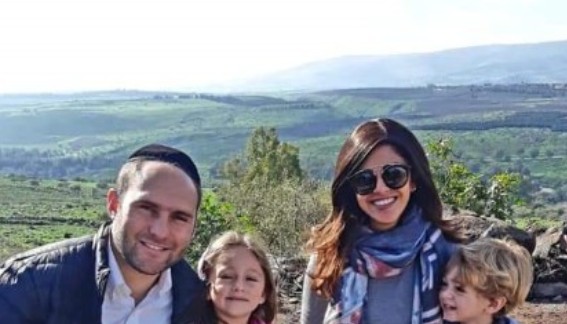 The Sirota family
Is there a Jewish community there?
"Santiago has a respectable Jewish community, though I'm not sure of the exact number, approximately 8,000 Jews. There's kosher certification and two Jewish schools; one secular and one religious. I work at the Maimonides religious school, where our children study too. Chabad also runs a kindergarten and school here. Most students pursue studies in Israel or the U.S after school."
What does a typical day look like for you?
"Mornings are school time, teaching first grade. My daughter is starting first grade this year, and I'll be teaching her, which we both hope will be enjoyable. Today was the start of the school year. The wonderful diversity of families sending children to the school stands out, some religious and some not observant. We strive for a welcoming atmosphere. Jewish teachers, like me, teach Judaism, Hebrew, holidays, and weekly Torah portions, while non-Jewish teachers teach English and general studies. We make sure everyone is happy, the parents seeking Jewish and general education alike, and the school operates on Jewish principles."
"In the afternoons, I manage a second-hand wig gemach: community women donate unused wigs, which I refurbish with the help of a stylist, adding hair when needed. These wigs are given to women in need, like cancer patients or those who can't afford new ones. The gemach came to me when the previous manager couldn't continue. It has since grown, and women contact me to schedule visits. I strive to offer a respectful and pleasant experience, like in a real store. Brides-to-be can purchase new wigs at a symbolic price, imported from China, offering them a joyful shopping experience."
"My children, Noa (six) and Netanel (three and a half), return from school around five. They've eaten lunch at school, so I make light dinners at home. While they play and do homework, I spend time with them, doing laundry, cleaning, and tidying."
"Honestly, I can't accomplish much during these hours, so I'm fortunate to have a cleaner three times a week. Initially, having a cleaner at home felt strange - I was used to organizing my home alone in Israel and was shy about hiring help like this. However, I soon realized the necessity with our busy schedules. Right after school, I often host a lesson for women or a bride who comes for pre-marriage sessions, and the house needs to be clean, inviting, and ready. Regular help became a necessity. Thankfully, labor costs here are low, and the cleaner does a great job."
"At night, I join my husband in managing his outreach organization, Morasha. It's part of a global organization, and we closely collaborate with Aish HaTorah's local community. I give lessons twice a week for women, and sometimes for Jewish university students. In our organization, we have about 200 young students. Some lessons are about Jewish philosophy, some about halacha, and before holidays, we focus on holiday-related topics. I often refer to lectures from Hidabroot, and sometimes we have special sessions for the holidays."
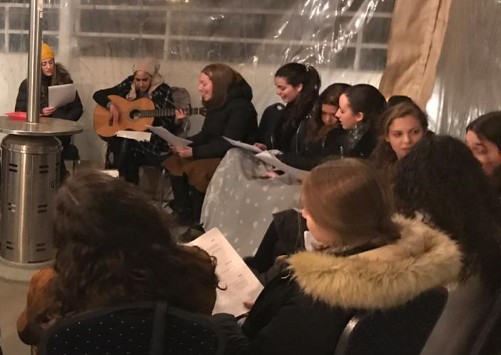 Yael at an outreach activity
What are Shabbats like for you?
"Shabbat is a significant part of our outreach efforts. You can teach someone about Torah and halacha on Shabbat, but they need to see and live it. We invite guests who need the experience. My husband's students and mine from the Morasha seminary come over to experience true Shabbat. We maintain connections beyond lessons and invite them for Shabbat. My husband has an Excel sheet tracking whom we've invited, ensuring everyone gets a turn. Some guests come frequently; others join spontaneously. Our home is open, we're always happy to welcome them."
"Preparation for Shabbat usually begins by Thursday afternoon; shopping is done on Wednesday. Ordering groceries is quick: within 90 minutes, it's all delivered. Sometimes, the store contacts me to check specific preferences, like tomato preferences or stock updates. Thursday afternoons, I return from school early, get right into cooking, and by 4:30 PM, all meals are ready for Shabbat. Occasionally, I also bake challah."
"The cleaner visits on Thursday too, handling cleaning, ironing, and organizing. By Friday, there's no work left. It's stress-free relaxation with the kids until Shabbat arrives."
"Most guests join on Friday night, and we talk, hear Torah, and sing. Guests realize how refreshing it is to disengage from the constant technology and communication, to enjoy family and friends and connect with oneself. Usually, the cleaner doesn't come on Shabbat, so my husband helps clean up after dinner. While doing dishes, I reflect on the privilege of hosting Jews. What could feel burdensome becomes fulfilling when done with love. I've learned it's okay to ask for help; initially, I refused when guests offered. Now, I may invite them to help themselves to drinks or assist when needed, making it easier to host and giving them a sense of belonging."
"In rare weeks, when I need a quieter family Shabbat, we don't invite guests, but our daughter complains it's boring without them. With Hashem's blessing, we enjoy hosting large Shabbat meals. The joy is palpable, guiding people on their spiritual journey. Sometimes they don't become observant, but we stand by them with love and a welcoming home."
What's the weather like now?
"It's summer in Chile, around 28-30°C (82-86°F). Most of the year, it's cold here, as Chile is generally chilly. Personally, I don't favor Chilean weather, eagerly awaiting summer each winter. Ironically, our summer break takes us to Israel, where it's winter."
 (Photo credit: shutterstock)
What's the political situation in the country?
"Up until a few months ago, things were calm, and Chile was known as 'America's oasis.' But recently, transportation fare hikes sparked protests against the government. Protesters burned bins and there was chaos, even right outside our building. I feared leaving home. Lines at the pharmacy evoked memories of living in Venezuela amidst government protests. I told my husband if things worsen, we'll leave Chile. Meanwhile, vacation has calmed things down a bit. It reminded us that Jews aren't truly comfortable anywhere but Israel."
Do you experience antisemitism?
"Yes, there's antisemitism in Chile, with a significant Muslim population. During tense times in Israel, local animosity toward Jews grows. Thankfully, we haven't faced physical violence, and my husband even wears a yarmulke in public. However, we've overheard hateful remarks. Recently, when trying to purchase travel insurance for a student, someone passing by sneered, 'Good thing I'm not traveling with you Jews.' We remained silent, though it was unpleasant."
How do you prepare for the holidays?
"Our community invests a lot of thought in pre-holiday activities. Once a month, women gather for programs with diverse festivities and delicious food. Before Purim, they hold a group stand-up, letting anyone perform and sing. Holiday preparations include student activities themed to the celebrations. Our Purim event kicked off 'Morasha 2020,' marking the new school year's start and first student meeting."
"On Purim night, there was a Megillah reading at the synagogue followed by a festive party where all community children wore costumes and had a costume contest. We enjoyed a communal Purim meal with great celebration, and the Megillah reading was very special, especially with all the students."
Do you visit Israel?
"Every year, during vacation, we travel with students to Israel. Morasha offers three different trips, tailored to students' levels and choices. Some spend their days touring and learning at night, others split their day between Torah study and excursions. The third option is for those looking to strengthen their faith, with boys and girls studying Torah deeply for a month."
"After students complete their stay in Israel and no longer need our close accompaniment during trips, we stay longer to visit family. They live in Rishon LeZion, and once a year, I cherish meeting them and easing the longing."
Is there a product you can't find there, or would like to get from Israel?
"We have everything here with excellent kosher certification, although some items are a small treat for me: sometimes Chalav Yisrael milk is missing, or certain spices. When I buy a mekupelet chocolate bar in Israel, it reminds me of childhood trips there. My kids love Israeli candies too: Bamba, Bissli, and of course, mekupelet chocolate."
Share a story only from your place
"This isn't a real story, more of a small winter anecdote: our building has underfloor heating shared by all units. If everyone turns it on, it's very cheap, but if only one tenant does, it can be costly. However, when one or a few tenants turn it on, nearby units also benefit, even if only the one who turned it on pays. So, you might often find me checking if the upstairs neighbor turned it on. If the ceiling is warm, I know it's safe to turn ours on too!"

