

Magazine
Kabbalah Today: Who Can Learn It, What It Really Means, and Why It Matters
Rabbi Yitzchak Batzri on practical Kabbalah, common myths, and women studying Torah and Kabbalah
- Hidabroot
- | Updated
 Rabbi Yitzhak Batzri
What comes to mind when you hear the term “Kabbalah”? Do you immediately think of reincarnations and hidden secrets of the Torah? To what extent is Kabbalah connected to your practical life? Is it permitted to study Kabbalah?
Whenever Kabbalah is mentioned, it opens a doorway into a fascinating subject that captures the imagination of many. In past generations, Kabbalah occupied only a small number of towering rabbis and elevated figures. Today, it is opening its gates to more and more Torah scholars. Across the country you can find yeshivot that study Kabbalah and Torah scholars who engage not only in peshat, remez, and derash, but also in sod (hidden parts of Torah).
In the following conversation, Rabbi Yitzchak Batzri reveals more than a little about the essence of Kabbalah and opens a window into its rich world.
Kabbalah through the generations
“I merited to grow up in a family of kabbalists and righteous men,” Rabbi Batzri says. “From the time I was a child, I remember my father and teacher, the great kabbalist Rabbi David Batzri, would rise every night at midnight and learn with my grandfather, the kabbalist Rabbi Salman Mutzafi, his father in law. They learned together for many years. My grandfather would also come to our home during the day to continue studying Torah with my father.
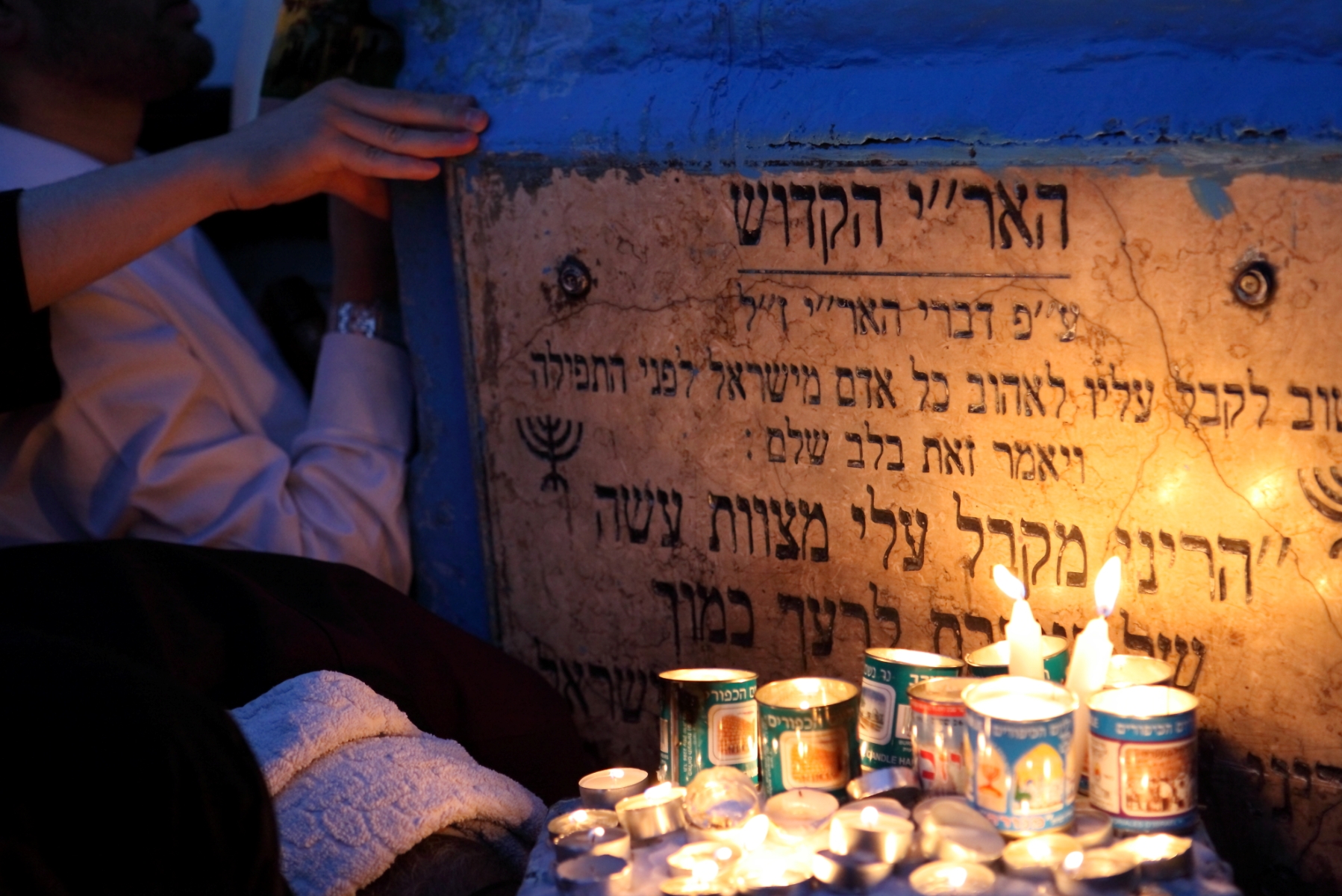 (Photo: Flash 90)
“In general, our family was immersed in sacred writings back in Baghdad. At the head of our family was the saintly kabbalist Rabbi Yosef Chaim, the Ben Ish Chai, and above him in holiness his father Rabbi Eliyahu Chaim, and above that the chief rabbi of Babylon, the kabbalist Rabbi Moshe Chaim.”
Rabbi Yitzchak Batzri’s family originated in Safed, traveled through Damascus, and from there to Baghdad. He relates about his grandfather, Rabbi Navi, that he learned Kabbalah together with Rabbi Shmuel Vital, the son of Rabbi Chaim Vital. Rabbi Navi was, in fact, the great grandfather of the great grandfather on the other side, the kabbalist Rabbi Yehuda Fatiyah.
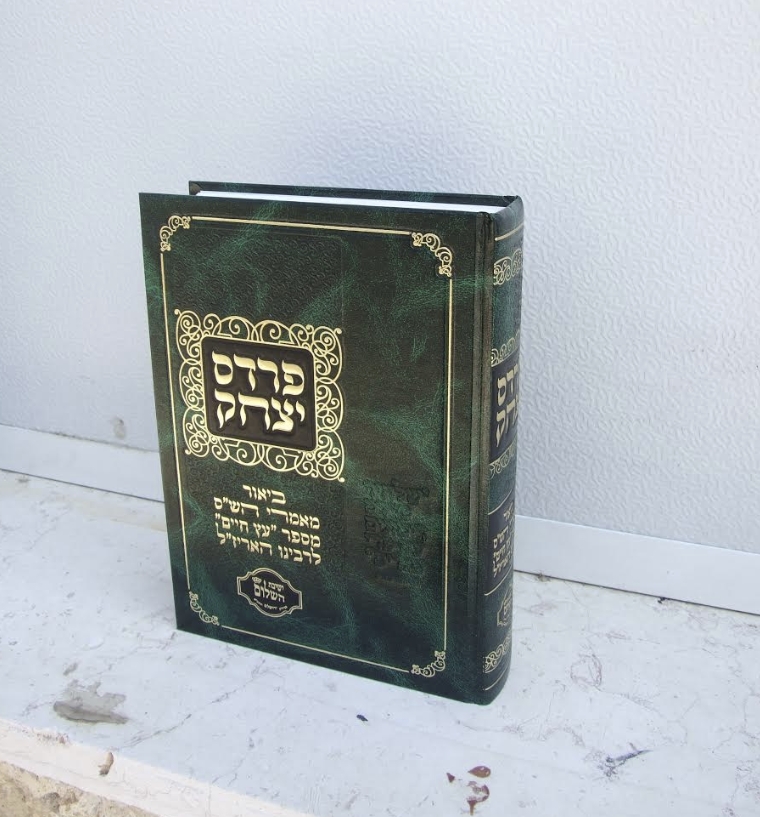
From a young age, Rabbi Yitzchak Batzri was drawn to watch his father and his righteous elders immersed in Torah day and night. His father made an effort to learn in partnership with his brother, the kabbalist Rabbi Sasson Batzri. Rabbi Yitzchak recalls an unforgettable moment.
“One day my uncle approached me and asked to teach me a lesson in Kabbalah. We sat and learned together. Afterward I asked him, ‘Why did you teach me these things? I’m young. Why expose me to Kabbalah’s secrets?’ His answer shocked me and gave me chills. He said, ‘I want a day to come when you will write a commentary on the Talmud through Kabbalah.’”
At the time Rabbi Batzri saw it as a dream, but his uncle continued and told him that the Ari studied the entire Talmud six times on the level of peshat and a seventh time through Kabbalah. To this day, no one has produced a Kabbalistic commentary on the Talmud based on the Ari’s teachings, and perhaps now the time has come. From that moment Rabbi Batzri carried the dream in his heart and thought about it for many years.
His uncle, Rabbi Sasson Batzri, passed away about a decade ago, and then Rabbi Yitzchak Batzri decided to write, in honor of his uncle’s pure soul, a commentary on the Shas based on the Ari. That became his first book, Pardes Yitzchak. In its introduction he notes that the work came into being due to his uncle’s initiative.
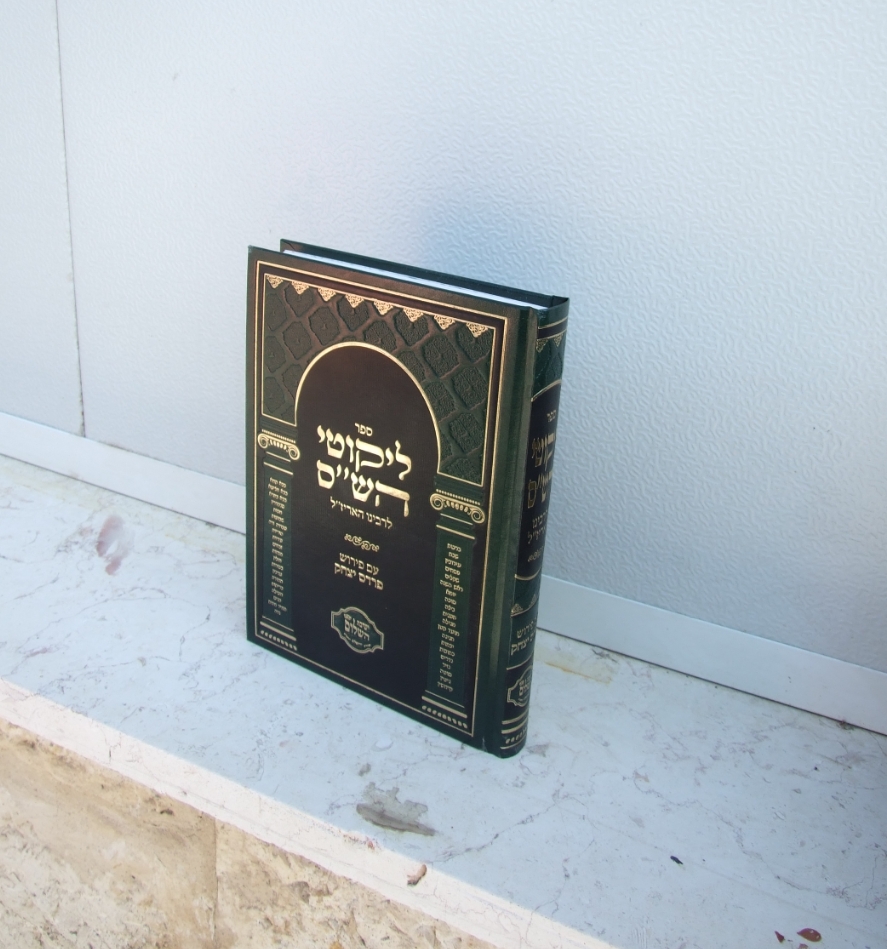
When he completed the project, he discovered something surprising. The Ari had another work called Likutei HaShas, a book not sold in stores and not easily obtainable.
“I managed to get it anyway,” he says. “And I saw there were many errors and revisions that didn't accurately reflect the Ari’s words. It was very hard to understand. I decided this would be my mission. I arranged the book like a page of Talmud. On one page the Ari’s words appear in his own language, on the facing page the Talmud's language appears, and on the sides there are variant readings and collected notes from Rashi.”
Naturally, out of curiosity, Rabbi Batzri continued exploring additional writings of the Ari. One day someone pointed out to him that the Ari has another work on the Talmud called Shaar Maamarei Chazal. He looked into it and discovered something deeply interesting.
“It became clear to me,” he says, “that the Ari wrote a tremendous number of works, but the ones who actually printed them were Rabbi Shmuel Vital, son of Rabbi Chaim Vital, and Rabbi Meir Paprish, an Ashkenazi rabbi who was pained that the Ari’s writings were not being recorded and printed. Two versions therefore emerged by Rabbi Paprish and by Rabbi Shmuel Vital. Likutei HaShas is apparently from Meir Paprish, and Shaar Maamarei Chazal is from Rabbi Shmuel Vital.
“By the way, there was controversy over whether Likutei HaShas truly belongs to the Ari, but the Chida testifies in his Shem HaGedolim that it is indeed the Ari’s work.”
For a time Rabbi Batzri hesitated about taking on Shaar Maamarei Chazal. “Of course I wanted it very much, but it challenged me in many ways,” he explains.
In the end, after much deliberation, he gathered courage and began writing a commentary. Then he describes a striking moment. “That night my uncle came to me in a dream and told me, ‘Yasher koach for returning to write on the Shas (Talmud).’”
These days the work is being completed and is about to be published.
“Another chapter in explaining the Ari’s teachings on the Shas has come to an end,” Rabbi Batzri says with satisfaction.
What is your goal in writing these books? Are they suitable for everyone, or only for those who have been studying Kabbalah for years?
“I’ll try to explain my purpose,” he says. “Today there are many Torah scholars who learn peshat and the writings of the Rishonim. They feel they never merited to enter the world of Kabbalah, and they are not familiar with the Ari’s writings at all. It seems to them that Kabbalah is meant only for rare individuals who reached lofty spiritual levels. That is a mistake. The reality is different. Each of us is obligated to learn Torah through peshat, remez, derash, and sod. You cannot fully understand the Talmud without learning Kabbalah.”
What do you mean?
“I’ll give an example. The Talmud says: ‘Anyone who recites Shema and is precise with its letters, Gehinnom is cooled for him.’ For years I went around among Torah scholars trying to clarify what ‘Gehinnom is cooled’ means. The answers were fairly uniform. ‘It means the blazing heat of Gehinnom becomes less hot.’ It didn’t make sense to me. If someone is in a place of 500 degrees, does it matter if you toss in an ice cube? What’s the difference between 500 and 200? I couldn’t find an answer.”
Until he reached the Ari’s writings and found a different framework.
“I saw the Ari writes that Gehinnom is not the World to Come, it is this world. A person with a yetzer hara can be in Gehinnom in this world, with no inner peace, with a scattered mind, chasing and chasing things without success. It’s frustrating and painful like Gehinnom.
“It says in the Zohar: When the sages came to the home of the child to visit a widow, the mother told the child, ‘Go ask the sages for a blessing.’ He refused and said he didn’t want to ask them because ‘they are impure.’ His mother got angry and asked, ‘Why are you saying they’re impure?’ He answered, ‘Because they didn’t say Shema this morning.’ The sages replied, ‘True, we were engaged in the mitzvah of redeeming captives, and one who is engaged in a mitzvah is exempt from Shema and prayer.’ And still, the reality showed that a kind of impurity remained with them.
“The Zohar says that Shema removes impurity and the person becomes purified. So anyone who says Shema and is precise with its letters removes impurity from himself. At night a certain impurity rests on a person, and the Shema of the morning removes it, and in that way the yetzer hara is weakened. That is what ‘Gehinnom is cooled’ means. The yetzer hara doesn’t burn inside him like fire. It is weaker, and he can pass through the Gehinnom of this world.”
Rabbi Batzri emphasizes that today across the country there are dozens of yeshivot for kabbalists, and great Torah figures from many communities study and engage in Kabbalah.
“It isn’t like it used to be, when they left it only for special people,” he says. “Rashi writes on the Zohar: ‘With this they will go out of exile.’ Over time the Zohar will be revealed and everyone will engage in it and learn it, and through that redemption will draw close. That is exactly what we see. For years it was hidden, and today more and more people learn it.”
Kabbalah, which began spreading in the era of the Ramban who revealed the Zohar, continued in the era of the holy Ari, and today is experiencing growth and flourishing.
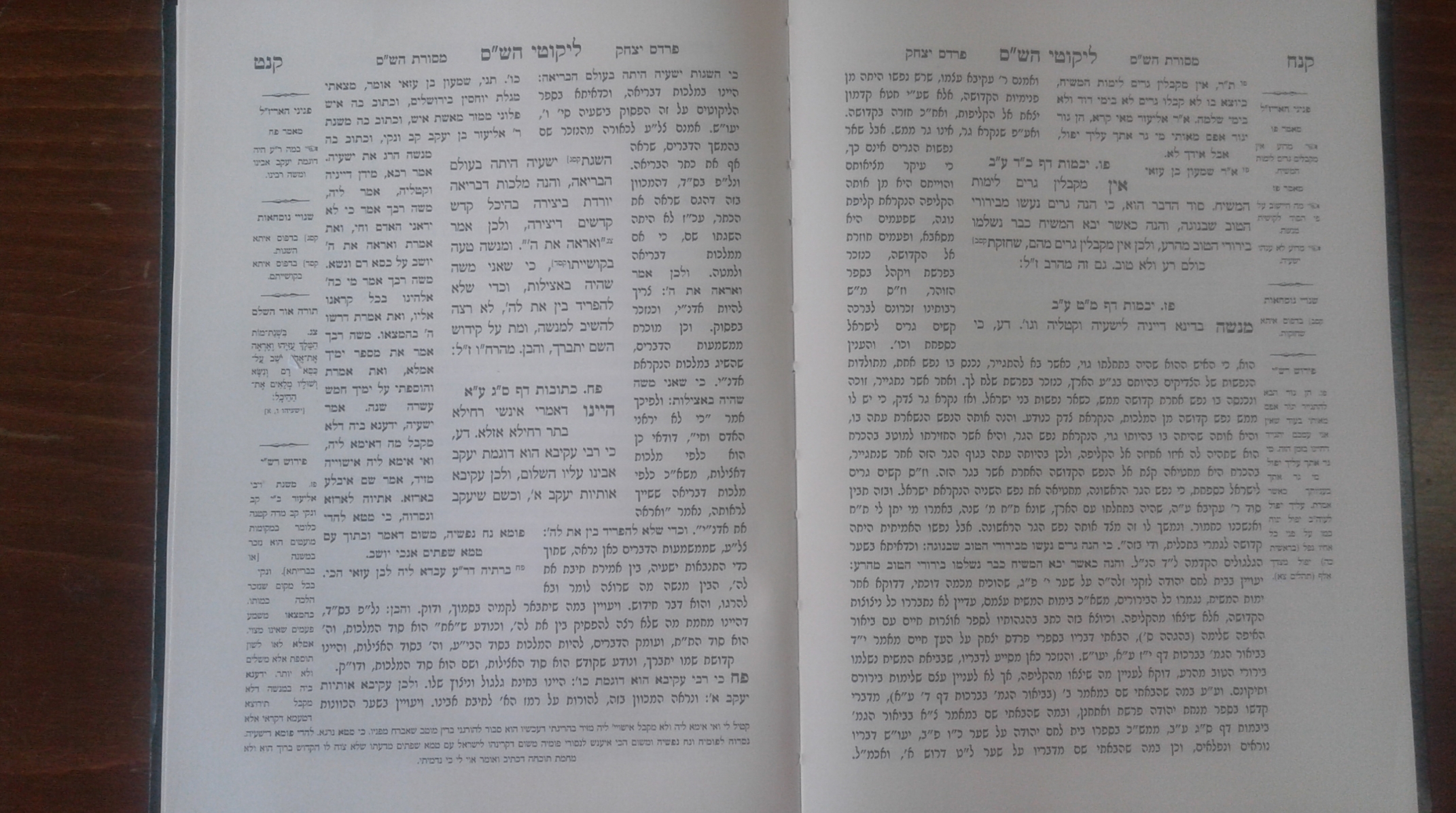 A photo from the book on *Likutey HaShas* of the *Ari*
Do you think every Jew can learn Kabbalah?
“Not everyone can,” he answers. “Only someone who has learned Talmud and halachic rulings and is proficient in them can move forward to Kabbalah. But a Jew who learned these things in holiness and purity not only can, but he should learn Kabbalah.”
For some reason, when people hear “Kabbalah,” what pops into their minds are various “babas” who offer fortune telling, explain exactly why you received reward or punishment, and demand large sums of money.
“There is no connection between ‘babas’ or those kinds of names and the Torah of Kabbalah,” Rabbi Batzri states unequivocally. “There must be no confusion. A true mekubal (kabbalist) is a Jew around whom Torah scholars sit and learn and receive Torah from his mouth, not a person who ‘receives the public’ and tries to predict their future.
“My father once told me, ‘A true mekubal doesn’t have time to receive the public.’ He meant that a true mekubal is constantly immersed in learning, kavanot, and giving classes, trying to finish his learning goals. I can testify personally. My grandfather, Rabbi Salman Mutzafi, never received the public at all. My father received people once a week for only two hours. Both always kept away from it because of lack of time. They were immersed all week in learning, fasting, and self discipline.”
Rabbi Batzri adds: “I am sure it is the merit of my ancestors, who were immense Torah scholars, that stood for me in recent years when I merited to publish my commentary on the Ari’s writings. I myself merited to learn with my father in chavruta for thirty years. We learned every day for four or five hours. That kind of learning stays with you for life.”

Secrets of reincarnation
To better explain the nature of learning through Kabbalah, Rabbi Batzri brings the well known story of Elazar ben Dordaya. After committing severe sins, he went and sat between mountains and hills. He asked the mountains to plead mercy for him and they refused. He asked heaven and earth and they refused. The sun and moon, the stars and constellations, also refused. Finally he said, “It depends only on me.” He placed his head between his knees and cried until his soul left him. A heavenly voice declared, “Rabbi Elazar ben Dordaya is ready for the life of the World to Come.” Rabbi wept and said, “Some acquire their world over many years, and some acquire their world in one hour.” And Rabbi said, “Not only do they accept penitents, they even call them Rabbi.”
Rabbi Batzri says that he always wondered about this story. That Elazar ben Dordaya became a baal teshuvah and was accepted into the World to Come is one thing. But how could he be called “Rabbi”? In the Talmud, “Rabbi” implies a leading sage, like the great teachers who lived their whole lives in holiness and purity. How could someone like him reach such a level? On the level of simple reading, the question remains significant.
And this, Rabbi Batzri says, is precisely where the Ari’s explanation enters. The Ari explains that Elazar ben Dordaya is actually a reincarnation of Yochanan Kohen Gadol, who served as High Priest for eighty years and in the end became a Sadducee. Yochanan Kohen Gadol came into the world again as Elazar ben Dordaya. After falling deeply, he returned to being “Rabbi Yochanan Kohen Gadol,” and therefore returned to the level of “Rabbi,” a righteous foundation of the world.
Rabbi Batzri draws a practical point from this.
“Sometimes we see people who change overnight, return in teshuvah, and their whole essence transforms. We don’t know what they were in a previous incarnation. Maybe they were great Torah scholars, and now they are returning to those lofty spiritual levels. The high levels they had in a previous life help them in their spiritual work today.
“Therefore we must never judge people externally. We have no idea what they were before or what they came to repair in the world. The holy Ari knew how to see the roots of souls and the reincarnations of every person. He revealed to us fascinating things in this style.”
In addition to Rabbi Batzri’s books on the Ari’s explanations of the Shas, he also wrote a series called Siach Yitzchak. In those books he provides a special introduction to each tractate that notes the reincarnations of the souls of the figures who appear in that tractate, along with interesting questions in halachah and aggadah. The material is written in clear language so that anyone can read and understand it.
“One of my sisters told me she went through these books from beginning to end,” he notes with a smile.
Can a woman learn Talmud?
“I don’t want to answer that in an absolute way, because there are different opinions,” he says, “but I can tell you about my grandmother, of blessed memory, the mother of my grandfather Rabbi Yosef Batzri. She was a sister of the Ben Ish Chai and she studied the entire Talmud by heart and knew all the halachot. She would sit in the women’s section of the study hall and listen to the class of her cousin Rabbi Yaakov Chaim Sofer, the author of Kaf HaChaim. He would give a class, and she would correct him and say, ‘The Ben Ish Chai didn’t say it that way.’ She would analyze the learning and remain in the beit midrash from before dawn until late at night.
“I also have an aunt named Lulu, the daughter of Rabbi Yehuda Fatiyah, who was known to discuss Talmud with her father, who would ask her questions. So I don’t want to decide. In any case, the specific book I wrote about reincarnations is not considered Kabbalah, so from the outset any woman can study it.”

