

Magazine
Inside Palestinian Incitement: How Schools, Monuments, and Leaders Glorify Terror
An in-depth investigation with Itamar Marcus of Palestinian Media Watch into education for violence, terror salaries, and the hidden messages shaping the next generation
- David Fried
- | Updated
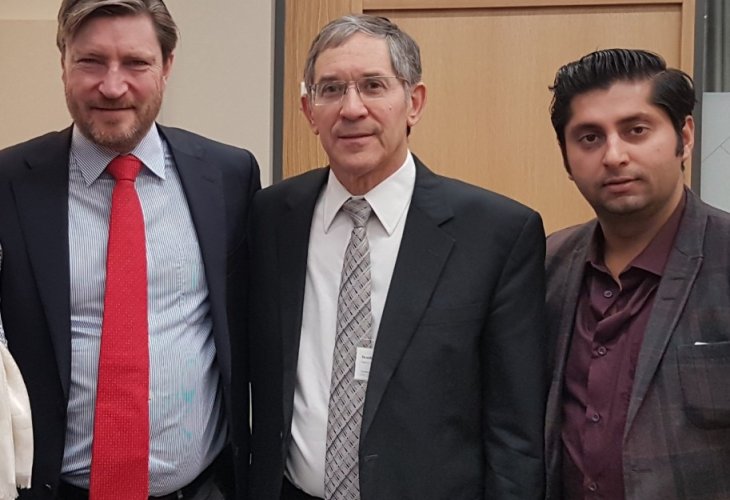 Marcus, center, with Norwegian Parliament members, February 2020.
The female students who pass every day by the entrance of the Palestinian Authority’s state school in Bethlehem have long grown accustomed to the monument standing at its gate. The monument is a simple Jerusalem stone engraved with the name of Ayat al-Akhras, a cultural heroine of the Palestinian Authority.
Ayat al-Akhras, in case one wonders, was not a poet, an intellectual, or a well-known social activist who cared for the needy. She became a Palestinian cultural icon because of a terrorist attack she carried out. Al-Akhras was the youngest Palestinian female suicide bomber in history. She was only 18 years old when she detonated herself at the entrance to a supermarket in Kiryat Yovel. The security guard on duty, Chaim Smadar, prevented her from entering the store and paid for it with his life. Along with him, a 17-year-old Jewish girl named Rachel Levy, who was standing nearby, was murdered, may God avenge her blood.
The story of this shocking monument, like many others, was exposed by Itamar Marcus, founder of the Palestinian Media Watch institute. “Every female student at the state school in Bethlehem passes by this monument commemorating al-Akhras from her very first day of school until she graduates,” he explains. “It is easy to imagine what message this conveys to young Palestinian girls who will one day raise the next Palestinian generation. This monument can be translated into Jewish blood,” he warns.
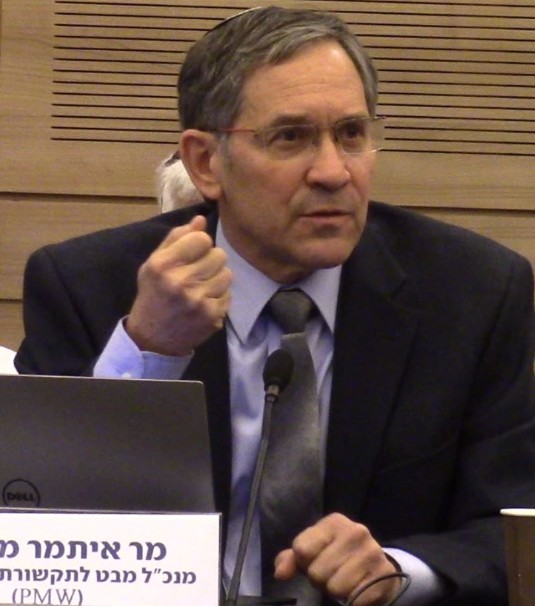 Itamar Marcus on the Foreign Affairs and Security Committee
What Palestinians Really Think
Itamar Marcus, a resident of Efrat in the Gush Etzion bloc, founded the institute during the Oslo Accords period. “I had a sense that what the Palestinians were saying to us Israelis was different from what they were saying to their own people, and so in 1996 I decided to establish Palestinian Media Watch,” he says.
Marcus’s goal in founding the institute was to understand what Palestinians truly think and how they educate the next generation, the one that will eventually lead the Palestinian Authority. The answers to these questions became clear very quickly and were deeply disturbing. While the Palestinians present pragmatic positions outwardly, internally they express explicit support for terror and the murder of Jews. “Today every Israeli child knows this truth, but in the past the Israeli public was almost completely unaware of it,” Marcus says. Thanks to the institute’s work, the truth about the Palestinian Authority was exposed.
“In 2011 we revealed that the Palestinian Authority pays salaries to terrorists. Until then this reality was largely hidden and scarcely known outside the PA. That exposure changed how Israel and the world relate to the Palestinian Authority. As a result, practical steps were taken against the PA. In Israel, a law was passed to deduct the funds the PA pays to terrorists from the tax revenues Israel transfers under the Oslo Accords. In addition, four countries — the United States, Canada, Australia, and the Netherlands, stopped funding the PA after our work showed that part of its budget goes to terrorists and their families. Other donor countries stopped transferring general funding and instead began allocating money only to specific projects, in order to ensure their donations would not reach terrorists.”
Marcus overcame many obstacles in the early years before the institute became a recognized and authoritative body with significant achievements. Initially, he worked alongside Knesset members from the Labor Party who opposed the peace process led by their own party. He supplied them with materials and evidence from within the Palestinian Authority, strengthening their opposition to the Oslo Accords. Later, he established the institute and began presenting the information he uncovered to the world. Without any state support, the institute succeeded in changing Israeli and international public opinion regarding the Palestinian Authority.
The institute, behind countless reports in Israeli and international media, is modest in size. Ten Arabic-language experts work there, including a Jewish researcher originally from Egypt and former intelligence officers from IDF units, all of whom work together to expose the truth the Palestinian Authority seeks to conceal.
At the same time, Marcus travels to parliaments around the world, presenting official bodies with evidence of the anti-Semitic content found in PA school textbooks. “People around the world are shocked by the information we present,” he says. “I have spoken before the U.S. Congress, the European Parliament, the British Parliament, and others. Often, after I testify, the local media takes interest and raises public discussion on the issue. That is what happened in Norway, where following my speech in parliament, the local press published extensive coverage about Palestinian incitement.”
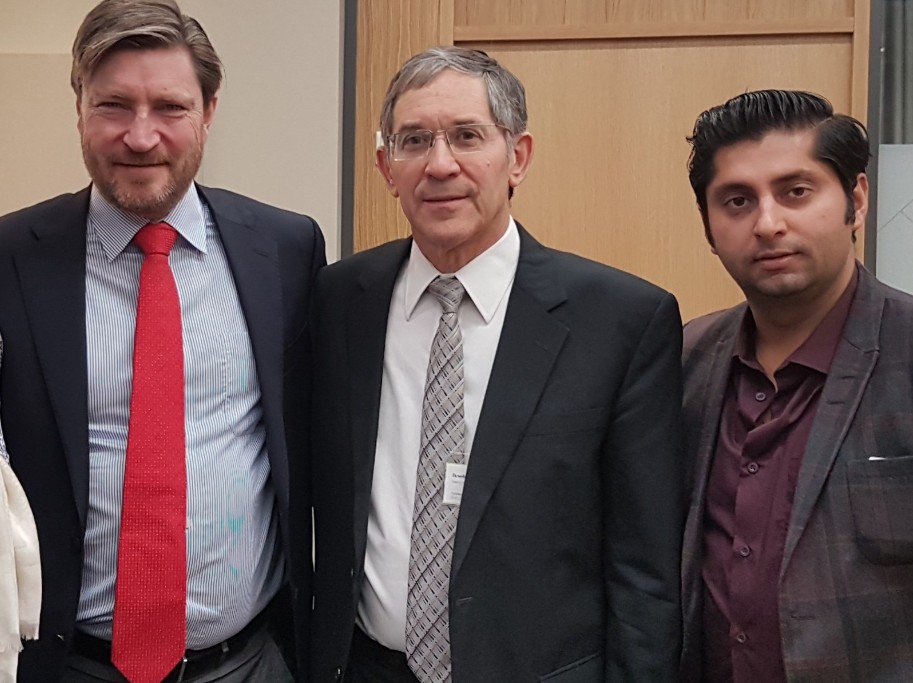 Marcus with Norwegian Parliament members, February 2020
The Problem: Education for Terror
“The Palestinian Authority’s education system clearly supports and legitimizes terror,” Marcus states. “It begins with the names of the schools themselves. Across the PA there are 31 schools named after terrorists who murdered Jews, including figures such as Ahmed Yassin, founder of Hamas, and Dalal Mughrabi, who holds a special place of honor in Palestinian history as a pioneer of female terrorism.”
Mughrabi, who led the terrorist cell responsible for the Coastal Road massacre — one of the deadliest attacks in Israel’s history, is commemorated by the PA in multiple ways. Naming schools after her is only one example. She was responsible for the murder of 35 people and the wounding of 71 others.
Mughrabi does not appear only on school buildings but also in educational content taught in PA classrooms. Palestinian Media Watch previously exposed a school text describing “heroes of the Palestinian people,” which includes Mughrabi. The text reads: “Heroes play an important role in every nation. We sing about them, praise them, name our children after them, and everyone wants to be like them.” It then lists ten individuals described as “heroes of the Palestinian people,” all of them fighters, including Mughrabi and arch-terrorist Yasser Arafat. “They are the crown of the people, the best of the best — glory to the heroes and shame on the cowards,” the text proclaims, teaching children as young as eleven that if they do not want to kill and die like Mughrabi, they are cowards.
The PA does not limit itself to glorifying terrorists from the past. It also honors those who carried out attacks in recent years. For example, Ahmed Manasra, a 12-year-old Palestinian who stabbed a Jewish boy his own age, was commemorated by the PA with a soccer tournament named after him. “You see children holding a trophy bearing the name of Ahmed Manasra. They learn that a child who stabs a Jewish peer is a hero and role model. The message is clear: there is nothing better than becoming a shahid,” Marcus says.
“They Are Not Interested in Peace”
Marcus illustrates the PA’s attitude toward terrorists with a striking example. “At the beginning of the year, due to financial difficulties, the PA cut salaries of all its civil servants by 60 percent. Everyone had to tighten their belts — except the Palestinian terrorists in Israeli prisons. Ironically, they earn far more than average PA workers, in some cases up to 12,000 shekels a month, four times the average salary. They continued to receive full pay. This indicates the degree to which the PA values terrorists and murderers of Jews.”
According to institute staff, this behavior proves the Palestinian leadership is not interested in peace or coexistence. “Who truly wants peace while educating children to slaughter their neighbor?” they ask. “The Palestinians present themselves internationally as peace-seeking, and this strategy works. Dozens of countries have recognized the Palestinian Authority as a state, enabling it to bring legal claims against Israel, all under the false claim that it seeks peace.”
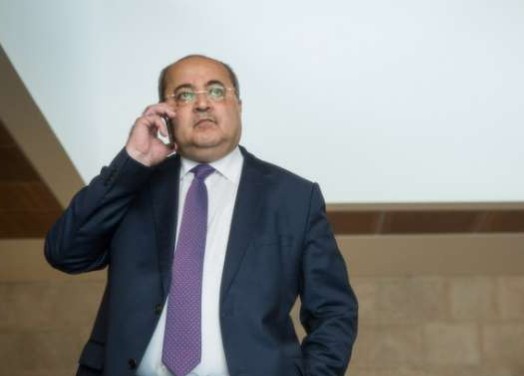 Tibi (photo: Yonatan Sindel, Flash 90)
Israeli Knesset Members in the Service of Terror
Knesset member Ahmad Tibi is widely regarded as personable and articulate. His fluent Hebrew, humor, and polished arguments have made him the most recognizable Arab MK in Israel. He appears frequently in Israeli media and speaks from the Knesset podium. Yet behind the polished image, Marcus argues, stands a man who supports the murder of Jews.
At an event in Ramallah marking the 16th anniversary of the imprisonment of Marwan Barghouti, Tibi openly expressed support for the convicted terrorist. “The tone and melody were entirely different from how he speaks in the Knesset,” Marcus says. Barghouti, responsible for numerous deadly attacks during the Second Intifada, received five life sentences. Tibi referred to him as “the symbol, the fighter, the friend, my brother Marwan,” and described his arrest as a “kidnapping.”
Marcus adds that Tibi’s remarks illustrate that he does not view the murder of Jews as justification for imprisonment. He also expressed solidarity with other convicted terrorists, including Karim Younis and Ahmad Saadat, and referred to Abu Jihad — responsible for the murder of 125 Jews — as “the great historical commander.”
Tibi has made similar remarks during military operations against terror. During Operation Hot Winter in Gaza, he told Palestinian media: “Resistance to occupation is legitimate, permissible, and one of the rights of peoples under occupation, as Hezbollah acted.” Marcus explains: “Tibi is intelligent. He knows how to speak indirectly so he can later claim his words were misunderstood, while Palestinians understand exactly what he means.”
Tibi is not alone. Other Arab MKs have expressed support for terror. Right-wing activist Meir Ettinger recently exposed an article by Joint List leader Ayman Odeh praising Hezbollah leader Hassan Nasrallah as a model of sacrifice and resistance.
Looking Ahead
The institute’s staff continues to work actively and plan for the future. One major initiative involves building a group of Jewish and Palestinian activists opposed to PA anti-Semitic incitement. The goal is to expose the hidden truth together before the world. A first such delegation has already taken place, with hopes of making it permanent.
Marcus recounts meeting Palestinians who oppose the incitement. During talks connected to the Wye Agreement, a Palestinian official responsible for education privately admitted to Marcus that he opposed anti-Jewish incitement and even rebuked his own son for repeating such messages from school. Soon after, however, that official was replaced. “That was the last time he was involved,” Marcus notes.
“The Palestinian DNA appears to support incitement,” he concludes.

