

Magazine
One Stage, Two Worlds: The Women Bridging Israel’s Deepest Divide
Tired of watching their worlds misrepresented, Esti Reichman and Ya’ara Landau Kanner chose a different path. Through an intimate community theater project, they bring ultra-Orthodox and secular women onto one stage to confront stereotypes, share real stories, and build something rare in Israel today: genuine connection.
- Tamar Schneider
- | Updated
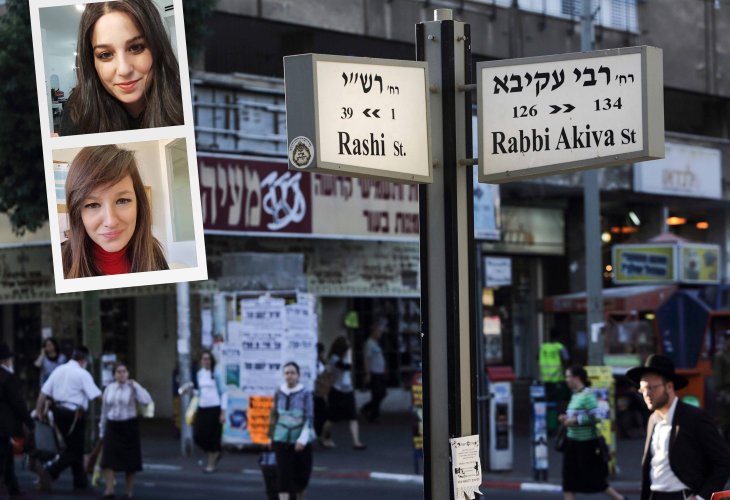 Above: Esti Reichman; Below: Ya'ara Landau-Kanner
Every time Esti Reichman, a resident of Bnei Brak, passed by tourist groups in her city, the explanations she heard from tour guides left her uneasy. To her, the ultra-Orthodox world was being described in ways that felt far from reality. At the same time, Ya’ara Landau-Kanner was living in Berlin, working for the Prime Minister’s Office. When she asked Israelis there why they had chosen to live in Berlin, she often heard the same answer: “We have nothing to look for in Israel.” Troubled by the growing rift among their people, both women reached the same conclusion: something had to change.
Tourists in Bnei Brak
Esti is a mother of five and owns a wig salon where she volunteers to make wigs for cancer patients in collaboration with Ezra LeMarpeh. Her work brings her into contact with people from all walks of life: religious, secular, Jewish, and Arab. Over time, she noticed how limited many people’s understanding of the ultra-Orthodox world was, often based on stereotypes alone. This disturbed her. Secular society is considered open-minded, yet many people know almost nothing about their ultra-Orthodox neighbors.
What hurt her most was encountering this ignorance among professionals who worked with the ultra-Orthodox community. She recalls a gynecologist who asked her questions that did not reflect her reality at all, leaving her feeling belittled and misunderstood.
From within the ultra-Orthodox world, Esti also recognizes the distance. “Our community is closed and sheltered, often unaware of what exists beyond it. From afar, the secular world can seem empty or even negative. But when you look more closely, you discover people with values and goodness. Labeling an entire public in such a negative way creates distance, and in a divided country like ours, that’s especially painful. Judaism does not belong only to us. Many people feel connected to Hashem and to certain mitzvot, each in their own way. Most are not truly disconnected.”
Her discomfort deepened when she listened to tour guides in Bnei Brak. “I would walk through the city, see groups of secular visitors, and hear what the guides were telling them. Too many inaccuracies. It felt like we were not being represented honestly. What hurt most was the sense that we are hated simply for being ultra-Orthodox. And when people hate the ultra-Orthodox, they also reject the Torah we are seen to represent. That is painful, because every Jew has a share in the Torah, even if they seem distant. During the COVID period, when I spent time in Tel Aviv, I felt how much hostility existed, fueled by distorted media coverage. I felt helpless. That was when I understood I had to act.”
Around the same time, Ya’ara, married and a mother to a young daughter, was living in Berlin. Today she lives in Ramat Gan. “I worked for almost nine years at the Prime Minister’s Office, nearly six of them in Berlin,” she explains. “I met many Israelis who had chosen to settle there. When I asked why, they often said, ‘We have nothing to look for in Israel.’ That shocked me. Realizing that people no longer felt connected to the country pushed me to return and work in the social sphere.”
Today Ya’ara serves as deputy CEO of LEAD, an organization that develops young leadership. “It’s important to me that everyone here has a reason to stay.”
Rabbi Akiva and Allenby Intersection
Their shared longing for a healthier social reality brought Esti and Ya’ara together in an unexpected place: a joint theater group of ultra-Orthodox and secular women.
“It’s a group where we connect through theater about our different worlds,” Esti explains. “We’re not professional actresses, just women who care deeply and want to express things that are sometimes hard to say directly. Through the creative process, we discuss our differences and learn to understand the life choices each of us has made. We may not agree, but we learn respect.”
The project is a collaboration between Shetachvia, which runs social theater groups across the country, and Eilat Hashahar, which promotes unity between religious and secular Israelis. Shetachvia provides professional guidance, while the Chavruta project encourages structured dialogue.
“We argue a lot and we hug a lot,” Esti smiles. “And over time, we’ve become real friends.”
Ya’ara’s First Encounter
“First, I simply wanted to understand what was happening here,” Ya’ara says. “It was clear to me that our strength as a nation lies in unity. The day after I landed in Israel, I signed up for the group. A few days later, I attended my first meeting in Bnei Brak. The theater attracted me, but I stayed because of the women. My return to Israel wasn’t easy, and the group became an anchor. I had never spoken to an ultra-Orthodox woman before. This was my first real encounter, at age 28.”
In their recent play, Rabbi Akiva and Allenby Intersection, the women portray characters ranging from a tattooed shop assistant to a woman from a closed Hasidic community. The storyline follows a guided tour from Allenby Street to Rabbi Akiva Street. Each woman chose a character she related to and voiced her story. Through these characters, painful stereotypes are confronted and replaced with complexity and humanity.
Over time, the relationships deepened. The women visit each other’s homes, attend family events, and share Shabbat meals. One participant, a lawyer, was so inspired that she began organizing dialogue meetings between secular women’s groups and ultra-Orthodox women in her own city.
When asked how she once viewed the ultra-Orthodox world, Ya’ara answers honestly: “I thought they were unhappy. That women were trapped in endless motherhood and that the men lived under unbearable pressure. I thought they didn’t contribute to society. What I found was the opposite: joyful women, full of life, deeply active in work and volunteering, often contributing more than many others. They were open, curious, and eager to learn about me too.”
Breaking Boundaries and Stereotypes
Ya’ara explains that clear boundaries in the ultra-Orthodox world actually allow for freedom rather than restricting it. Disagreements still exist, but she sees them as secondary to the humanity of the person in front of her.
“Esti contributes more to society than many people I know, including some former army officers,” she says.
She also emphasizes what unites them. “At the end of the day, both secular and ultra-Orthodox women care about family, relationships, purpose, and self-fulfillment. That’s the real core. I find inspiration in women who manage home, work, and community with strength and calm. They seemed pitiful to me once. Now I see how strong and joyful they are.”
Her experiences have also changed her family’s perspective. A Purim seudah at Esti’s parents’ home became a turning point for her husband, who had previously held strong criticisms of the ultra-Orthodox world. Through open conversation, stereotypes began to dissolve.
Beyond the theater, Esti decided to take her mission further. She began welcoming tour groups into her wig salon twice a week.
“They hear about the charity project, meet an ultra-Orthodox woman face to face, and are encouraged to ask anything. I focus on telling the truth and softening hearts. Recently, a group of teachers visited and later asked me to speak to their students. For many of them, this was the first genuine interaction with an ultra-Orthodox woman.”
Most questions revolve around women’s status, autonomy, and religious life. Many visitors are surprised to discover strong, educated women balancing large families and demanding careers.
“It hurts when people say, ‘You’re not like other ultra-Orthodox women.’ I am like them. And they are like me. We are all people with rich inner worlds, joy, responsibility, and kindness.”
One high-ranking government official who initially resisted joining such a tour later admitted, “I thought I knew everything about the ultra-Orthodox, but I realized I knew nothing. Meeting real people changed my entire perspective.”
Esti now hosts these meetings alongside her mother, sister, or Chavruta project manager Riki Seaton. “There’s no advertising. People come through word of mouth. Due to high demand, we now only accept influential groups such as teachers, doctors, and officers. For me, this is the real happy ending: knowing we are reaching people and creating real change in how the ultra-Orthodox, especially women, are seen.”

