

Magazine
From Swings to Roller Coasters: A Journey Through Time
A fascinating journey through the history of everyday inventions, from swings and roller coasters to bicycles, balloons, and airplanes, revealing how curiosity, wisdom, and a sense of wonder shape the world around us.
- Shalom Pekasher
- | Updated
 (Photo: Shutterstock)
Judaism teaches us to approach the world with curiosity and gratitude. Every natural law, every invention, and every discovery can become a window into divine wisdom. From the simple joy of a playground swing to airplanes soaring across the sky, human creativity reflects the remarkable potential Hashem placed within us. Let us explore the stories behind familiar inventions and the ideas that shaped them.
The Swing: A Simple Joy with a Long History
Going to the playground and climbing onto a swing is something children have loved for generations. However, this simple pleasure has a surprisingly rich history.
It is difficult to know when the first swing was invented, because humans have likely been swinging on branches and vines since the dawn of history. Ancient Greek paintings and sculptures show that people were already enjoying swings more than 3,500 years ago.
In the modern era, especially during the 19th and 20th centuries, several developments led to the widespread construction of playgrounds. One key change was that ropes and chains became cheaper and more accessible.
Around 1780, the world’s first kindergarten was built in Germany, and the idea spread to the United States about a century later. At the same time, the Industrial Revolution transformed daily life. People had more leisure time, and most importantly, new laws were passed that prohibited child labor.
Thanks to these laws, children finally had the freedom to do what they do best: play. Playgrounds began to appear, and swings became a central feature. In the United States, people even installed swings on their porches or tied ropes to tree branches in their yards.
By the 1930s, thousands of playgrounds were built across America, and swings became one of the most beloved play structures in cities.
Fascinating Facts About Swings
In 18th century France, swings were considered a luxury pastime for the wealthy, mostly adults
In the 1960s, psychologists suggested adding more complex playground equipment to help children develop decision making and social skills
It is physically impossible to complete a full loop on a traditional chain swing and attempting it is extremely dangerous
Until the 1970s, swings were often made of metal, which caused many injuries. Manufacturers later shifted to safer materials such as wood and plastic
The longest swing in the world is in New Zealand. It stands 160 meters high and reaches speeds similar to a car on a highway
How Does a Swing Work?
Objects that are higher have more potential energy. When you pump your legs at the right moment, you lift your body slightly higher. That increase in height creates more potential energy, which gravity then converts into motion. This is why you swing faster and higher with proper timing.
Roller Coasters: From Snowy Slopes to Thrill Rides
Roller coasters are exciting, but where did they come from?
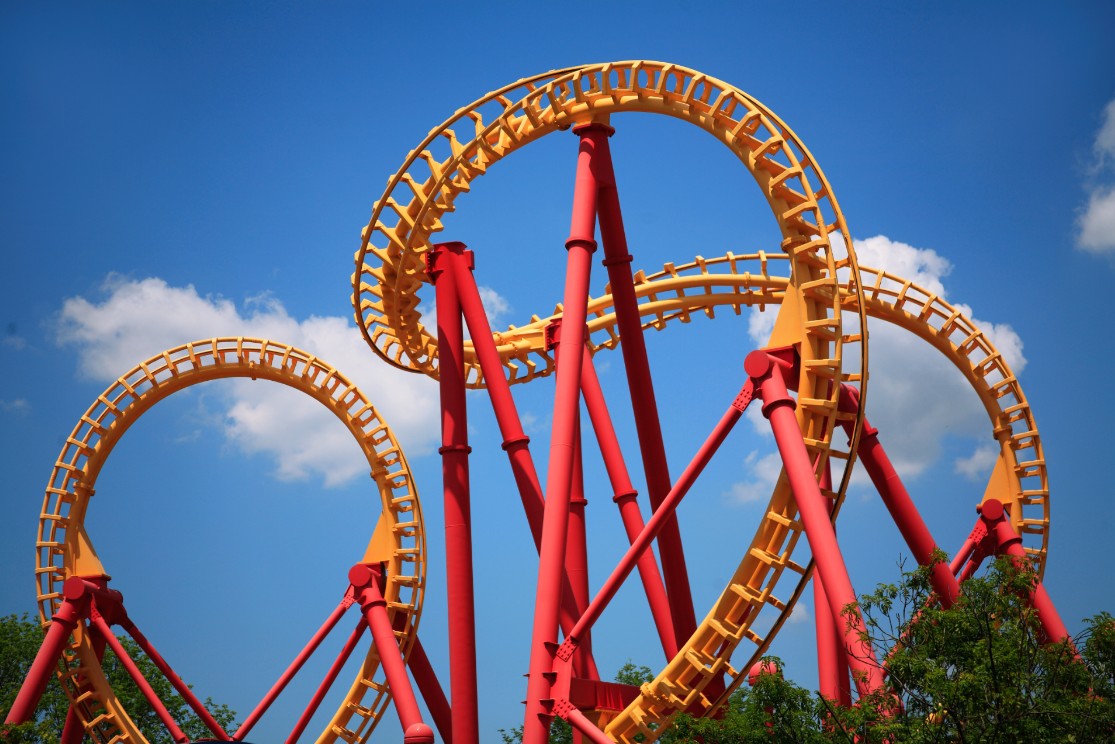 Photo: Shutterstock
Russia, 18th Century
The earliest origins trace back to Saint Petersburg, where wealthy families built massive snow slides in their palace gardens. People slid down using sleds, which is why roller coasters are still called “Russian mountains” in several European languages.
France, 1817
The first true roller coaster was built in Paris and called the “Aerial Walkway.” It featured carts on tracks and was intended only for the wealthy.
Denmark, 1843
Tivoli Gardens opened in Copenhagen and welcomed the middle class to enjoy amusement rides. This marked the beginning of amusement parks for the general public.
United States, 19th Century
Coal companies used sloped tracks to transport coal down mountains. Eventually, people realized these tracks could also be used for fun. By 1884, the first patented roller coaster was built at Coney Island, New York.
Technological improvements followed quickly. Continuous loop tracks were developed in 1885, and safer wheel mechanisms appeared in 1912. For decades, roller coasters were made of wood, which limited their design.
Everything changed in 1959 when Disneyland introduced steel roller coasters. This innovation transformed amusement rides forever.
Interesting Roller Coaster Facts
The oldest operating roller coaster is Leap the Dips in Pennsylvania, first opened in 1902
The tallest roller coaster is Kingda Ka in New Jersey, standing 139 meters high
The fastest roller coaster is Formula Rossa in the United Arab Emirates, reaching speeds of 240 km per hour
Why Don’t People Fall Out During Loops?
When something moves in a circle, a force pushes it outward. This is why you feel pushed to the side when a car turns sharply. In a roller coaster loop, this force presses riders firmly into their seats. When the speed is high enough, this force can overcome gravity itself. That is why the ride remains safe, though only because it is carefully engineered by experts.
The Bicycle: A Revolution on Two Wheels
Bicycles are no longer just toys. They are used for transportation, health, and environmental sustainability around the world.
 Photo: Shutterstock
The First Bicycle
The earliest bicycle, built in 1817 by Karl von Drais in Germany, was made of wood and had no pedals. Riders pushed themselves forward with their feet.
Pedals were later added by French inventors Pierre Michaux and Pierre Lallement, but the design was uncomfortable and earned the nickname “bone shakers.”
In 1870, James Starley enlarged the front wheel to increase speed, which made bicycles faster but less stable. Later improvements led to the modern bicycle shape, with equal sized wheels, a chain drive, and better balance.
In 1888, John Dunlop invented the inflatable tire, ushering in the golden age of cycling.
How Bicycles Changed Society
Bicycles played a major role in women’s independence. Women could travel freely without relying on men or horse drawn transport.
Today, bicycles still provide access to work, education, and markets, helping reduce poverty, pollution and expand opportunity.
Interesting Bicycle Facts
Early bicycles weighed over twenty kilograms. Today’s lightest models weigh less than five
Copenhagen has more bicycles than residents
Monkeys can be trained to ride specially designed miniature bicycles
Hot Air Balloons: Humanity’s First Flight
A hot air balloon carries passengers in a basket beneath a large balloon filled with heated air.
 Photo: Shutterstock
How It Works
Hot air is lighter than cold air. When the air inside the balloon is heated, it rises, lifting the balloon with it. This is why hot air balloons must be so large.
The First Flights
In 1783, the Montgolfier brothers in France launched the first hot air balloon. The first passengers were a sheep, a duck, and a rooster. Later that year, humans successfully flew untethered for the first time in history.
Today, balloons are used mainly for recreation, though they once served military purposes.
The Airplane: From Ancient Dreams to Modern Reality
For centuries, humans dreamed of flying like birds. Many tried and failed. Only when scientific understanding caught up with imagination did success become possible.
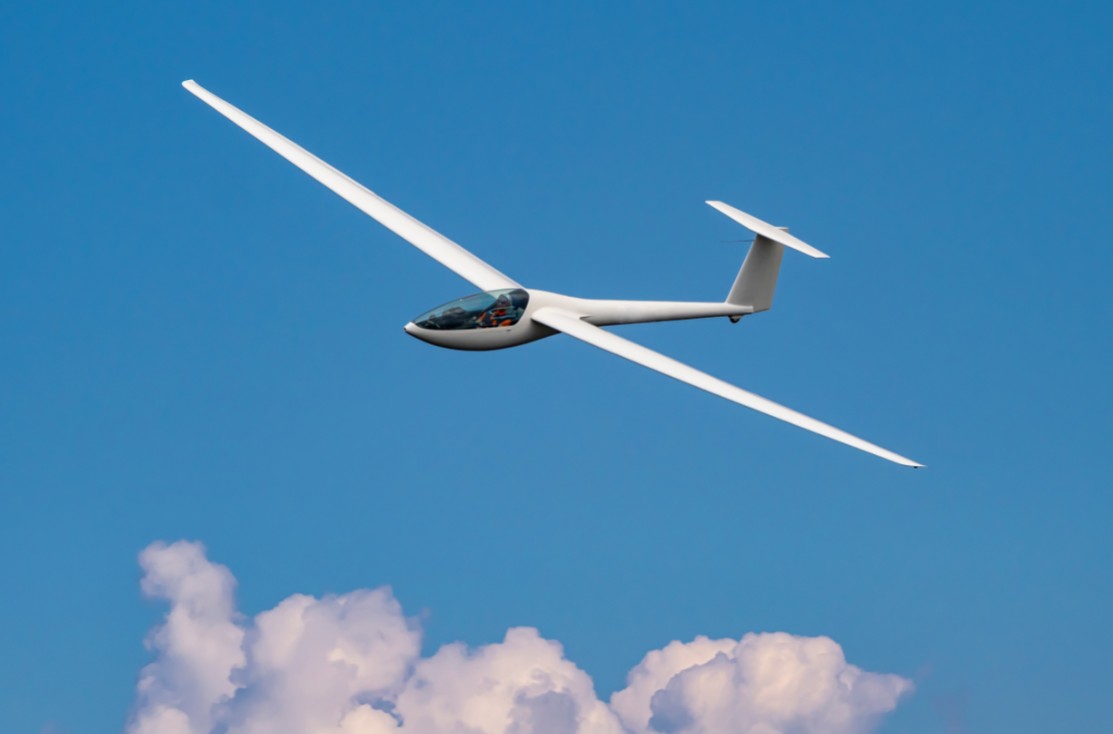 Photo: Shutterstock
The First Glider
Sir George Cayley built the first successful glider in the early 19th century and is considered the father of aviation. His work established the principles of aerodynamics.
Powered Flight
After many experiments and failed attempts, Orville and Wilbur Wright achieved the first controlled, powered flight on December 17, 1903. Orville flew for 12 seconds, Wilbur for 59. It was enough to change history forever.
How Airplanes Stay in the Air
Air moves faster over the curved top of the wing than beneath it. This creates pressure differences that push the plane upward. When speed is sufficient, lift overcomes gravity and the plane rises into the sky.
A Final Thought
When we explore the history of invention, we see more than clever machines and scientific progress. We see the unfolding of human potential, wisdom, perseverance, and curiosity, gifts placed within us by the Creator. Judaism encourages us to look deeper, to recognize that behind every law of nature and every breakthrough lies divine order and purpose.
The next time you see a child on a swing, a cyclist on the road, or a plane in the sky, remember that these are not only products of human ingenuity but also reminders of the extraordinary world we were entrusted to explore, understand, and elevate.

