

Magazine
Living with Tourette’s: Stories of Resilience and Hope
Four individuals living with Tourette Syndrome share their personal experiences of stigma, isolation, courage, and perseverance, revealing the strength behind the struggles and the hope that continues to carry them forward.
- Michal Arieli
- | Updated
 (Photo: shutterstock)
Judaism teaches the value of human dignity and compassion. Every person carries a story that deserves to be heard with sensitivity rather than judgment. The following article sheds light on the lived reality of people with Tourette Syndrome, not through statistics, but through voices. Honest, vulnerable, and deeply human.
Avitar Lerner: A Viral Moment That Exposed a Painful Reality
When Avitar Lerner boarded a bus two months ago, his intention was simple: to travel from central Israel to the north. During the ride, his Tourette Syndrome triggered vocal tics. The teenagers seated next to him began mocking him.
“Bark, kid, bark,” they jeered, mimicking the sounds his tics produced.
In a heartfelt post that later went viral, Lerner wrote, “I have always been embarrassed to talk about my daily struggles. But today I feel I must share a bit of what I endure because of Tourette’s.” He explained that his syndrome sometimes causes loud vocal sounds that resemble barking. Even after he calmly explained his condition, the teenagers continued mocking him and began filming him for Instagram.
“I’m going through a very difficult period with Tourette’s right now,” he wrote. “My sounds are louder than usual. Please think twice before laughing at someone. Be humane.”
The post sparked widespread awareness, but it did not stand alone. Since then, more and more people with Tourette’s, teenagers and adults alike, have shared their experiences. Their stories reveal not only the difficulty of living with the syndrome, but also the emotional toll of social judgment, misunderstanding, and isolation.
To better understand these realities, we spoke with four individuals living with Tourette Syndrome. These are their stories.
Alexandra Kashro Klugerman: “It Hit Me in My Most Vulnerable Place”
Alexandra, 35, says her symptoms began early. Her parents noticed unusual movements when she was just one year old, but clearer tics appeared around age six. She received an official diagnosis at twelve.
“I don’t remember much except endless tests,” she recalls. “Some even under anesthesia. Only later did the doctors finally confirm it was Tourette Syndrome.”
Her tics began with blinking and head movements. Over time, especially during periods of academic pressure, they intensified. Shoulder movements, finger tics, eye rolling, heavy breathing sounds, and body jerks were added to the mix.
“Managing everything was extremely hard,” she says. “I was a strong student, but I also struggled with attention and learning difficulties. That combination is exhausting.”
Socially, the experience was painful. Children mocked her, gave her cruel nicknames, and searched for excuses to laugh. Moving to a less demanding school helped reduce her anxiety.
 Alexandra Kashro Klugerman
Today, Alexandra is married, a mother, holds two degrees in special education, and has worked for over a decade as a teacher in remedial education.
“My tics are still here,” she says, “but they do not stop me from teaching. In fact, I feel a deep calling to work in this field.”
At the beginning of each school year, she tells her students about her Tourette’s. “It creates a real connection. They see I’m not speaking from above. I’m living with challenges too.”
The hardest moment came when she was dismissed from a school position. The principal explained that the work might be too stressful and that stress could worsen her Tourette’s.
“That comment broke me,” Alexandra admits. “I told her I knew how to manage myself. After that, I hid my condition for a full year at my next job. It still hurts to remember.”
She believes education and awareness are key. “People don’t always mean harm. Often they simply don’t know. But we all need to try harder to understand. Even with relatively mild symptoms, Tourette’s is exhausting.”
She shares one recent moment that stayed with her. During a sports session, her tics intensified. She apologized afterward and explained why. The group responded kindly and said, “We didn’t even notice.”
“That’s the kind of compassion that changes everything,” she says.
Bar Gentovnik: “I Chose to Meet Tourette’s With Humor”
Bar’s tics began suddenly when he was nine. By ten, he had been diagnosed.
“For me, it’s mostly motor tics,” he explains. “Neck movements, rubbing my eyes, snapping my fingers. As a child I tried to ignore it, but the reactions from others made it impossible.”
He endured bullying and physical violence at school. Today, the cruelty is usually more subtle, but still painful.
He recalls standing in line during the COVID vaccination period when his tics flared. Someone gave him a judging look. Without thinking, he joked, “Sorry, side effect of the vaccine.”
Humor, he says, became his coping strategy.
“I saw how much people with Tourette’s can suffer socially. I decided I didn’t want to be crushed by it. So I began speaking publicly about it.”
Bar now gives lectures, primarily in schools. He shares not only about Tourette’s but also about emotional wellbeing.
“I explain how stress worsens tics. How emotional distress affects the body. How ignoring mental health can lead to deeper problems. My own struggle led to overeating and even hospitalization. I don’t hide that from them.”
He emphasizes that while he cannot change having Tourette’s, he can choose how he responds to the world.
“Tourette’s often comes with OCD,” he adds. “Compulsions, rituals, rigidity. I live with that too. It’s daily work. A lifelong journey.”
On the importance of awareness, he is unequivocal. “The more people talk about disability, the more empathy grows. Silence only deepens the stigma.”
Tali Braier: “I Avoid Public Transportation”
Tali, 23, works as a special education assistant. Her Tourette Syndrome began at age fifteen and a half, following a severe strep infection accompanied by fever. The fever passed. The tics did not.
“They affect my hands, legs, shoulders, head, and voice,” she explains. “My whole body.”
At twenty, her symptoms worsened significantly.
“I try to live normally. I work, I go out, I use public transport. But every outing requires mental preparation. Sometimes I cancel plans just to avoid the looks.”
People’s reactions, she says, are often more painful than the tics themselves.
“When I explain, some people respond, ‘If you can’t control it, just stay home.’ They don’t understand how limiting that is.”
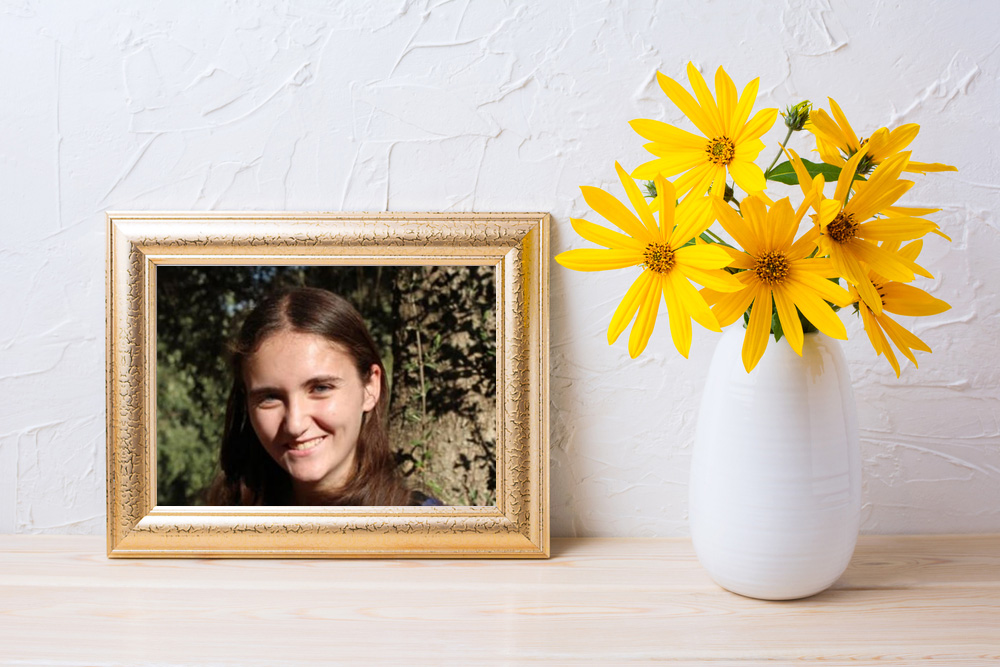 Tali Braier
She also describes systemic challenges. Her severe tics make waiting in line physically dangerous. She can hit herself, dislocate joints, or cause alarm. Yet she does not qualify for a disability exemption because her medical rating is below the required threshold.
“That means fewer medication options and missed appointments,” she says.
She adds something rarely discussed. “Tourette’s is painful. People don’t realize that. After episodes, my whole body hurts. There is no medication for that pain.”
Despite everything, Tali still hopes for change. “A little understanding could make life so much easier.”
Natalie Pesikov: “I Closed My Business and Rarely Leave Home”
Natalie’s Tourette’s began suddenly when she was almost twenty-four. One ordinary workday, eye tics appeared. Within days, her entire body was affected. She went to the emergency room but left without answers.
Six months later, the tics eased slightly, then returned with full intensity. Over the past year, her condition has deteriorated.
“My tics are severe,” she says. “Vocal screaming. Violent movements. My arms flail. My head hits walls. That’s why I stay home.”
She previously ran a baking supplies business. At first, she tried to continue as usual. But once the tics became daily, customers stopped coming.
“I understand them,” she says quietly. “It can be frightening. But it still hurts.”
The pain is constant. Some tics are visible, others internal, but none ever truly stop.
“There is no cure,” she says. “No real relief.”
Emotionally, the transition was devastating. She speaks with honesty but dignity.
“Some family members are my anchor. Others are afraid. Interestingly, younger people tend to see me as a person first. Older people struggle more. I have a disabled relative who cries every time he sees me. He says it’s unbearable.”
What would help most, she says, is simple human consideration. Continued support for her business. Greater flexibility in public services. A line exemption that would reduce stress in medical settings.
“The only places I go are the clinic and the pharmacy. Even one other person nearby increases my symptoms.”
Natalie ends with clarity and strength.
“It’s important to understand that behind Tourette’s are regular people. Interesting people. Funny people. Kind people. We are no different. If you’re unsure, you can always ask us. We are not ashamed of who we are.”
A Call for Awareness and Compassion
These stories reveal a reality that many prefer not to see. Tourette Syndrome is not only a neurological condition. It is a social challenge, an emotional burden, and a daily test of resilience.
Awareness does not require grand gestures. It begins with patience. With restraint. With the willingness to see the person before the behavior.
Sometimes, the most meaningful change begins with something very small: choosing not to laugh, choosing to listen, choosing to care.

