

Magazine
A Promise Made in Tears: Honoring Forgotten Soldiers of the Holocaust
They were 150 Holocaust survivors, the last remaining of their families, who immigrated to Israel and fell defending the young state. Known as the soldiers of “Nitzach Acharon,” their memory is now carried forward by Jonah Kalimi, who shares a deeply moving account.
- Tamara Carmiel
- | Updated
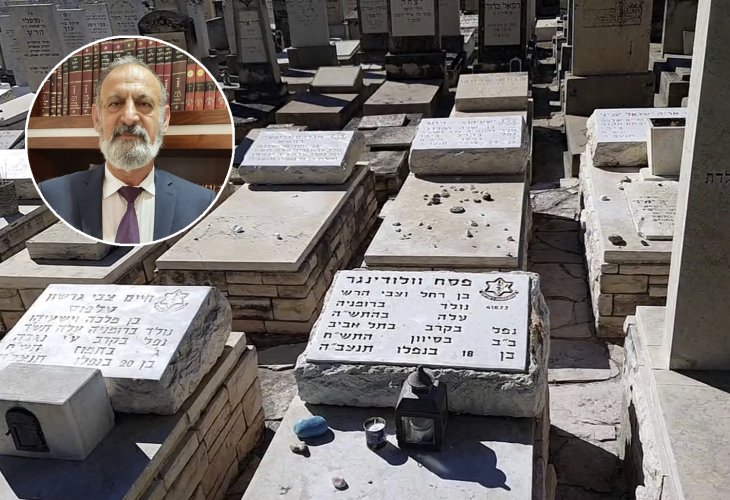 (In circle: Jonah Kalimi)
Jonah Kalimi, from a religious family in the moshav of Ashbul, has walked many paths in life. He left the ways of Torah and mitzvot, served in the Nahal, got married, and moved to Ramat Gan. Later, after attending a values seminar, he returned to religious observance, and today he and his wife live a Haredi lifestyle.
Nothing in his past suggested that one day, during the height of the COVID lockdown, he would establish “Nitzach Acharon” – a chilling mission that became the project of his life, especially after retirement. Within a short time, Kalimi became known as “the father of the soldiers” that almost everyone had already forgotten.
Honoring the Forgotten Fallen
Kalimi’s mission is to honor soldiers who fell sanctifying Hashem’s name. For several days, during the peak of the first wave of COVID, Kalimi searched for the old military section of fighters from the War of Independence. He did not give up, even after being reprimanded by the cemetery guard.
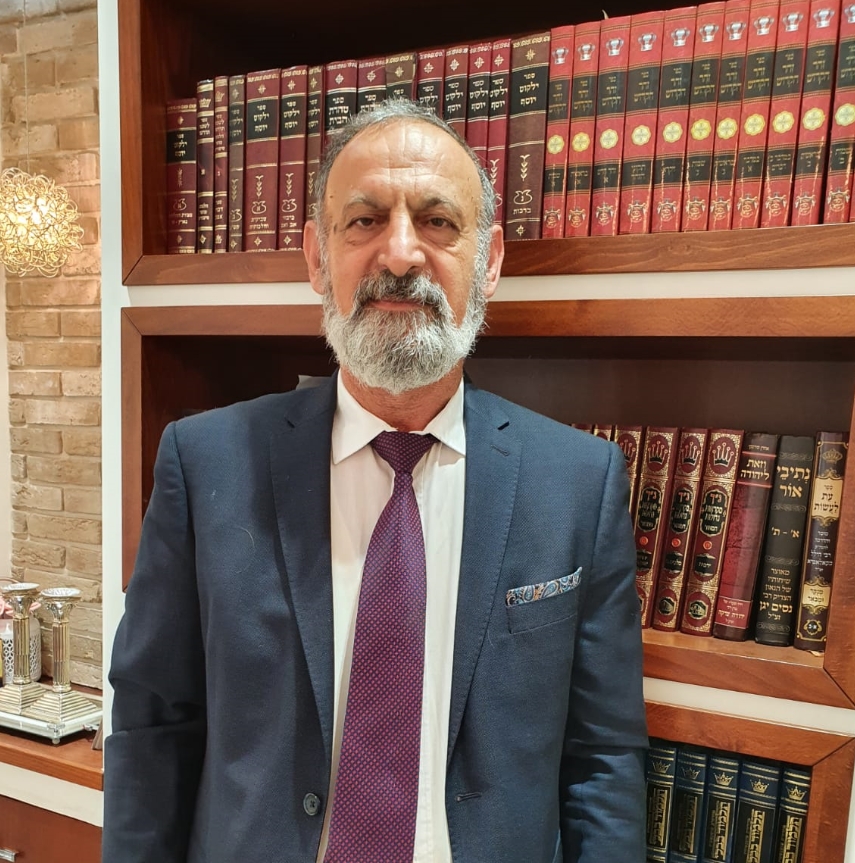 Jonah Kalimi
During the interview, Kalimi suddenly stopped speaking. When I asked why, he said, “The subject moves me so deeply that I have tears in my eyes.” I admitted that I felt the same.
What made you decide to risk visiting a military cemetery despite the lockdown guidelines?
“On Memorial Day for IDF Soldiers, the government announced that military cemeteries would be closed due to the pandemic. When I heard this, I felt a deep pain in my heart. And I was not alone. Everyone I spoke to expressed frustration and sorrow.
“Although I usually do not visit cemeteries and prefer to learn Mishnayot for the elevation of the souls of IDF soldiers, the thought of fallen soldiers lying alone, without visitors or prayers, would not leave me. I understood the danger of COVID and feared the consequences, but the inner drive was stronger.”
Discovering the Soldiers of “Nitzach Acharon”
How did you hear about the soldiers of ‘Nitzach Acharon’, and why did you decide to visit their graves?
“For many years I have owned the book ‘Nitzach Acharon’ from the Ministry of Defense, which contains the names and biographies of Holocaust survivors who were the final remnants of their families. They immigrated to Israel alone, enlisted in the IDF, fought for the homeland, and fell during the War of Independence.
 A memorial for the fallen soldiers who survived the Holocaust
Kalimi drove to the cemetery with fear in his heart, unsure what he would say if stopped by police. He searched unsuccessfully for hours. By nightfall he was exhausted and returned the next day, only to find the cemetery gate closed.
When he finally found the guard, he was reprimanded for being in the military section. Kalimi left but felt deeply that his mission was incomplete.
He returned again on Independence Day, still unable to locate the grave. Even though he had already recited Mishnayot, Psalms, and Kaddish, he felt it was not enough.
Finally, when restrictions were lifted, visitors and workers directed him to the separate section for fallen soldiers of 1948.
“When I finally saw the tombstone of Yitzhak Adler, I was overwhelmed with emotion and promised through tears: ‘I will do everything so that you will never be forgotten.’”
 (Photo: Jonah Kalimi)
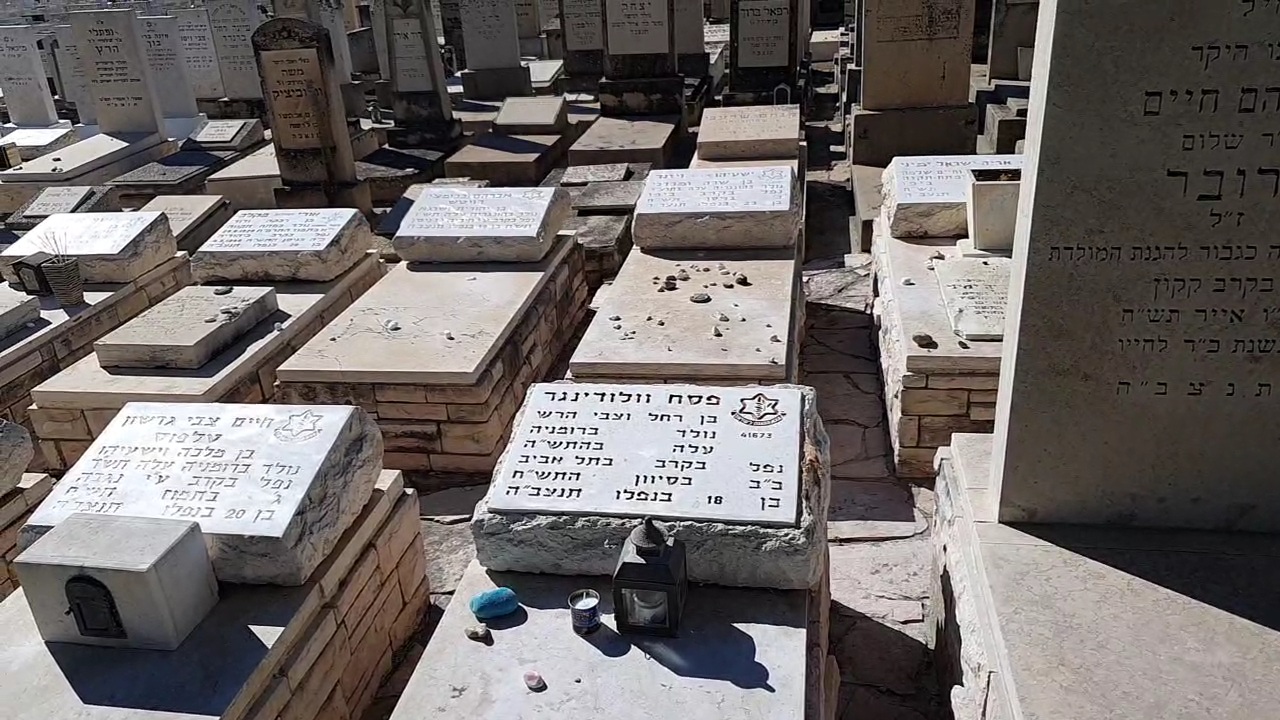
Looking around, Kalimi noticed candles, flags, and flowers placed by organizations, but no candles had been lit. The sight of the neglected graves deeply affected him.
He began lighting candles himself, returning day after day until the task was completed.
“I even had to improvise coverings so the candles would not go out. It rained heavily that night, everything was soaked, yet the candles lit easily.”
He contacted the Ministry of Defense regarding broken and neglected tombstones. To their credit, the inscriptions were restored, though many graves still lack candle holders.
 (Photo: Jonah Kalimi)
After such an effort, why did you continue?
“It’s hard to explain, but something kept burning inside me. My conscience would not rest, and I could not leave the remaining soldiers without attention.
“At first, I felt a sense of closure when I finished what I had started and thought the mission was complete. But it seems the Creator of the Universe had other plans. About two weeks later, the feeling returned. It occurred to me that there might be another ‘Nitzach Acharon’ whose date of death was approaching, and that I could pray for him as well. To my surprise, I discovered the fallen soldier Pesach Volodinger, buried next to Yitzhak Adler, whose date of death was ten days later. This time, I decided to organize a minyan and hold a proper memorial with Kaddish.
“Pesach fell on the 22nd of Sivan, 1948, in the Altalena disaster, at the age of eighteen. When I read his biography, I learned that for a brief period he had been fostered by the Kipnis family of Kibbutz Yihazkel. I contacted the kibbutz administration, and they directed me to Hagai Drori, a beloved 90-year-old Jew with a sharp mind who might remember something. When we spoke by phone, he immediately recalled Pesach. He shared his memories with great emotion and even invited me to visit the kibbutz. We remain in contact to this day.
“It was important to me that Pesach be remembered and commemorated in Kibbutz Yihazkel, so I searched for someone religious who could help make that happen. I learned that a group of returnees had recently formed there, and I reached out to Moshe Kram, a Chabadnik responsible for the synagogue who works to bring young people closer to our Father in Heaven. He recited Kaddish for Pesach that Shabbat, Parshat Beha’alotecha.
“Pesach was a sensitive boy with a strong sense of gratitude. Even though he arrived alone from the Holocaust and lived in poverty, he did not forget to thank his foster family and bought them a book with a personal dedication. To this day, the book with the dedication is preserved in the archives of Kibbutz Yihazkel.
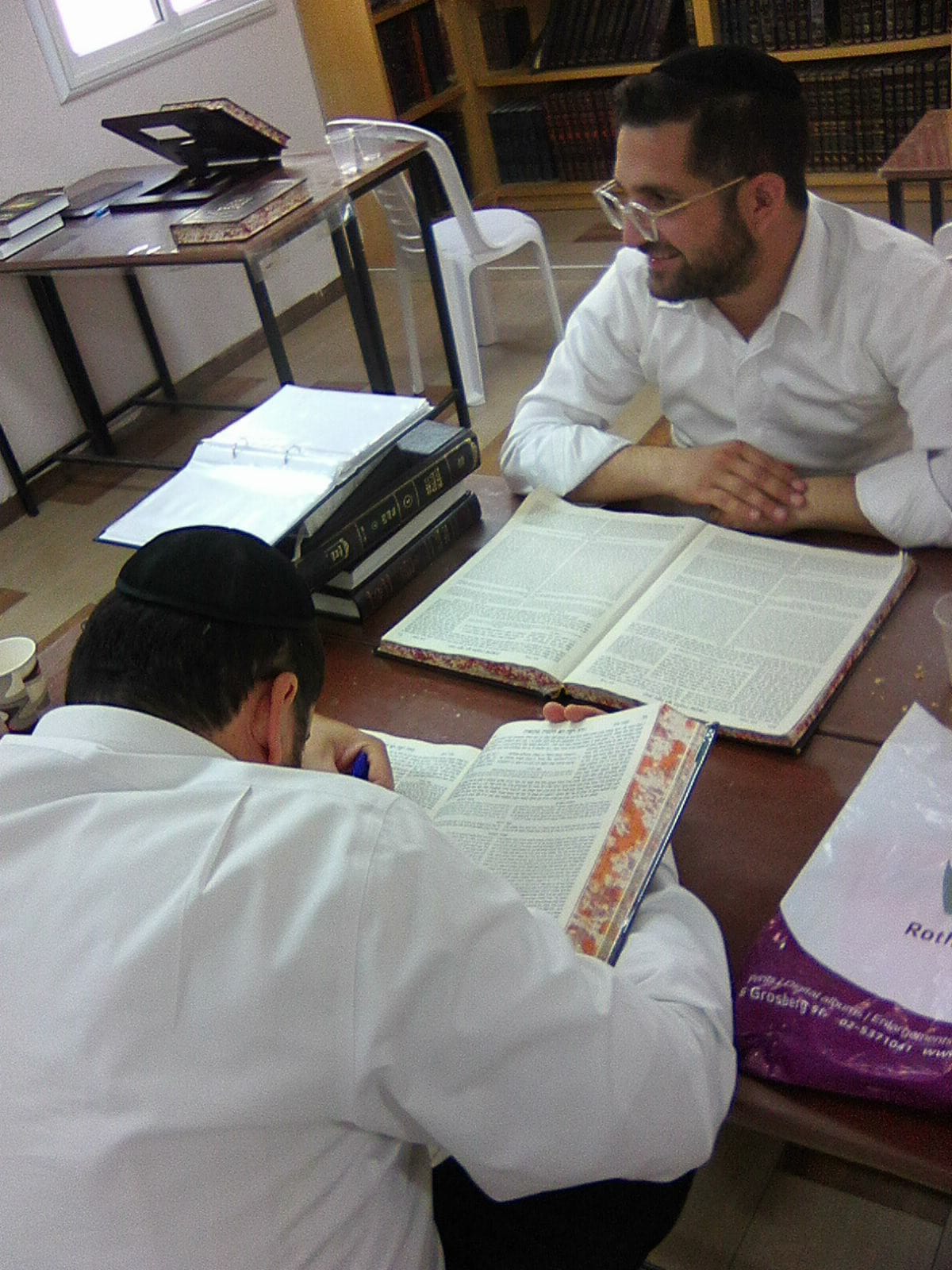
“As the anniversary of Pesach’s death approached, I already felt as though I knew him. I gathered several neighbors and friends. Two of them, Eliyahu Asoulin and Moti Nikah, who, like me, are special education teachers, joined me at the cemetery together with their students. I explained to the boys the concept of ‘Nitzach Acharon’ and how I became involved, and they were deeply moved.”
From One Prayer to a Life Project
You only wanted to pray for a soldier on Memorial Day. How did this become your life’s mission?
“I believe the promise I made at Yitzhak Adler’s grave took on a life of its own.
“Sometimes I feel that the souls of the 150 fallen are pushing me forward. There is no logical explanation for everything that has happened. This mission chose me, and I see it as a tremendous privilege.”
Do you feel this commitment is connected to your faith?
“As a believer, I understand what a soul is. That gives this work enormous meaning.
“There is a false perception, fueled by media, that Haredim do not care about IDF soldiers. That is completely untrue. Many Haredim served in the army. They pray daily for the soldiers’ safety. That has always been the case.”
Kalimi speaks at length about one particular fallen soldier, Chaim Kirshenbaum, known as Chaimak.
Born in Poland in 1927, Chaim survived the Holocaust alone after losing his entire family. He endured ghettos, labor camps, and unimaginable suffering. He attempted to reach Israel, was deported to Cyprus by the British, escaped, and eventually immigrated.
He joined the Palmach, fought bravely, and was later appointed an officer. In 1949, at age 22, he was killed in a plane crash in Eilat.
“When I saw his photo, I imagined him as a gentle child in a Talmud Torah, with parents dreaming of his future. He deserved life. He deserved continuity.”
Chaim was buried in Kibbutz Nitzach Sireni.
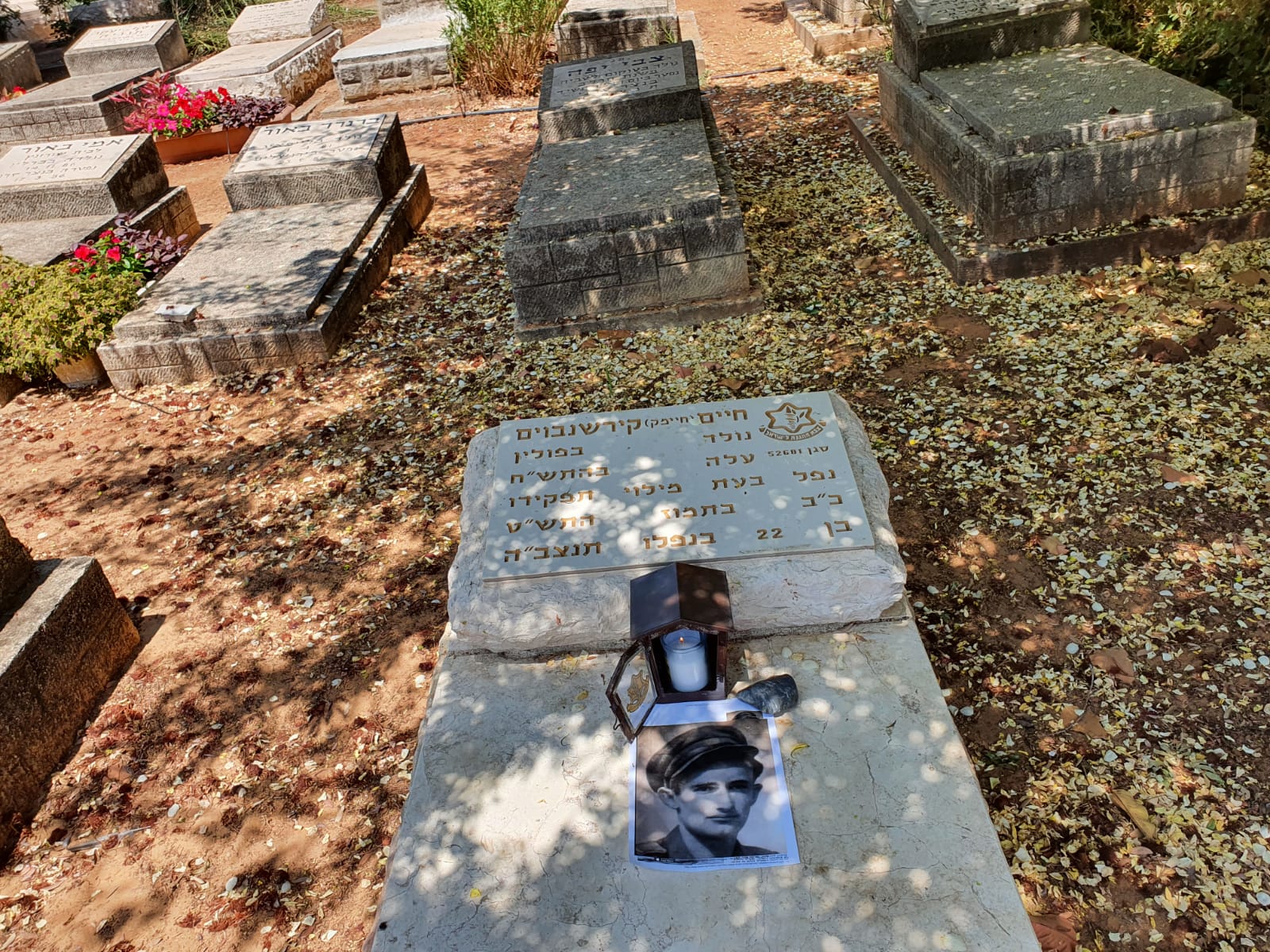 The grave of Chaim Kirshenbaum z"l (Photo: Jonah Kalimi)
A Growing Movement
Did you expect others to join this mission?
“The story itself evokes emotion. People do not need to be persuaded.”
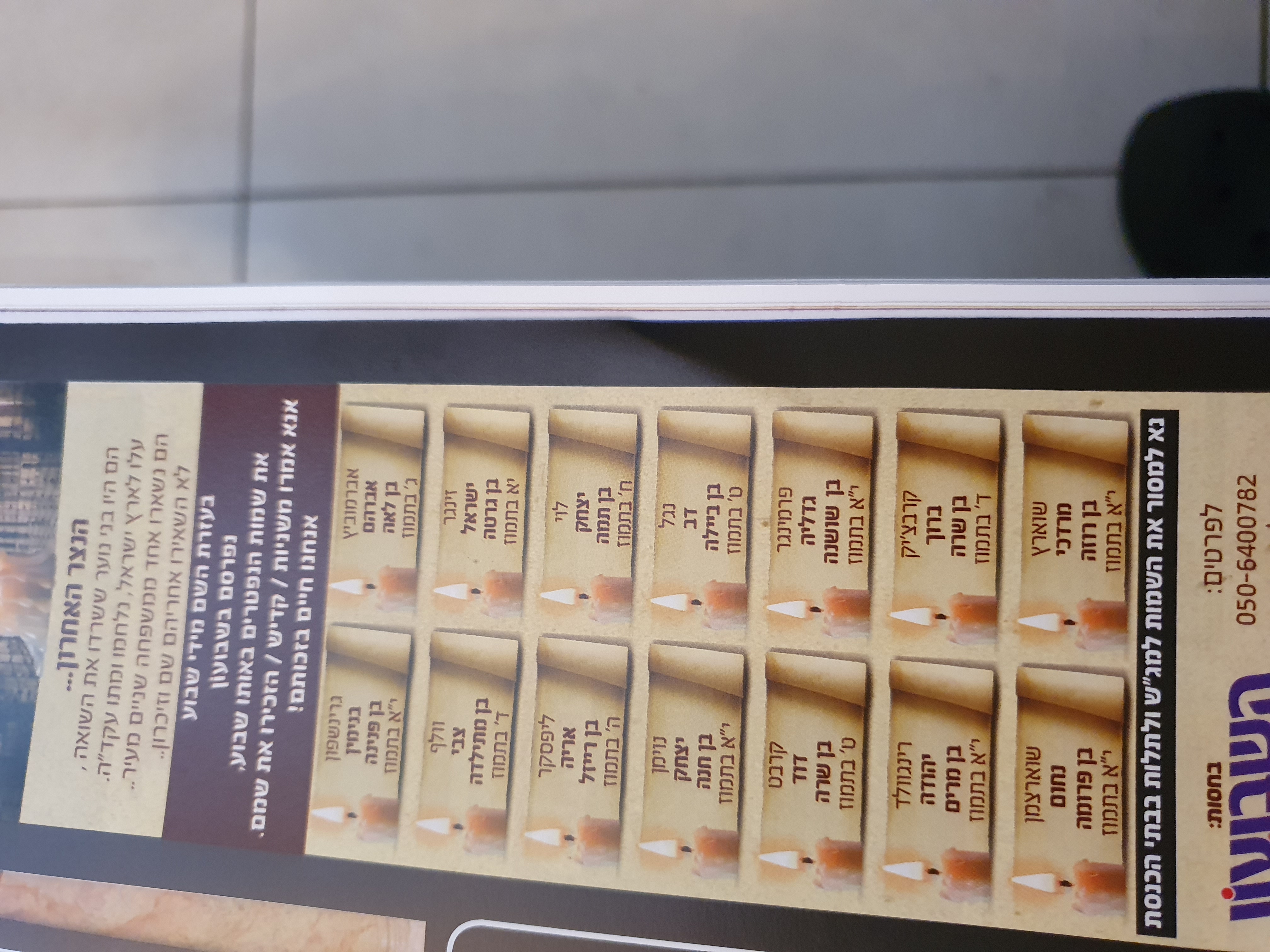
Kalimi shares how teachers, schools, synagogues, and kollelim across the country have begun learning Mishnayot and praying for the fallen. One school even committed to making “Nitzach Acharon” a recurring educational theme.
He printed the names and biographies of all 150 fallen and distributed them to communities across Israel.
“Today, they are no longer forgotten,” he says. “My dream is to continue spreading their stories with all my strength and fulfill my promise that they will never be forgotten again.”

