

Magazine
From Ruin to Renewal: The Forgotten Story of Har Tuv
An eyewitness recounts the harrowing night in which the Jewish community of Har Tuv faced devastation during the 1929 riots. Their courage, faith, and long journey of rebuilding offer a moving glimpse into a painful yet often overlooked chapter of Jewish history.
- Netanel Biton / HaDerech
- | Updated
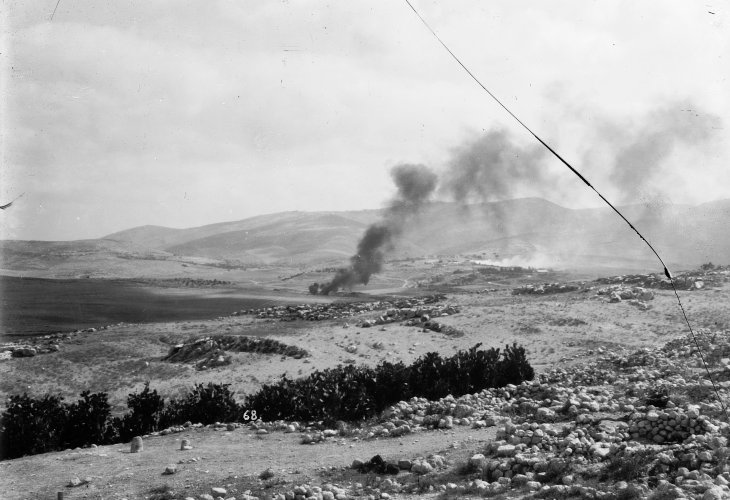 Har Tuv engulfed in flames during the 1929 riots.
The riots of 1929, marked by brutal violence against Jewish communities in the Land of Israel, left indelible scars. Even amid the turmoil, Jews from near and far continued returning to their ancestral land, founding new settlements and expanding ancient cities such as Jerusalem and Jaffa. Unable to accept this revival, segments of the local Arab population turned to violence.
The village of Har Tuv, known for its vibrant Torah life, was among the communities destroyed. Though its residents miraculously survived, their homes and synagogue were plundered and left in ruins.
This account seeks to illuminate those dark days through a period publication that documents the events in Har Tuv, a Jewish settlement near what would later become Beit Shemesh.
A Night of Terror in Har Tuv
An eyewitness describes the night of August 23, 1929, a Shabbat evening when the tranquility was shattered. A mob from the nearby village of Dayr Aban stormed the settlement, breaking through its gates amid deafening chaos.
The elders, women, and children were gathered for protection, while the young men defended the community with the few rifles that remained after British authorities had confiscated most of their weapons. For six harrowing hours, they resisted, uncertain whether they would survive the night.
Near dawn, British armored vehicles finally arrived, driving the attackers away. Only then did the full extent of the devastation emerge: homes ransacked, possessions stolen, sacred books desecrated, and entire structures reduced to rubble.
Memory, Reckoning, and Rebuilding
In the aftermath, some residents rebuilt, while others relocated to Tel Aviv or new communities. Yet the memory of Har Tuv endured. The reflections of Rabbi Eliyahu Dessler, preserved from that period, capture the spiritual anguish and introspection born from the tragedy.
Proposals were later made to relocate the residents in exchange for other lands, leading to painful divisions among the settlers. Ultimately, they chose to return and rebuild Har Tuv, which continued to exist amid recurring violence.
From Ruins to Renewal
Today, the old cemetery, containing just twenty-six graves, stands as a poignant remnant of the original settlement. Restored by workers committed to preserving the memory of the pioneers, it holds figures such as Bechor Israel Giron, one of Har Tuv’s earliest leaders.
From the struggles and ruins of this region eventually rose Beit Shemesh, a vibrant city that absorbed waves of immigrants and became a symbol of renewal and resilience. Har Tuv itself may no longer stand, but its story continues to echo as a testament to perseverance and rebirth.

