

Magazine
Klezmer at Heart: The Journey of Musa Berlin
Musa Berlin, 86, shares his deep connection to music and to the traditions of Mount Meron, where he has performed for decades. In a moving reflection, he speaks about the Meron tragedy and the lasting impact it continues to have on his heart.
- Avner Shaki
- | Updated
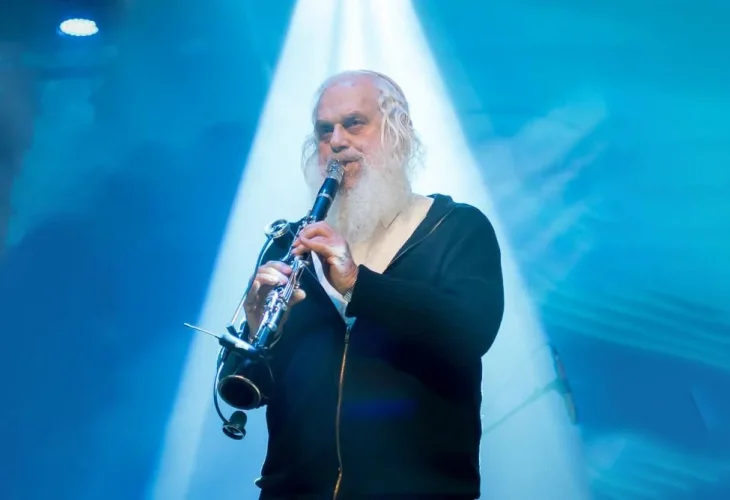 Musa Berlin (Photo Credit: Ma'oz Weissstock)
Musa Berlin's serene voice resonates with the wisdom of his 86 years and decades as a renowned klezmer musician in Israel. "I’ve been going to Meron for Lag B'Omer for over seventy years," he recounts, "and I've been playing there for more than sixty years. The changes over time are indescribable. For many years, we were just a trio of musicians; accordion, drums, and me. The atmosphere at the citadel was intimate. We knew the dancers, accepted requests, and understood that certain individuals awaited specific tunes. Everything was simple and communal."
He continues, "I began visiting Meron on Lag B'Omer and the 7th of Adar right after my Bar Mitzvah, and a decade later, I started playing there. At first, I played with Avrum Segal, may he rest in peace, until he grew older and I took over. Over the past twenty years, more musicians joined and the tradition evolved. Before my time, a custom involved musicians heading to Rabbi Yochanan the Sandler's tomb to play softer songs and share stories. Nowadays, I’m more drawn to what happens at Rabbi Yochanan’s because the intimacy at the citadel has vanished. The last organized gathering was during the year of the disaster, a scar that remains open in my heart."
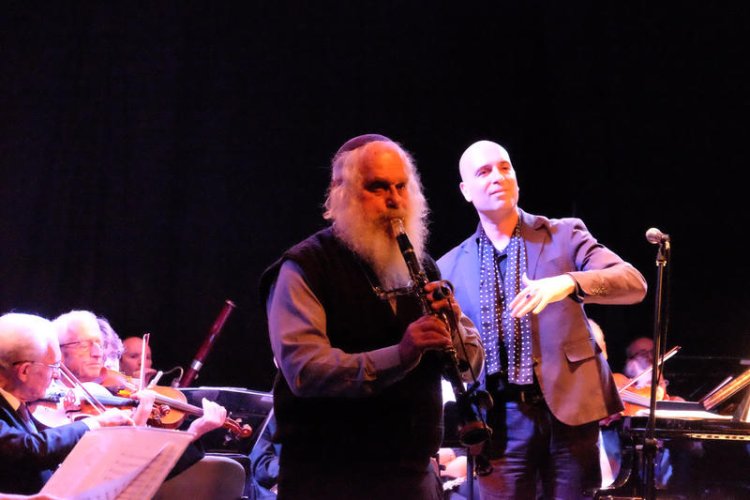 Photo: Gershon Elinson
 Playing by the Notes of Emotion
“I was born into a religious family with Chassidic roots, deeply connected to Torah and honest work,” Musa reflects. “My father was a prayer leader, and our home was filled with song, nurturing my love for music from an early age. We lived in southern Tel Aviv. I studied in Talmud Torah, later at Yeshiva Tel Aviv and Kfar HaRoeh, and then returned to Tel Aviv for high school. We couldn’t afford tickets to Philharmonic concerts at Ohel Shem, so my friends and I would listen from outside the door. The music captivated me. Sometimes I listened to the same concert seven nights in a row.”
At age six, Musa began learning violin, and by fifteen he joined the Elitzur Orchestra.
“After high school, I served in Golani. That period shaped me deeply. It’s also where the name ‘Musa’ began. There was another Moshe in the unit, so they called me Musa to distinguish us. The name stuck. Years later, during a university visit, an army friend called me Musa again, and it remained. The Sadigura Rebbe once advised me not to use the name, but we reached a compromise: official notices say ‘Moshe (Musa) Berlin.’ Interestingly, ‘Musa Berlin’ is numerically equal in gematria to ‘clarinet.’”
He adds, “After my army service, I studied physics and mathematics at Bar-Ilan University. I was offered a position at the Dimona nuclear facility, but instead chose to work at Rafael as a software engineer. Since I didn’t enjoy living in Haifa, I returned to Bar-Ilan’s computer center, where I worked for fourteen years, and later moved to Israel Aerospace Industries for seven years. When my contract ended, I retired at fifty, which is young, but it felt right. Music had always accompanied me, and since then it has been my only profession. For me, klezmer is not just music, it’s a way of life.”
How do you define your role as a klezmer artist?
“Klezmer expresses a worldview; a lifestyle woven into Jewish music. Some people, like Reb Shlomo Carlebach, carried Jewish music within them. I learned a great deal from him. Unlike classical music, klezmer allows for flexibility and spontaneity. When people ask whether I play according to written notes, I answer that I play according to the faces of the audience, their eyes guide me.”
“My first instrument was the violin, which I didn’t particularly love. While rehearsing with the Elitzur Orchestra, I found an abandoned clarinet. Because of my connection to Meron, I picked it up and began teaching myself. I had no teacher and couldn’t afford lessons, therefore I learned through trial and error, still sometimes making mistakes.
What did your parents think of your chosen path?
“The image of klezmer musicians in the diaspora wasn’t positive. They were seen as wandering figures, traveling constantly, living on the margins while bringing joy to others. My parents feared I would abandon university for music. I promised them I wouldn’t, and I kept that promise. My life remained balanced, and I passed that balance on to my daughter, Odelya. She became a pioneer in women’s Jewish music and performance, leading with depth and quality, and I’m deeply proud of her.”
Meron: Preparing for the Temple
As Musa speaks of Mount Meron and Rabbi Shimon Bar Yochai’s tomb, a unique light gleams in his eyes. “I was introduced to Meron by Rabbi Moshe Zvi Neria, head of the yeshiva at Kfar HaRoeh, where I studied. Rabbi Neria encouraged us to visit Meron on the 7th of Adar and on Lag B’Omer. Since then, I’ve hardly missed a year, for over seventy years now. I missed only twice: once during the Six-Day War and once when I was in Krakow. Even when I had wedding performances on Lag B’Omer, I tried to prioritize Meron. Once, I arranged to perform only until 11 p.m., and the family then drove me straight to Meron.”
Being so connected to the place, I imagine the Meron tragedy affected you deeply.
“Deeply. It’s a burden I carry to this day. That night, we were preparing to play at the tomb of Rabbi Yochanan the Sandler, as we did every year. Because of the overcrowding below, some of our group was delayed. Suddenly, announcements over the loudspeakers hinted that something unusual was happening. We heard about injuries and prepared to play prayers for healing. When we learned there were fatalities, we stopped playing entirely.”
He adds, “Jonathan Hebroni, one of the victims, later asked me to play at his wedding. Afterward, I found the recording and sent it to his widow. People debate the causes of the tragedy, but beyond fate, much of the failure stemmed from ego-driven power struggles among those responsible for managing the event. Plans were proposed to spread out the crowd through multiple simultaneous lightings, but some groups opposed this, wanting everyone present at their own bonfire. After the Boyan lighting ended, many moved toward Toldos Aharon, and that’s where the tragedy occurred.”
“Still,” Musa concludes, “the tragedy does not define Meron. Meron represents joy, devotion, and connection to Hashem. It is, in many ways, a preparation for the pilgrimage mitzvah we await. It teaches us how to manage immense gatherings of Am Yisrael united in purpose. Over time, the organization there has improved significantly. This holy place has brought great blessing to the Jewish people, and with Hashem’s help, it will continue to do so.”

