

Israel News
Yaakov Harari Freed After Year in Venezuelan Prison
An Israel-Argentinian citizen, accused by Caracas of being a foreign mercenary, returns to Israel after sustained diplomatic and intelligence efforts
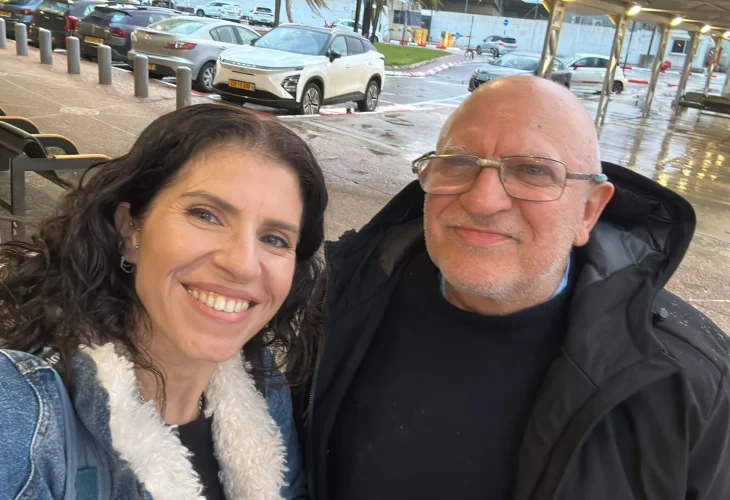 Yaakov Harari with his daughter (Courtesy of family(
Yaakov Harari, a 72-year-old Israeli-Argentinian citizen, was released Monday night from prison in Venezuela and returned to Israel, the Prime Minister’s Office confirmed Tuesday. The announcement followed a phone call between Harari and Prime Minister Benjamin Netanyahu, which was joined by Harari’s daughters.
Harari’s release ends more than a year of detention by Venezuelan authorities, a case that unfolded largely out of public view and showed Israel’s limited leverage in countries with which it has no diplomatic relations.
Harari was detained on September 4, 2024, after crossing into Venezuela from Colombia. Initial notice of his arrest reached Israel through indirect contacts, but Israeli officials said at the time that the reason for his detention was unclear and that his whereabouts were unknown. Efforts to contact him failed, and the case remained largely under the radar for months.
In January 2025, Venezuela’s then-interior minister, Diosdado Cabello, announced that authorities had arrested 125 “foreign mercenaries,” including one Israeli citizen. Cabello accused the detainees of involvement in “sabotage and destabilization” activities and alleged they were acting on behalf of the United States as part of an attempted coup. Venezuelan officials labeled Harari a foreign mercenary, though no formal charges or evidence were publicly presented.
According to the Israeli Foreign Ministry, Harari was held for over a year under harsh conditions, without a formal legal process and without access to medical care. He was imprisoned alongside local and foreign inmates, with his last known detention site being Internado Judicial Rodeo I in the state of Miranda.
Despite the absence of diplomatic relations between Israel and Venezuela, Israeli officials worked through indirect channels to maintain contact with Harari and to advance efforts for his release. The Foreign Ministry said its department for Israelis abroad remained in continuous contact with Harari’s family, while the ministry’s Latin America division led the diplomatic effort. Israel relied on foreign embassies, including its mission in Colombia, to facilitate prison visits, convey messages, and provide support. Through these channels, Harari even received photographs of his grandson in an effort to maintain human contact and morale.
Prime Minister Benjamin Netanyahu spoke by phone with Harari following his return to Israel, a call that also included Harari’s daughters. According to the Prime Minister’s Office, Netanyahu “expressed his appreciation to the Ministry of Foreign Affairs, the Mossad, and the Coordinator for the Hostages and the Missing Brig.-Gen. (Res.) Gal Hirsch for their work.” He also “thanked the U.S. administration, and the German, Austrian and Italian governments for the assistance they provided to Israel in the process of returning Yaakov to his homeland.”
Harari was flown on a direct flight to Rome, where he received support from the Israeli embassy, before continuing on to Israel. He also spoke with President Herzog. His release came during broader moves by the Venezuelan government to free detainees, which Caracas described as a “goodwill gesture” toward U.S. President Donald Trump, though human rights groups have disputed official figures regarding the number of prisoners released.
Israel’s Foreign Ministry reiterated its warning that Israelis who are not Venezuelan citizens should avoid traveling to Venezuela, noting the absence of diplomatic ties since 2009 and the country’s ongoing hostility toward Israel.

