

Magazine
The IVF Revolution in Israel: The Story of Prof. Shlomo Mashiach
How one doctor helped bring in vitro fertilization to Israel — and gave tens of thousands of couples the chance to become parents
- Hidabroot
- | Updated
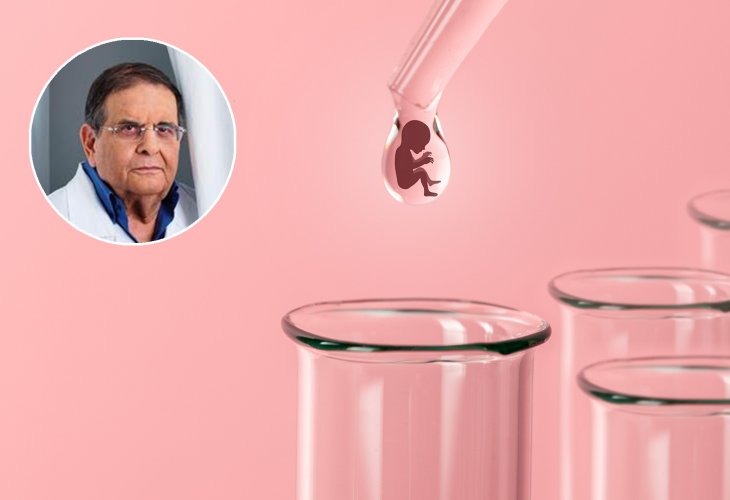 In the circle: Prof. Mashiach (Photo: Shutterstock)
When the British scientists Patrick Steptoe and Robert Edwards set off a medical revolution and brought about the birth of Louise Joy Brown, the world’s first “test tube baby,” few imagined that the breakthrough would reach Israel so quickly. Yet within a short time, it transformed the lives of countless couples who had long faced infertility with no real solution.
In those early years, even prominent doctors and researchers refused to believe the reports. Until then, Steptoe and Edwards were known mainly for laboratory successes in animals. Some colleagues dismissed them as frauds and claimed the woman had not become pregnant at all. But one physician in Israel recognized immediately what was unfolding.
That man was Professor Shlomo Mashiach, then deputy director of the obstetrics and gynecology department at Tel Hashomer. Today, he is still active in the field and is widely regarded as the father of in vitro fertilization in Israel.
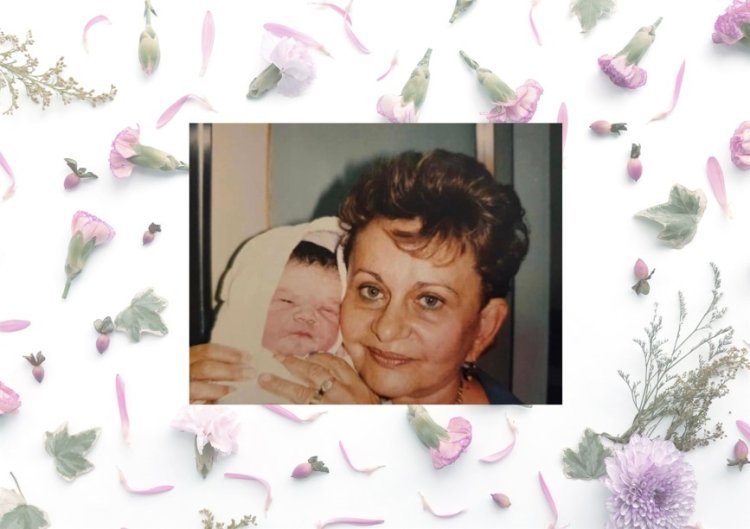
A Small Boy With a Big Future
“I was born here,” Professor Mashiach says. “My parents were part of the great ingathering of exiles. My father was of Sephardic origin. He came to Israel alone at eighteen. My mother was of Polish Russian origin and she also immigrated around that age. We lived in Tel Aviv on Rabinovitz Street, my parents, my older sister, and me.”
His father managed a branch of Bank Leumi, but Mashiach says he always felt unfulfilled. “He came from an academic family where many were pharmacists and doctors. In a way, I was the one who fulfilled his dream.”
Mashiach describes himself as an unremarkable student at first. “In elementary school I wasn’t outstanding. When I finished, I wasn’t even accepted into high school. But later I pulled myself together and became the top student in both humanities and sciences. After high school I went to medical school, and that’s how it began.”
After graduating, he met the woman who would become his wife, a midwife who passed away about a year ago. “She worked as a midwife, and I did my training as a young doctor in her department. During that period I discovered how deeply I connected to gynecology, and I continued specializing in it.”
Soon after, they married. She worked as a midwife at Tel Hashomer, while he served as an army physician. Later he joined the maternity department, and his wife became responsible for the delivery rooms.
“Even then,” he says, “we both knew this was our calling. We did it with a deep sense of purpose.” He later traveled to Berlin to specialize further in obstetrics, gynecology, and high risk pregnancies.
Why Fertility Became His Mission
When Professor Mashiach returned to Israel, one thing became clear to him.
“I knew I loved working in childbirth,” he says, “but even more than that, I was drawn to fertility. The reason is simple. You can’t compare a typical pregnancy that progresses normally and ends with a healthy baby, to a pregnancy that happens for a couple who has struggled for years and, according to nature, has no reason to believe it will ever happen. Then they receive the right treatment, and suddenly they are holding a child. They have fulfilled a dream.”
Over time, he came to view infertility as one of the most painful conditions a person can endure.
“There is no illness or situation more difficult than infertility,” he says. “Whether it’s the woman or the man, it affects every part of a couple’s life. It can isolate them socially and even within their own families, because life revolves around children, and they feel excluded from the circle. It’s not physically fatal, and people don’t die from it, but there is no joy greater than helping a couple bring a child into the world.”
He pauses, then adds quietly, “It feels like you have helped bring an entire world into existence.”
 Shutterstock
A Revolution in Fertility Care
“Fertility has never been a simple subject in medicine,” Professor Mashiach says. “When I began in the 1970s, there were answers for only a tiny portion of infertility cases.”
At the time, sperm donation existed, but it was not suitable for many couples and was not fully accepted in halachic terms. Certain surgical solutions were offered for women, but the procedures were difficult and success was limited. In many cases, doctors sent couples to pursue adoption because there seemed to be no realistic path forward.
Then came news from England.
“We heard that Robert Edwards, a scientist, and Patrick Steptoe, a renowned gynecologist, had succeeded in creating a pregnancy through in vitro fertilization,” he says. “It wasn’t completely surprising, because we knew they had been working for years and had animal successes. But there was enormous skepticism. It wasn’t clear the method would work in humans.”
Professor Mashiach notes that there are stories about an earlier attempt in the United States, in which a researcher reportedly created an embryo from human IVF and then destroyed it in fear, abandoning the work. “If that story is accurate,” he says, “he may have technically been first.”
He also reflects on how different the medical landscape was then. “If those experiments were conducted today, they might never have reached the finish line. There would be ethics committees, oversight, and far more restrictions. But in 1978 it was possible, and that year they announced success. The pregnancy ended well, and the first test tube baby was born.”
Not long after, Australian researchers advanced the field further by using ovulation inducing medications, accelerating progress dramatically. “And we in Israel entered the picture about two years later,” he says.
Israel Joins the Breakthrough
As soon as Professor Mashiach heard the news, he says he knew it was the next frontier. As deputy director at Tel Hashomer, he submitted a request to the Ministry of Health to allow his department to participate in developing IVF in Israel.
“They told me to wait until another unit at Hadassah in Jerusalem was ready,” he says. “That is how a kind of competition began: who would be first to achieve an IVF pregnancy.”
In the end, Tel Hashomer succeeded first. Israel’s first IVF baby was born: Roni Neumark, who later became known as a news anchor on Kan 11.
“She was the fifth successful IVF birth in the world,” Professor Mashiach says. “Before her, there were only four children worldwide who had been born this way.”
Even after the first successes, the odds were still low. “Early IVF pregnancies were rare, around one out of twenty attempts. But once people knew there was a chance, demand exploded. Couples flooded us with requests. There were enormous waiting lines, and we tried to handle as many cases as possible at once.”
After the first birth came a second, a boy, and then more pregnancies. “Each time the excitement was immense,” he says. “It felt unbelievable, like open miracles.”
From “Mechanical” Infertility to Nearly Every Case
As techniques improved, doctors discovered IVF was not only for “mechanical” infertility, but could help almost every type, including male factor infertility.
“We were among the first in the world to reach a point where a man who was considered completely infertile could father a pregnancy with his own sperm,” he says. “That was a shocking breakthrough.”
The unit expanded, new achievements followed, and additional technologies emerged, including embryo freezing, which had once seemed unthinkable.
“In the last forty years, the two fastest developing fields have been fertility and genetics,” he says. “In our unit, they grew together.”
That partnership helped reduce the prevalence of severe genetic diseases once common in Jewish populations, particularly among Ashkenazi communities, including Tay Sachs and cystic fibrosis, as well as many other serious conditions. With screening, couples could identify genetic risks before pregnancy, and sometimes even before marriage. IVF made it possible to select healthy embryos for implantation, preventing the birth of affected children.
 Shutterstock
Respecting Halacha
Professor Mashiach emphasizes that he worked for years to ensure religious couples could benefit from fertility treatment without violating halachic restrictions.
“Years ago, I established a respected forum of well known rabbis,” he says. “I brought them together with scientists from Tel Aviv University to find a balanced path, one that would allow treatment while remaining faithful to halacha. We developed practical solutions and special techniques.”
Even today, he continues meeting couples referred by rabbis, including Rabbi Elimelech Firer and Rabbi Moshe Schlesinger of the organization Pri Chaim. “Sometimes I travel far for difficult cases,” he says. “My guiding principle was never to argue with rabbis, but to find pathways they can accept.”
He notes that fertility treatments have become especially common in the ultra Orthodox community, with significant success. “I am constantly amazed by what people are willing to endure to have a child,” he says. “Not only multiple rounds of treatment, sometimes thirty cycles, but also enormous expenses. I have seen couples sell their homes to fund exceptional treatments.”
The greatest challenge he sees is delay. “Some couples wait too long, hoping the problem will resolve itself. But when there is a real issue, waiting only makes it harder. By the time they seek help, age may already have cost them precious chances.”
Why Israel Became a Global Leader
Israel is now considered one of the most advanced countries in fertility care. Professor Mashiach says that did not happen by chance.
“It required political intervention,” he explains. Over the years, he and colleagues approached many members of Knesset and even met with Prime Minister Ariel Sharon. They pushed for a policy that would grant fertility treatment funded by the state, especially for couples without children.
“There is no other country in the world with the same system,” he says. “In the United States, an IVF cycle can cost twenty to forty thousand dollars. In Israel, treatments are provided without charge for the first and second child, and health funds often offer incentives for third and fourth children. Another major achievement was extending coverage for women up to age forty five.”
The Wonder That Still Remains
Professor Mashiach says fertility medicine has become far more common and far less dangerous. “We rarely see the harsh surgeries that used to be standard. Some women even undergo egg retrieval without anesthesia because they feel they don’t need it.”
Still, not every case ends in success. Some women have no viable eggs, some men have problems that cannot yet be solved, and some cases remain “unexplained.”
“The more science advances,” he says, “the more we see how extraordinary reproduction truly is. Even today we don’t fully understand it. In theory, when an embryo forms, the body should reject it, like a foreign transplant. Yet the body does not reject it. It supports pregnancy. It is as if something protects the embryo from being attacked by the immune system. I have no other explanation.”
The Father of Tens of Thousands
Has he ever tried to estimate how many children came into the world through his work?
“I once tried to calculate,” he says. “It is around forty thousand children. And my late wife delivered between forty and fifty thousand babies at Sheba, so together the numbers are far higher.”
His son, Dr. Roi Mashiach, continues the family tradition and serves as head of the gynecology department at Tel Hashomer.
“He helps many couples bring children into the world, and I am very proud of him,” Professor Mashiach says. “We work closely together. And personally, there is nothing quite like discussing not only family life with your son, but also consulting with him professionally. He gives me great joy.”

