

Magazine
Living Under Tension in Jerusalem’s Sheikh Jarrah
Jewish residents of Shimon HaTzadik on daily life, security fears, and why they refuse to leave
- David Fried
- | Updated
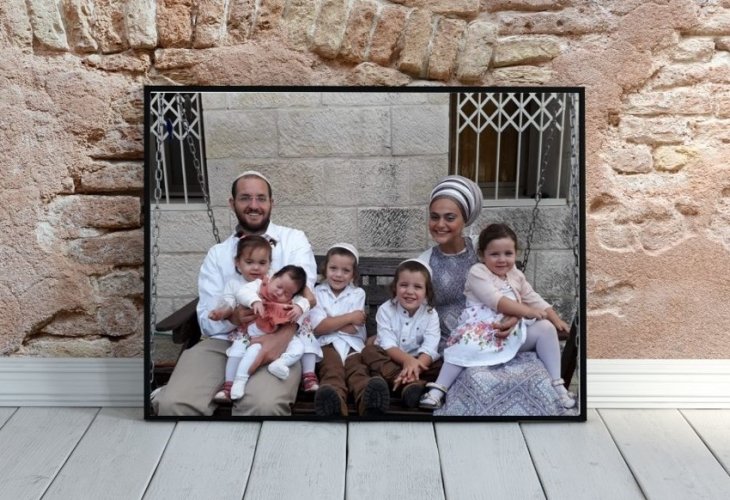 The Cohen Family
They may try not to live behind fortified walls, but they are constantly alert, surrounded by cameras, and some of them are armed. These are the Jewish residents of the Shimon HaTzadik neighborhood in Jerusalem, also known by its Arabic name, Sheikh Jarrah. We went to speak with them to understand what daily life looks like in what is perhaps one of Jerusalem’s most talked-about neighborhoods — and to ask whether the recent terror attack there, part of the latest wave of violence in Israel, is expected to change life for the residents.
There may be no better way to begin a story about life in such a volatile place than with Moriah Cohen, who was wounded in a recent stabbing attack in the neighborhood, and her husband, Dvir. Both have lived in the area for several years.
“We try to focus on the positive aspects of living here,” Dvir tells us, explaining that the neighborhood offers several advantages. “The most important thing for us is that this is the holy city of the Jewish people. At the same time, there are practical benefits as well, such as relatively affordable housing close to major Jerusalem neighborhoods like Shmuel HaNavi, Meah Shearim, and Bar-Ilan. That’s especially important for us because there are good educational institutions nearby for our children.”
Dvir adds that the ancient surroundings give them a unique sense of inspiration. “Above all,” he says, “we live close to the tomb of Shimon HaTzadik. Hundreds of Jews come there every day from across the city and beyond to pray. We feel it protects us.”
![Dvir Cohen]() Dvir Cohen
Dvir Cohen
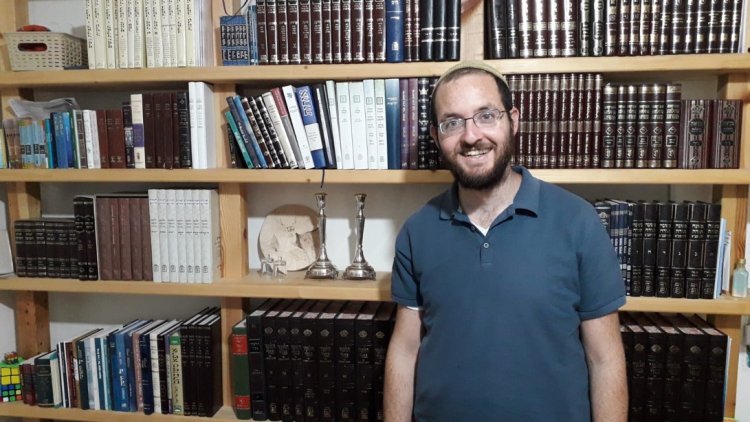 Dvir Cohen
An Attack Without Warning
Standing beside him is his wife Moriah, still recovering from the stabbing attack she survived. About a month ago, on the 4th of Tevet, she was taking her children to their schools when a 14-year-old girl from the neighborhood approached her from behind and stabbed her. Five of the Cohens’ children were nearby, two of them witnessing the attack in horror.
Moriah was classified as lightly wounded and was released the same day from Hadassah Mount Scopus Medical Center after doctors removed a 30-centimeter knife from her back. Miraculously, no internal organs were damaged. Professor Hagai Mazeh later explained, “She was evacuated by MDA with the knife still lodged in her back, exactly as one should be treated in such cases. Despite the length of the knife, the wound was not deep, and after treatment she was discharged home.”
A month later, Moriah says she is still recovering. “The physical effects haven’t completely passed — there is still pain from time to time. And emotionally, it takes time to heal from something like this. There are fears, moments of anxiety. But we try to turn it into something positive. We continue going out and living our lives. We do use the car more than walking now, but we are determined to maintain our routine.”
The attacker was arrested shortly afterward at a nearby school she fled to. However, Moriah still occasionally encounters members of the attacker’s family, who are openly hostile to Jewish residents. “We see them passing through the area, but we prefer not to look or engage. We don’t want to give the incident more power. They need to understand that we are here to stay.”
Dvir was serving in reserve duty at the time of the attack, which is why Moriah had walked that morning. From afar, he heard that an Arab neighbor had stabbed his wife. “When my wife was just a few dozen meters from home, the attacker stabbed her,” he recounts. “My son shouted, ‘Mom, you have a knife in your back.’ The attacker probably panicked and ran away. If she had continued, I don’t know how it would have ended — and I don’t want to imagine it.”
Do you believe the attacker wanted to drive you out of the neighborhood?
“Absolutely,” Dvir answers. “That’s also the assessment of the security forces.” He immediately clarifies, however, that the organization managing Jewish settlement in the area handles land redemption and legal matters with the courts and Arab families. “We hope that when houses are vacated we’ll be able to move into them, but it’s not accurate to say that we are the ones evicting Arab residents.”
The roots of the conflict go back decades. Before the Six-Day War, the neighborhood was under Jordanian control and lay directly along the border with Israeli Jerusalem. The area was dangerous, and where the main road now runs was once the border itself. After 1967, Arab residents remained, but in recent years Jewish families — some representing original Jewish owners through religious trusts, have begun returning.
“Today there is a small but growing Jewish community here,” says Gabriel, another resident. “About 17 Jewish families live in Shimon HaTzadik, comprising dozens of people. That fact is deeply resented by the local Arab population, which has turned the struggle over the neighborhood into a full-blown conflict. The events here were among the triggers for Operation Guardian of the Walls. International pressure followed, but we are here to stay.”
Despite the hostility, Gabriel says he generally feels safe, which is why the attack came as a shock. “We didn’t think it could happen. We don’t know what will happen next, but we know some of our neighbors are our enemies and are trying to harm us in different ways. Jews across Israel feel this, in Lod, Acre, and elsewhere. Maybe here it’s more tangible, but just as they continue living their lives, so do we.”
Dvir echoes that sentiment. “First and foremost, we trust in God. That gives us faith in the justice of our path. We believe that if He wants us here, we will continue to live and thrive here, even if it angers our neighbors.”
A Car Burned Again and Again
Life in the neighborhood is undeniably challenging. Dvir grew up in areas near Arab communities, first in Tene Omarim near Be’er Sheva and later in Eli in Samaria. His wife, originally from Petah Tikva, had not experienced such tension before. “I remember the intifada and other events, so it’s easier for me. For my wife, this is real self-sacrifice,” he says.
The hardships are constant. While only a few attacks have occurred over the years, harassment is ongoing.
Joining the conversation is Reut Yeshuvaev, who lives in the neighborhood with her husband Tal and their two children. “In the two and a half years we’ve lived here, we’ve experienced repeated harassment from Arab neighbors,” she says. “And we feel the police often try to treat each incident as isolated, instead of recognizing that there’s a population here that supports terror.”
She knows this reality firsthand. “Our car was burned five times. Two other cars belonging to guests were burned as well.” Shortly after our conversation, another fire would damage the family’s car. Asked whether this is too high a price to pay, they respond that the state compensates them because the incidents are classified as nationalist attacks. “And it doesn’t deter us,” they add. “For two thousand years we prayed to live in Jerusalem. We’re here, and we’re not leaving.”
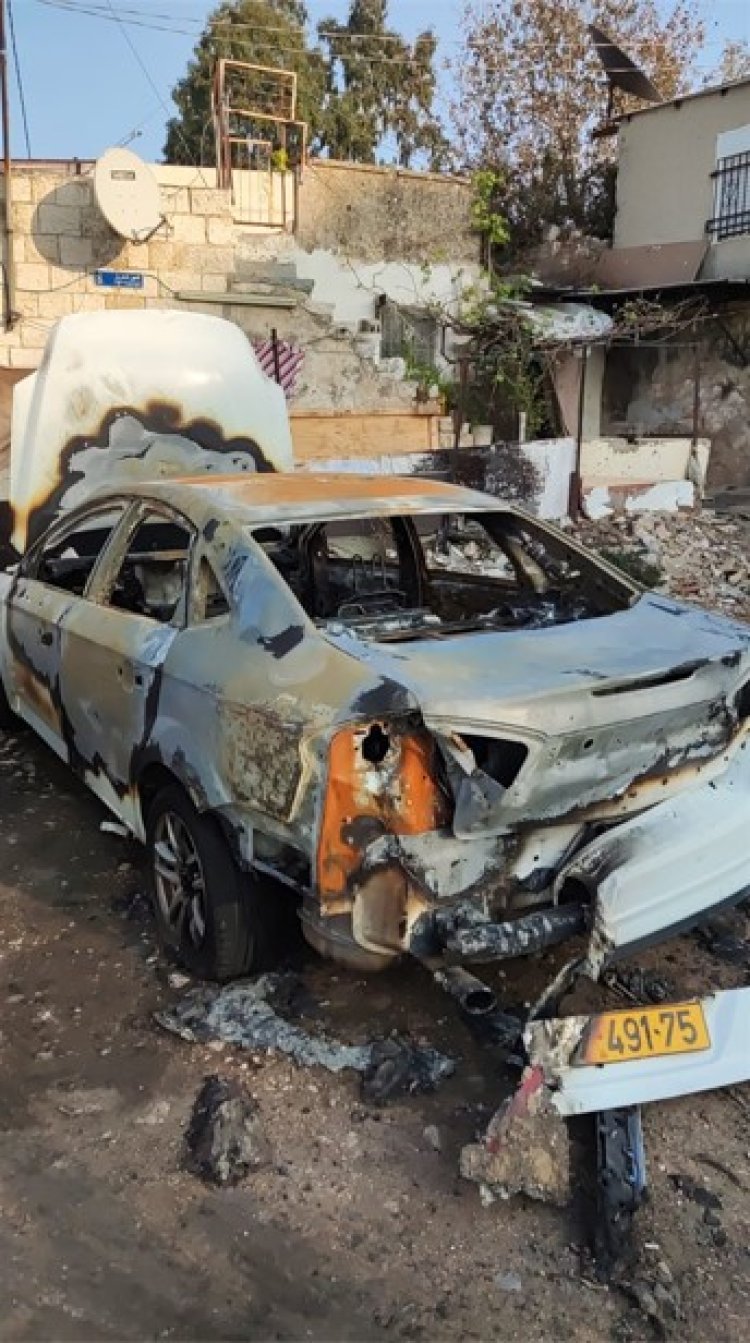 The vehicle that was set on fire
Cameras, Weapons, and Vigilance
Residents rely on extensive security measures. “There are cameras everywhere,” Dvir says. “Some of us are armed, and we stay in constant contact with the police.” Gabriel adds that nearly every part of the Jewish area is monitored, which helped authorities identify and arrest the attacker.
There are also private guards and a neighborhood emergency response team composed of armed residents with combat experience.
Still, attacks occur. One resident describes an incident where a glass bottle was smashed over someone’s head, requiring stitches. “Almost everyone here has experienced something, especially during Guardian of the Walls — fireworks, stones, or worse. There is fear, but if we stay inside, that’s a psychological victory for the attackers.”
Gabriel recounts a particularly alarming episode. “About a month ago, an Arab attacker climbed onto a resident’s roof and lowered himself into the yard with a rope. The homeowner heard noises, went outside armed, confronted him, and fired a warning shot. The attacker fled. It could have ended very badly.”
A Call for Law Enforcement
Both Gabriel and another resident, identified as Y., strongly criticize the police. “We expect them to do their job as they would anywhere else,” they say. They describe what they see as lenient enforcement toward Arab rioters and selective enforcement in other cases.
In one incident, after stones were thrown at a Jewish resident, police refused to arrest the Arab youth responsible, claiming that “just as the Jewish resident claims stones were thrown, the Arab resident could claim the same.” “They didn’t even bother checking the security cameras,” Y. says. “That’s the reality here.”
The residents urge police to act decisively, as they did when pursuing the stabbing attacker, who was arrested within half an hour. “We expect the same seriousness even in cases deemed less severe.”
They conclude with an invitation. “Despite everything,” they say, “the area is safe. Thousands of Jews come every month to pray at the tomb of Shimon HaTzadik. We are here — and we will remain here.”

