

Magazine
The People We Walk Past: And the One Man Who Stopped
Most of us walk past them without noticing. Matanya Kaduri didn’t. What began as deep personal pain became an unexpected mission on Jerusalem’s streets, where he now brings dignity, presence, and hope to those society forgets.
- Tamar Schneider
- | Updated
 Illustration: Shutterstock
“When I decided to go out into the streets, I had no idea what I was getting myself into or what challenges I would face,” says Matanya Kaduri, a volunteer with the Yizhar Association, an organization dedicated to harm reduction among addicts. “At first, I approached only addicts, but over time I opened my heart to homeless individuals and others in need. I began sitting with them on the ground, amid the dirt and the harsh smells, simply talking. It was important for me to truly care about them, to connect with what they were going through, and to see the goodness hidden beneath all the outer layers. To this day, they teach me more than anyone about love, compassion, and unconditional acceptance. They constantly help me open my heart further.”
Matanya, 29, holds a master’s degree in rehabilitative criminology and lives in Jerusalem, where he works with at-risk youth. Throughout the week, he walks the streets and meets people from the invisible margins of society: those rummaging through trash, injecting substances, or drifting unseen. In his youth, he never imagined this would be his path. But a traumatic moment, when he believed his life might be ending, changed everything.
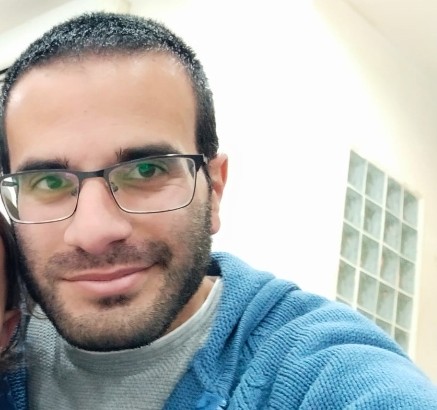 Matanya Kaduri
The Question That Changed My Life
“I grew up in a religious Zionist home and lived a fairly ordinary life,” Matanya says. “I studied in a religious high school, focused on my studies and friends, without any dramatic events. One evening, while crossing the street, a bus failed to stop and struck a car in front of me. The car flew forward and hit my legs. I was injured and lost consciousness for a few moments. The next thing, I heard ambulance sirens all around me. I remember worrying about the driver and not wanting my mother to see me in that state. In those moments, I didn’t know what was happening to my body or whether I would survive, and that’s when the question that changed my life arose.”
What was the question?
“I asked myself: if I leave this world now, what am I leaving behind? The painful answer was: nothing. I had lived seventeen years without truly working on my values or my character, without making any meaningful impact.”
As he was taken into the ambulance, fear deepened. “Suddenly, my leg wouldn’t move and I was terrified it would never function again. Gradually, things became clearer, and after about a month the pain subsided. Physically I recovered, but emotionally, mentally, and spiritually, everything had changed.”
The accident triggered a storm of questions.
“There was anger toward Hashem, confusion, and doubt. I questioned His existence, why suffering exists, and what He wanted from me. The answers I heard didn’t satisfy me, and like many teenagers in pain, I distanced myself from Torah and mitzvot.”
Yet he never fully disconnected.
“I still carried boundaries of modesty and self-respect that came from values. Inside me, a quiet fire kept searching. I wanted to know what I could give to the world, so that when my life ends, I could look back and feel I had truly lived. I wasn’t necessarily seeking religion. I was seeking meaning.”
Did you find it?
“Not at first. I was lost and confused. After high school, I enlisted in the army, hoping to become a combat soldier. But during training I experienced an emotional collapse. Pain from my parents’ divorce when I was 13, fears about the future, everything surfaced. I asked to transfer to a different role, knowing it could take months. And then something that felt like a miracle happened. The very next day, a commander helped arrange my transfer, and I was placed in a unit led by my uncle, whom I hadn’t seen in years. He became a figure of stability and belief in me when I couldn’t believe in myself.”
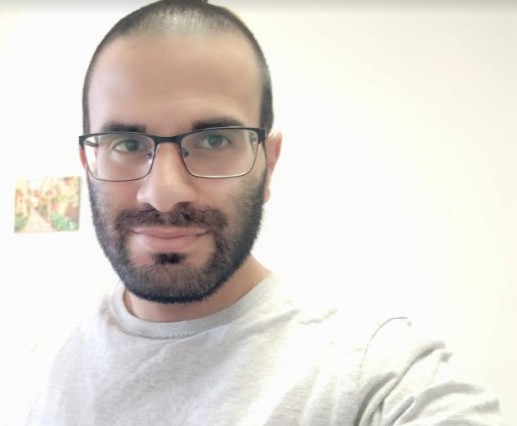 Matanya Kaduri
Over time, Matanya became a platoon commander himself. “For the first time, I discovered meaning through giving. Many of my soldiers carried complex personal stories. They came to me for guidance, and I gave them everything I could. Through them, I discovered my own humanity. I had known material pleasures, but this was something deeper. It filled me in a way nothing else had. I realized that when I allow myself to be authentic, I can truly make space for others.”
He completed his service transformed. “I entered the army broken and fearful. I left knowing I had given my best to others, and wanting to continue this path.”
Growing Through Giving
That desire led him to study psychology at Ariel University. “I still wasn’t fully observant, but my spiritual search was intense. Through my studies, I began to understand my past differently. I saw how the divorce and the accident had shaped my emotional strength. For the first time, I felt gratitude for the very things that once caused me pain.”
He went on to work in various therapeutic settings. “At a hostel for boys with autism, I doubted myself immediately. In a psychiatric ward for women, I encountered intense fragility. People could be harsh, painful, unpredictable, but I learned not to take things personally. Instead, I learned compassion. You see how fragile life is, how little control we truly have. You learn humility. And most of all, you learn to search for the heart behind the behavior.”
And spiritually?
“After my first degree, I finally allowed myself to explore Judaism deeply, from a mature place. I discovered Hidabroot, began listening to Rabbi Zamir Cohen and others. Slowly, I accepted Shabbat, prayer, tefillin. I still have questions, but clarity replaced confusion.”
Why Judaism specifically?
“Because I saw that everything I had searched for in general spirituality already exists, more deeply, within Torah. Once mitzvot entered the picture, everything became fuller, stronger, truer. Today I still engage with the broader world, but my soul is anchored in something far deeper.”
A Homeless Man Opens a Gemara
A painful breakup later reopened old wounds.
“I was devastated and angry again. My brother advised me to start thanking Hashem, even though I didn’t understand how. At first it felt artificial. But slowly, gratitude transformed into prayer. Through tears and Rabbi Shalom Arush’s teachings, I discovered I wasn’t alone. I had Someone to speak to at all times. That realization rebuilt me.”
Soon afterward, he was accepted into the rehabilitative criminology program. “I felt Hashem guiding me exactly where I needed to be.”
He interned in prison, working with deeply broken individuals. “At first I only saw their crimes. With time, I saw human beings; people with dreams, fears, humanity. A kind word can save a life. A smile can do more than medication. Once, I met a former patient who told me, ‘I was just wondering if anyone would care if I wasn’t here.’ That sentence stays with you forever.”
How do you protect yourself emotionally?
“I’ve learned to strengthen my inner world. To see goodness beyond outer behavior. To focus on positivity. Every evening, I write gratitude. It anchors me.”
Approaching with an Open Heart
Today, Matanya volunteers in street outreach in Jerusalem. “At first I handed out candy. Then I began sitting beside people on the ground, speaking to them eye-to-eye. I come as a therapist, but mostly as Matanya, a person who cares. Sometimes I learn Gemara on the street with a homeless man who hasn’t opened a book in years. Sometimes we just sit in silence. Sometimes I admit I don’t have answers. The goal is to reflect the good within them.”
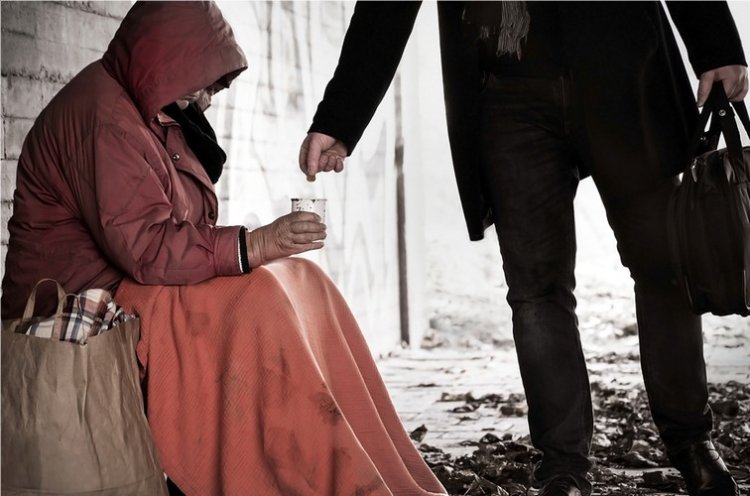 Photo: Shutterstock
He adds quietly, “Sometimes I even approach non-Jews. It feels like a true kiddush Hashem. We are meant to bring light to the world.”
Isn’t it painful to give when many won’t change?
“There is helplessness. I can’t save everyone. But even five minutes of presence can give someone another breath of life. That is already enormous.”
What can others do if they can’t go out to the streets?
“Give with heart. A smile. A kind word. A small act done with attention. Offer a drink. Learn someone’s name. Truly see them. That’s where change begins.”
He concludes softly: “When I was broken, others believed in me. Through them, I discovered how Hashem never let go of me. So now, I continue this chain of kindness. I have something to give, and someone out there is waiting for it.”

