

World News
Inside Iran: Death Toll Surges as New Execution Reports, Hospital Strain and Economic Collapse Emerge
Rights groups raise casualty figures, execution reports surface, hospitals warn of overload, and banks close as pressure on the regime intensifies
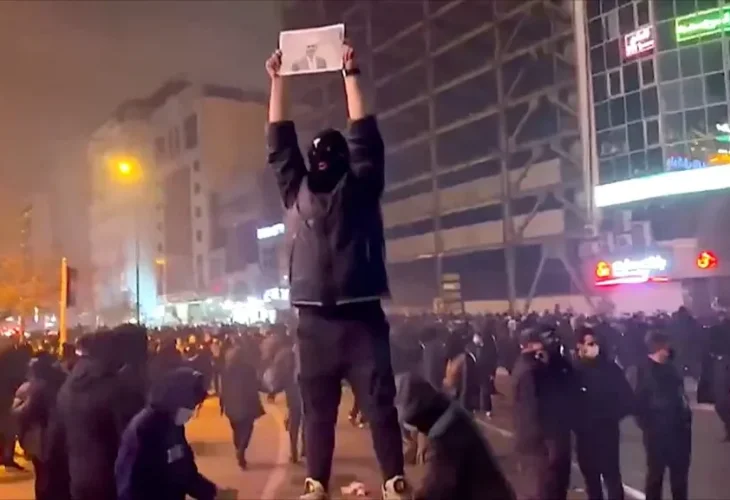 Iran Protests (Photo used in accordance with 27a)
New details emerging over the past 24 hours are revealing the scale of Iran’s internal crisis, as rights groups sharply raised casualty figures, reports surfaced that the regime may soon begin carrying out executions tied to the protests, and new signs of the economic and institutional strain materializing.
The most significant update came from the U.S.-based Human Rights Activists News Agency (HRANA), which said early Wednesday that the protest death toll has climbed to at least 2,571 people. HRANA also reported that more than 18,100 people have been detained.
Iranian authorities have still not released official figures. However, a senior Iranian official cited by Reuters on Tuesday said about 2,000 people had been killed, marking the first time Tehran has offered an overall death toll. Other estimates circulating outside the country are significantly higher. U.S. broadcaster CBS reported, citing two sources inside Iran who referenced hospital medical records, that the death toll could range from at least 12,000 to as many as 20,000, though independent verification remains difficult due to sweeping communications restrictions and the ongoing internet blackout.
Additional accounts from inside Iran pointed to mounting strain on the healthcare system. Doctors have described hospitals and emergency rooms overwhelmed with wounded protesters, many suffering gunshot injuries. One ophthalmologist in Tehran said he documented more than 400 eye injuries caused by gunfire at a single hospital.
Concern deepened further amid reports that Iran may soon begin carrying out executions tied to the protests. Hengaw, an Iranian Kurdish rights group, said 26-year-old Erfan Soltani, arrested in connection with demonstrations in the city of Karaj, is scheduled to be executed on Wednesday after authorities informed his family that the sentence was final. Reuters said it could not independently confirm the report, and Iranian state media has not announced any executions so far, though rights groups warn that additional death sentences may follow.
Communications restrictions remained largely in place. While the United Nations said phone services had been partially restored, internet access continues to face severe limitations. In response, U.S. organizations reported that Elon Musk’s SpaceX has made its Starlink satellite internet service available for free in Iran, offering a limited workaround for those able to access the system.
Economic stress indicators also sharpened. Several banks were forced to shut branches or restrict operations in the past few days as liquidity dried up. Ayandeh Bank emerged as the most prominent example, collapsing under nearly $5 billion in unpaid loans tied to regime insiders and well-connected elites. The failure exposed deeper problems in Iran’s financial system. Rather than fixing them, authorities moved to cover the losses by printing money, driving up inflation, weakening the rial, and pushing merchants in several cities to join the protests.
The unfolding crisis is also raising alarm across the region. Saudi Arabia, Oman, and Qatar have warned the U.S. in private contacts that prolonged instability in Iran could spill beyond its borders, disrupting energy supplies, driving up fuel prices, and risking wider regional escalation.
Reza Pahlavi, the exiled son of Iran’s last shah and the leading opposition figure, capitalized on the turmoil gripping the regime to encourage Iranians to press forward. “The world not only saw and heard your courage and voice, but is taking action,” he said, warning protesters not to let authorities “portray the situation as normal.” Calling the crackdown a point of no return, Pahlavi declared that “after all this killing, there is an ocean of blood between us and this regime,” and urged security forces to break ranks, telling them: “You are the national army of Iran, not the army of the Islamic Republic.”
Iranian authorities, meanwhile, signaled where the response may head next. Officials have continued to blame “terrorist operatives” and foreign interference of the United States and Israel for the unrest, while the judiciary has emphasized the need for rapid punishment of those accused of violence.

