

Magazine
Yaniv Ben Mashiach: Singing Faith, Shabbat, and Unconditional Love
On inspiration, Jewish music, faith, and why Shabbat is the source of all blessing
- Avner Shaki
- | Updated
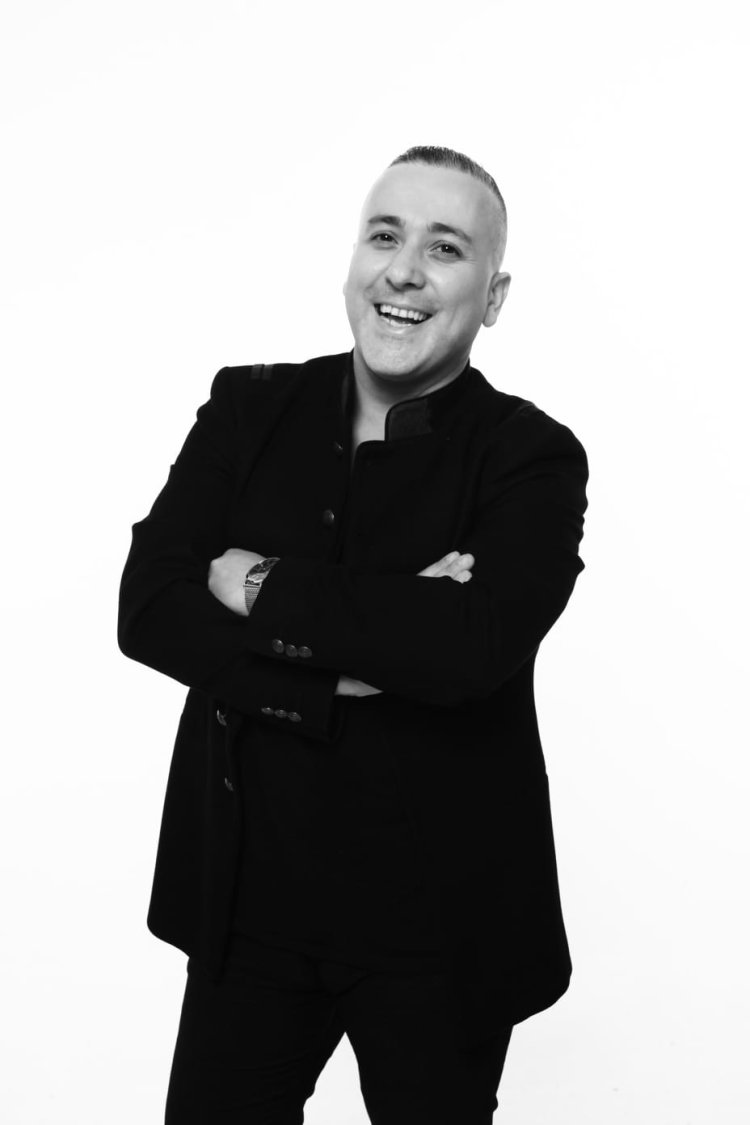
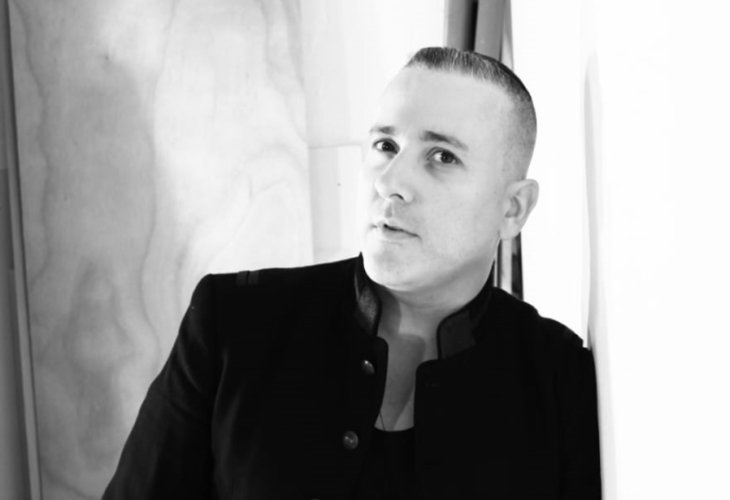 Yaniv Ben Mashiach (Photos: Guy Zeltzer)
Yaniv Ben Mashiach is a singer, songwriter, and composer. He is married, a father of three, and lives in Petah Tikva
A childhood story that stayed with you?
“When I was six years old, I was playing ball with friends outside the synagogue. Suddenly, one of the kids accidentally kicked the ball toward a synagogue window, and it shattered. The synagogue caretaker came out — but instead of yelling at us, he brought us inside, began teaching us piyyutim, and immediately added us to the choir. From there, the rest is history.”
A figure from the Jewish world who inspires you?
“Marán Rabbi Ovadia Yosef, of blessed and holy memory. I admired him so deeply. I performed at celebrations for his grandchildren, and every time I met him, I was moved to the depths of my soul by his holiness. At his funeral, I walked among the million participants and simply cried. A year after his passing, I released a song in his honor called ‘HaKadosh Maran Yosef.’
“In addition, I have the merit of being close to the head of the Kabbalists’ yeshiva, the Kabbalist Rabbi Benayahu Shmueli. I consult with him on every significant matter in my life. I’ve been connected to him for many years — since I was seven, actually.”
Which Jewish artists influenced you most, and what did you absorb from them?
“The cantors Rabbi Siman Tov Shay and Rabbi Mordechai Ashkenazi, from whom I learned the theory of maqamat for about three years. In addition, from a very young age I listened to Arabic, Turkish, and Greek music. I even performed several Hebrew songs with Greek melodies, such as ‘Petach Libi BeToratecha,’ ‘Yerushalayim Sheli La’ad,’ ‘Eshet Chayil,’ and others.
“I also had the privilege of singing for eight consecutive years in Athens with one of the Greek singers I grew up listening to — songs that took on a distinctly Jewish flavor.”
What is an average day in your life like?
“On a regular day, I usually come home late at night, full of energy, so I fall asleep around four in the morning and wake up at eight to help with the kids and prepare them for a successful school day. Then I go to Shacharit prayers and a fixed Torah class at a kollel.
“In the afternoon I rest unless I have studio recordings or media interviews, and in the evening I head out to perform again. During the coronavirus period, I was blessed to spend more time with my family, between studio sessions and events that were still permitted.”
How did the coronavirus affect your service of God and your connection to Him?
“My connection to the Creator, who accompanies me every day and every moment, has always been strong. I didn’t need corona to connect to God. He is with me at all times. No evil descends from above.”
Share something interesting or moving about your family
“In our home, there’s always celebration. During the coronavirus period, the kids took advantage of the fact that Dad was home, and I prepared gourmet meals for them. The most important thing is to preserve joy in the home — we are very strict about that.”
What do you remember most about the protests against your gender-separated concerts in Tel Aviv?
“About a decade ago, I held separate concerts at the Tel Aviv Cultural Center. I remember that the protests against them actually caused a frenzy in ticket sales. Two weeks before the performances, every ticket was sold out, thank God.
“I arrived at those shows very emotional. There were 22 musicians on stage with me, and the audience — religious and secular, sang my songs by heart. Thank God, that still happens today.”
A meaningful experience you had as a result of performing a mitzvah?
“When I visit the sick in hospitals to sing for them, cheer them up, and say a kind word, it strengthens them deeply. But no less than that, it strengthens me as well. I thank God for giving me the merit to bring joy. For me, that’s worth everything.”
What is your greatest musical dream?
“To merit singing in honor of Mashiach — may he come, God willing, very soon.”
How present is God in your life, and how does He influence your actions?
“I feel God in every bone of my body, in every step I take in life. In everything good — and even in what doesn’t seem good, He is there. Thank God, I was privileged to be born a Jew, meaning an inseparable part of the Creator. So it’s obvious to me that everything that happens comes only from Him.”
A moving story that happened to you?
“In one of the hospitals in Israel, several years ago, there was a Jewish man lying on his deathbed. Doctors said he had only a few days left to live. They asked him what could be done to make his final days as joyful as possible. After thinking a bit, he asked that I be invited to sing by his bedside. It was incredibly moving.
“Every time I receive requests to go to such places, I am moved anew. I arrive with tears in my eyes and thank God for the privilege of bringing joy to people wherever they are, and of trying to give them strength during the hardest times of their lives. This is my mission, and I feel blessed to have it.”
A mitzvah you feel especially connected to?
“Recently, I’ve taken upon myself to prepare the Shabbat candles already on Motzaei Shabbat or Sunday for the coming Shabbat. I get very emotional when I prepare the water, oil, and wicks for candle lighting. Shabbat sanctifies the entire week through the anticipation of its arrival.
“Beyond that, I can testify that through my love of Shabbat, many significant gates have opened for me in life.”
What brings you the greatest happiness?
“When people — with and without a kippah, sing my songs together in honor of the Creator, it fills me with immense joy.”
What do you fear most?
“I’m very afraid of losing my voice. When I’m hoarse, it genuinely pains me, because God gave me a gift, and I want to use it every moment to bring joy to the people of Israel. That’s why I always pray that my throat will never be harmed.”
A song that influenced you deeply?
“The latest song I released, ‘Le’ehov’ (‘To Love’), written and composed by Udi Damari. It’s especially moving in this period. We didn’t expect this is what would happen when it came out, but it received immense love from the audience.
“I truly hope we, as Jews, will know how to love one another and increase unconditional love. It’s difficult not performing for so long, and I can’t wait to return to the stage and hear the audience sing with me: ‘This is a great principle — so great — just to love and to give from the heart. ‘And you shall love’ — that’s everything, the great rule. Because what do I really have left? Only the truth. That is love.’”
Professionally, are you where you imagined you’d be? How does that feel?
“No, and that’s not something I take for granted. After 25 years of musical creation, climbing slowly step by step, I’ve reached many of the goals I set for myself early on, and I thank God for that.
“Many people know and love my songs, which are frequently played on radio stations, and that gives an incredible feeling. For me, it’s a dream unfolding before my eyes. Of course, there’s always more to invest in and more to achieve, and I have no intention of stopping.”
Where would you like to be in ten years?
“To continue bringing joy to the people of Israel with the highest-quality music possible — God willing, until 120.”
What moves you most in connection with Judaism?
“Shabbat, above all. The weeks come and go, but Shabbat plants a stake of faith — drawing closer to one’s inner self and connecting with God. I love Shabbat so deeply that I prepare for it all week long.
“I have a song called ‘Shabbat Shel Kodesh,’ and last month I released a duet with Moshik Afia about Shabbat, because it is the source of our blessing.
“Additionally, during the coronavirus period, I made sure to bring a beautiful Torah scroll into my home, hold Shabbat morning prayers with a minyan, and serve as cantor with great joy — all in accordance with the guidelines. After prayers, when permitted, we set a table with refreshments, sang Shabbat songs, and hoped it would never end.
“One of my dreams is to establish a synagogue, and maybe, God willing, it will happen.”
A painful lesson you learned in life?
“Nothing in life is truly painful — you decide whether to hurt yourself. You can overcome anything. What I’ve learned is that no one can take away the joy that God has given us. You must learn to walk through life on a straight path, hand in hand with the Creator, and then you will never fall.”
A prayer that was especially meaningful to you?
“Eleven years ago, there was something extremely important that I wanted from God — something critical in my personal life. Usually, every Rosh Hashanah I travel to Rabbi Nachman of Breslov, but I was advised to travel a week earlier to Ukraine and then continue on an exhausting 11-hour journey to Vilna-Dubnik, where Rabbi Yisrael Dov Ber — known as the ‘Ba’al HaYadit’, is buried.
“I arrived there and prayed with all my heart. Thank God, one week after Rosh Hashanah, everything worked out peacefully. There is tremendous power in prayer at the grave of a righteous person.”

