

Magazine
Safed’s Hidden Cry: A Battle for the Soul of a Holy City
Thousands walk through Safed’s ancient streets each year, yet few truly encounter its spiritual heartbeat. Local voices share their pain, their hope, and their struggle to preserve the holiness of a city that once shaped the Jewish world.
- Avraham Yisrael Friedman / Yom Liyom
- | Updated
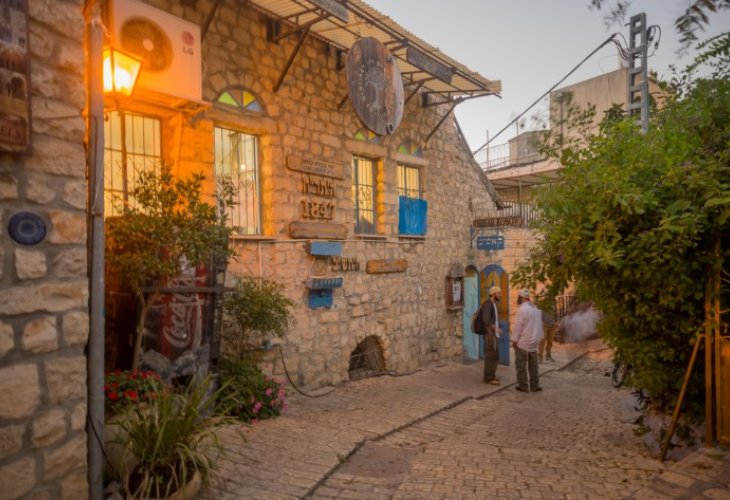 (Illustrative photo: Shutterstock)
“Those who eat fish on Fish Day will be saved from a fish,” the tour guide jokes into a makeshift microphone while addressing a group of secular high school students. Their puzzled expressions reveal how distant this ancient Jewish saying is to them. For many, it becomes yet another missed opportunity to truly grasp Safed’s spiritual depth.
Safed, with its winding alleys and layered history, attracts thousands seeking connection to its heritage. The Abuhav Synagogue has become a central destination for visitors, including many who are stepping into a synagogue for the first time. According to city statistics, about 1.2 million people visit Safed each year. Most come from abroad, often unaware of the profound legacy beneath their feet.
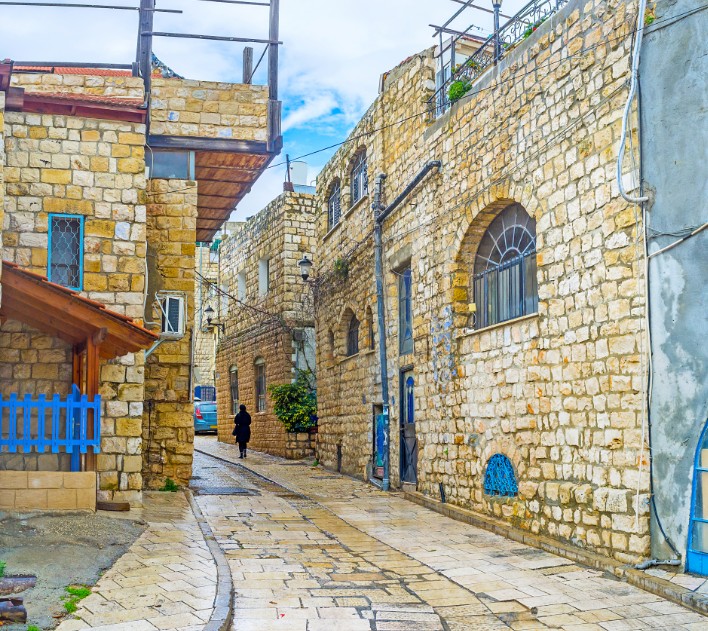 The streets of Safed
During peak seasons, especially summer breaks, the city’s ancient streets fill with religious Jewish travelers eager to breathe the mountain air once inhaled by great sages. Yet despite this spiritual awakening, a sense of missed opportunity lingers. Many residents feel that the city’s tourism has been surrendered to those who present it as a kind of cultural spectacle, likened by locals to a “curiosity zoo.”
Religious residents express frustration that secular tour guides often lead groups through Safed’s holy sites with little sensitivity to their sanctity. The teachings of the Arizal are trivialized, and in some cases, secular songs are played inside sacred synagogues such as Abuhav. Rabbi Yaakov Amar, of the Meir Baal HaNess Synagogue, has become a leading voice advocating for more meaningful, spiritually grounded tourism. He laments seeing traditional Jews from cities like Ashkelon guided by people who show little reverence for Safed’s towering scholars.
“It’s crucial that this issue be brought to public awareness,” says Safed resident Reb Favel Frank. Many traditional visitors arrive hoping to deepen their connection, only to leave with confusion due to superficial or misleading explanations.
Along the alleys leading to Abuhav Synagogue, one often encounters joyous processions escorting a bar mitzvah boy to his special moment. These are families who deliberately chose Safed to connect to something deeper. When Rabbi Amar encounters guided tours in the Ashkenazi Ari Synagogue, his heart sinks as he hears guides focusing on architectural trivia while ignoring the towering spiritual legacy of the place.
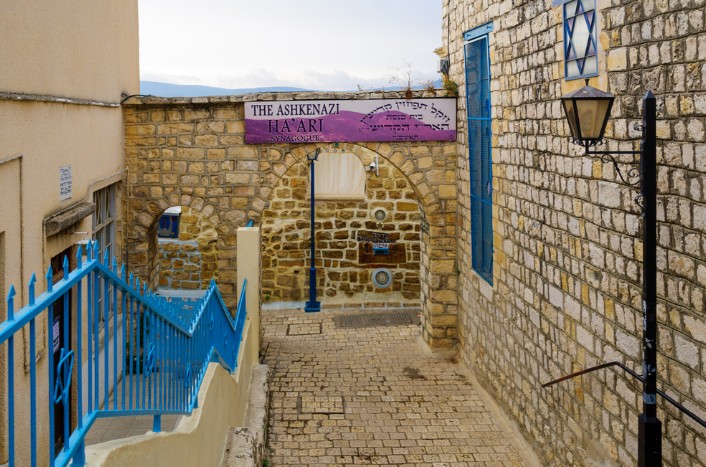 The Ashkenazi Ari Synagogue
Daily, buses from programs such as Taglit and school trips unload into Safed, yet countless visitors depart without understanding the city’s significance. The absence of culturally sensitive guides means missed opportunities to transmit the heritage of giants such as the Arizal and Maran HaBeit Yosef to young, curious minds.
Stirred Souls and Misguided Tours
Rabbi Amar’s words resonate deeply with those who hear him. When he first arrived in Safed, tour guides would often invite him to address their groups, seeking an authentic voice.
“Once, while learning in Abuhav Synagogue, a group of secular students entered and asked me to speak,” he recalls. “I saw their genuine thirst for knowledge about aspects of Judaism they had never encountered. They realized Safed’s legacy is not history, it lives within us today.”
This thirst is real. Even students from secular areas such as Kefar Shmaryahu confessed to feeling chills when learning about Safed’s depth. “We’ve traveled all over the world,” some admitted, “but nothing compares to the atmosphere here.”
Yet beyond the emotional disappointment lies another concern: factual distortion. Rabbi Zushi Benjamin argues that some guides invent stories for dramatic effect, feeding tourists myths with no historical basis. Rabbi Moshe Rosengarten points to repeated inaccuracies, such as fabricated claims about dual Arizal synagogues. These distortions further erode respect for Safed’s sacred narrative.
For those seeking truth, one can turn to Rabbi Roni Tauster, whose family has lived in Safed for nine generations. He debunks popular myths like the so-called “Alley of the Messiah,” explaining how folklore often obscures Safed’s genuine spiritual character.
Reviving Authentic Experiences
Rabbi David Rothenberg, a long-time Safed resident and guide, offers tours rooted in authenticity. His evening walks, especially during summer, wind through Alkabetz Alley and Teretz Lane, weaving together stories of divine presence, historical miracles, and lived faith.
“People tell me after a tour, ‘This wasn’t just a tour. It was a spiritual journey,’” he shares. For many, it becomes their first true encounter with the soul of Safed.
The Future of Safed Tourism
Rothenberg observes that mainstream tourism often prioritizes profit over purpose. “There is a need for guides who can transmit Jewish heritage with sincerity and depth. Nearly half the city is religious. Involving local guides could transform the visitor experience into something meaningful.”
Many believe such a shift could awaken a deeper connection, not only for visitors but for the city itself.
Preserving the Sanctity
While Safed cannot close its gates to the world, residents emphasize the need to protect the sanctity of its most sacred sites. The historical and spiritual weight of places like Abuhav Synagogue demands responsibility in how they are presented and preserved.
Safed’s doors remain open, but its legacy of holiness must not be diluted. By reclaiming authentic storytelling and spiritual depth, the city can continue to stand as a living beacon of Jewish history, faith, and soul.

