

Magazine
Inside the Lives of Parents Raising Children with Rare Diseases
An intimate and honest portrait of families raising children with rare diseases. Through powerful interviews, this article explores the realities of medical uncertainty, relentless caregiving, advocacy, and the resilience and hope that carry parents forward each day.
- Michal Arieli
- | Updated
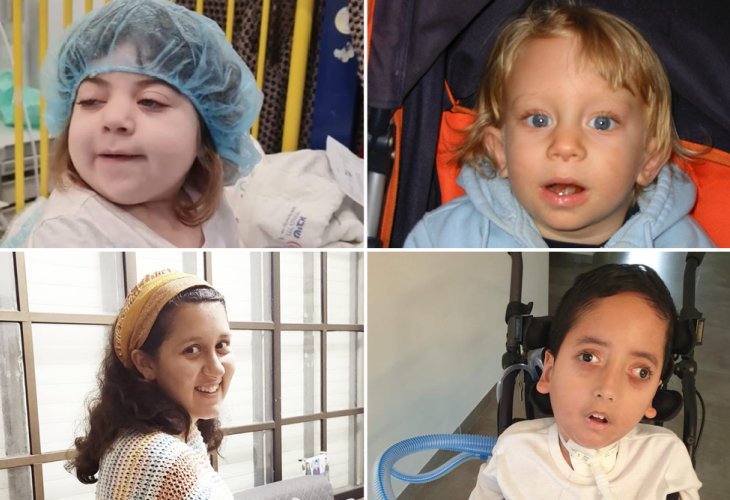
How painful is it for us as parents when our child is ill or suffering, be it during a hospital stay or even while writhing in pain at home? And how joyful it is when they get better, returning to routine and leaving the illness behind.
While every parent faces their child’s illnesses at some point, some parents encounter extraordinarily rare diseases that often lack medical solutions. We reached out to a few of these families to hear their stories, share their prayers for good news, and draw strength from their incredible resilience, which is beyond words.
Ofri Betelman: “The Sky Fell”
Einav Betelman is nearly seventeen, yet her life is divided into two parts: before age twelve and after. The difference between the two is profound. “Einav already had developmental delays in her early years,” her mother, Ofri, says. “As time went on, other issues appeared: language difficulties, emotional challenges, and sensory overload. We placed her in therapy early on, and she studied in a small class within a regular school. Life wasn’t easy, but it was fairly normal until age twelve.”
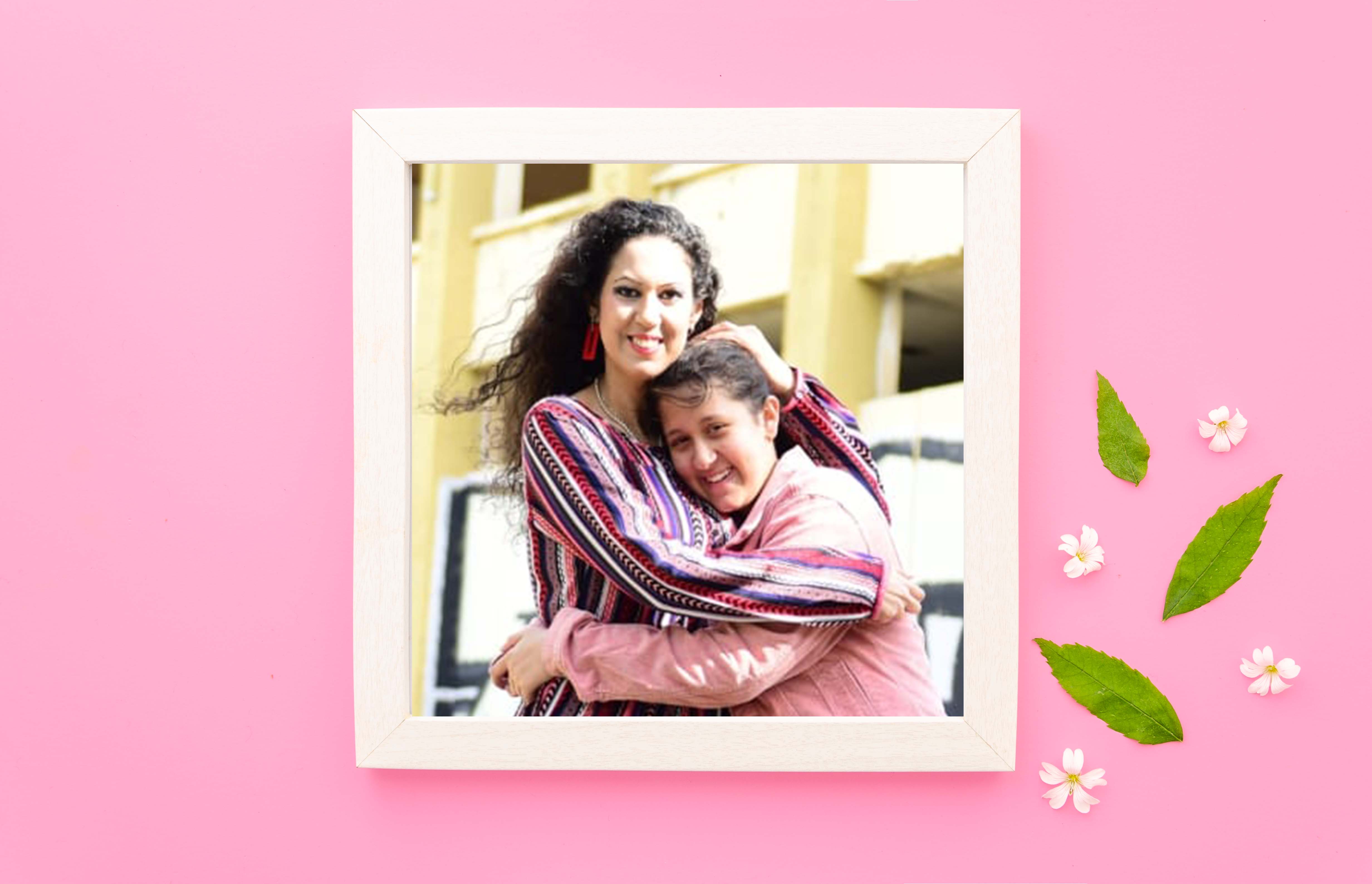 Einav Betelman and her mother, Ofri (photo: Idan Chen)
Then came the moment that changed everything. “It was a Shabbat morning. I was cleaning, and Einav was eating when she suddenly said, ‘Mom, I don’t feel well.’ She turned blue, collapsed, and her hands locked. It was terrifying. I called an ambulance. By the time the paramedics arrived, she had recovered, and within about twenty minutes she seemed completely fine. They suggested we investigate further. At the time, it felt like a one-time incident.” It wasn’t. “Soon after, Einav often said she didn’t feel well. She had dizzy spells and sometimes collapsed. Some people suggested she was seeking attention, but I knew that wasn’t true. I felt something serious was wrong.”
A long series of tests followed: neurology, MRI, EEG, and many more. “The hardest part was the uncertainty,” Ofri says. “I imagined the worst. I read everything, which only increased my fear. Still, I wanted answers. Even if the truth would be hard, at least we would know.” During this period, Einav struggled emotionally and academically. “She went from being an excellent student to barely functioning at school. And all the while, she felt unwell most of the time.”
Eventually, they were referred to the genetics department. “One test result was unusual, so they recommended an exome genetic test. During that very appointment, Einav had another seizure and lost consciousness in front of the doctor. She was rushed to the ER. After that, there was no question that the test had to be done.” The results brought devastating news. “They told us Einav has a mitochondrial disease. A disease that affects the entire body and gradually causes systems to weaken and fail.”
How did you feel when you heard this?
“I was in complete shock. I kept hoping it was something temporary. I asked about treatment, and the doctor, with tears in his eyes, said there was none.”
Further evaluations confirmed the severity. “There are only about one hundred people worldwide with this disease. Einav’s case is even rarer. In addition to cardiac issues, kidney and eye problems, and seizures, she also has severe neurological symptoms, profound hearing loss, and autism. The disease is progressive, and no one knows how far it will go.”
Daily life has changed completely. “The treatments don’t stop the disease, but they help with symptoms and pain. Einav lives with constant pain, especially in her legs and neck. She tries to function, to meet friends, to live like other teenagers. But it’s heartbreaking to watch a girl who should be flourishing slowly fade.” Today, Einav attends a special education school for students with hearing impairments. “She enjoys learning and has friends there. There are days when she feels genuinely good. But there is no doubt that her life has changed entirely.”
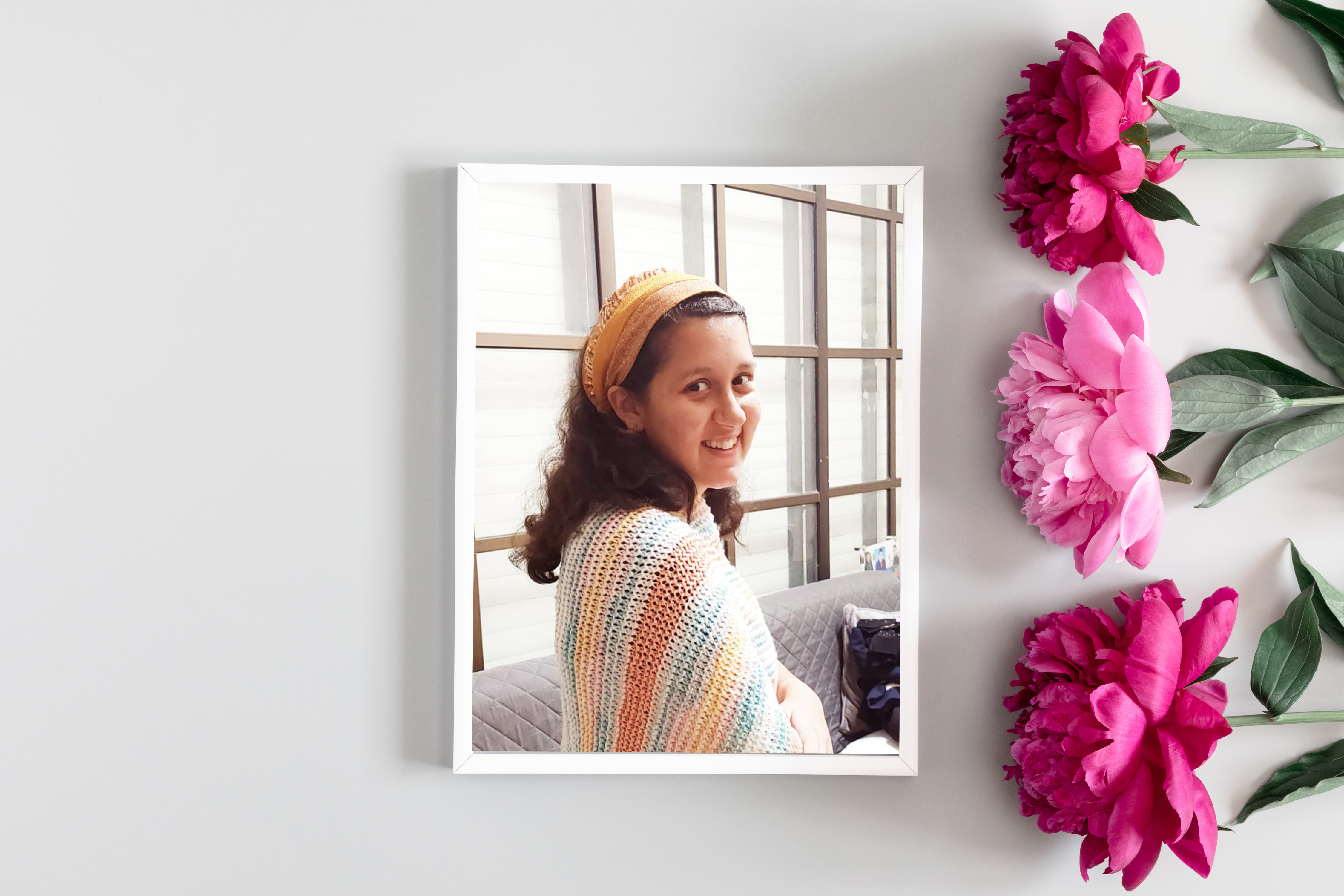 Einav Betelman
 Family life has changed too. “Every outing has to be planned. If she overexerts herself, she pays for it. I try not to overload her schedule. On Shabbat, if I don’t wake her, she can sleep until the afternoon.”
What gives you strength?
“We live in Kiryat Motzkin and belong to a support group called ‘Special Family,’ which includes many parents of children with special needs. My workplace is also very understanding. But most of all, I draw strength from knowing that scientists around the world are researching mitochondrial diseases. I truly believe treatment will be found. Our doctor keeps us updated on ongoing research, including in Israel. Medicine advances every day. The question is whether the breakthrough will come in time to help Einav.”
Ofri has a clear message for other parents. “If something feels wrong, don’t ignore it. Fight for tests. Fight for answers. Even if there is no cure, diagnosis can sometimes lead to treatments that ease symptoms or slow progression. Better to worry for nothing than to regret forever that you didn’t act in time.”
Orlin Malka: “We Will Beat the Statistics”
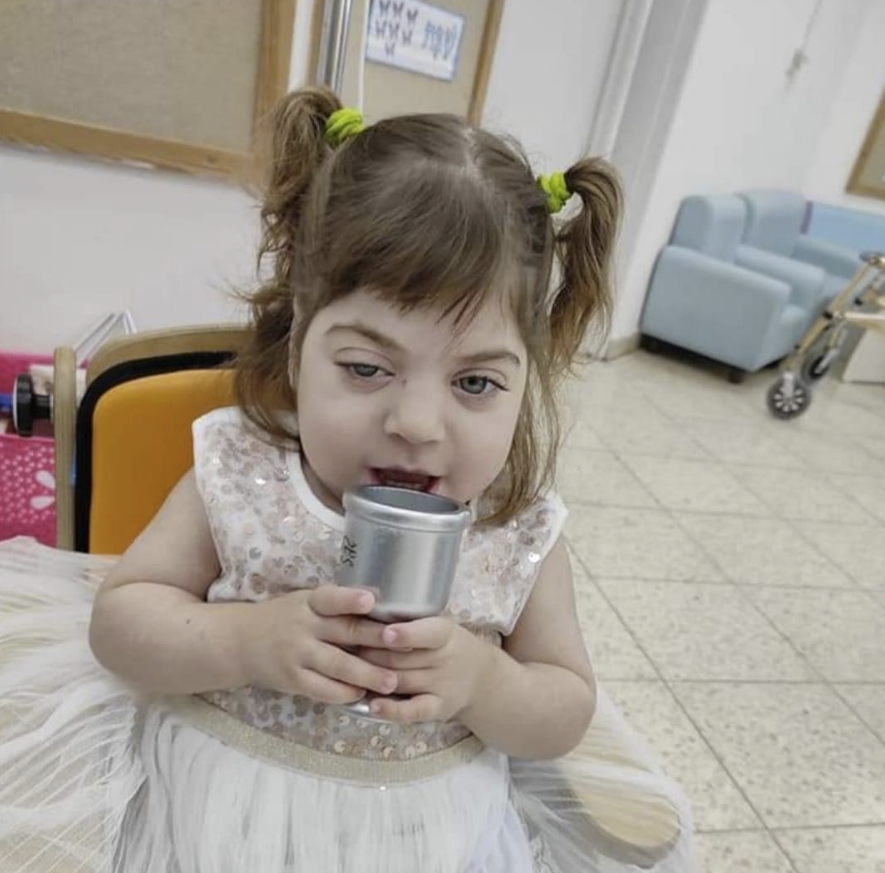
“Challenging doesn’t begin to describe our lives,” says Orlin Malka, mother of four year old Adele. Adele has Pearson syndrome, an extremely rare mitochondrial genetic disorder. “There are about fifty children worldwide with this diagnosis,” Orlin explains. “But Adele is considered one of the most complex cases. The odds are smaller than winning the lottery. And yet we were blessed with her. She is an extraordinary child.”
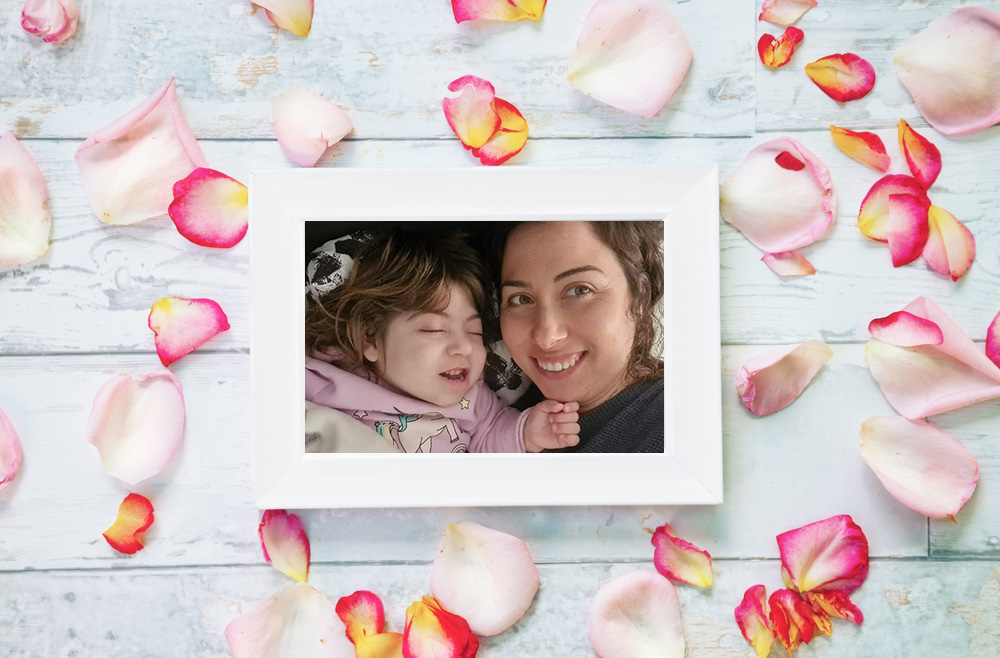 Adele with her mother, Orlin
Adele was born in critical condition. “Doctors told us she wouldn’t live more than twenty-four hours. She spent forty-eight days in neonatal intensive care. But she fought.” The family originally lived in Arad and traveled several times a week to Tel HaShomer Hospital, the only medical center familiar with the syndrome. “Eventually, we moved to central Israel because we understood that much of Adele’s life would be spent in hospitals. Even now, we’re speaking from a hospital room where she’s been hospitalized for six weeks.”
Does Adele have any normal routine?
“She’s never had a truly normal life. We managed to place her in an educational setting briefly, but within weeks she was hospitalized again. Recently, she was also diagnosed with a rare and aggressive cancer. Doctors struggle because they are dealing with two complex conditions at once. Every treatment involves risk.”
 Adele Malka
Bureaucracy adds another layer of difficulty. “Because the disease is so rare, receiving benefits becomes a constant battle. The illness isn’t recognized in official systems. Many families eventually give up.” Still, Orlin holds on to hope. “When you see Adele, you understand we must do everything to save her. No cure exists yet, but that can change. Research is advancing. When Adele was diagnosed, we were told children like her live five to seven years. That expectation is already changing. Adele has beaten the odds from day one.” The family now works to unite parents of children with complex disabilities through an advocacy group. “When we fight alone, we achieve only small victories. But together, we can create change for all our children.”
Chen Levi: “We Have an Angel in Our Home”
“Our Yinon was born completely healthy,” says his mother, Chen Levi. “His development was normal until he was two years and two months old.” He was hospitalized due to low weight, but during the hospitalization, he suddenly lost consciousness. “He required resuscitation and spent months in intensive care while doctors tried to understand what happened.”
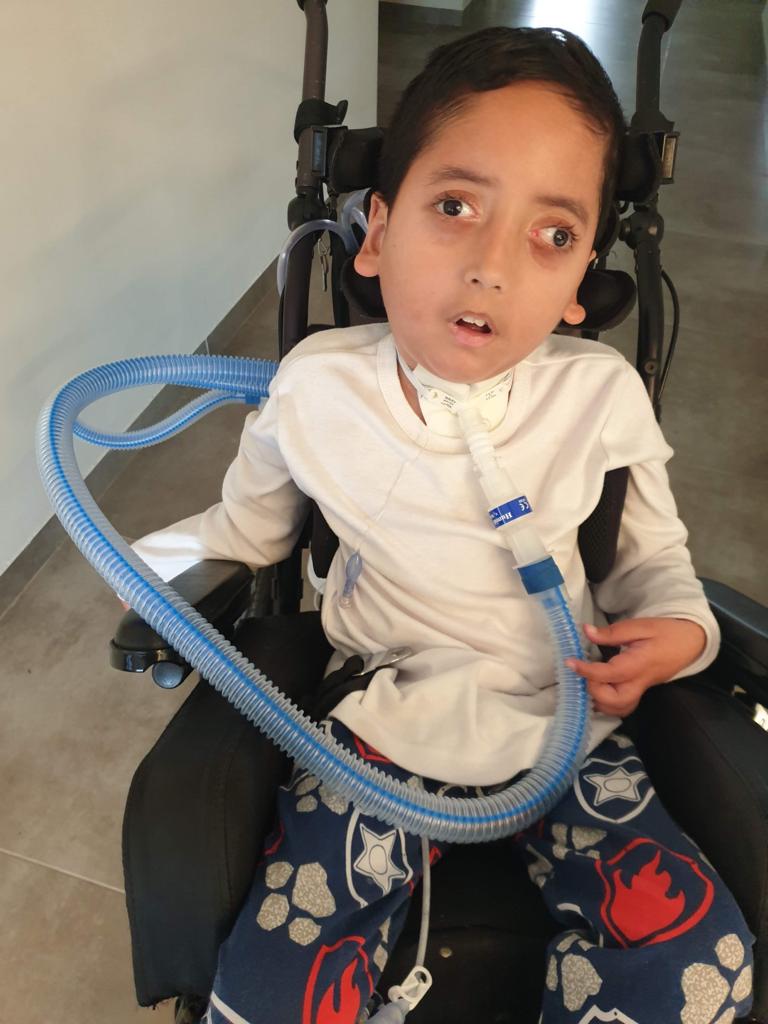 Yinon Levi
After extensive testing, he was diagnosed with Leigh syndrome, a rare genetic metabolic disorder. “In most children, abilities decline gradually. In Yinon’s case, the collapse happened suddenly. He has not regained consciousness since.” Today, Yinon is eleven and a half and fully dependent on medical care. “He is ventilated, fed through medical equipment, and needs constant care. We chose to raise him at home, so our home functions like an ICU. I provide all his care myself.”
Despite the hardship, Chen’s outlook is striking. “Some people see this as tragedy. And it is. But Yinon himself is the light in our home. We truly feel we have an angel with us. He gives us strength.”
Where does your strength come from?
“From him. Sometimes it’s the smallest reactions we interpret as a smile or a response. We don’t know how much he understands, but we know he’s calmer at home than in the hospital. That tells us something.” She adds, “This kind of love is unconditional. We love him without receiving anything in return. I believe it’s the highest form of love.”
Like the other families, they participate in research. “There are about one thousand to two thousand children worldwide living with Leigh syndrome. In Israel, only a handful. Because the disease is so rare, there is little financial incentive for research.” Still, Chen remains hopeful. “Medicine is moving toward genetic therapies that could one day help children like Yinon before irreversible damage occurs. I pray that day comes.”
Ravit Shani Levi: “How We Founded the Ori Foundation”
Ravit Shani Levi lost her two-year-old son Ori to a rare disease seventeen years ago. “Like the other parents, I experienced uncertainty, confusion, pain, and grief. Ori passed away only one month after diagnosis. I would have done anything for a sliver of hope.” At the time, there was almost no information about rare diseases in Israel. “Even doctors had little knowledge. We were completely alone.”
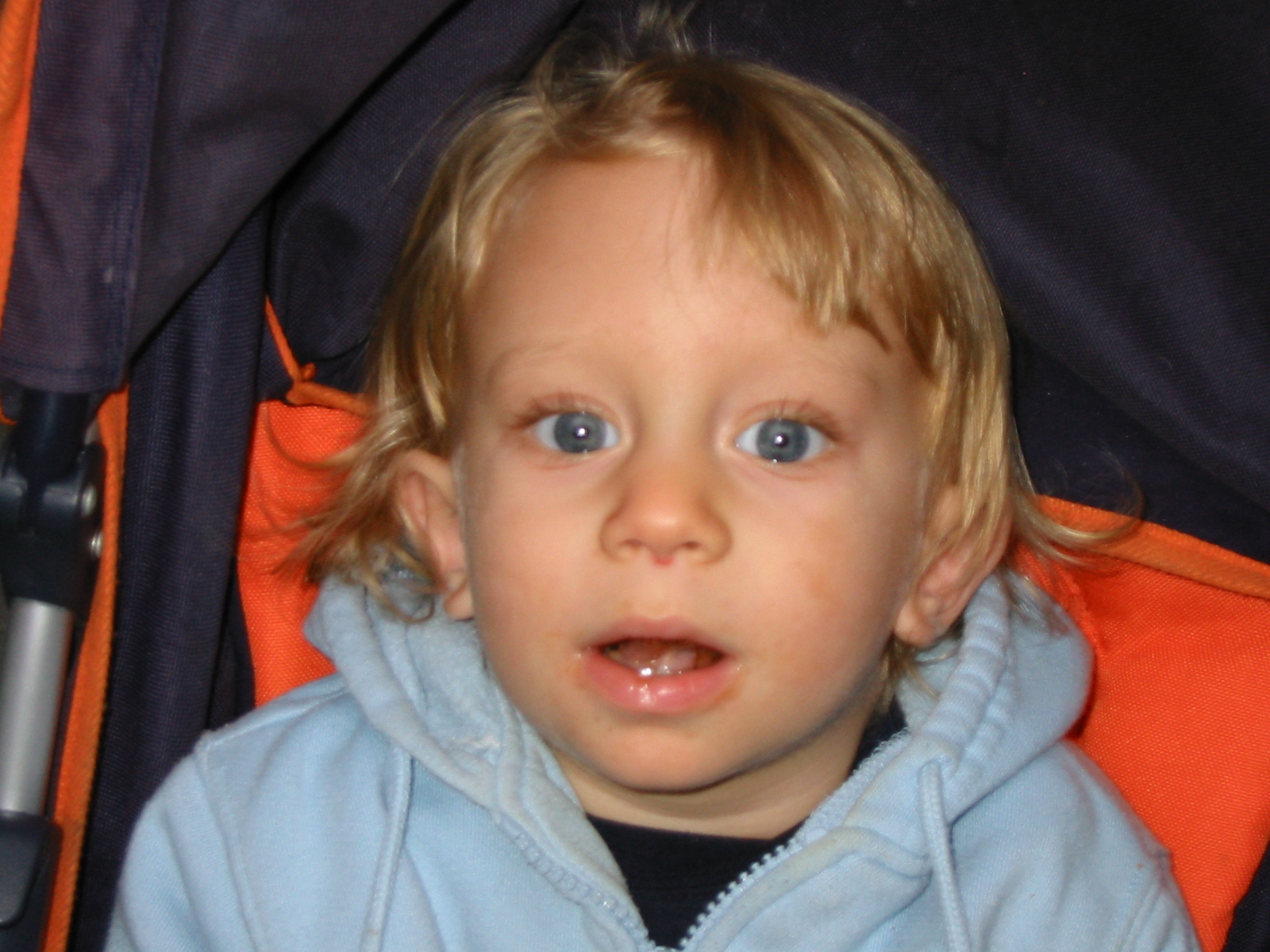 Ori Shani
After Ori’s death, the family traveled to Paris for genetic research and discovered a model in which doctors and researchers work side by side. “That collaboration doesn’t truly exist in Israel, and it should. We have outstanding professionals. There’s no reason they shouldn’t work together.” Out of this experience, the Ori Foundation was established to support families dealing with rare mitochondrial diseases. “We founded it because no one was truly representing these families. We hoped to create change. Seventeen years later, too little has changed.”
Parents still reach out with diagnoses so rare that their child may be the only known case. “They are not isolated. Together, they form a large community in desperate need of answers.” Her message is clear. “Every small advancement matters. Even treatments that help only a few children today can shape the future for generations. This is lifesaving work. Doctors and researchers must work together with humility and purpose. That’s where the breakthrough will come.”

