

Magazine
The Abbo Family's Legacy: A 192-Year-Old Torah Procession from Safed to Meron
Why do people from Safed and Jewish communities worldwide join the Abbo family’s Torah procession to Mount Meron each year? Sixth-generation descendant Rafael Abbo reveals the remarkable story behind this centuries-old tradition.
- Michal Arieli
- | Updated
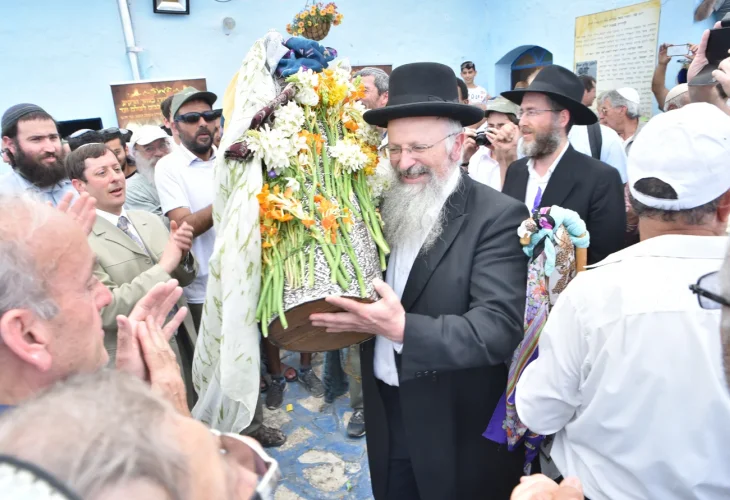 The Torah procession
Every year, alongside the massive Lag BaOmer celebrations in Meron, a quieter yet deeply moving tradition unfolds: the Abbo family’s Torah procession. This historic journey begins at the Abbo home in Safed, winds through the cobblestone alleys of the Old City, and concludes at the tomb of Rabbi Shimon Bar Yochai in Meron. Participants come from every background and age group, accompanied by klezmer musicians and distinguished cantors who infuse the procession with music and spirit.
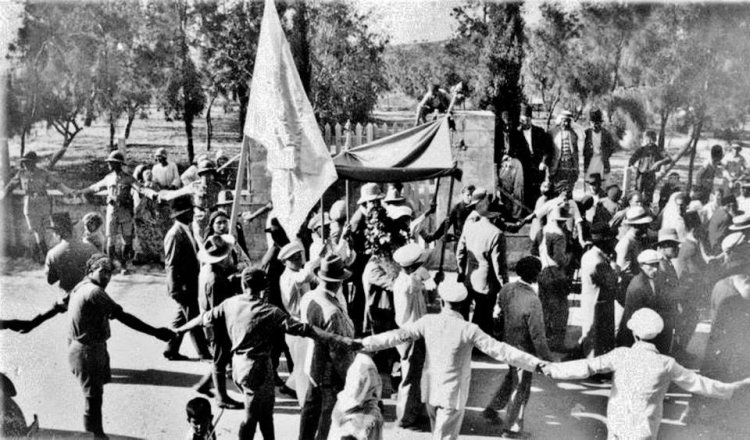 Torah Scroll Procession, 1932 (Abbo Family Archive)
“Together, everyone pays honor to the ancient, cherished Torah making its way to Meron,” explains Rafael Abbo, a sixth-generation descendant of Rabbi Shmuel Abbo. Rabbi Abbo arrived from Algeria in the early nineteenth century, settled in Safed, and became the city’s chief Sephardic rabbi. “This isn’t merely a family custom,” Rafael emphasizes. “It belongs to everyone. Just as my ancestor served the entire community, this procession brings people together in a living expression of unity, Zionism, and love for the Jewish people.”
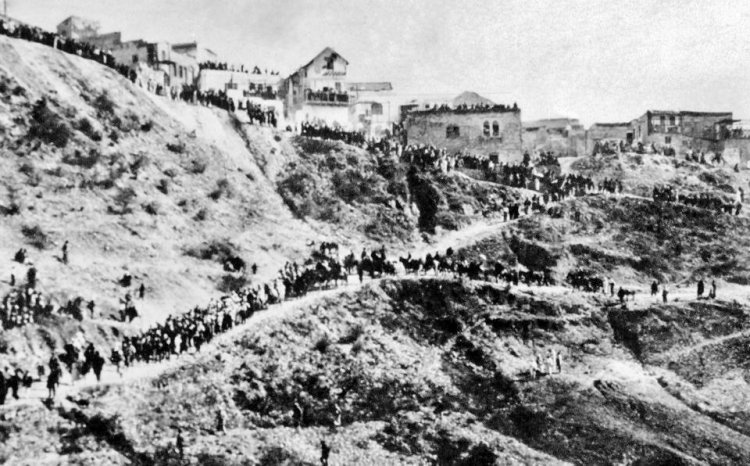 Torah Scroll Procession, 1932 (Abbo Family Archive)
The Rabbi’s Sanctuary
As Rafael explains, the procession sets out from Beit Abbo, the historic home built by Rabbi Shmuel Abbo himself. “My grandfather was a dayan and taught ‘Rashbi’s heritage’ and the Zohar at the Arizal Synagogue,” Rafael recounts. “He also renovated and founded the White Rabbi Synagogue, acquired land with his sons, helped settle the Galilee, and restored the tomb of Rashbi. His close friendship with Rabbi Shmuel Heller, the Ashkenazi rabbi of Safed, played a significant role in uniting the city’s diverse communities.”
The Abbo home, situated in the heart of Safed, served for generations as a center of hospitality. Guests from around the world passed through its doors, and new immigrants found refuge within its walls. Thanks to the family’s connections with Ottoman and later British officials, they were able to assist Jews seeking entry into the Land of Israel during periods of restriction, even using Ottoman stamps preserved by the family.
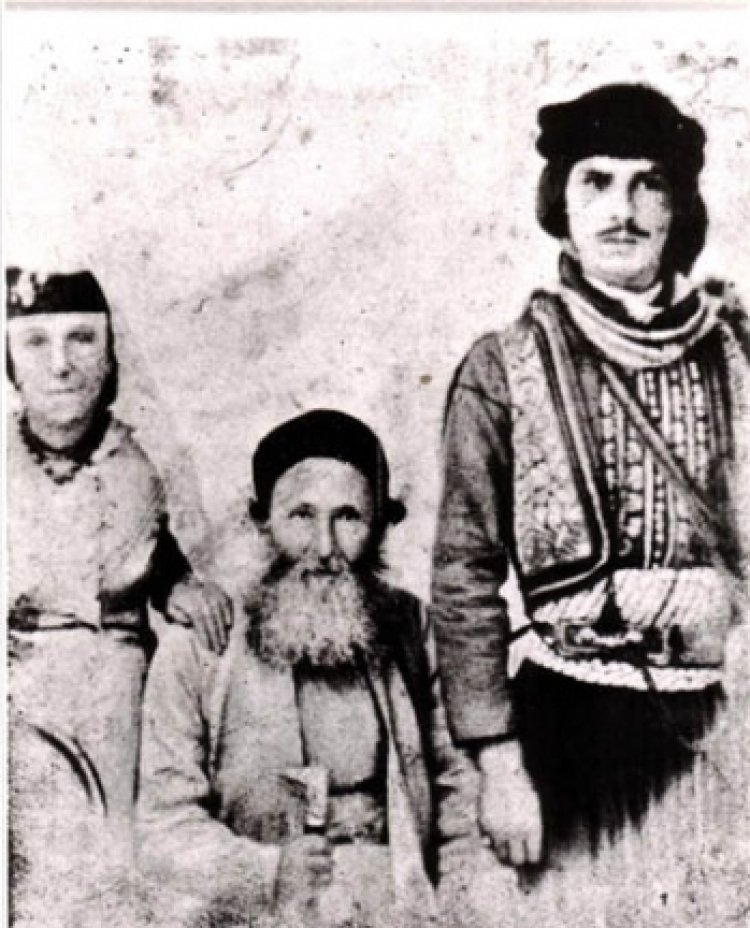 (Abbo Family Archive)
Rafael also speaks emotionally about his family’s enduring bond with Meron. His grandfather would travel there regularly, a tradition faithfully upheld by each generation to this day.
A Historic Procession
Where does the Torah used in the procession come from?
“For many years, we marched with a Torah presented to my grandfather by the Jewish community of Safed in recognition of his service as French consul in 1833,” Rafael explains. “That same year marked the beginning of the Abbo family’s annual Torah procession to Meron. Later, in 1904, after a painful family tragedy, Rabbi Abbo’s son commissioned a new Torah in dedication to the tradition. That Torah still leads the procession today, and for generations its arrival signaled the official start of the Meron celebrations.”
Even during turbulent periods, the procession continued. Archival black-and-white footage shows that local Arab villagers respected the tradition, allowing the procession to pass safely through their areas and, at times, even joining the march themselves.
And in more recent challenges, such as COVID-19 and wartime conditions?
“Tradition endured,” Rafael says simply. “During the pandemic, we secured special permits, including approval that reached as high as the Prime Minister’s office, to ensure the procession could take place. During the war, a rocket exploded near our home shortly before Lag BaOmer, shaking all of Safed. But we still went ahead. We could not abandon the tradition.”
The procession spans several days, beginning on the afternoon before Lag BaOmer. The Torah remains in Meron throughout the celebrations and sometimes stays until after Shavuot.
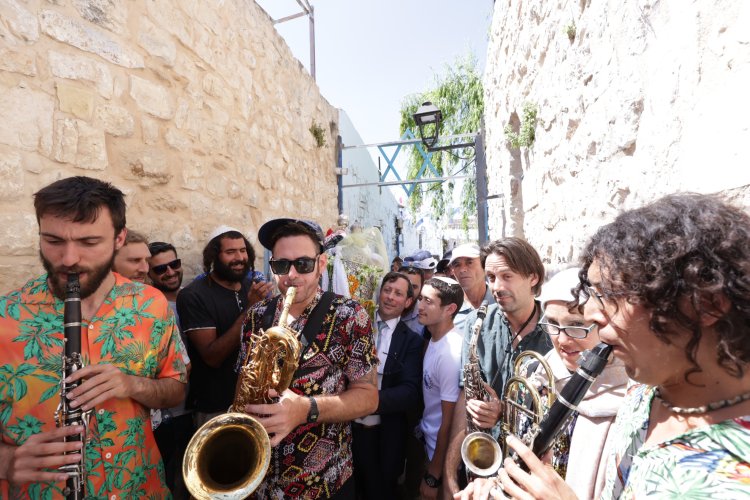 (Photo: Eitan Elhadez)
This year marks 192 years of uninterrupted tradition. Organized groups, families, and individual participants continue to join the journey each year. Rafael himself often guides groups along the route and describes the experience as “a rare opportunity to actively step into a living chain of generations.”
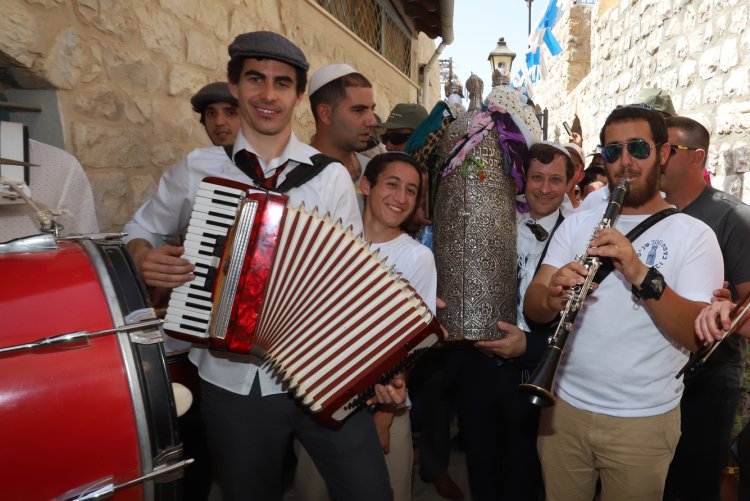 (Photo: Eitan Elhadez)
“It’s an incredibly powerful connection,” he says quietly. “A continuous thread stretching across two centuries of Jewish life. People walk with us and tell how their grandfather joined the procession, then their father, and now they do too. Elderly participants still remember riding donkeys to Meron as children. This procession weaves together nearly 200 years of history, binding Safed, Meron, and the Jewish people in a bond that simply cannot be broken.”

