

Israel News
From Israel to India: The Family Bringing Jewish Life to Goa
How does one family sustain Jewish life on the beaches of Goa? This moving story follows Neta Merili and her family on their mission from Israel to India, and the vibrant community they have built through faith, resilience, hospitality, and devotion.
- Miriam Salomon
- | Updated
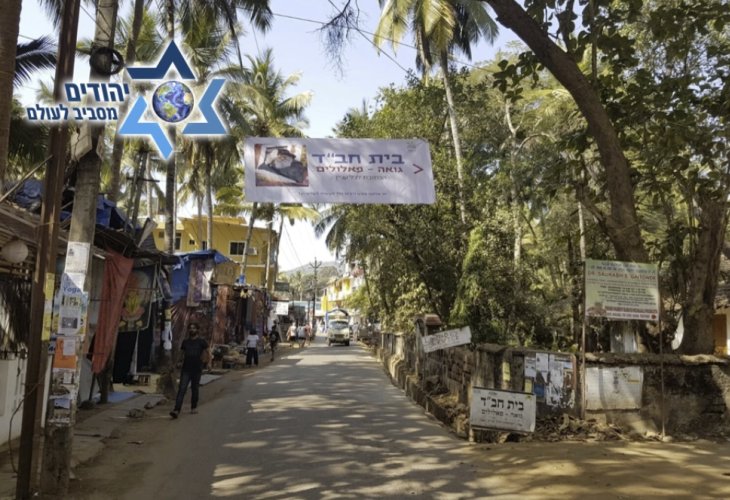 Chabad House in Goa
Why did you decide to live in India?
“We arrived here as part of a mission from the Lubavitcher Rebbe. A year after our marriage, my husband suggested embarking on this journey. As a young man, he had helped at a Chabad House in India, and the idea spoke to me as well. We consulted Rabbi Kopchik, the main Chabad emissary in India, to ask where a Chabad House was most needed. He directed us to Goa, an area filled with travelers and families. It was clear that a warm Jewish home, kosher food, Shabbat meals, and a synagogue were essential here. Since English is widely spoken, language was never a barrier. We have now been serving in Palolem Beach, India, for ten years.”
 Palolem Beach, Goa
Is there a Jewish community where you live?
“India is vast, made up of many states. We are in Goa, on Palolem Beach. It has long been a popular destination for travelers, and in recent years more families have begun settling here for extended periods. The availability of schools, activities for children, and the relatively organized, Western feel of the area makes it attractive. Today, we have a community of Israeli families who stay for six months to a year, alongside several long-term Jewish residents.”
What educational options exist for your children?
“At the beginning, there were no Jewish educational frameworks, so I opened a small kindergarten for my children and other Jewish children in the area. Over time, it expanded to include additional age groups, a nursery, and even a small school for my older sons. We work with young women from Israel who volunteer as educators, alongside local assistants. The work is demanding, but deeply meaningful. Recently, an online learning program was established specifically for the children of emissary families, connecting them with teachers in Israel. The small classes work beautifully and became even more popular during COVID.”
What does your weekly routine look like?
“My mornings are usually spent at the Chabad House, teaching or supervising the kitchen. I manage the kitchen with the help of a dedicated team, especially during busy seasons. In the afternoons, I focus on my children, and in the evenings I often attend team meetings or serve as a ritual attendant. Once a week, I host a challah baking gathering for women, which also includes Torah study.”
Neta shares a moving story from earlier this year:
“Yesterday we participated in a brit milah in Goa. The baby was already two months old because India’s laws delay gender disclosure. When we learned Sivan and Dudi had a son, we were overjoyed, but finding a mohel during COVID with closed borders felt almost impossible. Through faith and the efforts of many people, including Brit Yosef Yitzchak and the Israeli Embassy, a mohel arrived on a special visa. Mohel Shimon Eisenberg, known for his dedication, came despite the risks, even knowing he would face quarantine before Rosh Hashanah. ‘What wouldn’t we do for a Jewish child?’ he said with a smile. Standing together at that brit, united in faith, reminded us of the strength of our people. Mazal tov to Sivan and Dudi. May you raise Yaakov Ziv to Torah, chuppah, and good deeds with joy.”
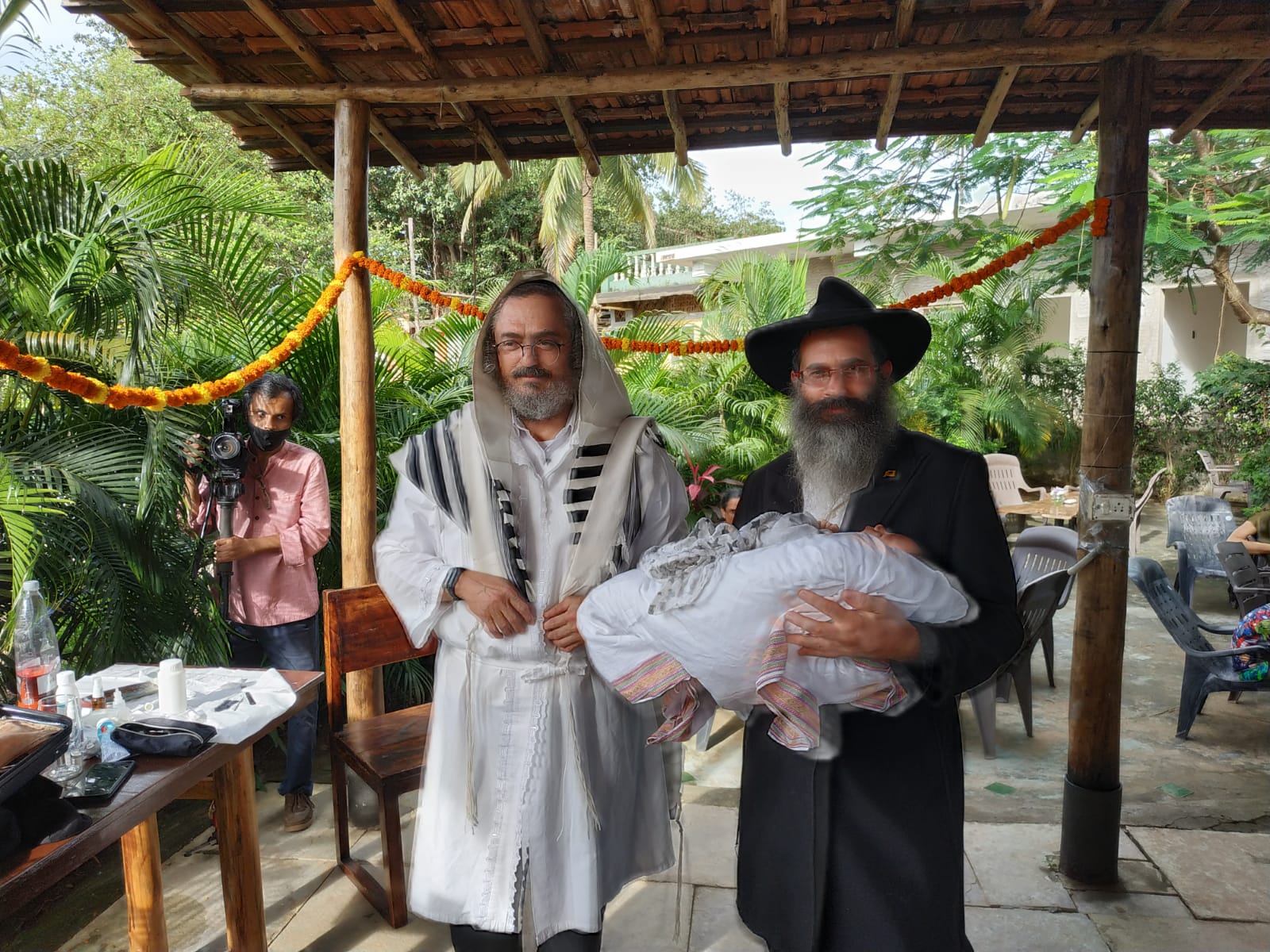 At a brit held in India earlier this year
How do you celebrate Shabbat?
“Before COVID, Shabbat here was enormous, with 150 to 200 participants each week. People registered in advance so we could prepare properly. Baking began days earlier, and every Friday we baked around 35 kilograms of challah alongside fresh meals. Beyond Shabbat meals, our kitchen also provides kosher food to travelers throughout Goa. Shabbat itself is vibrant, full of singing, warmth, and an atmosphere that’s hard to describe. Our children are deeply involved. They share Torah thoughts, sing, and help serve guests. They’ve grown up naturally sociable and love the communal spirit.”
What are the greatest challenges?
“Loneliness is one. Emissaries everywhere experience it, because people constantly come and go before deeper connections can form. Beyond that, the responsibilities are immense: managing staff, overseeing the kitchen, coordinating educators, raising our children, assisting travelers with personal struggles, running a restaurant, organizing large Shabbat meals, classes, prayers, and more. Balancing everything while nurturing our marriage, which is the foundation of our mission, is essential. People often ask, ‘How can you live like this?’ At first, that question shook me. Over time, I realized that normal is relative. This life fits us. We are here as emissaries for Hashem’s honor, strengthened by the Rebbe’s mission, with a sense that we’re carried beyond our natural abilities.”
What’s the weather like?
“It’s always warm here. Sometimes extremely hot. The monsoon brings intense rain. Right now we’re after monsoon season, enjoying warm days and pleasant evenings.”
What about the political situation?
“India is generally calm and stable. The Prime Minister respects Netanyahu, and relations between Israel and India are positive.”
Do you experience antisemitism?
“Thankfully, no. India is very accepting of different religions. Cultural differences do exist. For example, cows are sacred here, so beef is prohibited. Most of our meat is chicken.”
Neta also shared a powerful story posted by Ben Oved, a traveler they hosted, about attending a Jewish funeral in Goa:
He describes receiving a call asking him to complete a minyan for the burial of an elderly Jew. Despite illness and reluctance, he realized how vital his presence was. He traveled two hours by scooter, singing along the way, and arrived just in time. Eight other travelers did the same, none of them knowing the deceased, yet all coming out of pure solidarity. The widow shared her husband’s story: Michael Horowitz, a successful lawyer, son of Holocaust survivors, who dedicated his life to justice and compassion. Ben reflected on how deeply meaningful it was that even in distant Goa, Jews still showed up for one another.
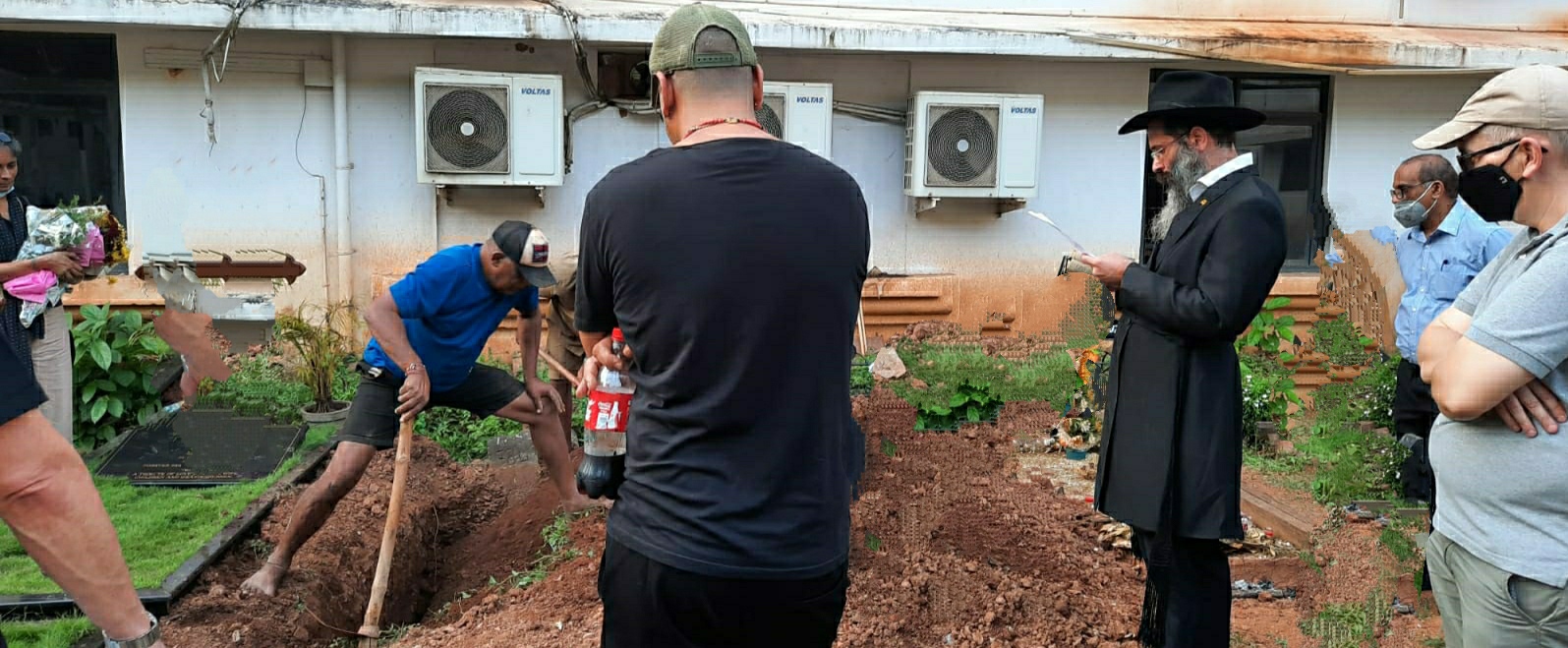 Rabbi Roi Merili at a Jewish funeral in India (Photo: Ben Oved)
What’s difficult to obtain there, and what would you want sent from Israel?
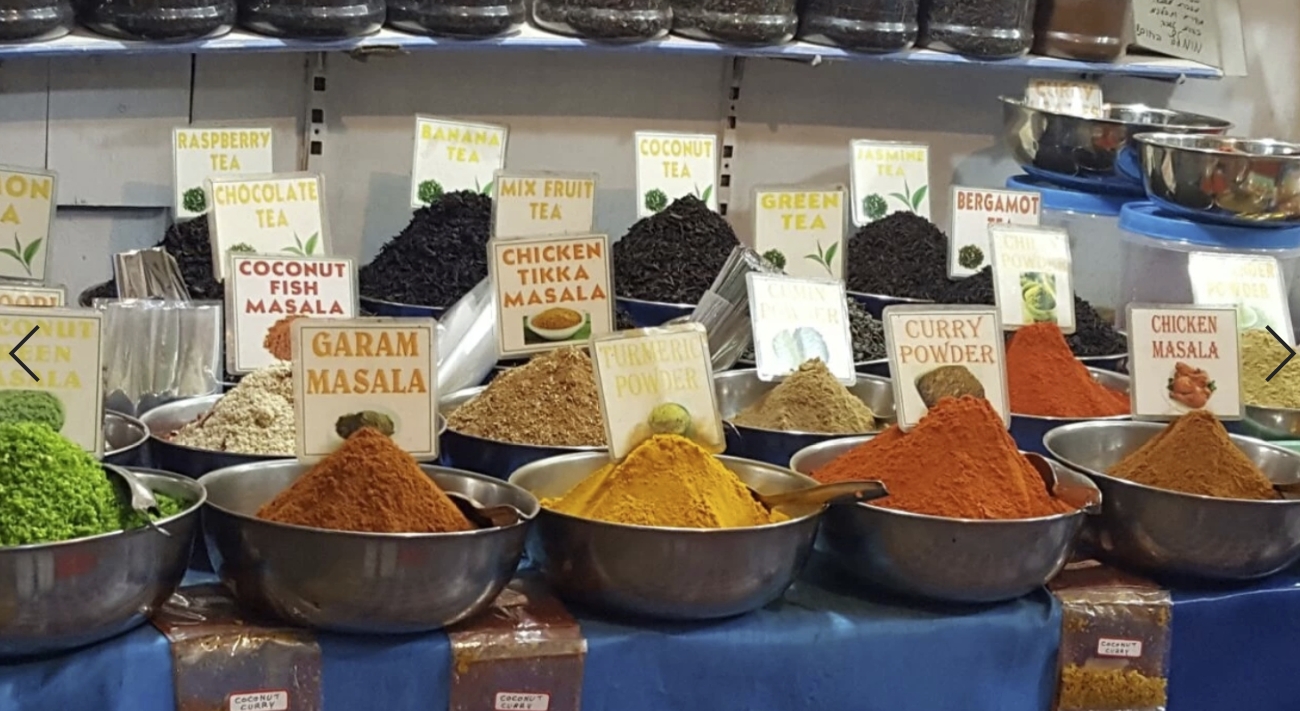
“Cooking here is challenging. We bake our own bread, produce our own dairy, and even grind our own spices. The food ends up healthier and tastier. What we mainly need shipped are wine, matzah, and some treats like cheese and chocolate.”
When did you last visit Israel?
“Our last full family visit was over two years ago. We miss Israel deeply. Our youngest child, born shortly before the pandemic, is known to most of our family only through photos. With Hashem’s help, we hope to return soon.”

