

Israel News
Trump Questions Pahlavi’s Viability as Exiled Prince Lays Out Israel-Centered Vision for Iran
As the U.S. president voices uncertainty about Iran’s opposition leadership, Reza Pahlavi calls for recognizing Israel and ending Tehran’s nuclear program
- Brian Racer
- | Updated
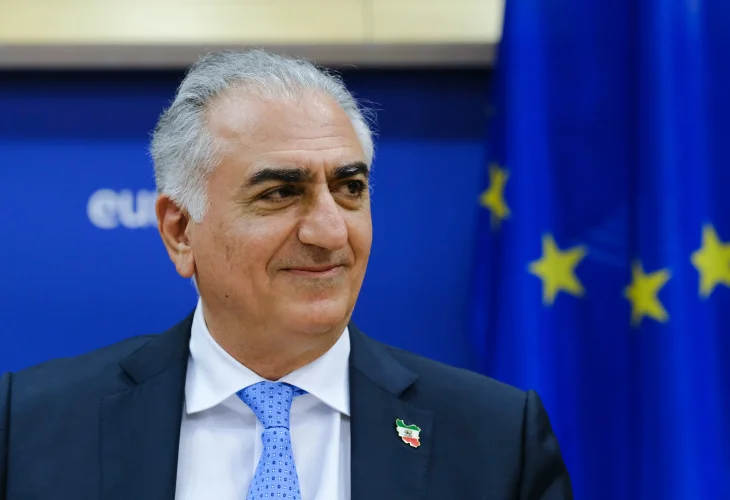 Pahlavi (Shutterstock)
President Donald Trump cast doubt last night on whether exiled Iranian opposition figure Reza Pahlavi could rally support inside Iran, even as Pahlavi publicly laid out a vision for a post-Islamic Republic state centered on peace with Israel and regional realignment.
Speaking in an exclusive Reuters interview in the Oval Office, Trump said Pahlavi appeared personally agreeable but questioned whether he could translate that into domestic legitimacy if Iran’s clerical regime were to fall.
“He seems very nice, but I don’t know how he’d play within his own country,” Trump said. “And we really aren’t up to that point yet.”
Reza Pahlavi, 65, is the U.S.-based son of Iran’s last shah, who was overthrown in the 1979 Islamic Revolution. He has lived in exile since before his father’s fall and has emerged as one of the most recognizable voices of Iran’s protest movement abroad. Iran’s opposition, however, remains fragmented among rival ideological camps, including monarchists who back Pahlavi, and lacks a clear organized presence inside the country.
Asked whether Pahlavi could assume leadership if the regime collapsed, Trump said he was unsure whether Iranians themselves would accept him. “I don’t know whether or not his country would accept his leadership, and certainly if they would, that would be fine with me,” Trump said.
Trump added that while regime collapse was possible, it was far from guaranteed. “Any regime can fail,” he said. “Whether or not it falls or not, it’s going to be an interesting period of time.”
Sanam Vakil, deputy director of Chatham House’s Middle East and North Africa Program, echoed that caution, saying Pahlavi’s prominence should not be overstated. “It’s very hard to see how much support he has or how much support any figure has in Iran,” she said.
Hours after Trump’s remarks circulated, Pahlavi released a detailed statement on X outlining how Iran would act under his leadership following the fall of the Islamic Republic.
“Under the yoke of the Islamic Republic, Iran is identified in your minds with terrorism, extremism, and poverty,” Pahlavi wrote. “The real Iran is a different Iran.”
He pledged that a future Iranian government would immediately dismantle the country’s military nuclear program and sever ties with terrorist organizations. “In security and foreign policy, Iran’s nuclear military program will end. Support for terrorist groups will cease immediately,” he said.
Pahlavi placed Israel at the center of his regional vision, declaring that Tehran would formally recognize the Jewish state. “The State of Israel will be recognized immediately,” he wrote, adding that Iran would seek to expand the Abraham Accords into what he called the “Cyrus Accords,” linking Israel, Arab states, and a future Iranian government.
“Iran will act as a friend and a stabilizing force in the region,” Pahlavi said. “And it will be a responsible partner in global security.”
He also outlined economic and governance reforms, promising transparency, anti-corruption measures, and compliance with international standards. Iran, he said, would become a “reliable energy supplier to the free world” with predictable pricing and accountable institutions.
“A free Iran will be a force for peace. For prosperity. And for partnership,” Pahlavi concluded.

