

Magazine
Unlocking Children's Inner Worlds Through Their Art
Can a child’s drawing reveal what words cannot? This article explores how drawing analysis can offer insight into a child’s emotional world, with expert guidance from Gilad Shama, author of The Complete Guide to Drawing Diagnosis.
- Shira Dabush (Cohen)
- | Updated
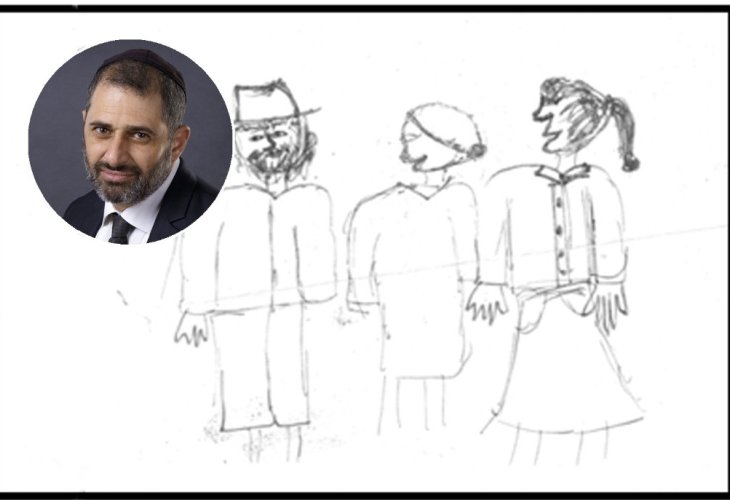 Inset: Gilad Shama
Which parent hasn't wished to understand their child better, even when words fall short? Teachers too often wonder about the quietest kid in class, the one who blends into the background. Curiosity is natural, but for the parent of a child who retreats inward, understanding can feel imperative.
There are many ways to delve into the psyche of our children and students today, but one of the most effective is through analyzing their drawings. This psychological evaluation technique provides a spectrum of details about the child's personality, challenges, and coping mechanisms, both emotionally and mentally.
By interpreting children's drawings, evaluators can enter the child's inner world through their lens, experiencing it in a broad and deep manner. Psychologists, educators, graphologists, and even parents use this method to assess the emotional and psychological state of children who often struggle to verbalize their feelings and experiences accurately.
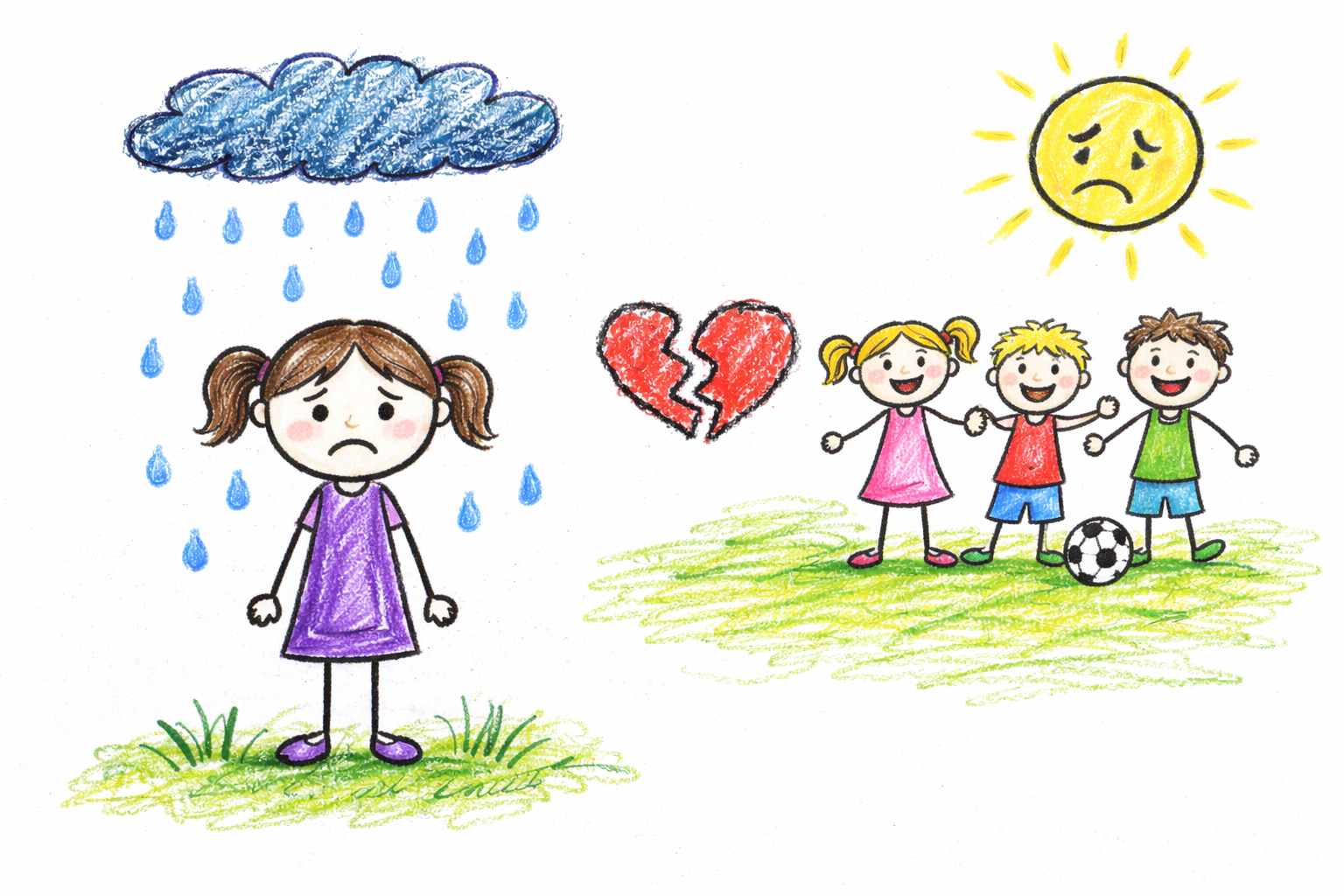
Drawing has always been a way for children to express themselves and 'communicate' with the adults around them. When we decode a drawing through this method, we can learn a lot about a child's thought process, how they are developing compared to peers, their view of the world, and their interpersonal relationships.
What Kids Hide and Reveal Through Art
What kinds of issues can this method uncover? According to Gilad Shama, coach, analyst, and author of the book 'The Complete Guide to Drawing Diagnosis,' this analysis can uncover a range of issues, but our role as parents and educators is to elevate the child's strengths, focusing on their advantages without diminishing them due to what we discover.
"One of the things I appreciate and love about this method is how it can help restore the confidence, joy, and energy that we've lost along the way. As children, we all grew up with this happiness, but at some point, something changed us, making us more 'serious,' yet sadder. This analysis can help identify when and why this behavior started, allowing us to choose a different path moving forward. But above all, remember that if I failed, it doesn't mean I am a failure. If I made a mistake, it doesn't make me a villain. There was a reason for this behavior. We must approach this process with the understanding that we are inherently good."
For many years, Shama has led the 'Israeli Center for Evaluation and Coaching', with numerous books to his credit. He explains that in psychology, issues are often categorized into three main areas: the hidden self, the unconscious self, and the blind self, which all reflect different personality types in children.
"The hidden self is where the child feels only they know certain things, that others don't. The blind self is where others see something in the child that the child doesn't perceive in themselves, like a child with cake crumbs on their face that everyone else notices except them. In the unconscious self, the child isn't aware of themselves or others. In the hidden self, for example, we can discover what the child is too shy to say, what they're thinking, and what they're hiding."
Do artistically talented kids have fewer 'issues'?
"Undoubtedly, this can complicate the analysis, requiring additional tests like the Vertag test or the 'Stars and Waves' test - tools that help assess the balance between the child's emotional and rational sides."
The Family Sketch: A Telling Canvas
Professional evaluation of children's drawings involves three stages: First, examiners evaluate the placement and size of drawn elements, line types, pressure applied with markers, crayons or pencils, the positioning of figures, etc. The second stage involves comparing a child's drawings to those of peers. The third stage explores why certain colors were chosen and how they are used. This process results in a comprehensive and profound picture of the child's inner world, intricately woven from layers of cause and effect.
At what age can you start analyzing a child's drawing?
"Around 5-6, when the child can communicate verbally. A favorite among analysts is the family drawing; a request for the child to draw their family. This can reveal a lot about the child's perception of their role in the family dynamics and their feelings towards siblings or parents. For instance, when a child draws their family and includes Grandpa instead of Dad, it signifies Grandpa's strong presence in their life."
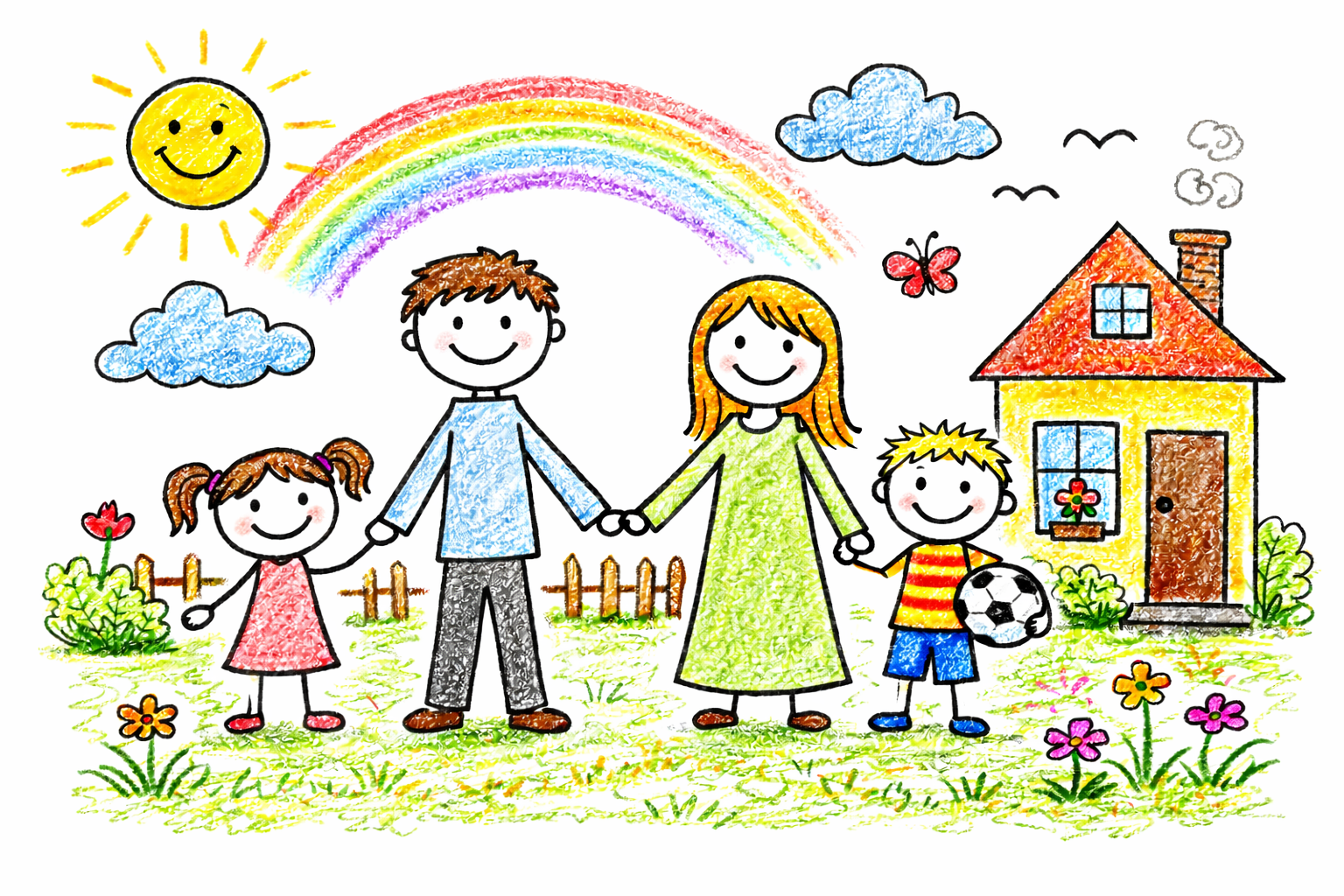
And what if a child 'forgets' to draw a certain family member?
"There's no such thing as 'forgetting'. The rule is that if it was 'forgotten,' there’s a reason. When you ask a child to draw a family, it should be implicit that everyone is included. Forgetting a parent or sibling is hard. If it happens, we need to understand why."
When would you recommend using this method and how much should a parent learn about it themselves?
"I recommend that every parent, educator, and caregiver familiarizes themselves with this field, at least superficially. There are workshops providing excellent tools for those wanting to understand a child's psychology and help them resolve issues. I suggest professional analysis when problems aren't typical, like more extreme and unusual behavior that should alert parents and educators, such as refusing to have friends over. Even an only child should want to be surrounded by friends, and if not, there's a problem that needs solving.
"But as I mentioned at the start, we should first evaluate the child's amazing strengths, seek out the positive, energetic aspects, and expand our perspective as educators. Recognize the child's impulsivity as a full reaction capacity. Inside any negative behavior, there is good, and we should find and nurture that within the child and ourselves."
"Before starting to diagnose issues, focus on identifying wonderful strengths. See the positive, powerful, energetic traits in every person. Any analysis should start with strengths and capabilities. Every negative trait contains something positive, such as impulsivity, a complete reaction ability."
Advice for those new to this field such as mothers considering a workshop?
"Drawing evaluation is a magical journey into a child's psyche, providing amazing tools to those who learn it. Anyone can learn and enrich their knowledge, even though it's an endless world full of continuous discoveries. If someone hasn't tried it yet, I highly recommend it. After such a course, you'll undoubtedly be able to 'read' your child and understand what they're experiencing at any given moment, more deeply and effectively."

