

Rebuilding After Tragedy: Miriam Ben Gal’s Journey Forward
How a young widow chose life again, remarried, and built a blended family of ten
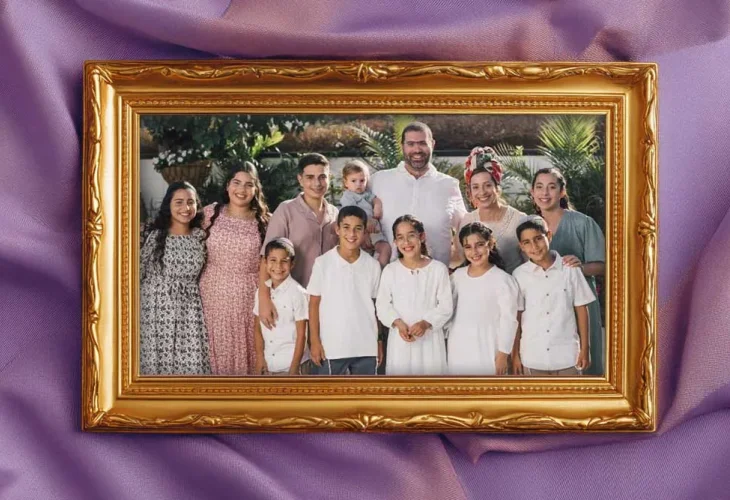 The Ben Gal-Rivai Family. Elad holding their shared son (Credit: Yaakov Aflalo)
Miriam’s husband, Rabbi Itamar Ben Gal of blessed memory, was murdered at the Ariel Junction about eight years ago while on his way to his nephew’s brit milah. In an instant, Miriam was left to raise their four young children alone, the eldest in first grade and the youngest just nine months old.
Eight years later, her life looks very different. Miriam is remarried to Elad Ravi, who had also lost his wife. Together they are raising a family of ten children: her four, his five, and their shared son. In an interview with Hidabroot, Miriam speaks candidly about grief, resilience, second marriage, and the deliberate choice to continue living fully.
![Rabbi Itamar Ben Gal (Credit: Barzi Goldblatt)]() Rabbi Itamar Ben Gal (Credit: Barzi Goldblatt)
Rabbi Itamar Ben Gal (Credit: Barzi Goldblatt)
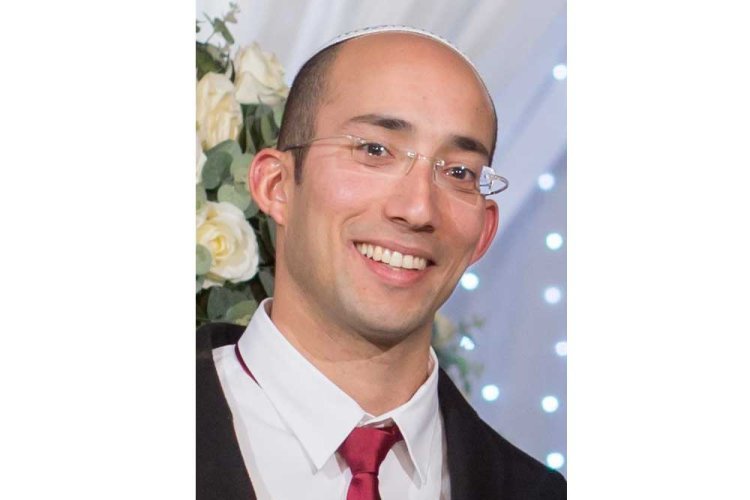 Rabbi Itamar Ben Gal (Credit: Barzi Goldblatt)
“The Dream Came True, Just with Different Circumstances”
“I remember that a few weeks after the attack, I went into my son’s kindergarten,” Miriam recalls. “It was around Family Day, and the entrance wall was covered with family photos. I saw a picture of a family from our community, a large family with ten children whom I really love and admire. I looked at it and my heart sank. I thought to myself, ‘I will never have a big family like that.’”
“Much faster than I ever imagined, we became a family of a father, a mother, and ten children. Not in the way I thought it would happen, with completely different circumstances. But if we are willing to be flexible and open ourselves to additional possibilities, we can still reach the essence of our dreams through different paths.”
Miriam and Rabbi Itamar married in their early twenties and were married for seven years. She describes their relationship as warm and deeply connected. “We had fun together. It was enriching, pleasant, and meaningful. Itamar was a true partner and friend. He was hardworking, intelligent, thoughtful, and deeply caring toward the people around him. He was always thinking about how to improve things and was willing to invest so that things would be done properly.”
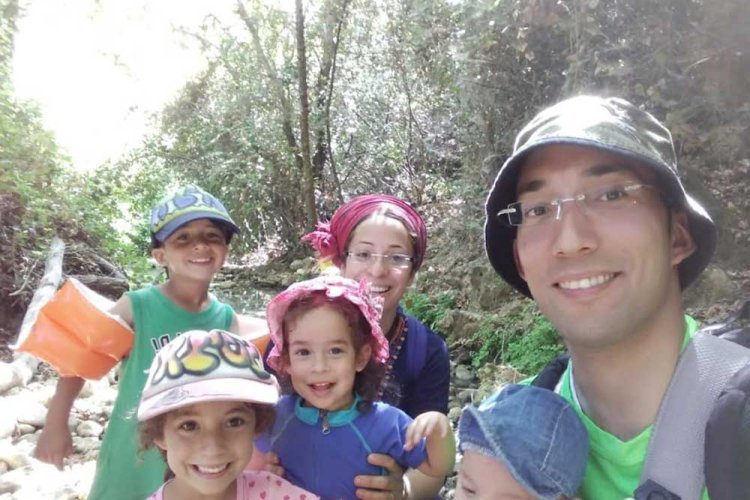 The Ben Gal family before the attack
The Day Everything Changed
Miriam received the news of her husband’s death in the middle of the day, shortly after serving lunch to her children.
“Two people from the community emergency team arrived and told me that Itamar had been wounded in a terror attack. Three weeks earlier, Rabbi Raziel Shevach had been murdered, and we had all watched how someone critically injured on the news later became a victim. I understood immediately that things were not heading in a good direction.”
On the way to the hospital, Miriam learned that her husband was no longer alive.
You were left alone with four young children. What gave you the strength to get up in the morning after the shiva?
“First of all, the strength came from the fact that my children needed me. And from the understanding that my mission in this world was not over,” Miriam says. “On one hand, everything I thought my future would be completely collapsed. There was a part of me that did not want to agree, did not want to accept, did not want to adapt. I wanted to ‘die’ together with Itamar.”
“At the same time, a deeper understanding began to grow. If I wanted to live, I needed to accept that this was now my story.”
“I told myself: ‘You imagined living with Itamar for decades and raising a family together. Apparently, that was not what was most accurate for you. God took him and placed you here. This must be where you are meant to be.’ I also understood that acceptance could not come from resignation. It had to come from choice, and from faith that this truly was the right place for me.”
“This is a long and complex process,” she emphasizes. “Not a single moment of choice, but something that repeats itself again and again, in each new situation.”
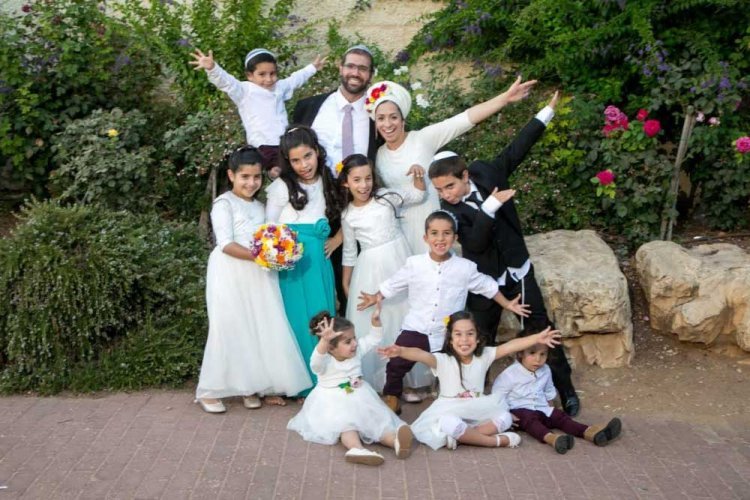 Miriam and Elad on their wedding day with their children around them (Credit: Hillel Lederman)
When did you decide that you would eventually remarry?
“From the very first moment, maybe already when we received the news at the hospital, it was clear to me that one day I would remarry and rebuild my home. I knew that this was what I wanted, and that this was also what Itamar would have wanted for me.”
She recalls a chilling conversation that took place about two weeks before the attack, shortly after the murder of Rabbi Raziel Shevach. “Itamar said to me, ‘Miriam, if something like this happens, it’s obvious that you remarry, right?’ I told him that it was impossible to think about, but that of course this is what should be done.”
She adds carefully, “That clarity gave me a small light and hope at the end of the tunnel, but at the same time it felt like another burden placed on my shoulders.”
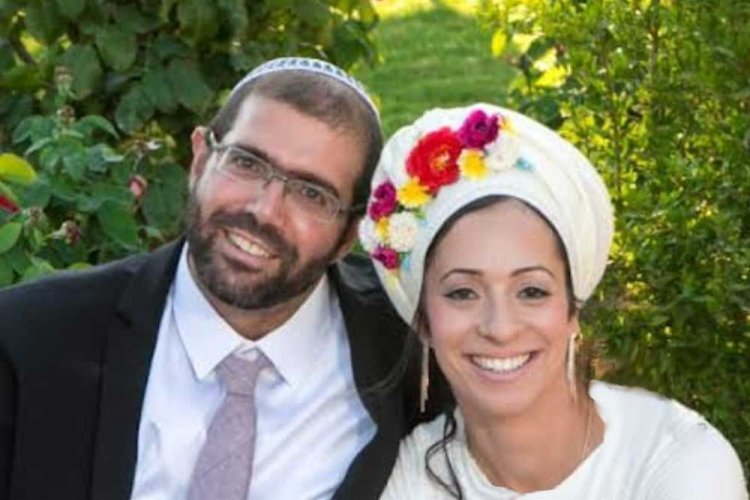 Miriam and Elad on their wedding day (Credit: Hillel Lederman)
Returning to Life
Miriam met her current husband, Elad, about a year after the attack.
“I was at a stage where I felt deeply lonely and lacking, and it was not easy at all. At the same time, I felt like a joyful person who truly loves life. I was ready and wanted to return to the world and to embrace life again, with all the pain, absence, and struggle.”
How do those two feelings coexist?
“I think they are connected. There is something about encountering death that carries enormous potential. When you experience sadness with such intensity, your capacity for joy also deepens.”
“Over time, you understand that we are here for a limited time, and it is worth living it as fully as possible. The sentence that accompanied me from the beginning was: ‘I refuse to feel that my life is an afterthought.’”
“I had many conversations with God where I told Him that although I was completely shattered and had to go through the hell of separation, no one would turn me from a woman who loves life into someone whose life feels second rate.”
Coming with a Willingness to Work
When the match with Elad was suggested, Miriam was told that he was a widower with five children.
“About a year after Itamar’s murder, I felt ready to meet someone. It took Elad two weeks to respond. At first, I hoped he would say no and that the idea would fall through. I felt that he was too much for me.”
“Then, during those two weeks, something shifted. I realized that the challenge might actually be meaningful. We met, and fairly quickly the relationship became serious.”
Five months later, they stood under the wedding canopy. About two and a half years ago, they welcomed their shared son.
When asked what she does for a living, Miriam answers simply: “My main occupation is being a mother.” Alongside raising ten children, she is also a certified couples counselor, a path she chose following her second marriage and the insights it brought.
Second Marriage Is a Different World
“The challenges of second marriages are not comparable to first marriages,” Miriam says openly. “This is a completely different level of complexity, in every sense. It requires tremendous physical and emotional strength, and a real willingness to work very hard. You have to truly want the marriage to succeed, even when it is extremely challenging.”
How is a second marriage different?
“You come into it from a more mature place. Sometimes the compatibility looks different. In a second chapter, people may choose things they would never have considered in a first marriage. There is greater maturity and an understanding that the core issue is the partnership itself, while other considerations are secondary.”
Complexity That Creates Depth
The challenges, Miriam explains, also extend to the children.
“There is already complexity in raising children who have lost a parent. Add to that children from two different families under one roof, and you can imagine the tensions. Between the children, between the parents, and everything that comes with it.”
She points out that four extended families are involved. “We are maintaining relationships with four families, without a natural figure to bridge two of them. This makes the marriage more complicated. But I believe that these challenges create an opportunity for a deeper kind of connection. Depth that comes precisely because not everything is smooth, and because real effort is required.”
“Thank God, today we have a warm and joyful family, with meaningful moments of togetherness. Sometimes all of us together, sometimes smaller connections: two siblings, one parent with one child. All kinds of family dynamics. And yes, the challenges are very real and on a different level than in a typical family.”
Is Itamar present in the home? How do you integrate his memory into your new family?
“From the beginning I knew that whoever married me would also be marrying Itamar,” Miriam says quietly. “He is an inseparable part of who I am. Anyone who wants to be my husband and closest friend has to be able to hold that.”
“I don’t believe it’s healthy to be in a relationship where you have to hide a significant part of yourself. I had no intention of putting Itamar into a drawer.”
She stresses that this is essential for the children as well. “A parent who has passed away remains a central figure in a child’s life. None of us came to threaten that.”
“Our home has a wall filled with family photos. Pictures of each family, with and without the parent who passed away, and pictures of all of us together. This is our reality.”
“We mark the birthdays of the parents who passed away, and also the anniversaries of our first marriages,” she adds. “These dates matter in our family. At bar mitzvahs and bat mitzvahs, the parent who passed away is present in videos, photos, and memories.”
Giving Everyone Their Place
“Early on, a wise woman told us that ‘complex’ simply means ‘made up of many components.’ The word often has a negative connotation, but complexity can also mean richness.”
“With all the desire to unify the family, we do not try to blur the fact that our family is made up of subgroups. That does not threaten unity.”
“If a cousin is born to Elad’s children and only they attend the brit, that does not make us less of a family. Giving everyone their place actually makes the family more whole and authentic.”
A Message for Couples Entering a Second Chapter
“Do not expect it to be simple or similar to a first marriage,” Miriam says. “This is a different system that requires different tools. Not because the partner is less good, but because the situation itself is different.”
“Come with a real willingness to work. And most importantly, do not just hope it will succeed. Take responsibility to make sure that it does.”

