

Magazine
The Dream That Saved Lives: A Miraculous Escape at Beit El Synagogue
A missile strike tore through Beit El Synagogue, yet dozens of scholars survived and the Torah scrolls were miraculously preserved. Rabbi Menashe Bubelil tells the extraordinary story of faith, protection, and the dream that changed everything.
- Michal Arieli
- | Updated
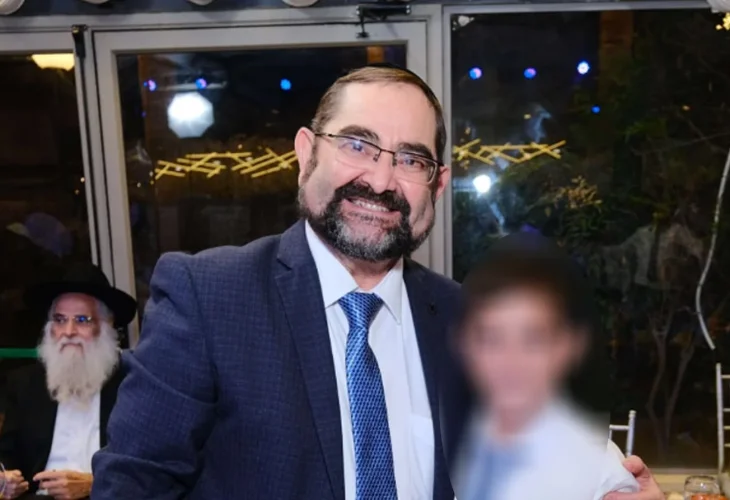 Rabbi Menashe Bubelil
“We often hear about miracles happening far away, but during the last war, I witnessed a miracle up close,” says Rabbi Menashe Bubelil, rabbi of Beit El Synagogue in the Pardes Katz neighborhood of Bnei Brak, his voice filled with emotion. “What happened here is beyond comprehension. The building suffered severe damage, yet every single congregant survived. That is what truly matters.”
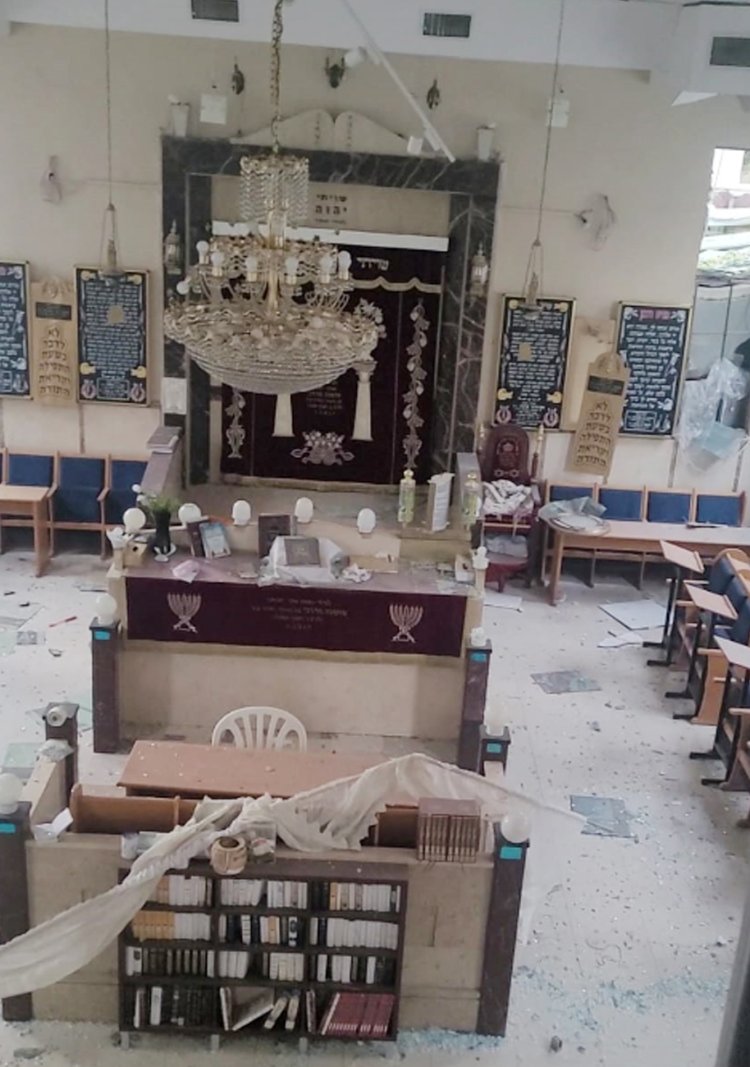 The damage to the synagogue after the missile strike
A Community at the Heart of Pardes Katz
Beit El Synagogue has long been one of the most active and respected synagogues in the area. It operates around the clock and serves as a spiritual center for the entire community. In addition to the three daily prayer services, more than 200 children gather there each Shabbat to recite Mishnah and Tehillim. The synagogue hosts regular Torah classes for women, an ongoing women’s study program, and during the Selichot season it draws hundreds of secular young people each night.
“It was one of the largest and most beautiful synagogues in Bnei Brak,” Rabbi Bubelil says quietly, now speaking of it in the past tense. At present, the building is unusable, and restoring it will take significant time and resources.
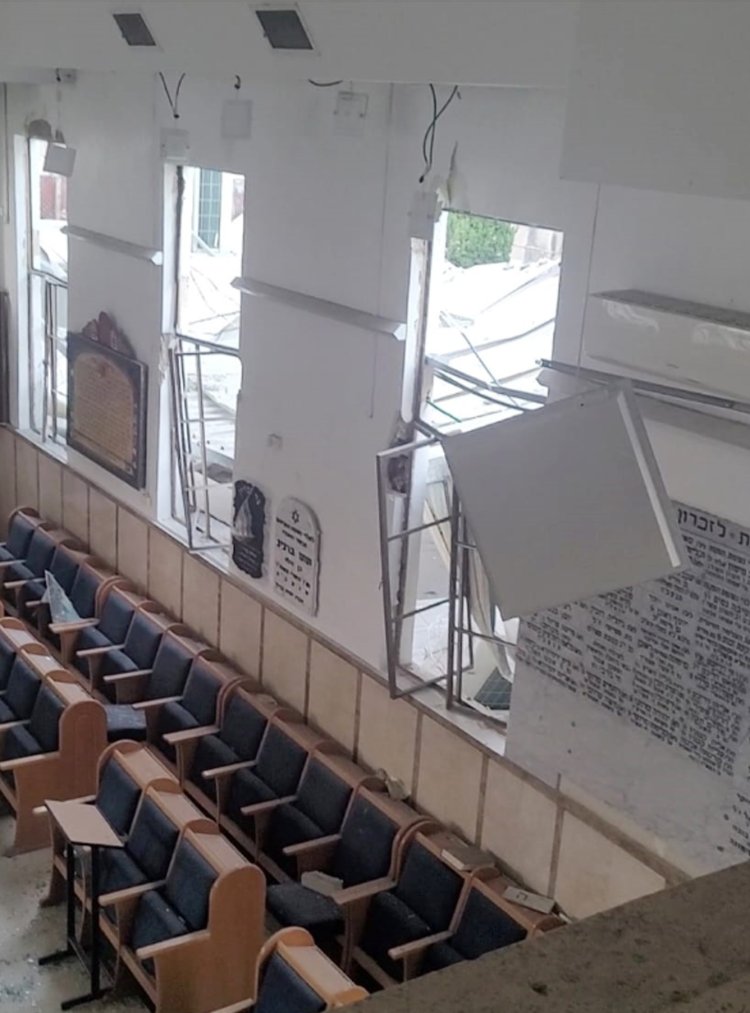 The aftermath of the Iranian attack
One of the synagogue’s most distinctive initiatives is its Night Kollel, which provides scholars with a place to learn Torah throughout the night. “We take great pride in the fact that Torah study here never stops,” the rabbi explains. “Learning takes place every hour of the day. It is something rare and deeply precious.”
The Night the Missile Struck
On the night an Iranian missile struck a building near the synagogue, dozens of scholars were learning in the kollel, together with its devoted director. The kollel is located on the top floor of the building. When sirens sounded, the scholars moved downstairs to what was considered a safer area.
Later, the head of the kollel shared a chilling account with Rabbi Bubelil. “He told me that he had dozed off briefly between study sessions,” the rabbi recounts. “In his sleep, he dreamed that his father appeared to him and urged him to wake up immediately. He woke up and headed toward the stairwell, but then felt a sudden inner prompting to step back toward the center of the room. He took a few steps back, and at that exact moment, there was a massive explosion. The missile struck a school building just 25 meters away, causing extensive damage to the synagogue.”
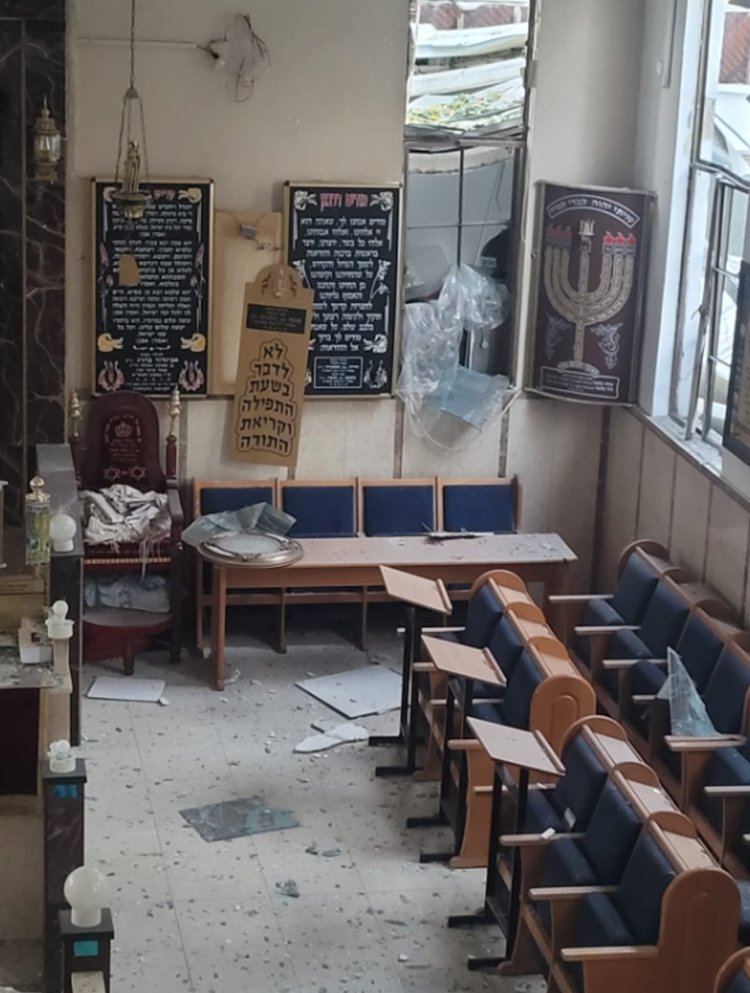
“The destruction inside was overwhelming,” Rabbi Bubelil says. “Windows shattered, doors were torn from their frames, and the entire electrical system collapsed. Dozens of scholars were inside the building at the time, including the kollel head who had been on the most heavily damaged floor. Not a single person was injured. There is no logical explanation for this.”
Beyond the survival of the scholars, Rabbi Bubelil describes additional moments that felt nothing short of miraculous. “When I entered the synagogue shortly after the blast, everything was in ruins. Glass was shattered everywhere, including a seven meter long glass display. Yet the sacred books remained intact. Most astonishing of all, the Holy Ark, which housed 14 Torah scrolls, was damaged and split, but the scrolls themselves were completely unharmed.”
“There is no natural way to explain this,” he says. “We lost so much, including antique doors and furniture that had been part of the synagogue for seventy years. The pain is real. And yet, we cannot ignore the gratitude we feel for the miracles we witnessed.”
The day after the explosion, the community gathered outside the damaged building for a large prayer service of thanks to Hashem. Soon afterward, Rabbi Bubelil arranged for a spacious prayer tent to be erected, since entering the synagogue is currently unsafe. “We will not allow the activities here to stop,” he says firmly. “The costs of rebuilding will be high, but we trust that Hashem will help us. We feel His providence every day, and we believe with full faith that He will not abandon us.”

