

Israel News
New Reports: Netanyahu and Arab States Pressed U.S. to Delay Iran Strike
New reporting from U.S. outlets suggest overlapping pressures shaped Washington’s restraint, even as officials insist no final decision has been made
- Brian Racer
- | Updated
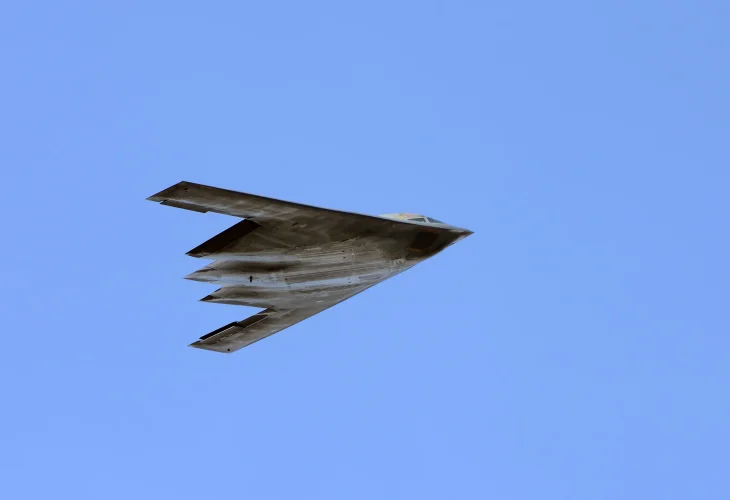 B2 Bomber (Shutterstock)
After a day of escalating rhetoric and military preparations, new reports published Thursday are suggesting why a U.S. strike on Iran did not materialize, even as American officials stress the option has not been ruled out.
According to The New York Times, Prime Minister Benjamin Netanyahu asked President Donald Trump to postpone any American military attack on Iran. The paper cited a senior U.S. official and reported that Netanyahu and Trump spoke Wednesday night, hours before Trump publicly declared that killings of protesters in Iran had stopped from “very important sources on the other side.” The Times wrote that the statement appeared to signal Trump was backing away from an imminent strike. However, the paper noted that Trump sent similarly ambiguous signals last June, shortly before he nearly ordered a military attack on Iran.
The Times further reported that Netanyahu raised concerns about Israel’s defensive readiness in the event of an Iranian counterattack, warning that Israel could face retaliation if the United States were to carry out the strike. The Prime Minister’s Office declined to comment on the report, neither confirming nor denying it.
The New York Times also said that Qatar, Saudi Arabia, Oman, and Egypt urged the Trump administration not to strike Iran as well, citing a Gulf Arab official and two diplomats in the region. Those countries warned Washington that a U.S. attack could trigger a broader regional conflict. At the same time, the officials said, the same Arab states were warning Tehran not to retaliate against regional targets if the United States were to strike. Speaking at a forum in Riyadh, Saudi minister Adel al-Jubeir said, “We believe in dialogue and we believe in solving any disagreements at the negotiating table.”
On Thursday, White House Press Secretary Karoline Leavitt addressed Iran at a press briefing. “The president told Iran that if the killing continues, there will be consequences,” she said. Leavitt added that “800 executions that were scheduled to take place yesterday were halted,” and said that “the president and his team are closely monitoring the situation and all options remain on the table.” The statements were presented as U.S. assertions and were not independently verified.
Trump himself reinforced the uncertainty in remarks to NBC. Asked about Iran, he said, “We saved many lives yesterday.” When pressed on whether a military strike was still under consideration, Trump declined to answer, saying, “I will not answer that.”
Additional context came from The Wall Street Journal, which reported that Trump was advised a large U.S. strike is unlikely to topple Iran’s regime and could trigger a wider regional war. Officials cited by the Journal said a major attack would require additional U.S. forces in the region to protect American troops and allies, including Israel. The paper reported that the lack of sufficient U.S. force was a central reason for delaying a strike. Trump has not made a final decision, the Journal said, but has ordered military assets to remain ready.
U.S. officials have also been preparing for potential Iranian retaliation. According to the New York Times, American planners expect Iran could strike U.S. military assets in the region or target troops stationed in Iraq and Syria. Israel could also be a target. During the 12-day war between Israel and Iran in June, Iranian missiles penetrated Israeli air defenses and killed civilians. Iran later fired ballistic missiles at Al Udeid following U.S. strikes on Iranian nuclear sites, though the barrage caused no casualties.
In recent days, the Pentagon moved some personnel from the base as Trump weighed his options. A Pentagon official said Thursday that alert levels have since been lowered and troops have begun returning.

