

Magazine
When Parenting Feels Like an Uphill Battle: Stories of Resilience
What is it like to be the parent of a child in a psychiatric ward? How do you survive the fear, stigma, and isolation? Three courageous mothers share their pain, their strength, and their hope for a more compassionate world.
- Michal Arieli
- | Updated
 (Illustrative photo: Shutterstock)
"When I hear about parents of children with mental illness who choose to hide it, I completely understand," says Donna, mother of a 12-year-old diagnosed with childhood schizophrenia. "Keeping it hidden takes so much energy, especially since some of these kids are hospitalized, and you always have to come up with excuses about where they are. Mental health issues always manifest and are hard to conceal. But I get it."
Donna pauses, seems to consider her words, and then continues: "My son initially attended a regular school, but then his behavioral problems worsened, and we admitted him to a psychiatric facility. During that time, his cousin visited him and said, 'Do you know what your classmates are saying? They're saying you're in a loony bin.' Every time I remember it, I tear up because it's obvious no fourth-grader understands what a psychiatric facility is. When they hear their friend is hospitalized, they aren't thinking along those lines. It's a message that parents pass on. It's no wonder kids then distance themselves from my son. So yes, I understand those who hide it, but I choose to speak out openly to raise awareness so people understand how common this is and learn how to deal with it."
Donna is not alone in finding a mission in discussing this issue. Iris, mother of a 15-and-a-half-year-old diagnosed with psychotic episodes, and Amy, mother of a 15-year-old girl with behavioral disorders, have joined in raising awareness. Together, they reveal the stories of their children - kids who just want to be normal, but whose mental health struggles make it difficult, and who don't always receive support from the society around them.
Donna: "The Hospitalization Was the Hardest Time of My Life"
Donna's son was always cheerful and active. As a child, he would occasionally have violent outbursts that were difficult to explain, as if possessed by a demon. "There was no real trigger; they just happened," she recounts. "Even between episodes, he was the friendliest, most polite and happy kid. The outbursts didn't fit him."
"When things got worse, and he started banging his head against walls and commanding the voices to stop, we knew it was a problem. His episodes intensified, and we couldn't manage them alone anymore. We consulted his teachers and psychiatrist and concluded he needed hospitalization. That was the hardest period of my life. Every morning, seeing his empty bed, I couldn't stop crying. Such a young child far from home. It's even harder because society doesn't know how to react to situations like ours. When it's other illnesses, people are empathetic and supportive, but we were so isolated."
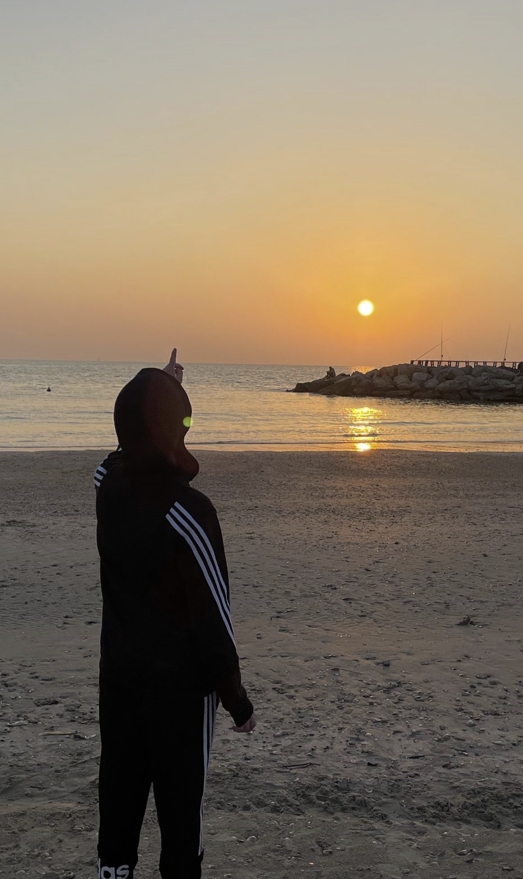 Donna's son
Were some people supportive?
"Yes, some helped with our older daughter, visited my son in the ward, or sent messages asking about him, which made him very happy. But many ignored us, or worse, distanced themselves."
After over a year of hospitalization, a diagnosis finally came: childhood schizophrenia. "It is one of the hardest disorders in children," Donna explains, recalling the experience at the hospital. "When we received the diagnosis, the staff surrounded us, offering commiseration, as if this was a death sentence."
And how did you actually feel?
"There was relief because everything made sense; his fear of adults, the voices in his head were part of an illness. But the relief was accompanied by the harsh realization of dealing with a lifelong condition. My husband often questions, 'Who will care for him when we are no longer here?' Whereas I focus on his needs in the present."
Today, Donna's son is at home, studying in a special education program and participating in a regular youth movement. Donna notes he excels at dancing and extreme sports. "These are things that bring him joy, and we try to provide them as much as we can," she elaborates. "When I tell people about his condition, they are often surprised and tell me, 'He doesn’t seem it at all.' It's true; outwardly, he is charming, polite, smiley, and very communicative. He has these gifts I hope help him gain independence and confidence for the future."
Amy: "I Have Faith in My Daughter"
"Ours is a normal, loving, and warm family," Amy begins, before delving into her daughter's condition. "Nobody asked if we wanted our daughter to have a mental health challenge, and we never anticipated it. One day, it just erupted, forcing us to acknowledge and accept it."
"It started in fifth grade," she recounts. "We transferred her from a regular class to a smaller one for children with learning disabilities. But it soon became clear that the new class mostly had behavioral issues. My daughter endured teasing and bullying, leading to social withdrawal and the onset of Tourette's, an added challenge of tics and involuntary noises. This snowballed, worsening daily."
"Eventually, she became physically and verbally aggressive towards us and her older brother. Our home environment became unbearable, and I understood that to save her and ourselves, we had to see a psychiatrist. We did so and immediately received a recommendation for hospitalization."
Amy's pain is palpable as she recalls this period. "It was an indescribable agony. I never imagined I'd face admitting the most precious thing in my life, at such a young age, to a facility far from home."
Did she cooperate?
"Initially, she was anxious, constantly asking, 'What will happen in the hospital?' Even there, seeing other kids in severe conditions and witnessing distressing situations, scarred her. I know they'll stay with her for life. She was eventually discharged, balanced on medication, but needing to attend a closed institution to address her behavioral issues. She now rotates through several facilities, coming home bi-weekly."
Looking back, could anything have been different?
"My husband and I harbor great anger towards the psychiatric system. Some issues went inadequately addressed, and society failed to embrace her. Awareness about helping those with emotional difficulties exists, why not for mental health too?"
As a mother, Amy does all she can to ease her daughter's journey. "I try to create good experiences for her, as if to repair the past. We go out together, shop for her favorite meals or clothes. We have genuine, healthy mother-daughter connections alongside the outbursts that leave me feeling powerless. It’s exhausting, resetting our progress each time."
What keeps you going?
"The belief that this setback is preparation for a comeback. I am convinced I'll see her graduate, marry, and fulfill her dream of becoming a doctor."
A doctor?
"Yes, she dreams of being a physician to help kids who went through what she did. She wants to be a brain surgeon to explore the origins of thoughts and emotional struggles. Every time she shares her ambitions, I promise my support and truly believe in her potential. It empowers her, and, honestly, she inspires me too."
Iris: "I Will Do Everything For My Child"
"My son's journey began with epilepsy, called ESES," shares Iris. "This syndrome, an electrical status during sleep, impacts multiple facets like emotional regulation, sensory processing, learning, and behavior. Recently, it escalated into psychological issues, manifesting psychotic episodes."
His first psychotic break occurred two years ago, during the COVID-19 pandemic. "He came home recounting bizarre accusations from teachers, which we verified hadn't occurred. It became clear he was experiencing psychosis, seeing nonexistent scenarios and feeling persecuted."
Was he aware of this?
"Upon hearing these weren't real, he was terrified. As a smart child, the idea of his brain deceiving him was alarming. He closed off emotionally, ceased functioning, and needed professional care. But, amidst COVID, private psychiatrists were inaccessible, and psychiatric hospitals rejected him due to his neurological disorder, so we sought help through general hospitals like Schneider."
Ultimately, after extensive evaluations and without a clear path for further help, he stayed at home for four months during the pandemic, while we struggled with our two daughters. Gradually, he improved, but his school refused him back, citing they handle learning disabilities, not psychiatric issues. This pushed me into advocacy. I appealed for assistance via a large Facebook group, detailing our dire situation and asking for help. To my amazement, many people extended genuine support, including a neuropsychologist, a dedicated Ministry of Health worker, and various others who provided assistance out of empathy, not obligation."
How did you feel about going public with such personal struggles?
"We have no shame. Our child's condition is not our fault, rather those unwilling to help should feel ashamed. It's a lesson I wish to share: there are good people willing to lend a hand. Being open to help is vital."
Eventually, a suitable educational institution was found for her son, and he resumed school. However, recently, his condition worsened, necessitating a return to psychiatric care. "With a high risk to himself and family, we couldn't manage him at home; alarm and fear were constant," she describes. "Sleeping with locked doors became routine."
Ultimately, he was admitted back to Maale Carmel psychiatric hospital. "Painful as it was, professional intervention was necessary. Despite his fear, he cooperated, understanding the necessity of intensive care."
Final Thoughts
The stories of Donna, Amy, and Iris reflect a reality that many families live with quietly. Their voices remind us that mental illness is not a source of shame, but a call for understanding, patience, and compassion. By choosing openness over silence, these mothers are not only advocating for their own children, but also paving the way for a more informed and empathetic community, one where no family has to feel alone.

