

Faith (Emunah)
The Ultimate Test: Holding Faith Amidst Life's Challenges
Rabbi Roi Avihai highlights the profound struggle of maintaining faith in a world filled with darkness.
- Rabbi Roi Avihai
- | Updated
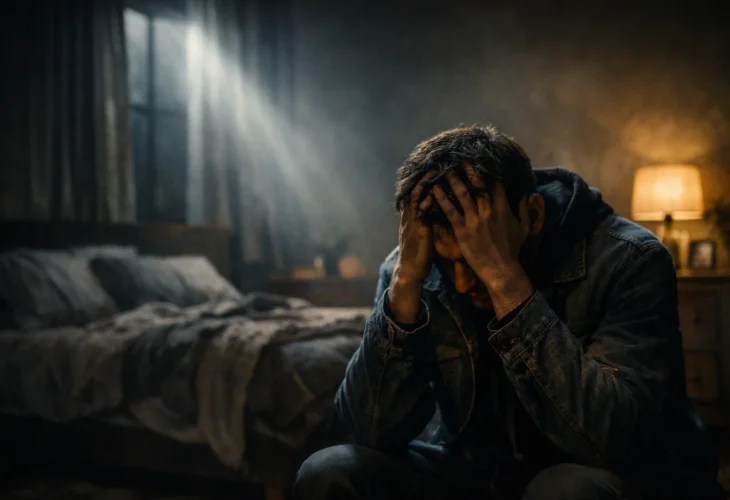
Hello Rabbi,
Lately I feel my faith slipping away. I find myself unable to wholeheartedly sing “I believe.” I am exhausted by the constant presence of evil in the world, exhausted by the reality that we are the most persecuted, murdered, and exiled people. In this world, there seems to be no connection between righteousness and happiness, between moral goodness and suffering.
In Tanach, we read of physical reward and punishment connected to the observance of mitzvot. Yet in reality, we see righteous people suffering and wicked people flourishing.
I understand that we are taught each soul will give an account in the World to Come, but there is also a basic logical principle that justice should be visible, not only performed in some hidden realm. How can one believe when reality appears to contradict everything we are taught?
Dear Reader,
Your questions are sincere, painful, and important. And thank Hashem, these questions were not invented today. The Tanach itself raises them, our sages grapple with them, and Jewish thinkers throughout history have addressed them deeply.
The more one studies the appropriate sources, the more one discovers the depth, coherence, and wisdom embedded within the Torah’s understanding of creation, purpose, suffering, and free will. The writings of the Ramchal, especially Da’at Tevunot and Derech Hashem, are essential foundations for anyone seeking clarity in these matters. What follows here is only a drop in the ocean of a vast, profound, and magnificent framework that addresses the nature of the world, evil, justice, and divine governance.
All of the Torah’s Promises Are Fulfilled
The Torah does not promise that every righteous individual will live a life free of suffering. What it does promise is the enduring destiny of the Jewish people as a whole, and history has demonstrated this with striking precision.
Even during periods of exile, suffering, and concealment, the events of Jewish history have unfolded in alignment with the blessings and warnings described in the Torah. Periods of difficulty were foretold, as were long eras of hiddenness following national spiritual decline.
At the same time, every positive prophecy has also been fulfilled. Hashem promised that despite immense suffering, the Jewish people would never be erased, while mighty empires would rise and fall. Babylon, Greece, and Rome were all prophesied to be destroyed, and each eventually vanished from the world stage. Yet the Jewish people remain.
Hashem also promised that after a prolonged exile, we would return to our land. There is no historical parallel to a nation scattered for millennia returning to its homeland, reviving its language, rebuilding its identity, and flourishing once again. Historians openly acknowledge that this phenomenon defies natural explanation.
The Torah also foretold that the Land of Israel would remain largely desolate while the Jewish people were absent. This too unfolded exactly as described.
It was further prophesied that at a time when emunah would appear to fade and many would abandon tradition, there would be a return to faith. Few could have imagined such a movement. Even secular leaders believed religious life would disappear within a generation. Instead, we witness tens of thousands returning to Torah and mitzvot.
Hashem allows the wicked to act freely, preserving free will. Yet justice unfolds in divine timing. There is order, meaning, and purpose beneath the surface, even when it is hidden from immediate perception.
The Inner Wealth of the Righteous
While the righteous may suffer materially, Tanach explicitly promises them eternal reward. Beyond that, in this world as well, there is often a qualitative difference between the inner life of the righteous and that of the wicked.
The righteous tend to experience deeper meaning, stronger family bonds, greater resilience, and more enduring peace. Social realities reflect this. Divorce rates, emotional instability, and despair are significantly higher in secular frameworks than in Torah centered communities. This is not merely ideological but observable.
The righteous find fulfillment in seeing their children grow in Torah, in living with purpose, and in feeling connected to Hashem. Even amid difficulty, they often carry a deep internal stability.
Studies have shown that religious families often cope more successfully with trauma, illness, and adversity. Psalms chapters 1 and 92 describe this dynamic with remarkable clarity.
Patience and Perspective
Tanach teaches that in an ideal world, when Israel lives fully on its land with a Temple and divine revelation is open, reward and consequence are more visible in this world. In periods of exile and concealment, however, much of this accounting is deferred to the world to come.
The struggle with the prosperity of the wicked and the suffering of the righteous is itself described repeatedly in Tanach. The prophets did not ignore this question. They voiced it.
Malachi describes people saying, “It is vain to serve Hashem… the wicked prosper.” And the answer given is not denial, but perspective. Hashem records every deed in a Book of Remembrance. A time will come when the distinction between righteous and wicked will be fully revealed.
Isaiah similarly describes a future reality in which divine justice becomes clear and the faithful are vindicated. The hiddenness of justice in this world is not denial of justice, but delay for the sake of free will and a larger divine plan.
The Essential Task: Faith
Your question assumes that mitzvot, prayer, and Torah should immediately produce visible effects. But according to Jewish thought, the primary test of this world is faith itself.
This world was created in a state of concealment. The word “world” is connected to the concept of hiddenness. Hashem is deliberately hidden so that faith can exist. If divine justice were immediately obvious, belief would not be a choice, and spiritual growth would not be meaningful.
The purpose is not merely to perform mitzvot but to choose truth even when it is difficult, to remain faithful when reality appears contradictory, and to continue trusting when clarity is withheld.
Jewish faith is not blind belief. It is grounded in history, revelation, tradition, and reason. The Exodus, Sinai, continuity of Torah, fulfilled prophecy, and national memory form a rational foundation. The test of faith is not whether belief is justified, but whether we remain loyal when divine governance is emotionally challenging.
A tzaddik lives by faith. Faith itself becomes the source of life, resilience, and joy.
Our mitzvot and prayers genuinely influence the world, even when the effects are not visible. If their impact were always visible, the choice would lose meaning. Hashem designed reality so that true influence occurs beneath the surface, allowing free will to remain intact and reward to be earned authentically.
Those who persist in faith through darkness often later witness profound moments of divine closeness. “Hashem is close to all who call upon Him in truth” is not poetry. It reflects lived reality for many.
The World of Souls, Resurrection, and the World to Come
A full Jewish understanding of justice cannot exist without understanding the broader framework of eternity.
According to our tradition, the soul does not reach its final destiny immediately after death. There is an interim spiritual realm, followed by a future era of resurrection and the true World to Come. This final state is described as an eternal, perfected existence of soul and body united, free of suffering, ascending endlessly in closeness to Hashem.
Our role in this world is to refine physicality, elevate it, and prepare ourselves for that eternal state. Death itself is part of the process that allows the soul and body to be purified and later reunited in a higher form.
Judgment is not merely about reward and punishment but about revealing the truth of each soul’s essence. Those aligned with good experience divine light as bliss. Those opposed experience it as unbearable exposure. This is the deeper meaning behind many descriptions found in Tanach and Chazal.
This eternal framework explains why justice cannot be fully measured within the narrow scope of earthly life. This world is a corridor, not the destination.
Core Principles
The purpose of this world is preparation for eternal existence. Struggle, concealment, and effort are the tools through which we build our eternal identity.
The primary test is faith itself. The environment of doubt is deliberate.
The Torah does not promise individual worldly reward for righteousness. It promises ultimate justice.
Jewish faith is intellectually grounded, not based on emotional convenience. The test lies in remaining faithful despite emotional difficulty.
This worldview empowers resilience, hope, and inner strength even amid suffering.
We conclude with the daily prayer:
“May it be Your will that we keep Your statutes in this world, and merit to see goodness and blessing in the days of Mashiach and eternal life.” Amen.

