

Wonders of Creation
Rethinking the Big Bang: Is Our Universe's Origin Story Flawed?
Astrophysicists question whether the classic Big Bang explanation still fits modern observations of the universe
- Yosef Yabece
- | Updated
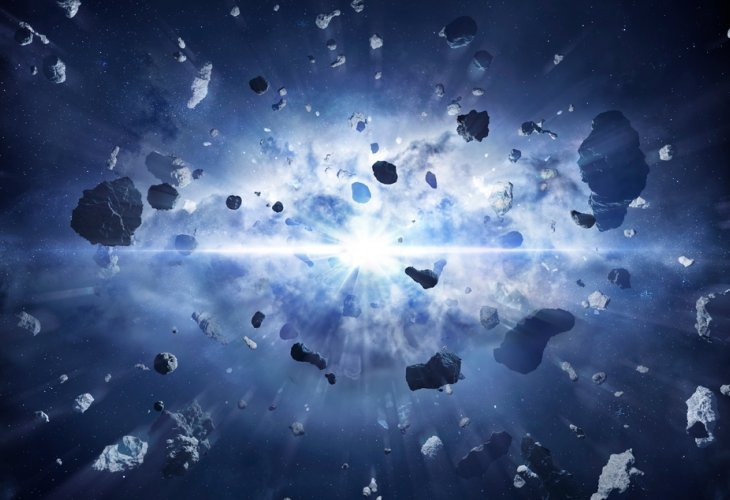 (Photo: shutterstock)
For many years, the “Big Bang” theory has shaped our understanding of how the universe began. According to this theory, the universe originated in a massive explosion, after which all matter began expanding outward. Ask anyone with even a basic knowledge of physics, from a student to a professor, and you are likely to hear the same answer: the universe began with the Big Bang. Based on this model, scientists calculate how much time has passed since the beginning of the cosmos.
A Foundational Theory Under Question
Recently it was reported that despite how central the Big Bang theory is to modern physics, it is far from certain that it is correct. In fact, some researchers now argue that it creates as many new problems as it resolves.
As reported in the press: “A group of leading scientists and experts in space science and astrophysics are currently attempting to determine whether the model we all know for the formation of the universe is even relevant. Increasing evidence suggests that it may be an outdated claim.”
A Global Scientific Debate
Is the widely accepted theory of the universe’s origin slightly flawed and in need of reexamination or revision? This question is currently being discussed by senior astrophysicists and space experts at a major conference organized by the Royal Society of Britain.
Until now, the prevailing assumption in the scientific community has been that the universe was born from an event known as the Big Bang, a single point from which matter, time, and space came into existence. According to the theory, the universe has continued to expand at a uniform rate ever since, with matter distributed evenly throughout space.
New Observations Challenge Old Assumptions
Recent measurements, however, have revealed that certain regions of the universe appear to be moving faster than others. In addition, astronomers have identified enormous structures of matter whose size is highly unusual compared to the rest of the universe. These discoveries seem to contradict the idea that matter spread evenly after the Big Bang.
Further observations have even detected river-like flows of massive amounts of matter moving through space, phenomena that are difficult, if not impossible, to explain using today’s standard scientific models.
An Outdated Model?
Professor Subir Sarkar of the University of Oxford, one of the organizers of the conference, explains: “The model we use to explain the universe was formulated in 1922 and is based on a great deal of evidence. At the same time, more and more data suggest that it is already outdated.”
Science as an Ongoing Process
Indeed, science advances. What was considered certain yesterday may no longer be certain today, and what seems certain today may not remain so in the future. There is no need to rush to conclusions. It appears that we still have much to learn about the universe, and there will always be more to explore and understand.

