

Wonders of Creation
How Earth Regulates Itself: The Hidden Systems That Keep Our Planet Fit for Life
From carbon dioxide cycles to the unique properties of water, discover the natural mechanisms that stabilize Earth’s climate and make life possible
- Yosef Yabece
- | Updated
 (Photo: Shutterstock)
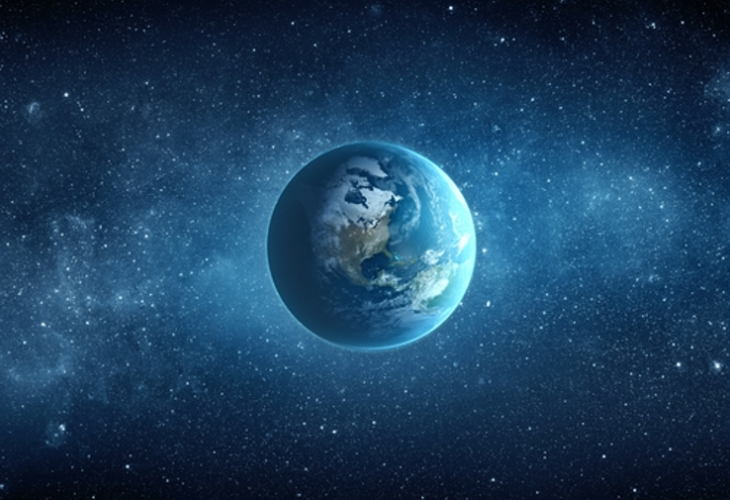
Earth was created as a planet capable of sustaining life. Yet this raises a remarkable question: how has it preserved this critical quality over thousands of years?
There have been periods in Earth’s history when the planet became extremely warm, and others when it cooled dramatically. And yet, time and again, Earth returned to balance. How does this happen?
Earth’s Natural Climate Regulation
Earth possesses something akin to an internal immune system, a mechanism that continually restores the conditions necessary for life.
One of the key elements in this process is carbon dioxide, a gas that warms the planet. Carbon dioxide traps existing heat, rises into the atmosphere, and increases global temperatures. However, Earth regulates the amount of this gas according to need.
At certain times, carbon dioxide is stored at the bottom of the oceans through a complex natural process. Rock erosion carried by rivers, combined with the activity of vast amounts of plankton and shell-forming organisms, draws the gas out of the atmosphere and locks it away. At other times, carbon dioxide is released back into the air, warming the planet once again.
When the atmosphere cools too much, Earth releases carbon dioxide through unique mechanisms, functioning much like the thermostat of an electrical device, restoring warmth. When the planet becomes too warm, the spread of the gas is reduced. It accumulates once more on the ocean floor, waiting until it is needed again.
All of this is made possible by water, which governs both the release of carbon dioxide when it is required and its storage when it is not.
A Look at Venus
Consider, for example, our neighboring planet Venus. In many ways it resembles Earth, with one critical difference: it has no water. As a result, carbon dioxide accumulates without restraint, with no mechanism to regulate it.
The surface temperature of Venus reaches about 475 degrees Celsius, and its atmospheric pressure is ninety times higher than Earth’s. Under such conditions, life cannot exist.
Water and the Prevention of Global Freezing
Water is not only an active component in regulating Earth’s climate. It was also created with unique properties that prevent life from being destroyed by freezing temperatures.
Why is it that in winter, when rivers and lakes freeze, only the upper layer turns to ice, allowing fish and other living creatures to survive beneath the surface?
The answer lies in a remarkable property of water. Unlike almost all other substances, water expands when it freezes. Most materials contract in cold temperatures and expand when heated. Because water expands as it freezes, ice is lighter than liquid water and therefore floats.
This floating layer of ice creates insulation, allowing the water beneath it to remain in motion and sustain life. If ice were heavier than water, as is the case with other substances, the frozen layer would sink. Gradually, the entire river or lake would freeze solid. All aquatic life would die, and when summer arrived, not a single fish would remain. The thaw would take much longer, the accumulated ice would further cool the planet, and a chain reaction leading to an ice age could begin.
Water as the Foundation of Life
Water is not merely the liquid that sustains every living being that drinks it. It is the substance that makes life on Earth possible at all. Its properties were intricately designed and finely tuned to support and preserve life in a stable and enduring world.

