

Facts in Judaism
Witnessing the Divine: 17 Miracles of the Holy Temple
Explore 17 extraordinary miracles of the Holy Temple, where heaven and earth seemed to meet. From heavenly fire to bread that remained fresh all week, discover timeless lessons of faith, humility, and human effort drawn from the words of our sages.
- Shuli Shmueli
- | Updated
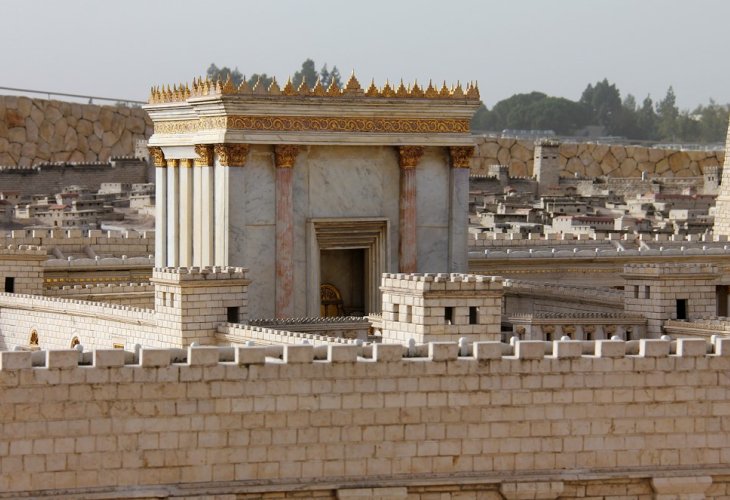 (Photo: shutterstock)
The Holy Temple was the site of many consistent miracles. At the same time, the principle that one does not rely on miracles applied even within its sacred walls, as stated in the commandment, You shall not test Hashem your God (Deuteronomy 6:16). For this reason, those who served in the Temple made a point of acting according to the natural order, even when miracles were clearly present.
For example, the priests lit the altar fire each day even though a miraculous fire descended from heaven. As the Rambam writes in Sefer HaMitzvot, even though the fire descends from heaven, it is a commandment to bring from the ordinary (Mitzvah 29).
The Hidden Nature of Miracles
The author of Sefer HaChinuch explains that the great miracles Hashem performs are often done in a concealed way, so that events appear to unfold according to nature. He points to the splitting of the sea, where the verse states that Hashem caused the sea to go back by a strong east wind all night (Exodus 14:21). This teaches that hidden miracles reflect the greatness of the Creator and the humility expected of those who receive His kindness. For this reason, we are commanded to light the altar fire ourselves even though heavenly fire descends, in order to conceal the miracle (Mitzvah 132).
Our sages list many ongoing miracles that took place in the Holy Temple, as recorded in the Mishnah in Pirkei Avot, Chapter 5, Mishnah 5, and in other sources.
No woman ever miscarried from the aroma of the holy offerings. The scent of the offerings traveled far and could naturally cause a pregnant woman to crave meat intensely, which might lead to danger. Despite this, no woman ever miscarried because of the aroma while the Temple stood.
The holy meat never spoiled. The meat of certain offerings was eaten over the course of two days, even though under normal conditions meat could spoil, especially in warm weather. Some explain that this also refers to portions that remained on the altar for days without spoiling.
There was no fly in the slaughterhouse. Although blood and flesh normally attract flies, not a single fly was present during the slaughter of the offerings.
The High Priest was never affected by impurity on Yom Kippur. A specific form of impurity would disqualify a priest from performing the service. Yet throughout the generations, the High Priest never became impure in this way on Yom Kippur.
Rain never extinguished the fire of the altar. Even though the altar stood outdoors, rain never put out its fire.
The wind never altered the column of smoke. When offerings were brought, the smoke rose straight upward and was not scattered by the wind. Some explain that this refers to the incense cloud inside the sanctuary, which remained undisturbed.
No imperfection was found in the omer offering. The omer and the two loaves were brought year after year without being contaminated by any impure creature. Even in times of war and destruction, the people were still able to bring the omer and fulfill the commandment.
Standing crowded, bowing comfortably. People stood very close together in the courtyard, yet when they bowed before the Shechinah, each person had ample space, about four cubits between one worshiper and another.
No snake or scorpion ever harmed anyone in Jerusalem. Even though such creatures existed, no one was bitten during the era of the Holy Temple.
No one ever said, I am sorry, there is no room for me to stay in Jerusalem. Despite the massive crowds who came for the pilgrimage festivals, everyone found space. Some explain that this refers to the residents of Jerusalem, who were able to earn a livelihood with dignity and did not need to depend on others.
Shards of earthenware were absorbed into the ground. Earthenware vessels used for offerings had to be broken after use. Instead of the courtyard filling with broken shards, the ground miraculously absorbed them.
The waste of the altar and inner sanctuary was absorbed in place. Feathers, ashes, and other remains were placed in designated areas, yet they did not accumulate into piles. Instead, they were absorbed where they lay.
The showbread remained fresh. The showbread was baked each week. When the old loaves were removed and replaced, they were still warm and fresh as if newly baked.
The Ark did not take up physical space. In the Holy of Holies, measurements showed that the Ark did not occupy any measurable space, a clear and open miracle.
The cherubim stood miraculously. The large cherubim placed by King Solomon filled the entire width of the Holy of Holies with their wings, yet their bodies did not seem to take up space. Their presence defied physical measurement and stood through miracle.
Fruit trees of gold. King Solomon planted golden trees in the Temple that produced golden fruit during harvest time, from which the priests benefited.
A special fire descended from the heavens. The fire on the altar had unique qualities. It resembled a crouching lion, shone brightly, consumed even wet wood, and did not produce smoke.
In addition to these, many other wondrous miracles occurred in the Holy Temple, each one revealing the powerful divine presence that rested there.
The miracles of the Holy Temple were not only signs of divine power. They were also lessons in humility, balance, and faith. Even in a place filled with holiness, human effort was required, teaching us that true service of Hashem comes from combining trust in Him with sincere action on our part.

