

Facts in Judaism
Yad Soledet Explained: The Halachic Meaning of Heat
Too hot to drink? It may already be halachically significant. This article explains the concept of Yad Soledet and how it affects Shabbat, kashrut, kashering, and everyday practical decisions.
- Rabbi Pinchas Doron
- | Updated
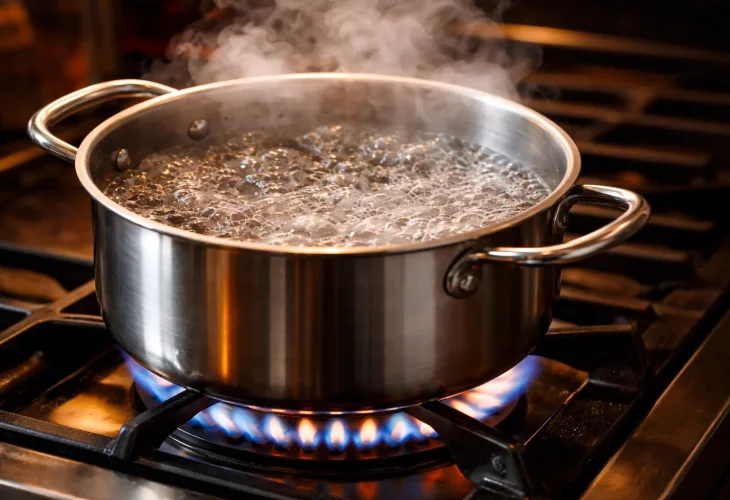
The Talmud uses the term Yad Soledet to describe a level of heat so strong that a person instinctively pulls their hand back out of fear of being burned. The expression comes from the verse “Va’asalda b’khila” in the Book of Job, referring to a reaction of withdrawal due to heat.
Our sages defined this level of heat as one that would burn the stomach of a newborn baby. In practical terms, this refers mainly to hot liquids. If a liquid is so hot that it cannot be drunk because of its temperature, it is generally considered to be at the level of Yad Soledet.
There are different opinions among halachic authorities regarding how this translates into modern temperature measurements. Some hold that Yad Soledet begins around 104°F, others place it closer to 113°F, and some consider even slightly lower temperatures to qualify.
In the Realm of Cooking
If a person heats water or oil on Shabbat until it reaches the level of Yad Soledet, this is considered cooking and is prohibited.
A vessel in which food or liquid was heated directly on the fire is called a 'kli rishon'. As long as the contents remain at the level of Yad Soledet, one may not place foods that cook easily into it, even after the vessel has been removed from the fire.
A second vessel, called a 'kli sheni', is the vessel into which the contents of the first vessel are poured. According to many authorities, a 'kli sheni' does not have the same power to cook.
There is also discussion regarding food that has already been cooked and is later roasted at the level of Yad Soledet. Some maintain that roasting after cooking is still considered a form of cooking and is prohibited.
There is further debate among authorities about whether a 'kli rishon' continues to cook as long as it remains at Yad Soledet, or whether once it has cooled slightly after removal from the fire it is treated like a 'kli sheni', even if it still feels very hot.
Regarding Absorption and Purging
The concept of Yad Soledet is also important in the laws of kashrut, especially regarding absorption.
If a forbidden food comes into contact with permitted food while both are hot at the level of Yad Soledet inside a 'kli rishon', the heat can cause the taste of the forbidden item to spread throughout the mixture. Even if the forbidden item is later removed, the permitted food may still become forbidden if it does not contain enough volume to nullify the taste.
This principle also affects the laws of kashering utensils. If a pot was mostly used with heat at the level of Yad Soledet, it can be kashered using hot water of similar heat, even if the water is no longer boiling, as long as it still reaches the level of Yad Soledet.
Hand Washing
For the hand washing before eating bread, both cold and warm water may be used.
However, for the final hand washing after a meal, known as mayim acharonim, only cold water should be used. Warm water at the level of Yad Soledet is too hot to allow proper cleaning of the hands and is therefore not suitable.
Practical Takeaway
Yad Soledet is not just a technical term. It has real everyday impact on how we handle food on Shabbat, how we kasher utensils, and how we approach practical halachic decisions. A simple guideline is this: if a liquid is too hot to drink comfortably, it may already be at the level of Yad Soledet and could involve halachic concerns. When in doubt about practical situations, especially on Shabbat or in matters of kashrut, it is always best to ask a competent halachic authority.

