

History and Archaeology
Pirates with Kippahs: The Hidden Jewish Avengers of Jamaica
In a bold twist of fate, Jews who fled persecution in Spain became privateers for the British in Jamaican waters, striking Spanish ships across the Caribbean and seeking justice for the suffering inflicted on their ancestors.
- Yosef Yabece
- | Updated
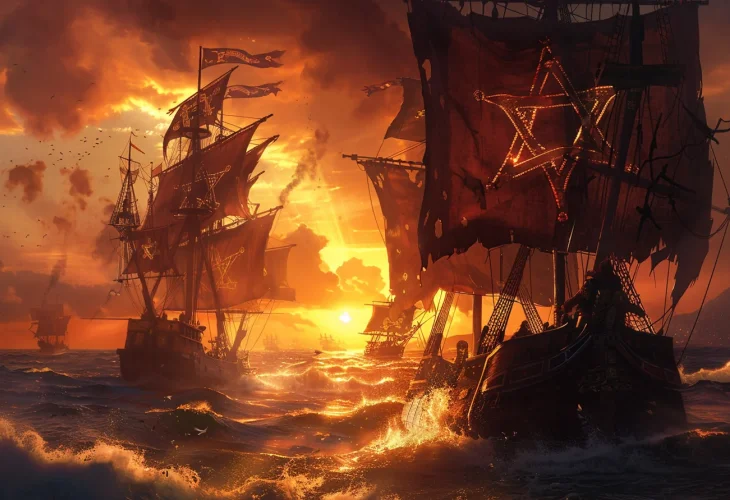 A depiction of Jewish pirates in the Caribbean.
In the seventeenth century, Jamaica was home to a thriving Jewish community of several hundred people. In Kingston, the capital, nearly a fifth of the population was Jewish. What truly set this community apart, however, was their unusual occupation: piracy.
Jamaica, an island in the Caribbean Sea near Central America, became a refuge for Jews fleeing the cruelty of the Spanish Inquisition. The first Jewish settlers arrived from Spain, escaping through Brazil to Holland, only to be captured along the way by Spaniards who accused them of violating the ban on Jews living in the New World. They were ultimately exiled to Jamaica, which had been a Spanish colony since its discovery by Columbus.
Over time, more Jewish exiles and their families arrived, longing for a fresh start across the ocean. Together they formed a close knit community of former conversos. In 1650, when the British began their conquest of Jamaica, these Jews welcomed them with enthusiasm and offered vital assistance. By 1655, with the island firmly under British control, the Jewish residents gained religious freedom and openly embraced their heritage. They built a strong community and established the Shaar Hashamayim synagogue, one of the oldest synagogues in the Americas still standing today.
Pirates With a Mission
Driven by deep resentment toward their Spanish persecutors, the Jewish settlers embraced a bold idea. Jamaica’s strategic location made it ideal for controlling key sea routes along the American coast, and piracy was already common in the region. The Jews proposed to the British that they serve as privateers under royal approval, launching attacks on Spanish ships to avenge Jewish suffering and weaken Spanish dominance in the New World.
The plan succeeded. Many conversos already had naval experience from their time in the Spanish fleet. They acquired ships and patrolled the coasts, targeting vessels that flew the Spanish flag. Their ships bore biblical names such as Samuel the Prophet, Queen Esther, and Shield of Abraham. Over time, these Jewish pirates became a serious threat to the Spanish navy. Spanish captains reportedly delayed their departures until Shabbat, knowing the Jewish pirates would not sail on that day.
Legendary Figures of Jewish Resistance
One legendary figure from this era was Yaakov Curiel. Born into a Sephardic family forced to convert during the expulsion, Yaakov rose through the ranks of the Spanish navy and became a warship captain. Eventually, he returned to Jewish observance. On one voyage, the Inquisition arrested him and planned to bring him to trial in Spain. Instead, the ship’s Jewish converso crew revolted, restored command to Yaakov, and fled. Yaakov went on to lead a band of Jewish pirates, commanding three warships that caused significant damage to the Spanish fleet. According to tradition, he later made aliyah, immersed himself in Kabbalah, and was buried in Safed near the grave of the Ari Hakadosh.
Another remarkable figure was Moshe Cohen Henriques, a descendant of Portuguese conversos who had fled to Holland. During the Dutch struggle for independence, Moshe proposed attacking Spanish treasure ships and played a key role in carrying out these raids. He led a daring operation that captured sixteen Spanish vessels, seizing treasures worth what would be billions of dollars today. The loss was devastating to the Spanish crown. Afterward, Moshe settled near Jamaica and established a small base on a Caribbean island. When the Portuguese regained control of the region, he fled and later joined a well known pirate crew.

