

History and Archaeology
A Forgotten Tragedy: The 1943 Boating Disaster
In 1943, a boat ride following a dairy farmers’ convention on the Sea of Galilee ended in disaster, claiming eleven lives. Long buried in silence, this overlooked tragedy reveals painful lessons about responsibility, memory, and the importance of learning from the past.
- Yosef Yabece
- | Updated
Dairy farms are a charming reminder of life in a village or kibbutz, evoking a simpler, pastoral way of living. Today, Israel is recognized worldwide for the quality of its dairy products, yet the dairy industry remains a small piece of Israel's economy, which is known for technology, weaponry, high-tech, and more.
If we go back to 1943, a few years before the establishment of the State of Israel, dairy farming was a cornerstone of the Jewish community's economy. Almost every Jewish settlement maintained dairy farms and sold milk and veal, making dairy a significant part of their livelihood.
As a result, dairy farmer conventions were an important part of social and economic life in Israel, much like today's "high-tech forums." Such conventions were covered in the press, and notable figures often attended. Farmers would learn and teach about the latest innovations and tackle the challenges of their time.
The Tragedy on the Sea of Galilee
On October 19, 1943, during the intermediate days of Sukkot, a dairy farmers' convention took place at Degania, the mother of the kibbutz movements. Over two hundred farmers from across the country gathered for professional lectures, and a festive moonlit boat ride was planned at the conference's end.
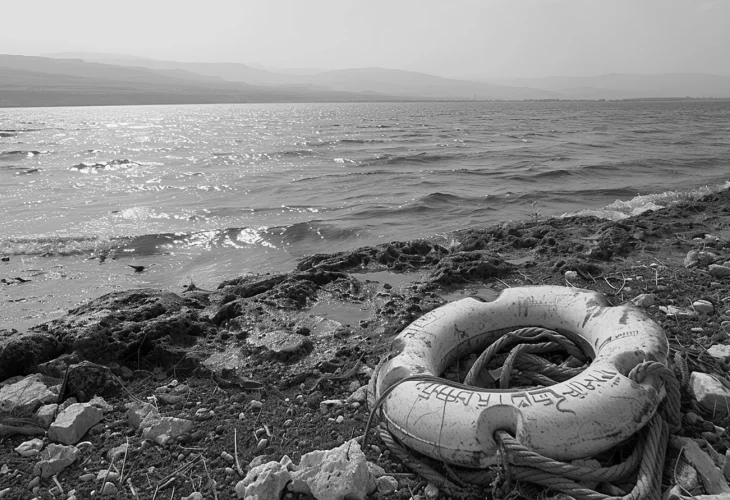
A large motorboat was available for the farmers, towing a wooden boat. Each boat was supposed to hold a maximum of eighty people, but in the excitement, over two hundred people crammed aboard. The ride aimed to take them from Degania to Ein Gev, on the eastern shore of the Sea of Galilee. Most of the journey went as planned, but as they neared Ein Gev, the wooden boat suddenly began to sink. Without warning, dozens found themselves in the deep waters. It was night, making it hard to see those struggling or getting swept away by the waves, tragically resulting in the drowning of eleven farmers; four women and seven men.
Grief, Investigation, and Silence
The search for bodies continued for ten days, involving fishermen from Ein Gev and Ginosar, divers from Haifa, and even a plane from the British Royal Air Force. The bodies were slowly recovered and given emotional funerals in their communities. The sorrow was profound, with David Remez, one of the labor movement leaders, even opening a meeting of the Executive Committee with a moment of silence.
Members of Ein Gev, fearful of being blamed for negligence, initiated a public inquiry led by Captain Ze'ev Hayam. The investigation revealed serious judgment errors, an overloading of passengers, and a lack of basic safety measures. Despite these findings, no criminal actions were taken, and the event faded into the backdrop of World War II.
Remembering the Forgotten
Perhaps due to a reluctance to assign blame, the incident was repressed and forgotten, neither remembered nor known for decades. Only in 2013, seventy years after the disaster, a special memorial booklet was published by the Israel Dairy Board, featuring articles, testimonies, rare photographs, newspaper clippings from those days, and the names and pictures of the victims.
Since then, we've witnessed further tragedies related to overcrowding in areas not suited for the masses, the most well-known being the Meron disaster. These events must be remembered to learn from experience and prevent repeating past mistakes.

