

Israel News
Some European States Rethink Role at U.S.-Led Gaza Coordination Center
Diplomats cite stalled aid flows and unclear political impact as questions grow over the future of the U.S.-run CMCC
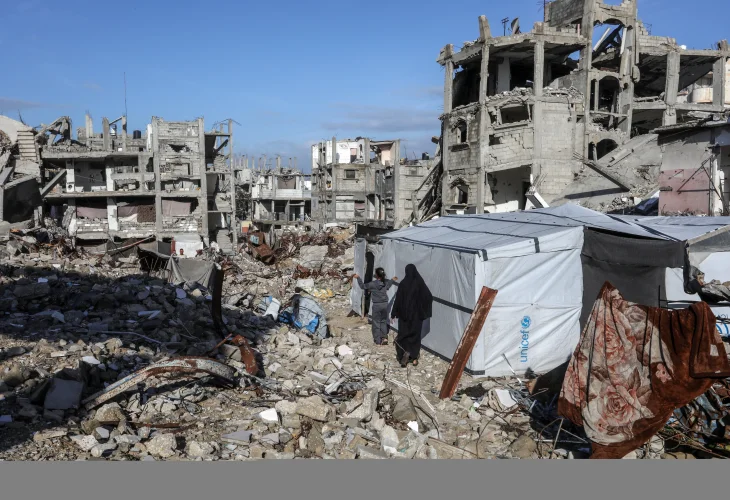 Gaza (Shutterstock)
Several European countries are reconsidering whether to continue sending personnel to the U.S.-led coordination center for Gaza, diplomats said according to Reuters. They cited frustration over its limited impact on humanitarian aid and the lack of political progress since its establishment, even as the Trump administration moves into a second phase of its ceasefire framework.
The Civil-Military Coordination Centre (CMCC) was set up in southern Israel in October as part of U.S. President Donald Trump’s plan to end the war in Gaza. The body was tasked with monitoring the Israel–Hamas ceasefire, facilitating the entry of humanitarian aid, and developing post-war policy proposals for the territory. It is run by a U.S. general and includes both American and Israeli military personnel.
Dozens of countries, including Germany, France, Britain, Egypt, and the United Arab Emirates, initially sent representatives to the center, among them military planners and intelligence officials. Diplomats said many governments viewed participation as a way to influence discussions over Gaza’s future and ensure their positions were represented.
However, eight foreign diplomats said officials from some European countries have not returned to the CMCC since the Christmas and New Year holidays. Several governments are now questioning the purpose of the center, with one Western diplomat describing it as “directionless.” Another said: “Everybody thinks it’s a disaster, but there is no alternative.”
The diplomats declined to name which governments are reassessing their involvement, and stressed that discussions remain informal. Still, they said some European states are weighing whether to reduce their presence or stop sending personnel altogether.
Much of the dissatisfaction centers on humanitarian access. Diplomats said there has been no significant increase in aid entering Gaza since the ceasefire took hold, despite U.S. assertions that there is, arguing that the CMCC has failed to meaningfully change conditions on the ground.
According to the diplomats, many trucks entering Gaza since the ceasefire have carried commercial goods rather than humanitarian supplies. They also said Israel remains effectively in control of Gaza’s aid policy, despite the CMCC’s mandate to help boost relief flows into the enclave.
An official at COGAT, the Israeli government agency responsible for coordinating civilian policy in Gaza, disputed some of that criticism. The official said that 45% of all trucks entering Gaza since the October ceasefire were commercial vehicles transporting food and other everyday goods, and that humanitarian trucks are prioritized. Commercial shipments, the official said, are intended to supplement the aid effort, and additional humanitarian trucks would be allowed to enter if available.
The COGAT official acknowledged that Israel continues to restrict items deemed “dual-use,” meaning they could serve both civilian and military purposes, but said alternatives are being sourced, including wooden tent poles to replace metal ones.
The Trump administration announced last week that its plan has moved into a second phase, including demilitarization and reconstruction. Diplomats said it is not yet known whether the CMCC will retain any influence under this next stage, or how it will interact with new U.S.-led bodies being established to oversee Gaza-related decisions.
Despite the doubts, diplomats said most countries are unlikely to formally leave the CMCC for now. They cited concerns about straining relations with the U.S. and a desire to retain the option to scale up involvement if the center regains relevance, describing the current mood as one of hesitation rather than a break.

