

History and Archaeology
Inside the Magnificent Palace of King Ahasuerus: A Journey Through History
Discover the grandeur of King Ahasuerus's palace and the archaeological remnants that reveal its past glory.
- Rabbi Zamir Cohen
- | Updated
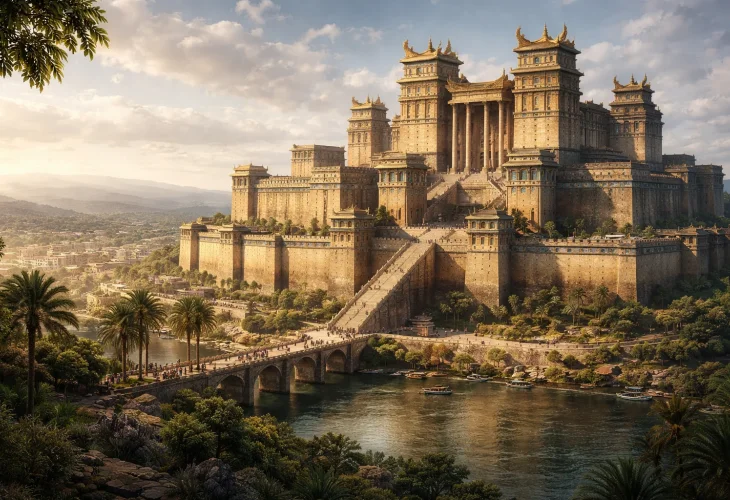
Let us enter the fascinating world of King Ahasuerus as portrayed in the Megillah. The story opens with a grand banquet, where the king sits on his throne in the fortress of Shushan. The feast, intended to display the splendor and wealth of his kingdom, lasted 180 days, followed by an additional seven-day celebration for the people of Shushan in the royal garden.
Historical sources parallel this picture. Records describe a king who struggled with revolts early in his reign and only later established firm control after suppressing uprisings in regions such as Egypt and Babylon. This context sheds light on why Ahasuerus may have felt the need to demonstrate his power so extravagantly.
The Fortress of Shushan
The royal seat of Ahasuerus was Shushan, known today as Shush in Iran. The famous traveler Rabbi Benjamin of Tudela visited the area in the 12th century and described visible remnants of the ancient city, along with the continued presence of a Jewish community.
Modern archaeological research began in the mid-19th century and uncovered major discoveries, many of which are now displayed in museums around the world. French archaeologist Roman Ghirshman identified Shushan as one of the four capitals of the Persian Empire and a key center of government and commerce.
The Megillah distinguishes between “Shushan” and “Shushan the fortress,” suggesting that the palace complex stood on an elevated section of the city. Hebrew scholar Abba Bendavid explained this distinction and confirmed that it aligns with the site’s geography.
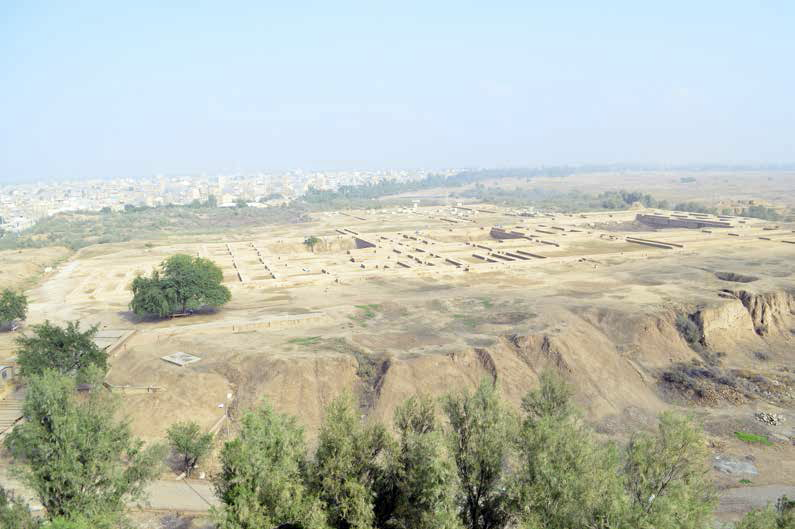 The remains of Ahasuerus’s palace in Shushan today.
The Royal Palace Complex
The Megillah provides detailed descriptions of the palace structure, including the outer courtyard, the inner courtyard, and the king’s private residence. Archaeological findings have confirmed that such divisions existed, demonstrating the author’s precise knowledge of the layout of Shushan.
Researchers also found that Persian palaces shared similar architectural features, including those in Persepolis. While the brick structures in Shushan deteriorated over time due to wars and natural damage, the better-preserved stone ruins of Persepolis have helped scholars reconstruct the grandeur and style of Shushan’s palace.
The Treasury Tablet
Among the most remarkable discoveries were foundation tablets embedded in the palace walls. These inscriptions describe how construction materials were brought from distant regions such as Lebanon, Bactria, and other parts of the empire. They also list the diverse peoples involved in the building project.
These findings strongly reflect the biblical portrayal of a vast empire stretching “from India to Ethiopia,” emphasizing the global reach of Ahasuerus’s dominion.
The Opulence of the Palace
The Megillah describes gold and silver furnishings, elaborate fabrics, and royal luxury throughout the palace. Classical historians, including Herodotus, independently describe the Persian court in similar terms, confirming the immense wealth and splendor that characterized the era.
The King’s Garden
The Megillah notes that the king’s garden was located near the palace and served as the setting for critical moments in the story. Archaeological evidence confirms the importance of royal gardens in Persian culture, and museum records describe elaborate horticultural designs that evoke the beauty and prestige of such spaces.
Wine, Marble, and Majesty
Even smaller details in the Megillah have found echoes in historical sources. The text mentions that guests were not forced to drink wine, an unusual custom in ancient royal feasts, highlighting the uniqueness of this banquet.
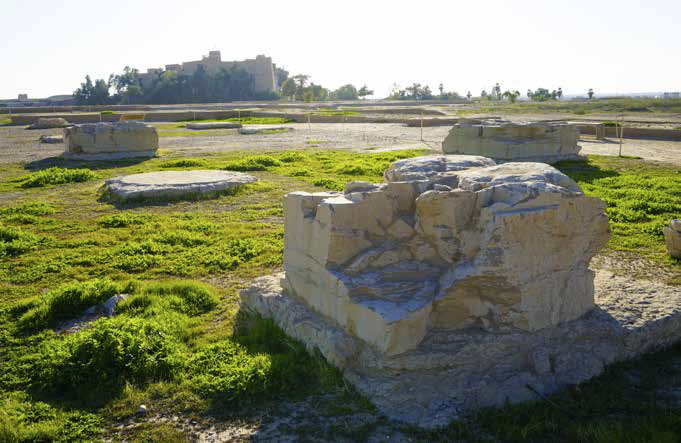 Marble column bases, the size of a bed, in the palace of Ahasuerus in Shushan.
The massive marble columns also receive special attention. Rabbi Matna taught that these columns were so wide that a full-grown man could comfortably stand within their circumference. Archaeological discoveries of enormous columns in Persian palaces have confirmed that such descriptions were not exaggerations.
These insights, drawn from the research of Rabbi Zamir Cohen and others, enrich our understanding of the Megillah. They reveal a vivid and authentic portrait of ancient Persia, where archaeology and tradition intertwine, allowing the world of Ahasuerus to emerge from the pages of Scripture into historical reality.

