

History and Archaeology
Ancient Seals of Jerusalem: A Rare Discovery
Unearthed in the City of David, two rare First Temple seals including one belonging to a woman open a window into the personal lives and hidden stories of ancient Jerusalem.
- Naama Green
- | Updated
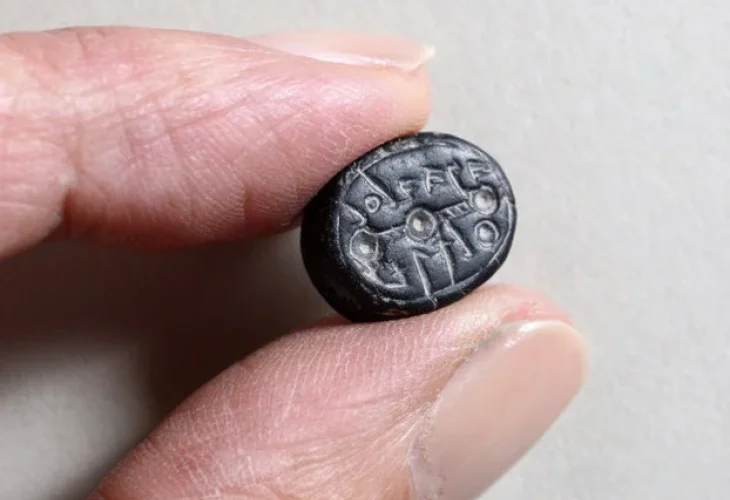
Two seals bearing Hebrew names were discovered during excavations by the Israel Antiquities Authority at the Givati parking lot in the City of David, within the National Park that surrounds the walls of Jerusalem.
“The discovery of seals bearing Hebrew names from the First Temple period is not common, and finding a seal that belonged to a woman is even rarer,” the researchers noted.
Unearthing Jerusalem’s Ancient Layers
For over a decade, the Israel Antiquities Authority has been conducting excavations in collaboration with the Nature and Parks Authority and the Elad Association. Recently, the team reached layers dating back to Jerusalem of the First Temple period. There, within a structure built of finely hewn stones, the seals were uncovered. According to the researchers, the impressive quality of the building suggests it may have served as an administrative center.
Seals as Symbols of Identity and Status
Dr. Doron Ben Ami, Yana Chahanovets, and Shlomo Cohen, directors of the excavation on behalf of the Israel Antiquities Authority, explain that “personal seals, such as those belonging to Alyahana and Sariahu, were used to sign documents and were often set into rings worn by their owners. In antiquity, seals reflected the identity, lineage, and social status of the individual.”
The rare seal belonging to a woman was made of semi precious stone and engraved in mirror script with ancient Hebrew letters reading: “Alyahana bat Ga’al.” The seal identifies its owner by her own name and her father’s name.
A Rare Glimpse into Women’s Status
Dr. Haggai Misgav of the Hebrew University of Jerusalem explains that “seals belonging to women make up only a small percentage of those discovered. This is generally due to the lower economic status of women, except in exceptional cases such as this one.”
He adds that while the name Alyahana does not appear in the Bible and nothing further is known about her identity, the very fact that she owned a seal points to her elevated social standing.
Dr. Misgav further notes that “most women’s seals mention the father’s name rather than the husband’s. This may suggest that Alyahana’s status was linked to her birth family. It is even possible that she retained property rights and a degree of financial independence after marriage, though our knowledge of legal practices in Judah at the time remains limited.”
The Second Seal
The second seal found at the site, also engraved in mirror writing, bears the inscription: “To Sariahu ben Shivnai.” The name Sariahu appears on a shard discovered at Arad and may mean “the Lord revealed in the storm,” as reflected in the wording found in the Book of Job.

