

History and Archaeology
The Mystery of Ramban’s Burial Place
Ancient pilgrims, devoted students, and centuries of tradition offer conflicting answers to a single question: where does Ramban truly rest? A journey through history, faith, and the enduring legacy of one of Judaism’s greatest scholars.
- B'Kehila
- | Updated
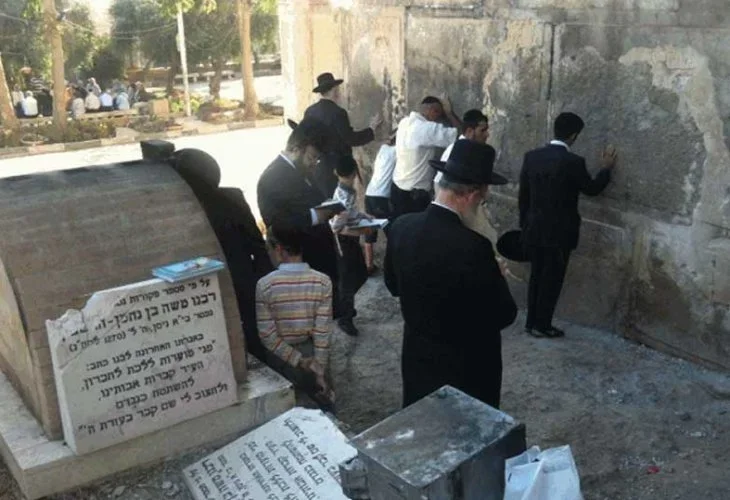
The mystery surrounding the burial place of Rabbi Moshe ben Nachman, known as the Ramban, is among the most puzzling. Few figures from the early sages have been attributed with so many possible burial sites.
Ramban was born in 1290 in Girona, Spain, and became renowned as one of the great scholars of his generation. In 1263, he was summoned to Barcelona to participate in a significant public debate that lasted four days in the presence of the king and royal ministers. When the debate concluded, the priest emerged defeated, but Ramban feared for his life and chose to leave Spain and ascend to the Land of Israel.
From Akko to Jerusalem
He arrived by ship at the port city of Akko, and on the 9th of Elul in the year 1267, he reached Jerusalem. From there, he wrote a moving letter to his son in Spain describing his plans:
"My intention is to go to Hebron, the city of our ancestors' graves, to hew myself a grave, with God's help; and whoever has granted me to see it in its destruction will grant me to see it in its reconstruction, when the Divine Presence returns to it."
Ramban passed away in 1270, only a few years after arriving in the land. Because he had expressed such a clear desire to be buried near the holy ancestors in the Cave of Machpelah, some traditions identify his grave near the entrance to the cave. Ancient pilgrims to the Land of Israel wrote: "And up many steps, one ascends to the entrance of the Cave of Machpelah, and on the first ascent to the left of the first entrance is the grave of Ramban." To this day, many approach to pray near this site before entering the graves of the holy ancestors.
Competing Traditions of His Burial
Other traditions suggest that Ramban passed away in Jerusalem and was buried on the Mount of Olives, either in a cave known as the cave of Rabbi Ovadia of Bartenura or in a cave adjacent to the cave of Shimon the Just, which is called the cave of Ramban.
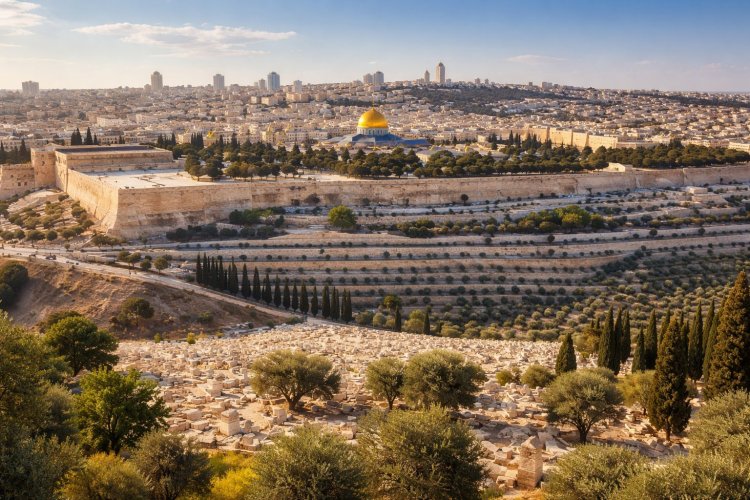
Yet another tradition appears in the writings of an anonymous student of Ramban, who composed his work a few years after his teacher’s passing. He places the burial site in Haifa: "From Akko to Haifa, there is a cemetery at the foot of Mount Carmel, where the great Rabbi, our teacher Rabbi Moshe ben Nachman of Girona, is buried, along with several other great ones whose names we do not know." According to this view, Ramban’s burial place is in the ancient Jewish cemetery near Yaffo Street, at the lower part of the city of Haifa. Even this northern location, however, remains disputed, as other traditions point instead to Akko itself, the port city where his foot first touched the Land of Israel.
A Legacy Beyond Place
Whether in Hebron, Jerusalem, Haifa, or Akko, the uncertainty surrounding Ramban’s burial place ultimately underscores a deeper truth: his legacy is not bound to any single location. His Torah, his courage, and his longing for the Land of Israel continue to inspire generations, making his presence felt wherever his words are studied and his memory honored.

