

Israel News
Trump Unveils Board of Peace at Davos With Confusion Over Signatories
Ahead of the ceremony, uncertainty surrounds who will sign, Israel’s role, and how broadly the new council is meant to function
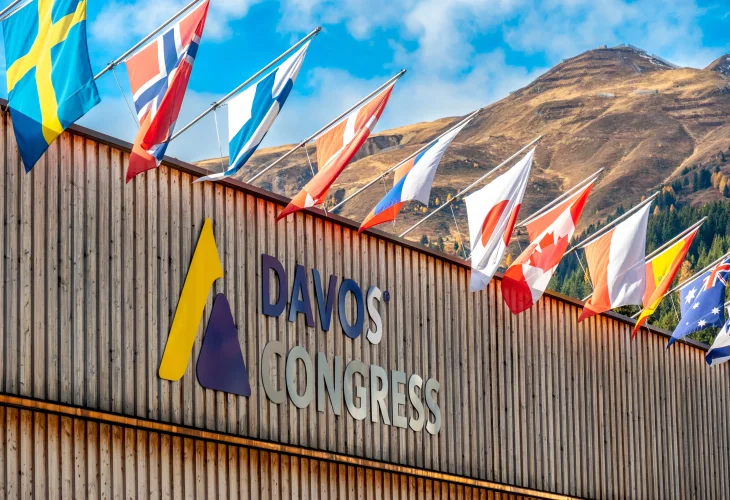 World Economic Forum in Davos (Shutterstock)
U.S. President Donald Trump is set to unveil a new international forum called the Board of Peace on Thursday at the World Economic Forum in Davos, with a formal signing ceremony planned despite significant last-minute uncertainty over participation and representation.
The event, taking place on the sidelines of the World Economic Forum, is being framed by Trump as a high-profile diplomatic initiative bringing together leaders from across regions to coordinate ceasefire frameworks, post-conflict arrangements, and broader diplomatic initiatives. But as the ceremony approaches, major questions remain, including who will sign for each country, whether the framework will carry any binding authority, and what role the council is actually expected to play.
World leaders are expected to begin arriving at the venue shortly before the ceremony. After a brief informal reception, participants are slated to take the stage for Trump’s opening remarks. Leaders are then expected to sign the first chapter of the charter one by one, followed by a presentation on the Board of Peace before delegations depart.
Countries reported to have accepted invitations to join the Board of Peace include Argentina, Armenia, Azerbaijan, Bahrain, Egypt, Hungary, Indonesia, Jordan, Kazakhstan, Kosovo, Morocco, Pakistan, Qatar, Saudi Arabia, Turkey, United Arab Emirates, Uzbekistan, and Israel, according to Israeli and international reports. Other countries, including Belgium, Bulgaria, and Paraguay, have appeared in some circulating lists but have not been confirmed. Several European states, among them France, Sweden, and Norway, have publicly declined to participate at this stage, while other major powers including the United Kingdom, Canada, and Russia, have not announced whether they will join.
According to a schedule circulating among organizers, the signing sequence is expected to follow English alphabetical order, with Israel slated to sign last.
Even hours before the ceremony, it remains unclear which officials will represent several of the participating states. U.S. officials have reportedly urged countries to send the most senior representative present in Davos to the stage, but some delegations have signaled that foreign ministers may sign in place of heads of state.
Israel’s participation also remains unresolved at the operational level. President Isaac Herzog was in Davos for the forum, but it is unclear whether he would sign the charter on Israel’s behalf during the ceremony.Israeli officials have confirmed approval to join the council, but details around who would represent Israel and how the move would be presented publicly were still being worked out.
Speaking ahead of the event, Trump framed the initiative as a broadly supported diplomatic effort. “Tomorrow we will convene the Peace Council, which has support worldwide. We’ll see how it goes,” he said.
A joint statement issued by several participating countries outlined ambitious goals for the council, including cementing the ceasefire in the Gaza Strip, rebuilding the territory, and advancing what it described as a just and sustainable peace based on granting the Palestinian people their rights to establish an independent state. Israeli officials have not endorsed that language publicly and have emphasized that participation in the council does not imply acceptance of all positions articulated by other members.
The ceremony itself is expected to conclude within a short timeframe, with leaders departing Davos shortly afterward. Despite the formal signing, diplomats and observers caution that the Board of Peace’s future role, authority, and effectiveness remain unclear.

