

History and Archaeology
The Secret Beneath Jerusalem: Where Is King David Really Buried?
Tradition says King David rests on Mount Zion. But careful study of ancient sources and archaeological finds raises an unsettling question: could the real tomb be elsewhere?
- B'Kehila
- | Updated
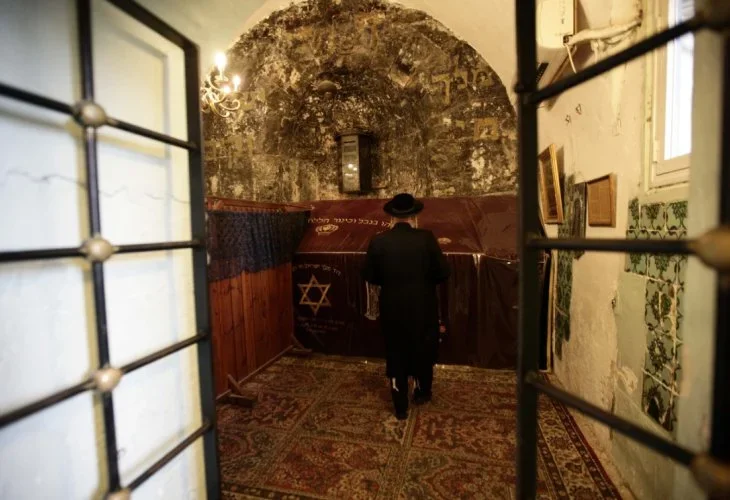
The Tomb of David is a structure on Mount Zion in Jerusalem that, according to longstanding tradition, marks the burial place of King David. This tradition stretches back at least a thousand years. The Jewish traveler Benjamin of Tudela, who visited Jerusalem in the twelfth century, describes Mount Zion in connection with King David. He writes that above the Pool of Shiloach stands the Citadel of Zion, where the tombs of the kings are found, and where there is an ancient building known as the Hall of David, aligned toward the Temple. Candles were lit there in reverence, based on the belief that this was the place where David once housed the Ark of the Covenant before the Temple was built by King Solomon.
Until 2007, Torah crowns from Jewish communities destroyed in the Holocaust were displayed at the site. Sadly, these sacred items were stolen and have never been recovered.
Tradition Versus Text
Rabbi Yechiel Michel Tikochinsky zt”l, in his book Jerusalem and Its Borders, raises a significant question. The Book of Kings explicitly states that King David was buried in the City of David, which is identified with the area of Silwan, near the Pool of Shiloach. During David’s lifetime, Mount Zion as we know it today was not yet inhabited.
The Book of Nehemiah further supports this location, describing David’s tomb as situated near the Pool of Shiloach, within the city walls, close to the Gate of Refuse. Scholars widely agree that this area corresponds to today’s City of David.
Who Is Buried on Mount Zion
Rabbi Tikochinsky therefore concludes that King David himself cannot be buried on Mount Zion. Instead, he suggests that the tomb on Mount Zion may belong to later kings of the House of David or to descendants from a later period.
This interpretation aligns with the words of Benjamin of Tudela, who refers to the site as containing the tombs of the kings of the House of David, rather than explicitly stating that King David himself is buried there.
Searching for the Original Tombs
Around a century ago, Baron Edmond de Rothschild sponsored an archaeological search for the royal tombs of the House of David. The Jewish archaeologist Raymond Weill led excavations on the southern edge of the City of David and uncovered a series of rock-hewn caves. One of these was notably larger and more elaborate than the others.
Weill believed that this complex may represent the burial site of the kings of Judah. While definitive identification remains elusive, the discovery strengthens the possibility that the true burial place of King David lies in the ancient City of David rather than on Mount Zion.

